Best Home Security Specialists in Wellington
Published 11 September 2026 · Written by the ValueHub team · Reviewed by Steve Baron
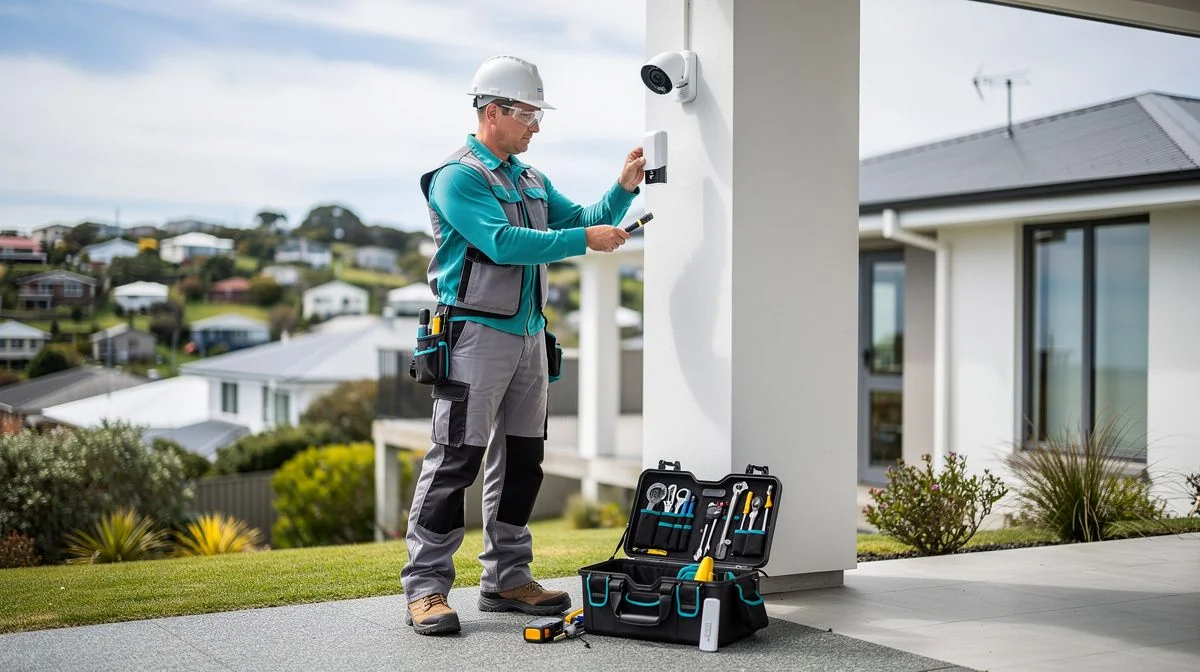
Home Security in Wellington: Hills, Wind and Empty Weekday Homes
Securing a Wellington home comes down to terrain and weather. Houses climb steep sites on multiple levels, many with steps, retaining walls and more than one way in. The wind is relentless, too, which matters more for alarm hardware than most people expect, and the city's older timber villas have high studs, generous windows and plenty of quiet openings.
Public-sector employment dominates, and restructuring has changed how many households use their homes during the day. More houses sit empty between nine and five than the city's commuter reputation suggests. That combination is exactly why monitoring earns its fee here: a siren nobody hears achieves nothing, while a monitored signal produces a response.
The prevailing northerly is the enemy of outdoor sensors. Swinging trees, shifting fences and blowing debris all trigger passive infrared detection, and repeated false alarms become expensive once callout fees apply. In coastal suburbs, salt-laden air also corrodes cheap camera housings and siren boxes within a few years, so ask whether outdoor hardware is rated for marine exposure.
How We Researched This Guide
We started with the equipment and the contract, since that is where the cost is decided. We compared published installed prices from New Zealand security firms across self-monitored kits, wired alarms and monitored multi-zone systems, and reviewed how subscriptions are tiered — what a basic phone-contact plan covers and what only appears higher up.
We then worked through the standard terms: minimum contract lengths, callout charges for false alarms, keyholding and whether the hardware is rented or owned outright. The ranges below are typical, not quoted, because sensor counts vary from house to house.
Our Trusted Home Security Specialists
We feature businesses that demonstrate strong performance, proven experience, and consistently positive customer feedback. Some of the providers listed may have commercial relationships with us, but all are selected based on quality and reliability.
To begin, reach out to them and speak with them directly — this helps you explain your job, ask questions, and confirm whether they're the right fit.
For a trusted security company in NZ, look to Recon Security. We provide residential and commercial security services throughout Auckland and Wellington. We provide commercial security services including security alarm installation, alarm monitoring and security guards throughout New Zealand.
The 60-Second Version
If you read only one part of this page, read this.
- A self-monitored alarm starts around $450 installed. A basic professionally installed wired alarm starts around $995.
- A monitored six-zone home system runs roughly $1,180 installed, plus the monthly monitoring fee.
- Professional 24/7 monitoring commonly costs $35–$60 plus GST a month, with phone-contact-only plans around $15–$25.
- An unmonitored alarm is a loud doorbell. On a windy Wellington street, nobody hears it anyway.
- Outdoor motion sensors can trigger false alarms in high wind. Placement matters as much as the brand.
- Many insurers discount premiums for a monitored alarm, which offsets part of the monthly cost.
What Home Security Costs in Wellington
Wellington pricing sits mid-range nationally, but older villas on steep sites can push quotes up because cable runs are awkward and access is slow. Budget for the subscription as well as the install — the monthly fee outlasts the hardware by years.
| System or service | Typical cost |
|---|---|
| Self-monitored alarm | From about $450 installed |
| Basic professionally installed wired alarm | From about $995 |
| Monitored six-zone home system | Around $1,180 installed, plus monitoring |
| Alarm with four outdoor cameras and smart access | Roughly $2,500–$5,000 |
| Full smart security with intercom and monitoring | $6,000–$15,000 |
| Commercial multi-zone system | From about $2,450 |
| Basic phone-contact monitoring | About $15–$25 plus GST per month |
| Mid-range monitoring with police dispatch | About $25–$35 plus GST per month |
| Premium monitoring with priority dispatch | About $35–$50 plus GST per month |
| Professional 24/7 monitoring, common band | About $35–$60 plus GST per month |
Installed prices and monitoring ranges gathered from published New Zealand security provider pricing as at September. Final quotes depend on sensor count, cable runs, access to the property and whether GST is included.
What Monitoring Actually Buys You
The most important line on this page: an unmonitored alarm is a loud doorbell. In Wellington, that is even more true, because the wind will carry the sound away and shut windows muffle it. If the house is empty, the siren achieves nothing except annoying the neighbours.
Monitoring converts the siren into action. The panel signals a monitoring centre, a person reads it, and a response follows — a call to you, a call to a contact, or a patrol dispatched to the address. The monthly fee pays for that signal path and the human watching it.
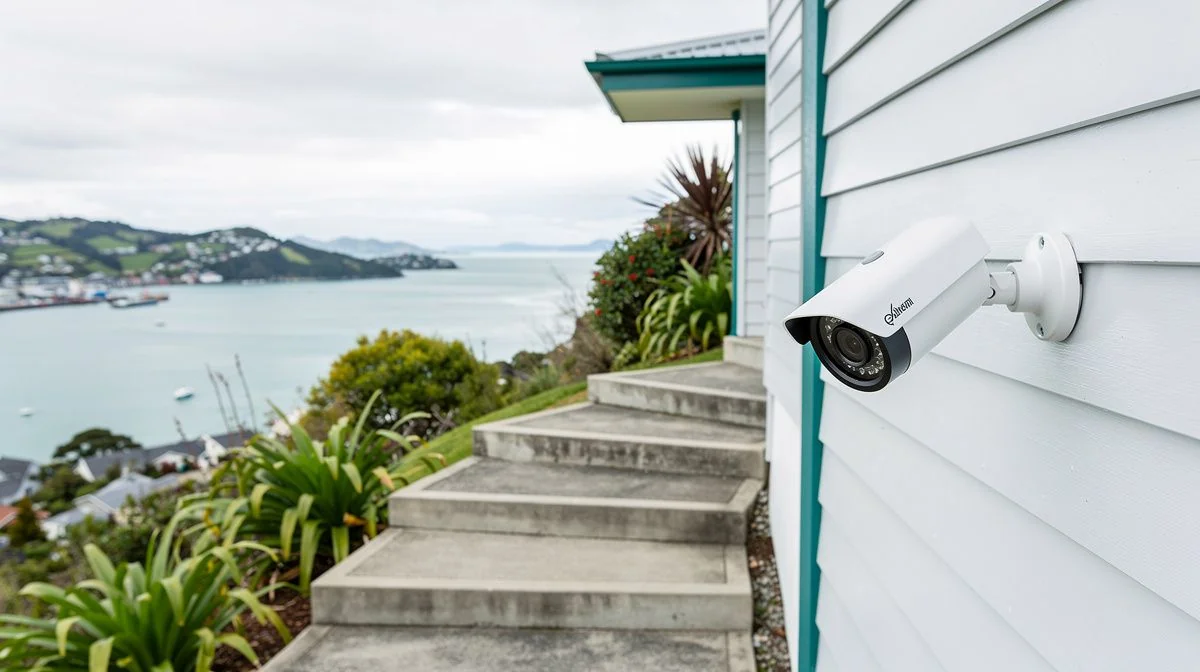
Be specific about what your plan includes. A cheap tier may mean a phone call and nothing more, while a premium tier adds patrol dispatch, priority handling and a written response record. Ask which one you are paying for.
Wellington Factors That Change Your Security Plan
Wind and Outdoor Sensor Reliability
The prevailing northerly is the enemy of outdoor motion sensors. Swinging trees, shifting fences, and blowing debris can trigger passive infrared detection, and repeated false alarms add up quickly once callout fees apply. Positioning cameras and sensors out of the wind path matters more here than in most cities.
Steep Sites and Multiple Access Levels
Many Wellington homes are built down a bank, with a street-level garage, a mid-level living floor and bedrooms above or below. Each level can be reached separately. A single keypad at the front door assumes there is one way in, which is rarely true on these sections.
Older Timber Villas and Seismic Reality
The city's classic villas have high studs, timber framing and generous windows. They are lovely, but porous from a security point of view. Because seismic strengthening is often underway, make sure any installer knows not to compromise bracing or fix equipment into added structural elements.
Salt Air in the Coastal Suburbs
Suburbs such as Seatoun, Lyall Bay and Island Bay sit in salt-laden air that corrodes cheap camera housings and siren boxes within a few years. If you are within a few streets of the coast, ask whether the outdoor hardware quoted is rated for marine exposure.
How to Choose a Home Security Specialist in Wellington
Walk the property and write down every way in before you take a quote: front door, back door, each level's entry, garage, basement and any door onto a deck. Then ask each company to design to that list rather than to a standard package.
Ask how they handle the wind. A company that has installed on Wellington Hills will talk about sensor placement and false-alarm tuning without prompting. One that only sells national kits will not.
Warning Signs to Take Seriously
- A quote with no sensor schedule. Without sensor numbers, types and positions, you cannot compare quotes or judge value.
- Monitoring sold only as "24/7". That tells you nothing about dispatch, keyholding or the response at three in the morning.
- No cellular backup mentioned. Burglars cut phone lines. If the plan relies on a landline, it may fail exactly when you need it.
- Outdoor sensors are specified without any discussion of wind. On a Wellington hill, that quote will produce false alarms.
- You only see a long minimum term at signing. Read the term and the exit clause first.
Questions You Might Have
Do I really need monitoring, or is the alarm enough?
If someone is nearly always home and your neighbours are attentive, an unmonitored alarm has some deterrent value. If the house is empty on weekdays, monitoring is what produces a response. Without it, you have bought a siren that the wind drowns out.
Does monitoring include a patrol, or just a phone call?
Often just a phone call unless you opt higher. Patrol dispatch is usually a separate tier or an add-on. Confirm in writing who attends, how quickly, and what the charge is when a callout turns out to be a false alarm.
What happens if the phone line is cut?
Cellular backup is the answer. The panel uses a mobile network rather than the landline, so the signal still reaches the monitoring centre. Ask whether the SIM and its data are bundled into the monthly fee or billed on top.
What are keyholding and false-alarm fees?
Keyholding means the provider holds a key or code so it can attend and reset the system, and some charge for the privilege. False-alarm fees apply when a patrol is sent and there is no emergency, often after a set number within a period.
Do I own the hardware at the end?
It varies. Some contracts rent the equipment for the term, so you keep paying and never own it. Others sell the hardware outright and charge only for monitoring. Get the answer in writing before signing.
Insurance, Contracts and Ownership
Many home insurers reduce premiums where a monitored alarm is installed, because it lowers the chance of a claim. The size of that reduction depends on the insurer and the policy, so ask your provider rather than assuming. Even a small discount offsets part of the monthly fee.
Two contract terms matter more than the headline price: the minimum period, commonly 12, 24 or 36 months, and the notice required to leave. A low monthly fee on a long lock-in is not a bargain if the service disappoints early.
Ask whether the agreement renews automatically. An auto-renewal nobody explained is one of the most common complaints in this trade, and one question at the start prevents it.
What Matters Most
Wellington's housing is expensive on the inner hills, and the terrain makes these homes harder to secure than a flat suburban section. That combination is exactly why monitoring earns its fee. The response behind the alarm matters far more than the badge on the keypad.
Budget for the subscription, not just the install. Confirm what monitoring includes, check the cellular backup, understand the term, and ask who owns the equipment at the end. Those answers tell you more than any sales brochure.
You can compare local providers and see how the trade fits together on our home security specialists hub.

The ValueHub Team built this site because finding clear, unbiased financial information in New Zealand was harder than it should be. Every guide is based on real research — we compare the actual fees, terms, and fine print so you don't have to. Our tip: shop around every year, read the policy docs, and never assume loyalty gets you the best deal.— The ValueHub Team
Try our Calculators
Use these free tools to crunch the numbers:
KiwiSaver Fund Comparison
Compare fees, returns, and risk levels across every KiwiSaver fund — the most up to date data in New Zealand.
Currency Converter — USD to NZD
Convert US Dollars to New Zealand Dollars instantly. See the latest exchange rate and 30-day trend.
Mortgage Repayment Calculator
Calculate your weekly, fortnightly, or monthly mortgage repayments. Free NZ mortgage calculator — try different rates, terms, and repayment frequencies.
Compound Interest Calculator
See how your savings grow with compound interest over time. Free NZ compound interest calculator with yearly, monthly, and weekly compounding options.
Term Deposit Calculator
Calculate your term deposit returns before you lock in. Compare interest earned across different terms and rates with ValueHub's free calculator.
Savings Goal Calculator
Calculate how long it will take to reach your savings goal — and what monthly deposit you need to get there. Free NZ savings planner.
Home Security Specialists in Other Cities
Latest Guides & Reviews
KiwiSaver and Tax — PIR, ESCT and What You Actually Pay
KiwiSaver is taxed twice — ESCT on your employer's contribution and your PIR on the fund's returns. How each rate is set, and the two most members never check.
reviewInvestNow KiwiSaver Scheme Review
InvestNow KiwiSaver review: 45 open funds, fund charges from 0.03 to 1.38 per cent, and net returns to 30 June 2026.
reviewKernel KiwiSaver Scheme Review
Kernel KiwiSaver review: 25 open funds, fund charges from 0.25 to 0.45 per cent, and net returns to 30 June 2026.
guideTax Debt in New Zealand — The Numbers
Official figures on New Zealand's overdue tax debt: the total, the collectable share, which customer groups hold it, and how much is repaid or written off.