Best Home Security Specialists in Hamilton
Published 11 September 2026 · Written by the ValueHub team · Reviewed by Steve Baron
Home Security in Hamilton: Student Rentals and Spillover Growth
Hamilton's economy is more diverse than its size suggests. Dairy farming, food processing, rural services and the industrial base at Te Rapa sit alongside Waikato-Tainui and a university that brings a large student population. In security terms, that mix produces two very different problems: family homes in new subdivisions, and rental stock where nobody is quite sure who is responsible for what.
Around the university, houses turn over every year, and nobody feels long-term ownership of the property. Landlords often install a basic alarm and stop there, while tenants rarely monitor it. Agree in writing who owns the hardware, who pays the monthly fee and who holds the code when tenancies change, or the system quietly stops working.
Shift work shapes the rest of the city. The industrial estates run around the clock, so plenty of homes sit empty at unusual hours and offenders learn those patterns. In the growth suburbs on the edges, new streets have clear sightlines but few long-term residents watching them. For households tied to dairy and rural services, design coverage for the shed and garage as deliberately as for the house.
How We Researched This Guide
We started with the hardware and the contract, since that is where the cost sits. We compared published installed prices from New Zealand security firms across self-monitored kits, wired alarms and monitored multi-zone systems, and reviewed how monitoring plans are tiered — what a basic phone-contact service covers and what only appears higher up.
We then read the standard terms: minimum contract lengths, callout charges for false alarms, keyholding and whether the equipment is rented or owned outright. The ranges below are typical, not a quote, because every property needs a different number of sensors.
Our Trusted Home Security Specialists
We feature businesses that demonstrate strong performance, proven experience, and consistently positive customer feedback. Some of the providers listed may have commercial relationships with us, but all are selected based on quality and reliability.
To begin, reach out to them and speak with them directly — this helps you explain your job, ask questions, and confirm whether they're the right fit.
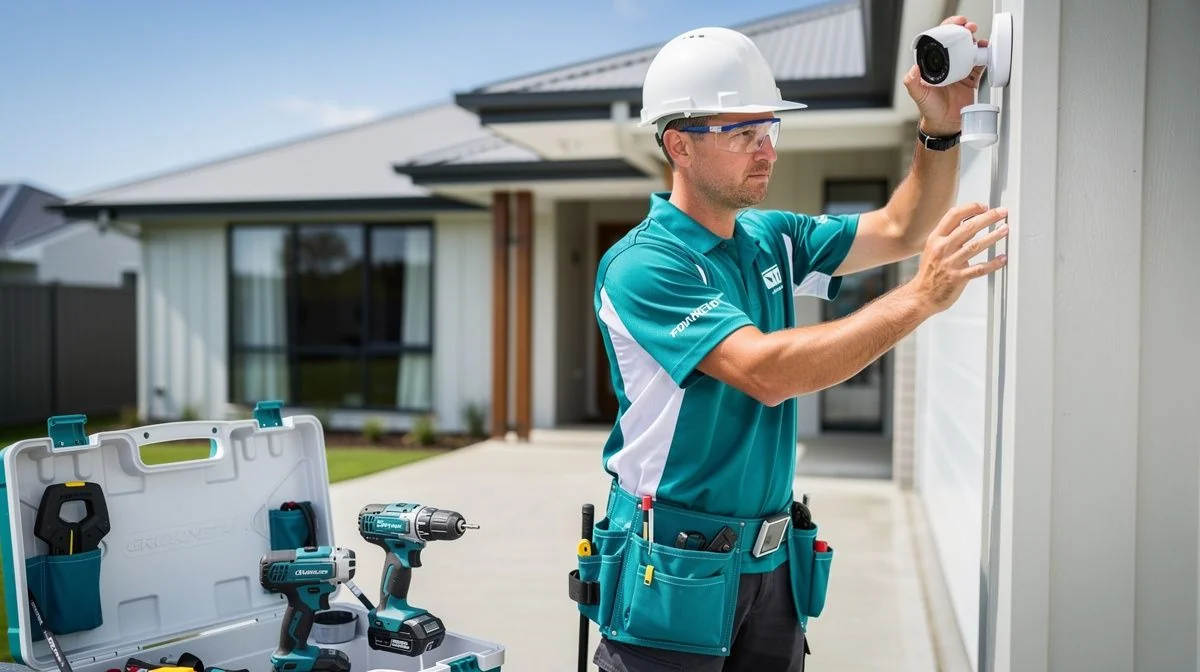
ADT Security keeps your home and business protected with smart alarms, 24/7 monitoring, and fast-response support. From break‑in detection to connected cameras, ADT gives you reliable Kiwi security you can trust. Stay safe, stay in control, and safeguard what matters most with ADT’s proven protection.
The 60-Second Version
If you read only one part of this page, read this.
- A self-monitored alarm starts around $450 installed. A basic professionally installed wired alarm starts around $995.
- A monitored six-zone home system runs roughly $1,180 installed, plus the monthly monitoring fee.
- Professional 24/7 monitoring commonly costs $35–$60 plus GST a month, with phone-contact-only plans around $15–$25.
- An unmonitored alarm is a loud doorbell. In a student street, nobody investigates a siren.
- In rentals, agree in writing who owns the alarm, who pays the monitoring and who holds the code.
- Many insurers discount premiums for a monitored alarm, which offsets part of the monthly cost.
What Home Security Costs in Hamilton
Hamilton pricing generally sits below Auckland and above smaller centres, though installing on an older villa costs more than on a modern brick build because of cable runs. The monthly subscription is the figure that keeps going long after the install is paid for.
| System or service | Typical cost |
|---|---|
| Self-monitored alarm | From about $450 installed |
| Basic professionally installed wired alarm | From about $995 |
| Monitored six-zone home system | Around $1,180 installed, plus monitoring |
| Alarm with four outdoor cameras and smart access | Roughly $2,500–$5,000 |
| Full smart security with intercom and monitoring | $6,000–$15,000 |
| Commercial multi-zone system | From about $2,450 |
| Basic phone-contact monitoring | About $15–$25 plus GST per month |
| Mid-range monitoring with police dispatch | About $25–$35 plus GST per month |
| Premium monitoring with priority dispatch | About $35–$50 plus GST per month |
| Professional 24/7 monitoring, common band | About $35–$60 plus GST per month |
Installed prices and monitoring ranges gathered from published New Zealand security provider pricing as at September. Final quotes depend on sensor count, cabling, access to the property and whether GST is included.
What Monitoring Actually Buys You
This is the single most important point on the page. An unmonitored alarm does one thing: it makes noise. If the house is empty and no neighbour acts, the noise changes nothing. Nobody is dispatched, nobody calls you, and the siren stops on its own.
Monitoring turns noise into a response. The panel signals a monitoring centre, a person reads it, and something follows — a call to you, a call to a nominated contact, or a patrol sent to the address. The monthly fee buys that signal path and the person watching it.
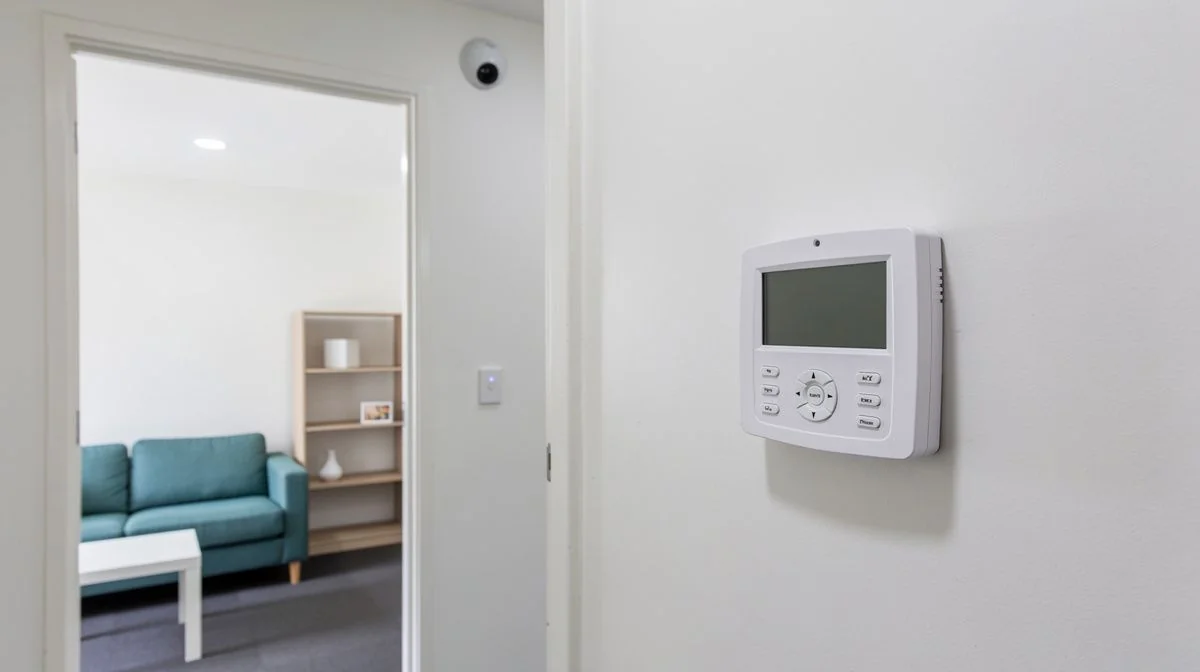
Check what your tier includes before you commit. The cheapest option may mean a phone call and nothing more, while the top tier adds patrol dispatch, priority handling and a documented response record.
Hamilton Factors That Change Your Security Plan
Student Rentals: Who Is Responsible for What
Around the university, houses turn over every year, and nobody feels long-term ownership of the property. Landlords often install a basic alarm and stop there; tenants rarely monitor it. Agree in writing who owns the hardware, who pays the monthly fee and who holds the code when tenancies change.
Auckland Spillover and New Subdivisions
Growth suburbs on the city's edges attract families moving south for affordability. New streets with few established trees have clear sightlines, which helps, but they also have fewer long-term residents watching the street. Cameras facing the road earn their keep in these pockets.
Te Rapa and the Industrial Workforce
Shift work at the industrial estates means homes sit empty at unusual hours — evenings, nights, weekends. A burglar watching a street learns those patterns. When the house is regularly unattended outside normal working hours, monitoring matters more than the sirens.
Dairy Money and Rural Service Households
Households tied to dairy and rural services often hold expensive equipment, farm bikes and tools. If that is your situation, design the system to cover the shed and the garage as deliberately as the house itself.
How to Choose a Home Security Specialist in Hamilton
Before taking quotes, list every entry point yourself: front and back doors, all ground-floor windows, the garage and any shed. Then ask each company to design to your list rather than to a fixed package that may not match the property.
If you are a landlord, decide the split before you start. Do you want to own and maintain the alarm, or install a self-monitored unit and let tenants opt into monitoring? Getting that right up front avoids arguments later.
Warning Signs to Take Seriously
- A quote with no equipment list. Without sensor numbers, types and locations, you cannot compare quotes or judge value.
- Monitoring sold only as "24/7". That says nothing about dispatch, keyholding or the response at two in the morning.
- No cellular backup mentioned. Burglars cut phone lines. A landline-only plan can fail exactly when you need it.
- No discussion of who pays the monthly fee in a rental. Unclear responsibility for how monitored alarms quietly get switched off.
- A long minimum term buried in the paperwork. Read the term and the exit conditions before you sign.
Questions You Might Have
Do I really need monitoring, or is the alarm enough?
If someone is almost always home and neighbours are attentive, an unmonitored alarm has some deterrent value. In a student street, where sirens are common and ignored, monitoring is what produces a response. Without it, you own a loud box.
Does monitoring include a patrol, or just a phone call?
Usually just a phone call unless you choose higher. Patrol dispatch is often a separate tier or add-on. Confirm in writing who attends, how quickly, and what the charge is when a callout turns out to be nothing.
What happens if the phone line is cut?
Cellular backup handles this. The panel uses a mobile network instead of the landline, so the signal still reaches the monitoring centre. Ask whether the SIM and its data are included in the monthly fee or charged separately.
What are keyholding and false-alarm fees?
Keyholding means the provider holds a key or code so it can attend and reset the system, and some charge for it. False-alarm fees apply when a patrol is dispatched and there is no emergency, often after a set number of false alarms in a period.
Do I own the hardware at the end?
It depends on the agreement. Some contracts rent the equipment for the term, so you keep paying and never own it. Others sell the hardware outright and charge only for monitoring. Get the answer in writing before signing.
Insurance, Contracts and Ownership
Many home insurers discount premiums where a monitored alarm is fitted, because it reduces the chance of a claim. The discount depends on the insurer and policy, so ask your provider directly rather than assuming. Even a modest reduction offsets part of the monthly cost.
Two contract terms matter more than the headline price: the minimum period, commonly 12, 24 or 36 months, and the notice needed to leave. A low monthly fee on a long lock-in is not a bargain if the service disappoints early.
Ask whether the agreement renews automatically, and get the answer in writing. An unexplained auto-renewal is one of the most common complaints in this trade.
What Matters Most
Hamilton splits into two security problems: rental stock where responsibility is unclear, and growing suburbs where nobody has watched the street for long. Both are solved the same way — a system someone is accountable for, backed by real monitoring rather than a siren nobody answers.
Budget for the subscription, not just the install. Confirm what monitoring includes, check the cellular backup, understand the term, and settle who owns the equipment at the end.
You can compare local providers and see how the trade fits together on our home security specialists hub.

The ValueHub Team built this site because finding clear, unbiased financial information in New Zealand was harder than it should be. Every guide is based on real research — we compare the actual fees, terms, and fine print so you don't have to. Our tip: shop around every year, read the policy docs, and never assume loyalty gets you the best deal.— The ValueHub Team
Try our Calculators
Use these free tools to crunch the numbers:
KiwiSaver Fund Comparison
Compare fees, returns, and risk levels across every KiwiSaver fund — the most up to date data in New Zealand.
Currency Converter — USD to NZD
Convert US Dollars to New Zealand Dollars instantly. See the latest exchange rate and 30-day trend.
Mortgage Repayment Calculator
Calculate your weekly, fortnightly, or monthly mortgage repayments. Free NZ mortgage calculator — try different rates, terms, and repayment frequencies.
Compound Interest Calculator
See how your savings grow with compound interest over time. Free NZ compound interest calculator with yearly, monthly, and weekly compounding options.
Term Deposit Calculator
Calculate your term deposit returns before you lock in. Compare interest earned across different terms and rates with ValueHub's free calculator.
Savings Goal Calculator
Calculate how long it will take to reach your savings goal — and what monthly deposit you need to get there. Free NZ savings planner.
Home Security Specialists in Other Cities
Latest Guides & Reviews
Kōura KiwiSaver Scheme Review
Kōura KiwiSaver review: 13 open funds, fund charges from 0.63 to 1.10 per cent, and net returns to 30 June 2026.
reviewMaritime KiwiSaver Scheme Review
Maritime KiwiSaver review: 3 open funds, fund charges from 0.61 to 0.76 per cent, and net returns to 31 March 2026.
reviewMAS KiwiSaver Scheme Review
MAS KiwiSaver review: 7 open funds, fund charges from 0.25 to 0.98 per cent, and net returns to 30 June 2026.
reviewArotahi KiwiSaver Scheme Review
Arotahi KiwiSaver review: 1 open fund, a 0.77 per cent fund charge, and net returns to 31 March 2026. What the Government register shows you pay and get back.