Best Landscapers in Queenstown
Published 07 March 2025 · Updated 18 August 2026 · Written by the ValueHub team · Reviewed by Steve Baron
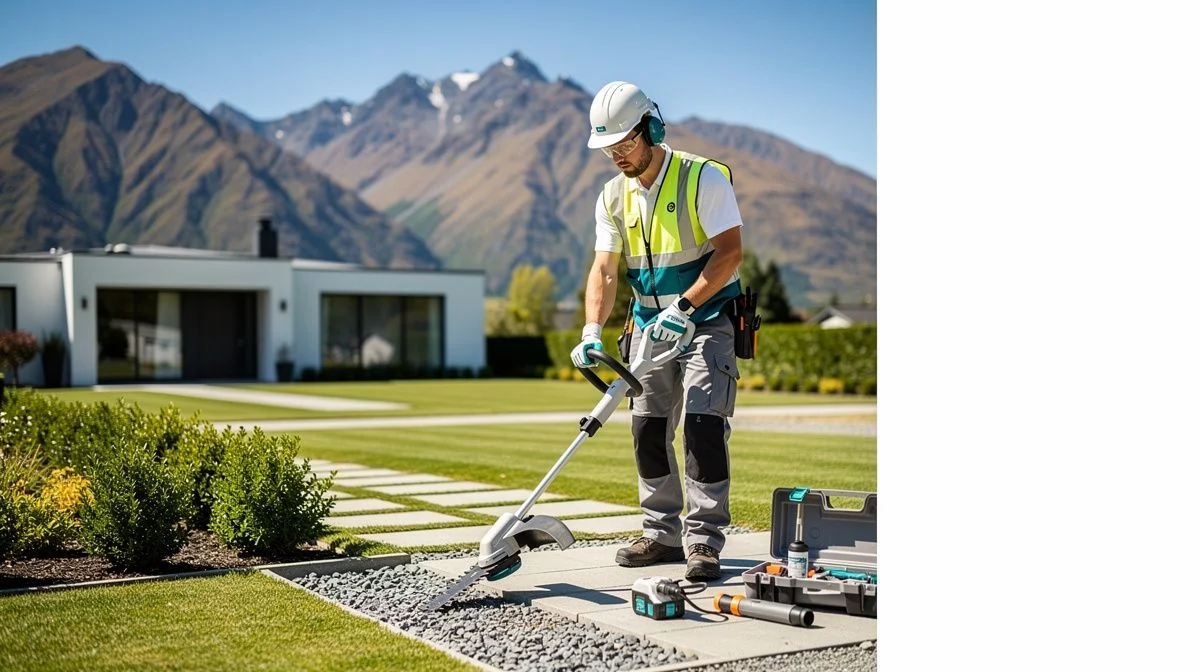
Best Landscapers in Queenstown
Short seasons, hard frosts and a market that never slows down
Queenstown is the most demanding place in New Zealand to build a garden, and it has little to do with the views. The growing season is short, frosts arrive early and come back late, and a plant that survives the cold still has to survive wind funnelling down the lake and around the Remarkables. Native tussock and alpine species do well here for the obvious reason: they are what the valley grew before anyone arrived.
The second factor is access and cost. Almost everything used in a Queenstown garden — paving, topsoil, plants, stone — arrives on a truck from somewhere else, and labour is priced accordingly. Local landscapers compete for the same crews as the construction industry, and that pressure shows up in every hourly rate.
The third is the character of the work. A large share of gardens here are attached to holiday homes, rentals or commercial accommodation, which means they need to look presentable from the day they are finished and then survive periods of no one being there to water them. Irrigation is not a luxury in this market; it is the difference between a garden and a gravel patch by February.
Our Trusted Landscapers
We feature businesses that demonstrate strong performance, proven experience, and consistently positive customer feedback. Some of the providers listed may have commercial relationships with us, but all are selected based on quality and reliability.
To begin, reach out to them and speak with them directly — this helps you explain your job, ask questions, and confirm whether they're the right fit.
Natural Habitats is NZ's residential & commercial landscape leaders. Our design & garden maintenance solutions are tailored to small or large-scale needs. VIEW NOW. Why choose Natural Habitats? For over four decades, Natural Habitats Landscapes has established itself as the most-awarded landscaper in New Zealand , offe
How We Researched This Guide
We worked from unit rates rather than whole-project figures, because a total for landscaping in this district swings so widely that it tells you almost nothing. Per-square-metre rates for soft landscaping, paving and premium work, hourly rates for a crew, a stonemason and an excavator, and design fees are the components that actually make up a Queenstown quote, and those are what we collected from published New Zealand cost guides.
What we noticed is how much of the price difference in this district comes from access, waste removal and irrigation rather than from plants. We also checked the consent line, because retaining on a Queenstown slope is common and regulated: MBIE’s guidance on building work that needs consent explains where a wall stops being a garden feature and starts needing approval. Figures we could not source do not appear on this page.
The 60-Second Version
The short list, before the detail.
- Expect labour at the top of the national range — $65–$95 an hour, and more for stonework or machine time.
- Soft landscaping runs $120–$300 per square metre; mixed paving and planting $300–$700; complex work far more.
- Irrigation and shelter planting are near-essential here, and both belong in the budget from the start.
- Design costs roughly $60–$150 an hour, or $1,500–$10,000+ for a full plan.
- Access, spoil removal and material cartage are where Queenstown quotes pull away from the national average.
- Avoid planting in autumn and hoping; spring planting gives a root system a full season before the first hard frost.
What You Get for the Money
A landscaping company will usually quote in stages: site preparation and shaping, drainage, hard landscaping such as paving and walls, then topsoil, irrigation and finally planting. Design and build are sometimes offered together and sometimes separately, and the quoting is almost always done from a plan, because nobody can price a sloping site from a conversation.
That plan is the item people try to skip, and in this district it is the wrong thing to skip. A design that reads the slope, the sun, the wind and the frost pockets is cheaper than a build that discovers them one truckload at a time.
Maintenance is worth asking about early. With a high proportion of properties that are empty for weeks at a time, a planting scheme that needs regular attention is a liability, and the local answer is usually hardy species, mulch, and irrigation with a timer.
What Landscaping Costs in Queenstown
Unit rates, which is how local quotes are actually built.
| Item | Typical rate |
|---|---|
| Landscape crew labour | $65–$95 per hour |
| Stonemason or paving specialist | $90–$140 per hour |
| Excavator with operator | $130–$180 per hour plus delivery |
| Soft landscaping | $120–$300 per m² |
| Mixed paving, paths and beds | $300–$700 per m² |
| Complex work with retaining or steep access | $900–$1,800+ per m² |
| Garden design | $60–$150 per hour |
| Full design package | $1,500–$10,000+ |
| Irrigation system | Quoted per zone, plus the controller |
| Waste and spoil removal | $30–$80 per m³ |
Rates verified from published New Zealand landscaping cost guides as of September 2026. Rates exclude GST, and in this district cartage, access and waste handling commonly push a quote above the national range.
What Pushes Queenstown Prices Up
Cartage is the quiet one. Soil, paving and plants mostly come from outside the basin, and every load adds cost that does not appear on a national price guide. It is worth asking where the materials come from and whether a local alternative would do the same job.
Spoil is the loud one. Excavating a sloping site produces material that has to go somewhere, and tip fees are charged by volume. On a job with substantial earthworks, disposal can rival the cost of the retaining it came from.
The season is the third. There is a real window for planting here and everyone wants work done inside it, so scheduling pressure is genuine and flexible timing is often worth more than negotiating over the hourly rate.
One more local reality is the pressure on the trades themselves. The same crews are wanted by builders, and a job that needs a digger and an operator has to fit into a queue. Booking earlier in the season usually costs less than booking urgently, simply because nobody has to reshuffle another job to fit you in. It is the same labour pool, and it is finite.
Choosing a Landscaper in Queenstown
Ask which projects they have completed in the district and go and look at one that is a few years old. Planting that fails does so by the second winter, so a garden built five years ago is far better evidence than a photograph taken on handover day.
Ask for a breakdown by stage, and ask explicitly about drainage, irrigation and waste. Ask about the retaining structures too, and whether a consent or a designer was involved: the official line on building work that needs consent is the place to start, and getting it wrong on a slope is expensive to unpick.
Warnings worth taking at face value: a lump-sum quote with no breakdown, no mention of where spoil is going, planting plans built on species that need a warmer climate, and a contractor who cannot give you a reference from a job older than twelve months.
Local Conditions That Decide the Planting
Frost, wind and a short season
Frost pockets form where cold air settles, which on a sloping section is usually the bottom of the garden, and the wind comes down the lake with real force. Hardy natives, tussock and alpine species are the reliable choices, and shelter planting makes everything behind it grow better. Planting in spring rather than autumn gives new roots the whole growing season to establish.
Slope, retaining and access
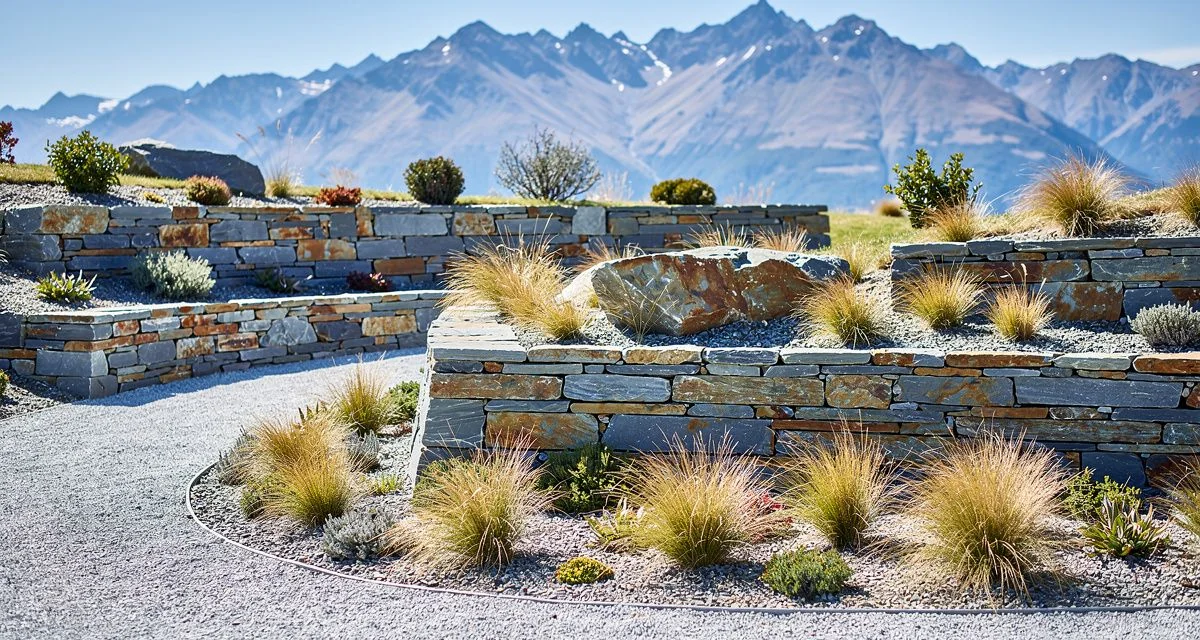
Very few Queenstown sections are flat, and terraces with well-built retaining are the standard answer. Walls over a certain height need a design and a consent, and the drainage detail behind a wall matters as much as the wall itself. Where access is tight or steep, machine hours rise quickly and hand work is slow and expensive.
Holiday homes and gardens that get left alone
Many gardens here have to look good on arrival and survive weeks of neglect. That points towards irrigation on a timer, heavy mulching, and plants that tolerate dry spells rather than the thirstiest choices in the catalogue. Talk to the landscaper about what the garden looks like in February, not just on the day it is planted.
Questions You Might Have
Can I landscape year-round here?
Construction can mostly continue, but planting has a window. Late spring is the safest bet, and a good contractor will schedule the build around that rather than the other way round.
Is irrigation really necessary?
On most Queenstown sites, yes. Even hardy species struggle through a dry summer in free-draining soil, and a simple zoned system costs less than replacing a failed planting scheme.
Do I need a designer?
On a flat, simple section, no. On a slope with retaining, access issues and wind exposure, a design fee is usually the cheapest part of the project.
What should I check on the quote?
That it separates labour, materials, cartage and waste, states whether GST is included, and names what happens if the excavation finds something unexpected.
What Matters Most
Queenstown gardens fail for two reasons: the wrong plants and the wrong ground. Sort drainage and shelter first, choose species that already live in this climate, and put irrigation in so the garden survives the months nobody is home.
Then get a staged quote from someone who has built here before — not just planted here, but built. The gardens that still look right five years on were designed for the frost, the wind and the slope from the beginning.

The ValueHub Team built this site because finding clear, unbiased financial information in New Zealand was harder than it should be. Every guide is based on real research — we compare the actual fees, terms, and fine print so you don't have to. Our tip: shop around every year, read the policy docs, and never assume loyalty gets you the best deal.— The ValueHub Team
Try our Calculators
Use these free tools to crunch the numbers:
KiwiSaver Fund Comparison
Compare fees, returns, and risk levels across every KiwiSaver fund — the most up to date data in New Zealand.
Currency Converter — USD to NZD
Convert US Dollars to New Zealand Dollars instantly. See the latest exchange rate and 30-day trend.
Mortgage Repayment Calculator
Calculate your weekly, fortnightly, or monthly mortgage repayments. Free NZ mortgage calculator — try different rates, terms, and repayment frequencies.
Compound Interest Calculator
See how your savings grow with compound interest over time. Free NZ compound interest calculator with yearly, monthly, and weekly compounding options.
Term Deposit Calculator
Calculate your term deposit returns before you lock in. Compare interest earned across different terms and rates with ValueHub's free calculator.
Savings Goal Calculator
Calculate how long it will take to reach your savings goal — and what monthly deposit you need to get there. Free NZ savings planner.
Landscapers in Other Cities
Latest Guides & Reviews
Kōura KiwiSaver Scheme Review
Kōura KiwiSaver review: 13 open funds, fund charges from 0.63 to 1.10 per cent, and net returns to 30 June 2026.
reviewMaritime KiwiSaver Scheme Review
Maritime KiwiSaver review: 3 open funds, fund charges from 0.61 to 0.76 per cent, and net returns to 31 March 2026.
reviewMAS KiwiSaver Scheme Review
MAS KiwiSaver review: 7 open funds, fund charges from 0.25 to 0.98 per cent, and net returns to 30 June 2026.
reviewArotahi KiwiSaver Scheme Review
Arotahi KiwiSaver review: 1 open fund, a 0.77 per cent fund charge, and net returns to 31 March 2026. What the Government register shows you pay and get back.