Best Lawn Mowing Services in West Coast
Published 10 March 2025 · Updated 18 August 2026 · Written by the ValueHub team · Reviewed by Steve Baron
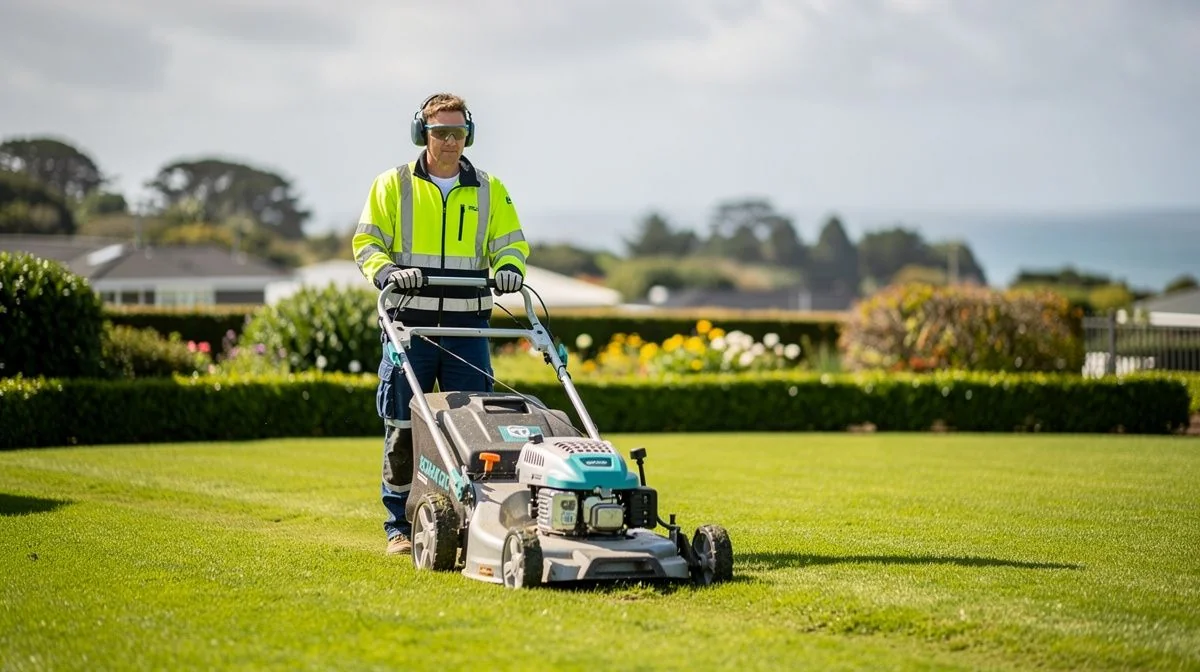
Best Lawn Mowing Services on the West Coast
It rains here, and the grass keeps growing because of it
The West Coast is one of the wettest inhabited places on earth, and that single fact shapes everything about lawn care in the region. Grass does not get a dormant season the way it does in Canterbury or Otago. It grows steadily through a long, mild, damp year, which means a Coasters lawn needs mowing more often than the same lawn in almost any other part of New Zealand.
That rain creates a specific problem, too. Wet ground cannot be mown, because a mower on saturated soil compacts it, tears the grass rather than cutting it and leaves clumps of clippings that smother what is underneath. So West Coast mowing is not a tidy schedule so much as a constant negotiation with the weather, and the contractors who do it well are the ones who work around the rain rather than to a fixed day.
The result is a different set of priorities from the cities. Frequency matters more, drainage matters more, and moss is a persistent issue in shaded and low-lying parts of a section. Distance matters as well, because outside the main towns the population is thinly spread, and travel time becomes a genuine part of what a visit costs.
Our Trusted Lawn Mowing Services
We feature businesses that demonstrate strong performance, proven experience, and consistently positive customer feedback. Some of the providers listed may have commercial relationships with us, but all are selected based on quality and reliability.
To begin, reach out to them and speak with them directly — this helps you explain your job, ask questions, and confirm whether they're the right fit.
Jim's Mowing NZ is your go-to local expert for lawn care and maintenance for homes and commercial spaces. We offer everything from gardening to rubbish removal. We offer a complete range of services to maintain and enhance your outdoor spaces.
How We Researched This Guide
We began with price, because it is the first question and the one most likely to be answered with a figure that is not the final one. That meant gathering published rate cards from lawn mowing businesses around the country, covering both the size-band model and the hourly model, and working out how differently the two price the same section.
Then we looked at what moves a quote above the advertised rate: grass that has grown long, slopes, tight access, travel distance and whether clippings are taken away. Those are what separate the website price from the invoice price. We also checked what a mowing operator should be able to demonstrate before working on your property. Every dollar figure on this page was verified against a live source rather than estimated.
The 60-Second Version
If you only read one section of this page, read this one.
- A small lawn costs about $30–$55 per mow, medium $45–$75 and large $75–$120.
- Grass grows for far more of the year on the West Coast than elsewhere, so visits are more frequent.
- Wet ground cannot be cut, so expect visits to shift with the weather.
- Travel distance adds to a quote outside the main towns.
- Moss is a drainage and shade problem, not something mowing will solve.
- Ask whether clippings are removed or mulched back into the lawn.
What You Should Check Before Hiring
Lawn mowing is not a licensed trade in New Zealand. There is no register, and no qualification proves someone will do the job well. What you can assess is how professionally the business is run, and four things are worth confirming before you engage anyone.
Insurance comes first. A contractor on your property with a mower, a trimmer and possibly a ride-on machine can damage fences, glazing, a letterbox or a vehicle. Public liability cover is what stands behind that damage, and an uninsured operator cannot remedy it.
Health and safety practice is second. Mowing means powered machinery with exposed blades, thrown debris, noise and fuel handling, and the risks are greater on wet, sloping ground. The health and safety guidance from WorkSafe New Zealand is the standard a competent operator should work to, and you will see it in how carefully they work around slopes and wet patches. Keep children and pets indoors while machinery is running.
Third, ask where the clippings go. Mulching them back into the lawn returns nutrients and suits frequent cuts; removing them costs more but is the better choice when grass has grown long between visits. If green waste leaves your property, ask where it ends up.
Fourth, get the quote in writing and make sure it names the frequency. Without that, a per-visit price tells you nothing about the annual cost, which on the West Coast is the figure that really matters.
What Lawn Mowing Costs on the West Coast
Size bands suit a straightforward residential lawn. An hourly rate suits a section that is sloping, overgrown or awkward, and on the Coast that is common enough to be worth asking about up front.
| Lawn size | Regular mow, per visit | Overgrown first cut |
|---|---|---|
| Small, under about 100 m² | $30–$55 | From about $95 |
| Medium, about 100–300 m² | $45–$75 | From about $160 |
| Large, about 300–600 m² | $75–$120 | From about $220 |
| Extra large, 600 m² and over | $120–$300+ | Quoted on inspection |
| Hourly rate, any size | $40–$90 per hour | |
| Hedge trimming or garden tidy | Quoted separately | |
Ranges verified from published New Zealand mowing price guides as of September 2026. Whether GST is included varies between providers, so ask. Slopes, tight access, travel distance and overgrown grass all move a quote above these bands.
Two charges matter more here than elsewhere. The first is travel: outside Greymouth, Hokitika and Westport, sections are spread out and a contractor has to price the drive as well as the mow. The second is the catch-up cut, which follows any wet spell long enough to postpone a visit. A lawn left to grow for three wet weeks takes far longer than three ordinary cuts, and it is charged accordingly.
How to Choose a Mowing Contractor
Ask for a quote based on your actual address rather than a size band, because travel changes the number significantly on the Coast. A contractor already working near you will usually be cheaper than one travelling from town.
Then ask what happens when it rains on your day, because here it will. A contractor with a sensible answer about rescheduling is worth more than one offering the lowest price.
Five things worth walking away from:
- Mowing saturated ground. It compacts the soil, tears the grass and leaves clumps that kill what is underneath.
- No insurance. Ask directly and expect a straight answer.
- A quote with no stated frequency. You cannot work out an annual cost from a per-visit price alone.
- No answer on clippings. Mulching and removal are different services at different prices.
- A price that changes on the invoice without an explanation of what changed.

What Happens on a Visit
A regular mow usually takes twenty minutes to an hour, depending on size, access and trimming. Most contractors work a run of neighbouring properties and offer a set day rather than a fixed time, and on the Coast that day may move with the weather.
A standard visit generally covers:
- Mowing at a height suited to the season and the growth.
- Line trimming around fences, posts, trees and bed edges.
- Edging hard surfaces where the service includes it.
- Clearing clippings from paths and driveways.
- Removing clippings if that is part of the agreement.
Usually excluded, and worth confirming: hedge trimming, weed spraying, garden beds and green waste removal if it is not in the base price. Those are the extras that turn a $70 visit into a $150 one, which is fine as long as you know beforehand.
What the West Coast Climate Does to a Lawn
Growth almost year-round
A mild, very wet climate means grass never really stops growing, so the quiet winter months that give southern lawns a rest do not arrive here. That raises the annual cost of mowing relative to the per-visit price, and it also means a neglected lawn becomes unmanageable faster than anywhere else in the country.
Wet ground and compaction
Cutting saturated ground is worse than not cutting it. A mower on wet soil compacts the surface and tears the grass instead of slicing it, and the clippings clump and smother the crown. This is why a schedule has to bend to the weather, and why a contractor who insists on a fixed day through a wet winter is not doing you a favour.
Moss, shade and drainage
Moss thrives in damp, shaded, compacted ground, and the Coast has all three in quantity. It is a drainage and light problem rather than a mowing problem, so if it keeps coming back, the answer is aeration, drainage improvement or opening up the shade. Paying for more frequent cuts will not fix it.
Questions You Might Have
How often should a lawn be mown here?
Fortnightly through most of the year for many West Coast lawns, and weekly during the fastest growth. The rule that matters is never taking more than about a third of the leaf blade in one cut, because removing more stresses the grass and lets weeds in. If the lawn is outgrowing your schedule, shorten the interval rather than cutting shorter.
Can my lawn be mown when it is wet?
Light dampness is usually fine, but saturated ground is not. Mowing wet soil compacts it, tears the grass and leaves clippings that clump and smother the lawn. It is also harder on the mower and less safe on any slope. A day's delay is nearly always better than a cut on ground that squelches underfoot.
What can I do about moss?
Address the cause rather than the symptom. Moss indicates shade, poor drainage, compaction or low soil fertility. Aerating the lawn, improving drainage, cutting back whatever is shading it and feeding the grass will all make it harder for moss to compete. It is worth asking a contractor whether they offer aeration, because it does more for a mossy lawn than any amount of extra mowing.
What Matters Most
On the West Coast, the sensible arrangement is one built around the weather rather than a calendar. Grass grows for most of the year, wet spells make some days unusable, and a contractor who adapts to both will keep your lawn in better order than one who simply turns up on a fixed day.
Ask two or three local contractors for a written quote based on your address and your typical frequency, and ask how they handle a wet week.

The ValueHub Team built this site because finding clear, unbiased financial information in New Zealand was harder than it should be. Every guide is based on real research — we compare the actual fees, terms, and fine print so you don't have to. Our tip: shop around every year, read the policy docs, and never assume loyalty gets you the best deal.— The ValueHub Team
Try our Calculators
Use these free tools to crunch the numbers:
KiwiSaver Fund Comparison
Compare fees, returns, and risk levels across every KiwiSaver fund — the most up to date data in New Zealand.
Currency Converter — USD to NZD
Convert US Dollars to New Zealand Dollars instantly. See the latest exchange rate and 30-day trend.
Mortgage Repayment Calculator
Calculate your weekly, fortnightly, or monthly mortgage repayments. Free NZ mortgage calculator — try different rates, terms, and repayment frequencies.
Compound Interest Calculator
See how your savings grow with compound interest over time. Free NZ compound interest calculator with yearly, monthly, and weekly compounding options.
Term Deposit Calculator
Calculate your term deposit returns before you lock in. Compare interest earned across different terms and rates with ValueHub's free calculator.
Savings Goal Calculator
Calculate how long it will take to reach your savings goal — and what monthly deposit you need to get there. Free NZ savings planner.
Lawn Mowing Services in Other Cities
Latest Guides & Reviews
Kōura KiwiSaver Scheme Review
Kōura KiwiSaver review: 13 open funds, fund charges from 0.63 to 1.10 per cent, and net returns to 30 June 2026.
reviewMaritime KiwiSaver Scheme Review
Maritime KiwiSaver review: 3 open funds, fund charges from 0.61 to 0.76 per cent, and net returns to 31 March 2026.
reviewMAS KiwiSaver Scheme Review
MAS KiwiSaver review: 7 open funds, fund charges from 0.25 to 0.98 per cent, and net returns to 30 June 2026.
reviewArotahi KiwiSaver Scheme Review
Arotahi KiwiSaver review: 1 open fund, a 0.77 per cent fund charge, and net returns to 31 March 2026. What the Government register shows you pay and get back.