Best Mechanics in Porirua
Published 14 March 2025 · Updated 08 October 2026 · Written by the ValueHub team · Reviewed by Steve Baron
Best Mechanics in Porirua
Most cars here do short trips. School, shops, station, home again, with rarely a long run to warm the engine through and burn off the condensation. That pattern is hard on oil, batteries, and exhausts, and it is why local servicing schedules matter more than the handbook's distance alone suggests.
The other local factor is the hill. Brakes, suspension and tyres work harder on a commute that climbs and descends every day. We have set out what repairs and servicing cost, how workshops charge, and the questions that separate a proper quote from a guess.
How We Researched This Guide
We worked from published 2026 New Zealand workshop labour rates and service menus, and compared them across regions because the hourly rate is the single biggest variable in any repair bill. We then checked the prices of the components that sit on top of it, such as brakes, cambelts, and batteries.
The inspection side comes from the vehicle inspection standard rather than from any workshop's marketing, because a warrant of fitness is issued under rules set by the transport agency, not by the business issuing it. That is also where the tread and safety requirements are defined.
Our Trusted Mechanics
We feature businesses that demonstrate strong performance, proven experience, and consistently positive customer feedback. Some of the providers listed may have commercial relationships with us, but all are selected based on quality and reliability.
To begin, reach out to them and speak with them directly — this helps you explain your job, ask questions, and confirm whether they're the right fit.
Paremata Auto Services can handle all of your auto repair services, from servicing, tyres and alignments to all mechanical repairs, exhaust, suspension and much more. Independent, trusted and MTA-assured automotive servicing and repair workshop for the greater Wellington region. Conveniently located just off SH59 in no
The Quick Summary (60-Second Version)
If you want the short version before you book anything, this is it.
- General servicing labour runs $95 to $120 an hour plus GST, and diagnostic work runs $110 to $150 an hour.
- A basic service is $150 to $250, a full service is $280 to $600, and a major service is $500 or more.
- A warrant of fitness on its own is $50 to $95.
- Front brake pads cost $200 to $400, and a cambelt costs $600 to $1,200.
- Dealership and European specialist rates are far higher than an independent workshop, often $140 to $200 an hour.
- The mistake to avoid is authorising diagnostic time without asking what it will be capped at, because fault-finding can run for hours.
What a Repair Quote Should Cover
A repair estimate is a combination of parts and labour, and the two should be shown separately. That matters more than it sounds because it tells you whether a quote is high on parts, high on time, or high on both. A single total figure tells you nothing you can compare.
Servicing has its own trap. A basic service is an oil and filter change with a safety check; a full service adds more items; and a major service adds even more. The same word does not mean the same job in two workshops, so ask what is included at each level before comparing prices.
A warrant of fitness is different again, because it is an inspection carried out under rules set by the transport agency rather than a repair. Only an authorised inspecting organisation may issue one, and the inspection is a pass-or-fail against a published standard. Anything found is then a separate repair with its own price, and you are entitled to that price in writing before work starts.
Porirua Pricing — What You Can Expect to Pay
Workshop labour is charged in one of three ways: an hourly rate for the actual time, a book time for a standard job, or a fixed menu price for routine work. The first is the most open-ended. Ask which one applies before you authorise anything, because a fault that takes three hours to find costs the same whether or not it is fixed in the end.
Parts are the other half of the bill, and the spread between a budget part and an original-equipment part is wide. Ask what brand is being fitted and whether a cheaper equivalent is available. A workshop that offers a choice is usually the one that does not mark parts up heavily.
| Item | Typical cost |
|---|---|
| General servicing labour | $95-$120 per hour plus GST |
| Repairs and diagnostic labour | $110-$150 per hour |
| Dealership or European specialist | $140-$200 per hour |
| Warrant of fitness | $50-$95 |
| Basic service | $150-$250 |
| Full service | $280-$600 |
| Major service | $500-$900+ |
| Front brake pads, parts and labour | $200-$400 |
| Cambelt or timing belt | $600-$1,200 |
| Battery supplied and fitted | $180-$350 |
| Wheel alignment | $80-$150 |
| Diagnostic scan | $80-$150 plus investigation |
Labour rates exclude GST in most published schedules, while menu prices such as a full service or a warrant of fitness usually include it. Ask which basis a quote is on before comparing two workshops, because a rate and a total are not the same kind of number.
How to Choose a Workshop — What Actually Matters
Ask whether the figure is a menu price or an estimate
A full service is usually a menu price, so it is the same whether the job takes two hours or three. A repair is an estimate, and it moves. Ask which one you are being given and how the workshop will contact you before spending beyond it. A workshop that rings before exceeding a figure is worth keeping.
Ask what the diagnostic charge covers
A scan fee buys the code read and a limited amount of investigation. Fault-finding beyond that is billed by the hour and can be open-ended. Ask for the scan fee and the hourly rate to be given separately, and ask for a cap you are prepared to spend on diagnosis before you decide whether to repair.
Ask what is actually included at each service level
Get the checklist for the level you are buying. A basic service and a full service can differ by dozens of inspection points, and a car on short local trips benefits from more of them, not fewer. Ask specifically whether the brake fluid, cabin filter, and differential are checked at the level you are being sold.
What Happens During a Service
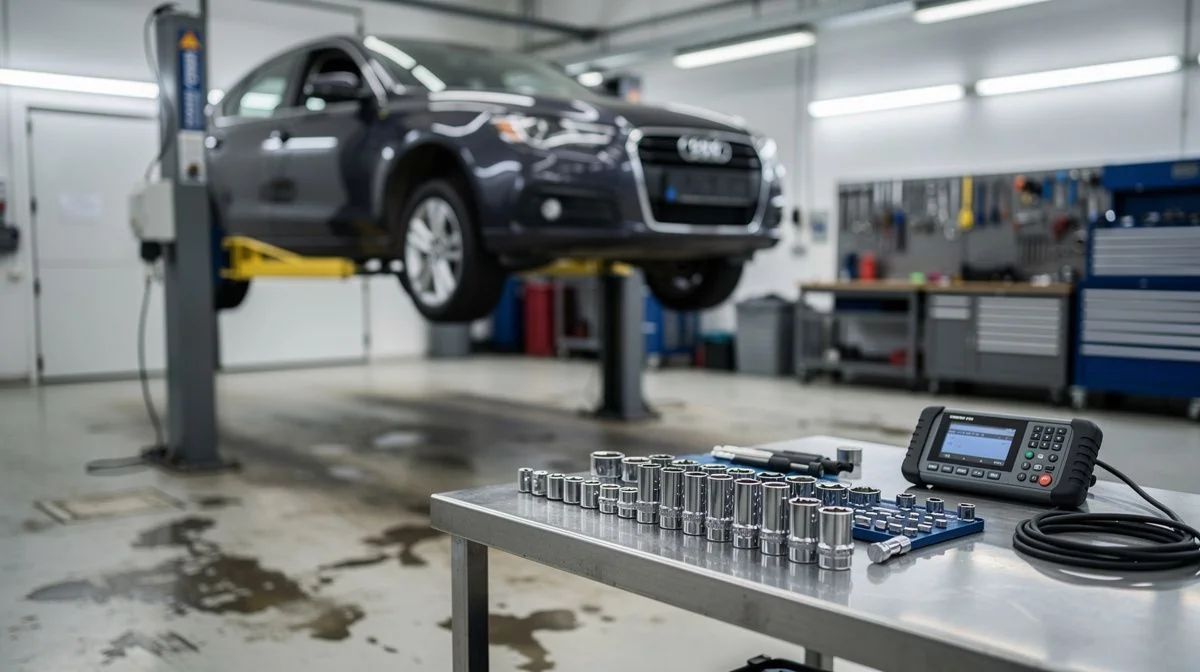
The order is standard, and the early checks decide what else gets priced.
- The car is booked in, and you are asked what you have noticed, which is often the most useful diagnostic information the workshop gets.
- The vehicle is inspected on the hoist, and the service items are replaced, with the checklist ticked off as they are done.
- Anything found outside the service is priced, and you are contacted before it is touched.
- The work is complete, fluids and pressures are set, and the vehicle has been road-tested where a fault was reported.
- You receive the invoice with parts and labour separated, plus any parts that were replaced.
Porirua-Specific Risks — What Your Mechanic Should Know
Short trips that never warm the engine through
Cars used mainly for short local runs build up condensation in the exhaust and crankcase, and the oil never reaches the temperature needed to burn off contaminants. That shortens oil life, corrodes exhausts from the inside and flattens batteries. Ask for the service schedule to be based on your actual use, not just the odometer.
Hills, brakes and tyres
A commute that climbs and descends every day puts considerably more wear on the brakes and tyres than flat running. Brake pads and discs wear faster, and tyre pressures drift more in a car that is working. Ask for the brakes and tyres to be checked at every service rather than only at the warranty.
Salt air and underbody corrosion
Vehicles parked near the harbour take salt into the underside, the brake lines and the exhaust fixings, and corrosion there is what turns a small repair into an expensive one. An underbody wash after a spell of rough weather is cheap, and it is worth asking whether the workshop checks the brake lines rather than only the pads.
Questions You Might Have
Can I supply my own parts?
Some workshops will fit customer-supplied parts and some will not, because they cannot warrant the outcome. Where they will, expect the labour rate to be at the top of the range. The trade-off is real: you save on the part, and you carry the risk if it is wrong or fails early.
How often does my car need a service?
The handbook gives a distance and a time, whichever comes first, and both matter. A car doing low annual mileage on short trips needs the time interval honoured even if the distance interval has not been reached. If your use is unusual, ask the workshop to set a driving schedule for you rather than the handbook's typical one.
Is a dealership better than an independent workshop?
For a manufacturer-specific fault or a warranty repair, the dealership has the equipment and the access to technical support. For routine servicing on an out-of-warranty vehicle, a good independent does the same job at a considerably lower hourly rate. Ask any workshop whether the service keeps your warranty valid, because using an independent does not void it if the schedule is followed. Consumer Protection sets out the guarantees that apply to a repair service, including that it is carried out with reasonable care and skill.
What Matters Most
A repair bill is parts plus time, and every good workshop will show you both. The workshop worth keeping is the one that rings before it spends more than you agreed, and that services the car you actually drive rather than the one in the handbook.
Ask whether you are being given a menu price or an estimate, ask what the diagnostic time is capped at, and have the brakes and tyres checked on the hill you drive every day.

The ValueHub Team built this site because finding clear, unbiased financial information in New Zealand was harder than it should be. Every guide is based on real research — we compare the actual fees, terms, and fine print so you don't have to. Our tip: shop around every year, read the policy docs, and never assume loyalty gets you the best deal.— The ValueHub Team
More Mechanics in Porirua
These businesses also operate in this area.
North City Diesel offers quality servicing and repairs keeping your engine running. Our skilled technicians provide reliable, efficient, and affordable solutions. We are a comprehensive diesel repair and servicing company for diesel trucks, buses, vans, camper vans, and all commercial vehicles. At North City Diesel, yo
Welcome to Pit Stop Porirua where you've come to the right place! Come to Pit Stop Porirua for your WOF, car repairs, car servicing and much more.
Try our Calculators
Use these free tools to crunch the numbers:
KiwiSaver Fund Comparison
Compare fees, returns, and risk levels across every KiwiSaver fund — the most up to date data in New Zealand.
Currency Converter — USD to NZD
Convert US Dollars to New Zealand Dollars instantly. See the latest exchange rate and 30-day trend.
Mortgage Repayment Calculator
Calculate your weekly, fortnightly, or monthly mortgage repayments. Free NZ mortgage calculator — try different rates, terms, and repayment frequencies.
Compound Interest Calculator
See how your savings grow with compound interest over time. Free NZ compound interest calculator with yearly, monthly, and weekly compounding options.
Term Deposit Calculator
Calculate your term deposit returns before you lock in. Compare interest earned across different terms and rates with ValueHub's free calculator.
Savings Goal Calculator
Calculate how long it will take to reach your savings goal — and what monthly deposit you need to get there. Free NZ savings planner.
Mechanics in Other Cities
Latest Guides & Reviews
KiwiSaver and Tax — PIR, ESCT and What You Actually Pay
KiwiSaver is taxed twice — ESCT on your employer's contribution and your PIR on the fund's returns. How each rate is set, and the two most members never check.
reviewInvestNow KiwiSaver Scheme Review
InvestNow KiwiSaver review: 45 open funds, fund charges from 0.03 to 1.38 per cent, and net returns to 30 June 2026.
reviewKernel KiwiSaver Scheme Review
Kernel KiwiSaver review: 25 open funds, fund charges from 0.25 to 0.45 per cent, and net returns to 30 June 2026.
guideTax Debt in New Zealand — The Numbers
Official figures on New Zealand's overdue tax debt: the total, the collectable share, which customer groups hold it, and how much is repaid or written off.