Best Painters in Christchurch
Published 11 September 2026 · Written by the ValueHub team · Reviewed by Steve Baron
In Christchurch, Painting Is Really About Cladding
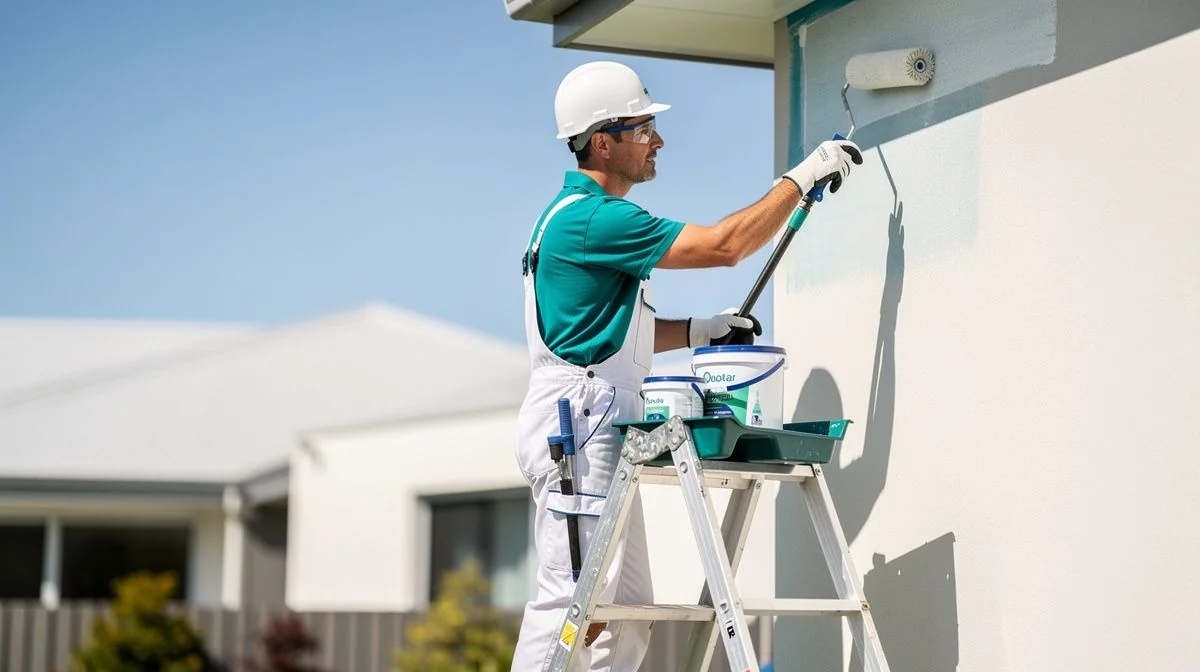
What your Christchurch walls are made of matters more here than in most cities. The city has an unusually wide mix of cladding: traditional timber weatherboards, brick veneer, and a substantial stock of plaster and roughcast systems. Plaster is the most demanding to recoat, because it needs sealing, crack repair and a dedicated primer before topcoats, and the city has plenty of it.
The rebuild legacy still shows up at painting time. A significant share of the housing stock has been repaired, reclad or rebuilt, and that history matters: different claddings on the same house, patched sections and disturbed junctions all take longer to prepare. If your home has a repair record, ask the painter to assess the whole envelope rather than pricing it as one surface.
The flat terrain has also produced large volumes of modern, single-level housing with open-plan interiors and wide expanses of plasterboard. Those rooms are quick to prepare and quick to coat when the walls are sound. Exterior work on a brick home, by contrast, usually narrows to joinery, soffits, fascias and doors rather than a full weatherboard envelope.
How We Researched This Guide
We began with current New Zealand painter pricing guides and published trade cost data, then checked how those rates translate into real quotes across cladding types. Plaster systems are priced differently from weatherboards because they require more primer and more filling, and we kept that distinction throughout the page.
For local context, we used regional Canterbury property data and notes on how the city's cladding mix behaves over time. We checked every figure quoted against a live source. Where sources give a range, we use the range.
Our Trusted Painters
We feature businesses that demonstrate strong performance, proven experience, and consistently positive customer feedback. Some of the providers listed may have commercial relationships with us, but all are selected based on quality and reliability.
To begin, reach out to them and speak with them directly — this helps you explain your job, ask questions, and confirm whether they're the right fit.
Christchurch house painting advice and house painters experienced in interior and exterior house painting, including the painting and staining of fences, decks and roofs. Painting houses in the Christchurch suburbs of Cashmere, Halswell, Westmoreland, Barrington, Hoon Hay, Somerfield, Spreydon, St Martins, and Sydenham,.
The 60-Second Version
If you read only one section, read this.
- Preparation, not paint, drives the price. Sound weatherboards run $60–$80 per m²; boards needing full stripping run $105–$145 per m².
- Plaster and roughcast cladding costs up to 20 per cent more, mostly because of extra primer and filling.
- Smooth plaster is the cheapest surface to coat at $32–$48 per m²; rough-textured is the most expensive at $58–$80.
- Two-storey exteriors cost far more than single-storey because of scaffolding and a larger façade.
- A three-bedroom interior repaint typically runs $8,000–$12,500.
- The lowest quote is usually the one that has quietly skipped preparation.
What Painting Costs in Christchurch
Rates arrive in two forms. Interiors are priced per square metre of floor area, exteriors per square metre of façade. Check which measure a quote uses before comparing it with anything else.
| Work | Typical cost |
|---|---|
| Interior repaint | $35–$55 per m² of floor area |
| Interior including walls, ceilings and trims | $60–$85 per m² |
| Exterior basic finish | $45–$65 per m² of façade |
| Exterior premium finish | $65–$95 per m² of façade |
| Timber weatherboards in sound condition | $60–$80 per m² |
| Weatherboards needing full stripping | $105–$145 per m² |
| Smooth plaster cladding | $32–$48 per m² |
| Medium-textured plaster | $40–$60 per m² |
| Rough-textured plaster | $58–$80 per m² |
| Shadowclad | $45–$70 per m² |
| Interior plasterboard walls and ceilings | $20–$30 per m² |
| Skirtings and window or door liners | $12–$22 per linear metre |
| Standard interior door | $320–$420 each |
Ranges drawn from published New Zealand painter pricing guides and trade cost data. Actual quotes vary with access, cladding condition and whether GST is included.
What a Whole House Costs
A three-bedroom interior repaint commonly lands between $8,000 and $12,500. A single-storey exterior is usually $8,500–$15,000, a two-storey exterior $15,000–$22,000, and roof painting a separate line at roughly $5,000–$11,000. A full repaint of the interior, exterior and roof runs $25,000–$45,000.
As a rough check, multiply the exterior façade area by $70–$140 per m² (depending on cladding), and the interior floor area by $35–$55 per m² for a standard repaint. If a quote falls well below those bands, ask which preparation steps were removed to get there.
Preparation Is Where the Money Goes
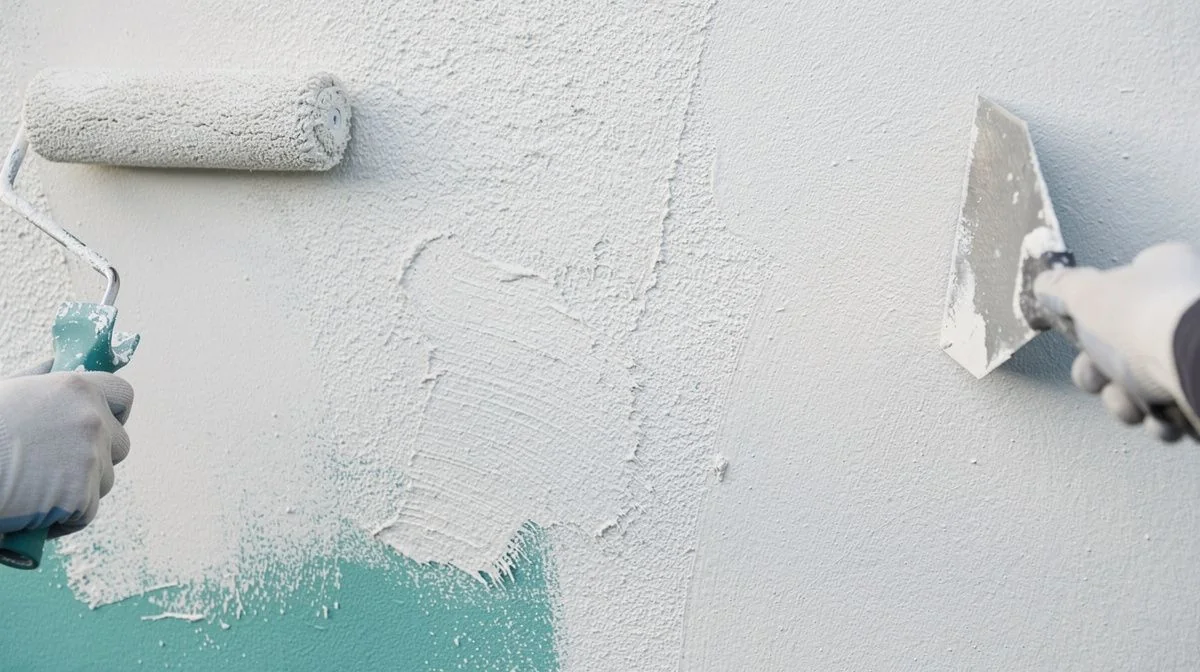
Two houses of the same size can be quoted 80 per cent apart, and the difference is rarely the paint itself. It is how much preparation the surface needs. Sound weatherboards that only need washing, sanding, and spot-priming sit at the low end. Boards with flaking or built-up coatings that must be stripped back to bare timber sit at the high end.
Plaster changes the arithmetic again. A plaster surface cannot simply be recoated if it is cracked, drummy or letting moisture through. Cracks need raking out and filling, bare patches need sealing, and the whole surface usually needs a dedicated primer before topcoats go on. That is why plaster and roughcast carry roughly a fifth more than the equivalent timber job.
Cheap quotes cut preparation because none of it is visible once the job is finished. Stripping, filling, sealing and priming are all labour, all expensive and all hidden under the final coats. When the coating fails, it fails at the joins, the cracks and the bare patches — precisely where the shortcut was taken.
Christchurch Factors That Change the Job
Plaster and Roughcast Cladding
Textured plaster is the single most expensive surface on this list, and the city has plenty of it. Rough-textured plaster runs $58–$80 per m² against $32–$48 for smooth, because the texture traps dirt, needs more primer and takes longer to coat evenly. If your home is a plaster system, expect the exterior quote to reflect that from the outset.
Flat-Land New-Build Interiors
Much of the city is flat, and the newer housing stock reflects it: single-level, open-plan, high-stud in places, with large expanses of plasterboard. Those interiors are quick to prepare, and quick to coat, which is why interior repaints here often sit at the lower end of the $35–$55 per m² floor-area range, provided the walls are in good order.
Homes With a Repair or Reclad History
A significant share of the housing stock has been repaired, reclad or rebuilt, and that history matters at painting time. Different claddings on the same house, patched sections and disturbed junctions all take longer to prepare, so ask a painter to assess the whole envelope.
A Competitive Trades Market
With a large self-employed trades population, quotes are easy to come by and genuinely competitive. That also means a wide spread of prices for what sounds like the same job, so insist every quote describes preparation, products and access in the same terms.
How to Choose a Painter in Christchurch
Start by confirming the firm has worked on your cladding type. Plaster systems and weatherboards fail differently and require different prep, so experience with the wrong material is worth very little. Ask for a recent job on the same substrate.
Then ask how they will prepare it, in their own words. Ask how many coats, which products by name, and whether cracks will be raked, filled and primed rather than painted over. Ask what happens if weather interrupts the work, and whether they carry their own scaffolding.
Warning Signs
- A quote that treats every surface the same. Plaster and timber cannot be priced identically.
- No preparation detail, only a total and a start date.
- Cracks to be painted over rather than raked, filled and primed.
- No scaffolding mentioned on a two-storey home.
- A price far below the bands above with no explanation of exclusions.
- No written scope and no product names anywhere in the paperwork.
Reading a Quote Without Getting Burned
Ask for the scope in writing: elevations or rooms, preparation method, number of coats, product names, access arrangements and a start date. A one-line total is an estimate, not a quote, and it leaves both sides guessing about what was agreed.
Confirm whether GST is included. Fifteen per cent turns $10,000 into $11,500, and painting quotes are often given before GST. Confirm the exclusions too: rotten board replacement, cracked plaster repair, furniture shifting and waste disposal are common extras.
Questions You Might Have
Is plaster really more expensive to paint than weatherboard?
Usually yes. Plaster and roughcast cost up to 20 per cent more than timber because they need extra primer and more preparation. The gap is smaller when the plaster is smooth and in good order, and larger when it is textured and showing cracks.
My house is brick veneer. Does it need painting?
Brick itself is rarely painted, but the joinery, soffits, fascias, doors and any timber or plaster detailing around it all need coating. Those elements are usually where the exterior budget actually goes on a brick home.
How long will an exterior job last in Canterbury?
Longevity depends on preparation and the coating more than the brand. A properly prepared job on a sound surface will last much longer than a cheap one. Ask the painter what they expect for your specific cladding and get it in writing.
Should I get the roof painted at the same time?
Roof painting is a separate line at roughly $5,000–$11,000, so it is worth pricing separately even if you do it in the same season. Combining work can reduce mobilisation and access costs, but only if the quote clearly itemises both jobs.
What Matters Most
In Christchurch, cladding drives the cost, and preparation drives the outcome. The difference between a sound weatherboard at $60–$80 per m² and one needing full stripping at $105–$145 per m² is entirely labour spent on the surface, and that labour is what keeps water out of the structure. Plaster carries an extra premium for the same reason.
Get three quotes, make sure each one describes preparation on your actual cladding, and treat the lowest number with suspicion until you have read the exclusions. To compare firms across the city and the wider region, see our painters directory.

The ValueHub Team built this site because finding clear, unbiased financial information in New Zealand was harder than it should be. Every guide is based on real research — we compare the actual fees, terms, and fine print so you don't have to. Our tip: shop around every year, read the policy docs, and never assume loyalty gets you the best deal.— The ValueHub Team
More Painters in Christchurch
These businesses also operate in this area.
Dyer Decorating excels in painters and house painters in Christchurch. Contact us today and get a free consultation on your next painting or house painting. Give you home a much needed refresh – a fresh, modern look starts with dyer decorating. ✅ House Painting ✅ Interior Painting ✅ Exterior Painting ✅ Plastering and Surface Prep ✅ Wallpapering ✅ Commercial Painting.
An experienced team of tradespeople skilled in painting and decorating, interior and exterior, residential and commercial. Based in Christchurch but willing to travel to from Rangiora to Rolleston. No job is too big or too small. The team of experts at David Robertson Decorators bring more than 120 years of experience to the job.
Try our Calculators
Use these free tools to crunch the numbers:
KiwiSaver Fund Comparison
Compare fees, returns, and risk levels across every KiwiSaver fund — the most up to date data in New Zealand.
Currency Converter — USD to NZD
Convert US Dollars to New Zealand Dollars instantly. See the latest exchange rate and 30-day trend.
Mortgage Repayment Calculator
Calculate your weekly, fortnightly, or monthly mortgage repayments. Free NZ mortgage calculator — try different rates, terms, and repayment frequencies.
Compound Interest Calculator
See how your savings grow with compound interest over time. Free NZ compound interest calculator with yearly, monthly, and weekly compounding options.
Term Deposit Calculator
Calculate your term deposit returns before you lock in. Compare interest earned across different terms and rates with ValueHub's free calculator.
Savings Goal Calculator
Calculate how long it will take to reach your savings goal — and what monthly deposit you need to get there. Free NZ savings planner.
Painters in Other Cities
Latest Guides & Reviews
Kōura KiwiSaver Scheme Review
Kōura KiwiSaver review: 13 open funds, fund charges from 0.63 to 1.10 per cent, and net returns to 30 June 2026.
reviewMaritime KiwiSaver Scheme Review
Maritime KiwiSaver review: 3 open funds, fund charges from 0.61 to 0.76 per cent, and net returns to 31 March 2026.
reviewMAS KiwiSaver Scheme Review
MAS KiwiSaver review: 7 open funds, fund charges from 0.25 to 0.98 per cent, and net returns to 30 June 2026.
reviewArotahi KiwiSaver Scheme Review
Arotahi KiwiSaver review: 1 open fund, a 0.77 per cent fund charge, and net returns to 31 March 2026. What the Government register shows you pay and get back.