Best Panel Beaters in Wellington
Published 16 September 2026 · Written by the ValueHub team · Reviewed by Steve Baron

Best Panel Beaters in Wellington
Hills, tight parking and a city that dents cars constantly
Wellington is hard on cars. Steep driveways, narrow streets, multi-storey car parks with tight ramps, and a wind that takes doors out of hands all produce a steady stream of small damage. Add the occasional hail event, and you get a city with more panel shops per head than most of the country.
The work splits into two clear streams. The first is insurance-funded collision repair, which is quoted through an insurer’s process and often managed end to end by the shop. The second is private work that owners pay for themselves, usually because the damage is below the excess or because claiming would cost more in future premiums than the repair is worth.
That second stream is where the most questions come up. A dented door or a scuffed bumper is a small job in panel beating terms, and the choices about how to fix it — paintless repair, a repaired panel or a replacement one — are what determine the price.
Wellington also has a lot of older vehicles still in daily use, which complicates parts. A panel that was available new in the 2010s may now only exist at a wrecker, and finding one in the right colour is a job in itself.
Our Trusted Panel Beaters
We feature businesses that demonstrate strong performance, proven experience, and consistently positive customer feedback. Some of the providers listed may have commercial relationships with us, but all are selected based on quality and reliability.
To begin, reach out to them and speak with them directly — this helps you explain your job, ask questions, and confirm whether they're the right fit.
Edwards Panel & Paint Wellington offer quality collision repair & spray painting services.We will provide you with a professional & personalized service with free quotes collision repair shop near me open now, how much does auto paint job cost, best collision repair shop for insurance claims, what to do after a car accident for insurance claim.
How We Researched This Guide
We used published New Zealand panel beating cost guides rather than a set of quotes, because the trade publishes genuine repair-type prices: paintless dent removal, scratch repairs, single-panel resprays and bumper work. Those categories are more useful than a national average because the price difference between them is enormous.
What stood out is how much repair cost comes from paint rather than metal. Blending paint into an adjacent panel, matching a faded colour, and running a booth are all expensive, which is why a small dent can cost more than a large one in an awkward place. We also read the official rules that apply to vehicle repair and structural work through the New Zealand Transport Agency, and the general consumer protections covering a paid repair under Consumer Protection.
The 60-Second Version
The short Version, before the detail.
- Panel shop labour runs about $80–$130 an hour plus GST.
- Paintless dent removal is the cheapest option, commonly $150–$400, and only works where the paint is intact.
- A minor scratch repair is $250–$700, and a single-panel respray is $600–$1,400.
- A bumper replacement with paint is $900–$2,500, because it includes the part.
- A small area of rust is $500–$1,500, and structural or collision work starts around $2,500.
- Always ask whether the quote includes blending, clips and trim, and a valet.
What Actually Happens to Your Car
A repair starts with assessment. The shop inspects the damage, checks for structural movement behind the panel, and decides whether the panel can be repaired or must be replaced. That decision is the biggest single factor in the price.
If the panel can be repaired, the work is pulled or hammered back into shape, filled where necessary, sanded, primed and painted. If it has to be replaced, the shop orders the part, which may be genuine, aftermarket or sourced from a wrecker, and removes and refits the trim and clips around it.
Painting is where modern cars differ from old ones. A repaired panel is rarely sprayed in isolation, because the colour has to blend into the panels beside it. That means a small repair can occupy a spray booth for a day, and the booth is the expensive part of the shop.
Finally there is reassembly and, on late-model vehicles, calibration. A bumper with sensors or a camera behind it needs those systems checked after refitting, and that step turns a straightforward repair into a technical one.
One thing worth asking before work starts is whether the shop keeps the old parts. On an insurance repair, they usually belong to the insurer. Still, on a private job, the removed panel is yours, and if the repair is ever questioned, it is useful evidence of what was actually damaged.
What Panel Beating Costs in Wellington
Published New Zealand prices by repair type.
| Repair | Typical cost |
|---|---|
| Labour rate | $80–$130 per hour + GST |
| Small paintless dent repair | $150–$400 |
| Minor scratch repair | $250–$700 |
| Bumper scuff repair | $350–$900 |
| One panel respray | $600–$1,400 |
| Door or guard repair and paint | $700–$1,800 |
| Bumper replacement and paint | $900–$2,500 |
| Small non-structural rust repair | $500–$1,500 |
| Structural or collision repair | $2,500–$10,000+ |
| Full respray | $3,000–$8,000 |
Price ranges verified from published New Zealand panel beating cost guides as of September 2026. Quote figures usually exclude GST, and parts, paint blending, sensor calibration and consumables are frequently charged separately.
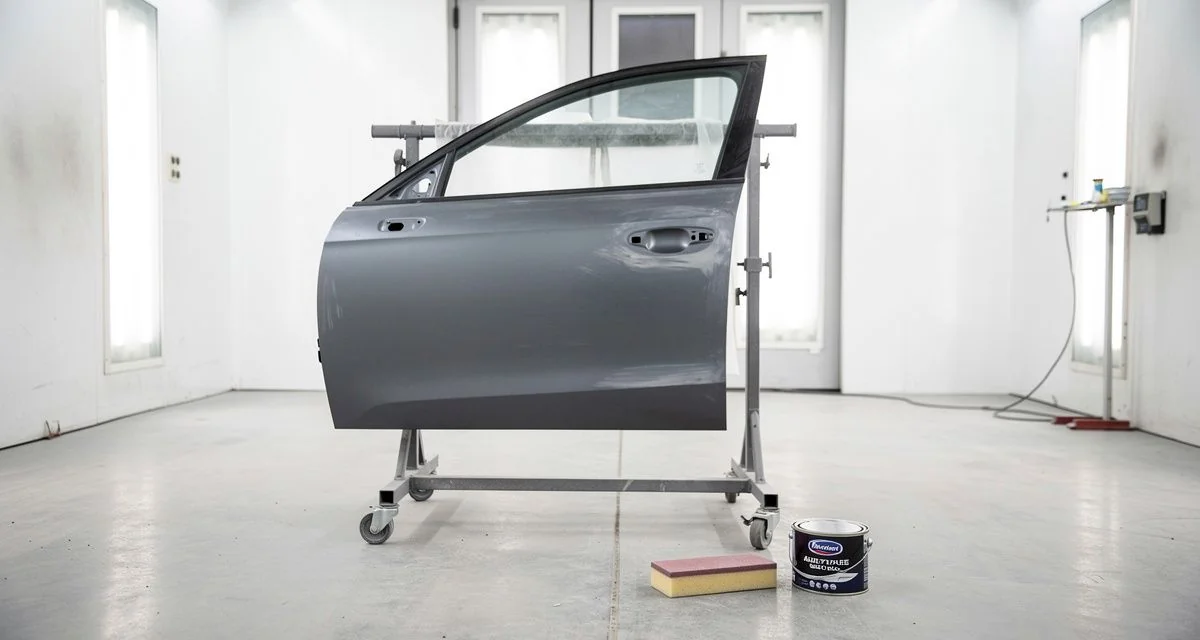
Insurance or Paying Yourself
The arithmetic is simple but often ignored. If the repair is cheaper than your excess plus the likely effect on your premium, paying privately usually makes sense. A scratched bumper rarely justifies a claim, and many policies count every claim against you for years.
Suppose the repair is well above the excess; claim. That is what the insurance is for. When you do claim, you may have the right to choose the repairer rather than using the insurer’s preferred shop, and it is worth knowing which arrangement applies to your policy before the car is booked in.
One practical point: an insurer-approved shop often handles the whole process, including the assessor, the courtesy car and the invoice. That convenience has value, particularly when the damage is significant, and the process is unfamiliar.
Choosing a Panel Beater in Wellington
Ask for an itemised quote that separates parts, labour, paint and any calibration. A single lump sum tells you nothing about whether a cheaper option was considered, such as paintless repair instead of a respray. Two quotes that look identical can differ because one repairs a panel and the other replaces it, and the parts cost sits entirely in the second.
Ask whether the shop is an authorised repairer for your vehicle brand, and whether it has the equipment to recalibrate driver assistance systems. On a late-model car, this is not optional, and not every workshop can do it.
Ask what warranty the work includes, and how long it runs. A repair that fails, whether through paint lifting or a panel that no longer lines up, should be fixed under that warranty. Ordinary consumer protections for services apply here as elsewhere, and Consumer Protection explains what you can do if the repair isn’t carried out with reasonable care and skill.
Local Factors Worth Knowing
Tight streets and car parks produce specific damage
The most common damage in Wellington is not collision at speed. It is a car park scrape, a door edge into a pillar, and the slow-speed knock that dents a guard without breaking the paint. Those repairs sit at the lower end of the range and are often cheaper than the excess.
Hail and the weather
Hail events damage hundreds of vehicles at once, and paintless dent removal exists largely because of them. When it happens, every shop in the region is booked within days, so the earlier you can get an assessment, the better.
Parts for older vehicles in daily use
Wellington keeps cars going for a long time. For makes and models that are no longer supported, a panel may only be available second-hand, and waiting for one to appear adds days to a repair. Ask about parts availability before authorising the work.
Questions You Might Have
What is paintless dent repair?
A technique that pushes or pulls a dent out from behind the panel without filling or repainting. It works only where the paint is intact and, where possible, it is the cheapest and fastest option by a wide margin.
Will the colour match?
Modern paint matching is accurate, and a good shop blends into adjoining panels rather than trying to finish in a hard line. A slight variation on an older, sun-faded vehicle is normal and is why blending exists.
How long will the car be in the shop?
A paintless repair can be a same-day job. A panel repair and respray is commonly two to four days, and a major collision repair can take weeks once parts are involved.
Do I have to use the insurer’s repairer?
Not necessarily. Check your policy wording and ask the question before the car is collected. Some insurers allow any repairer; others work through a network.
What Matters Most
A panel repair is judged by how it looks in two years, not on the day the car is collected. Matching the colour, blending properly, and using the right paint system make the difference, and none of it shows up in the quote.
In Wellington, where most damage is small and the parts market is complicated for older cars, the sensible approach is to get an itemised quote, ask whether paintless repair is possible, and check the warranty before booking anything in.

The ValueHub Team built this site because finding clear, unbiased financial information in New Zealand was harder than it should be. Every guide is based on real research — we compare the actual fees, terms, and fine print so you don't have to. Our tip: shop around every year, read the policy docs, and never assume loyalty gets you the best deal.— The ValueHub Team
More Panel Beaters in Wellington
These businesses also operate in this area.
If you need a panel beating or spraypainting quote we aim to get back to you in 4 business hours, or if parts are required, 24 hours. We'll keep you well informed along the way and will tell you WHY the work needs to be one.
Plimmerton Panel & Paint All work is guaranteed. Specialising in: Panelbeating Spraypainting Rust Repairs Fibre Glassing Cut & Polish Trucks Campervans Pickup & Delivery. All work is guaranteed. Specialising in:. Plimmerton Panel & Paint Phone: 233 8478 Mobile: 027 312 1289 Address: 3 Freshfield Place, Northpoint Industrial Park Email: plimpanel@xtra.co.nz Owner / Operator: Glenn Laurenson.
Try our Calculators
Use these free tools to crunch the numbers:
KiwiSaver Fund Comparison
Compare fees, returns, and risk levels across every KiwiSaver fund — the most up to date data in New Zealand.
Currency Converter — USD to NZD
Convert US Dollars to New Zealand Dollars instantly. See the latest exchange rate and 30-day trend.
Mortgage Repayment Calculator
Calculate your weekly, fortnightly, or monthly mortgage repayments. Free NZ mortgage calculator — try different rates, terms, and repayment frequencies.
Compound Interest Calculator
See how your savings grow with compound interest over time. Free NZ compound interest calculator with yearly, monthly, and weekly compounding options.
Term Deposit Calculator
Calculate your term deposit returns before you lock in. Compare interest earned across different terms and rates with ValueHub's free calculator.
Savings Goal Calculator
Calculate how long it will take to reach your savings goal — and what monthly deposit you need to get there. Free NZ savings planner.
Panel Beaters in Other Cities
Latest Guides & Reviews
Kōura KiwiSaver Scheme Review
Kōura KiwiSaver review: 13 open funds, fund charges from 0.63 to 1.10 per cent, and net returns to 30 June 2026.
reviewMaritime KiwiSaver Scheme Review
Maritime KiwiSaver review: 3 open funds, fund charges from 0.61 to 0.76 per cent, and net returns to 31 March 2026.
reviewMAS KiwiSaver Scheme Review
MAS KiwiSaver review: 7 open funds, fund charges from 0.25 to 0.98 per cent, and net returns to 30 June 2026.
reviewArotahi KiwiSaver Scheme Review
Arotahi KiwiSaver review: 1 open fund, a 0.77 per cent fund charge, and net returns to 31 March 2026. What the Government register shows you pay and get back.