Best Pest Controllers in Upper Hutt
Published 27 March 2025 · Updated 08 October 2026 · Written by the ValueHub team · Reviewed by Steve Baron
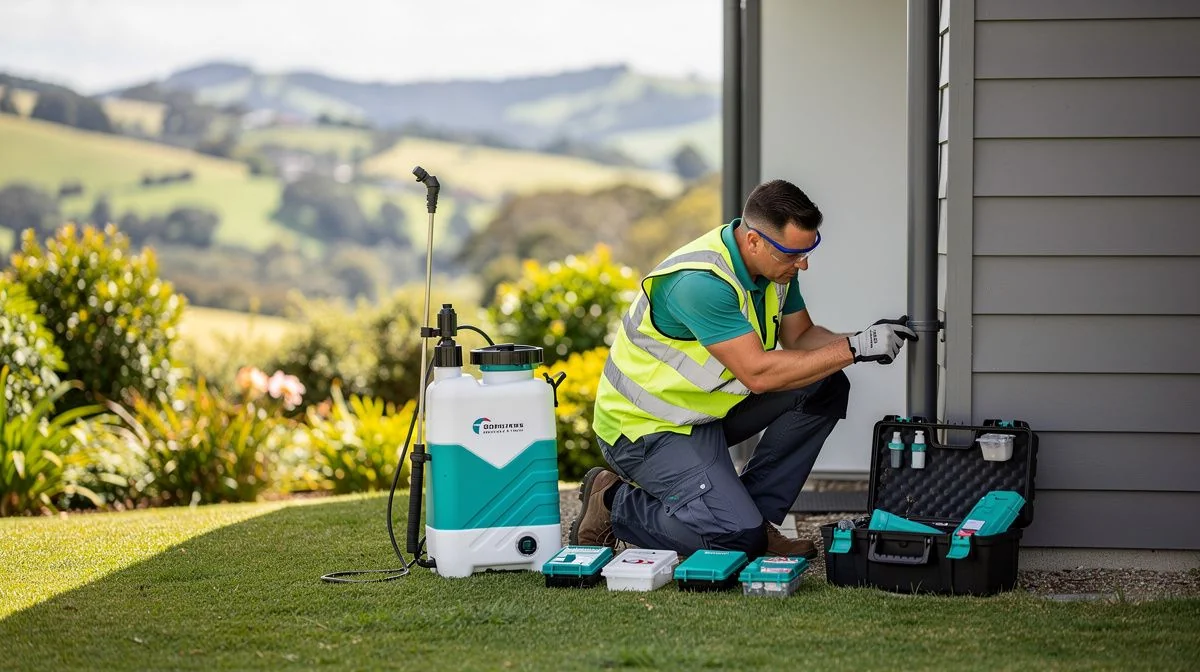
Best Pest Controllers in Upper Hutt
Upper Hutt is bush country. Large parts of the city back onto reserves and regenerating forest, the hills run straight into the northern suburbs, and a good share of homes sit on sections that adjoin cover rather than open ground.
That makes rodent work the backbone of the local trade, with ants and wasps close behind in summer. We have set out what each treatment costs, what a quote should include, and what to check before you engage anyone.
How We Researched This Guide
We started with the price lists pest control firms publish for themselves, because a posted rate is the only figure you can hold an operator to. The bands agree closely on single-visit work, such as a wasp nest, and spread out on rodent and cockroach jobs, where the number of follow-up visits is not known until the first visit is done.
We then looked at what the work actually involves, because the difference between two quotes usually lies in the number of visits rather than the quality of the chemical. The certifications that matter are an Approved Handler test certificate for the substances used, and the training behind them, which WorkSafe regulates.
Our Trusted Pest Controllers
We feature businesses that demonstrate strong performance, proven experience, and consistently positive customer feedback. Some of the providers listed may have commercial relationships with us, but all are selected based on quality and reliability.
To begin, reach out to them and speak with them directly — this helps you explain your job, ask questions, and confirm whether they're the right fit.
Pestproof™ are your local pest management expert for residential and commercial properties. Contact us to book your pest control technician today. Your Local Expert Pest Control Team Servicing the greater Wellington, Wairarapa and Manawatu regions. Our team of professional technicians provide pest management for mice, rats, ants, wasps, cockroaches and other pests.
The Quick Summary (60-Second Version)
If you want the short version before you ring anyone, this is it.
- A single-visit treatment such as a wasp nest runs $130 to $260 and is the cheapest job in the trade.
- Rodent and cockroach work costs more because it is a programme, not a one-time visit, and typically runs from $150 to $440.
- Ask whether the price includes a follow-up visit and what the guarantee period is. That is what the number really buys.
- Ongoing plans start around $99 a month, which suits rental properties and anyone with a recurring seasonal problem.
- An operator must be certified to handle the hazardous substances they apply. Ask which certificate they hold.
- The mistake to avoid is treating a recurring infestation once. In most cases, the pests come back, and the second visit costs the same again.
What a Treatment Actually Covers
A treatment is a defined job with a defined endpoint. A wasp nest is one visit and one nest. A rodent job is an initial visit, bait stations placed in the right places, and at least one follow-up to check the take. A cockroach job is similar, because the gel and residual work only succeeds if the population is monitored after the first application.
What a good operator brings is not the chemical, but its placement. The same product applied in the wrong place does nothing; the two things that determine success are correctly identifying the species and finding the harbourage. Ask which species they expect to be dealing with and how they determined that.
Confirm what is covered before work starts. Consumer Protection publishes plain guidance on what a fair contract should tell you, and in this trade the questions that matter are the guarantee period, whether follow-up visits are included, and what happens if the pests return inside it.
How to Choose a Pest Controller — What Actually Matters
Ask what the price includes, specifically
A quote for a rodent or cockroach job means very little until you know how many visits it includes. An initial treatment with a three-month callback period is a different product from a single spray, and both might be quoted at a similar figure. Ask for the number of visits and the guarantee in writing.
Establish the species before the price
Different pests require different treatments, and misidentification wastes the visit. A good operator asks questions, inspects before quoting, and can tell you what they expect to find and why. If a firm quotes a figure over the phone without asking anything about the property, treat that as a warning rather than a convenience.
Check the certification behind the chemicals
Commercial application of agrichemicals falls under the Hazardous Substances and New Organisms framework, and an operator handling certain substances must hold an Approved Handler test certificate. WorkSafe is the regulator, and the question is a fair one to ask, along with whether the operator carries public liability cover.
What Pest Control Costs in Upper Hutt
Prices here sit inside the national bands. The city is small, and the suburbs are close together, so travel is rarely a large part of a quote, and single-visit work, such as a wasp nest, sits at the lower end of the range.
What lifts a figure here is the setting. A property on a bush edge or at the top of a gully has continuous rodent pressure that no single treatment will resolve, and operators quote those jobs as a programme rather than a visit. WorkSafe sets out the framework under which the substances used fall.
| Treatment | Typical price, including GST |
|---|---|
| Wasp nest, per nest | $130–$260 |
| Rats or mice, initial treatment | $150–$440 |
| Ants, interior and exterior | $210–$320 |
| Cockroaches, initial treatment | $160–$400 |
| Fleas, interior treatment | $140–$370 |
| Spiders, interior and exterior | $195–$320 |
| Full treatment with a written report | $380–$750 |
| Ongoing plan, per month | from $99 |
Two things move a quote above the band a job sits in: how many visits the treatment needs, and how hard the harbourage is to reach. A rodent job in a sealed modern house is a different proposition from the same pest in an old home with a deep subfloor and three outbuildings.
Upper Hutt — What Changes Locally
Bush on the boundary means continuous rodent pressure
When a reserve or a stand of regenerating bush adjoins a section, the rodent population is replenished from outside no matter how well the house is treated. The honest response is a maintenance programme rather than a one-off, and any operator who promises a permanent fix from a single visit is overselling.
Hills and gullies channel activity downhill
Properties at the bottom of a gully or below a bush-clad slope see more rodent activity than those on the ridgeline, because cover and water both run downward. If that describes your section, ask the operator to look at the lower boundary and any retaining structures, not only the house.
A small market, so compare operators across the valley
There are fewer operators based in the city than in Lower Hutt, and a firm travelling up the valley may build that trip into its quote. It is worth getting a second figure from a Hutt-based operator and comparing them on what is included rather than on the headline alone.
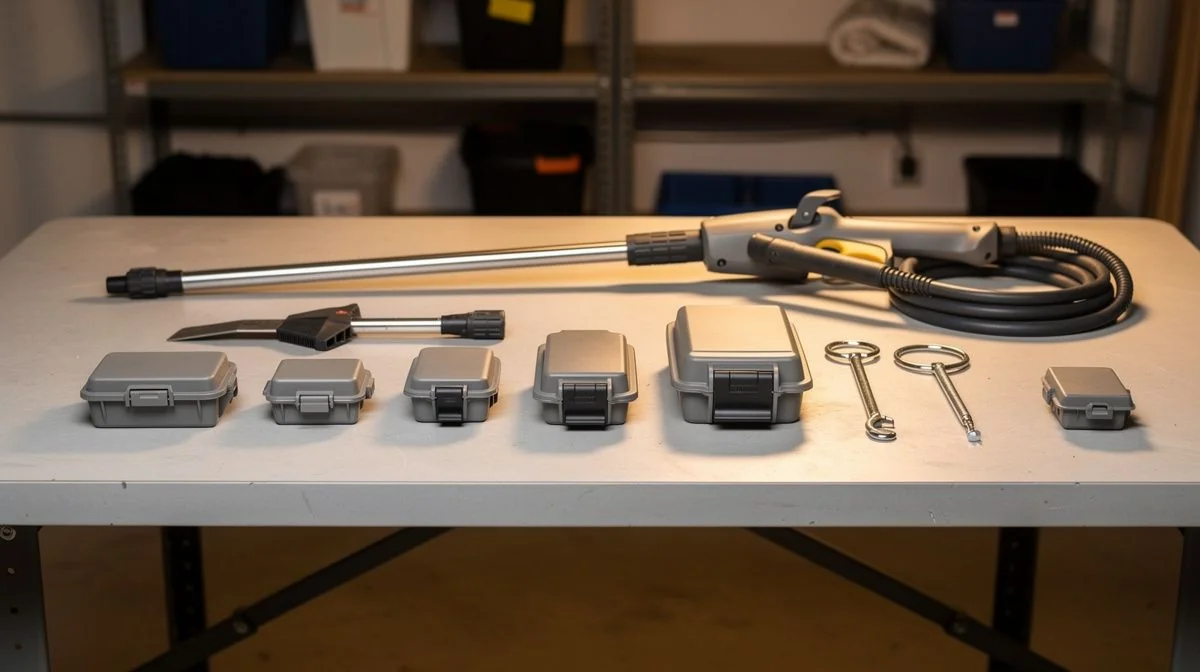
What Happens on a Treatment Visit
A professional visit follows a set order, and knowing it tells you whether the whole job happened.
- The technician inspects the property and confirms the species because the treatment follows the identification, not the other way around.
- You are told what will be applied, where, and for how long to keep children and pets away from treated areas.
- Bait stations, gels, or residual sprays are placed at harbourage points rather than being spread randomly across the whole property.
- Entry points and conditions that invite pests back are pointed out, because treatment without that advice rarely holds.
- A follow-up visit is booked, and you are told what to look for in the meantime and who to call if activity continues.
Questions You Might Have
Should I treat the problem myself first?
For a single wasp nest or a few ants, a shop-bought product is a reasonable first attempt. For rodents, cockroaches and fleas it usually is not, because the over-the-counter products kill the ones you see without reaching the harbourage, and a partial treatment makes the next one harder.
Is the treatment safe around children and pets?
The products used professionally are selected for the situation and applied away from living areas wherever possible. You will be told how long to keep people and animals out of treated spaces, and that period is short for most residual work. Ask for the safety information sheet if you want it in writing.
Do I need a plan rather than a one-off treatment?
That depends on whether the problem recurs. Rental properties, food businesses and homes near bush or water usually do better on a scheduled plan, because the pressure is continuous rather than seasonal. Health New Zealand publishes public health guidance on pest-borne disease if you want to understand what is actually being prevented.
What Matters Most
Pest control is priced per visit, so the number of visits is what matters. A cheap single treatment for a problem that needs three is not cheap, and a quote that includes the follow-up is usually better value than one that looks smaller but doesn't.
Get the species identified before you agree to a price, confirm the guarantee period and the follow-up in writing, and ask which certification the operator holds. Those three things separate a treatment that works from one you pay for twice.

The ValueHub Team built this site because finding clear, unbiased financial information in New Zealand was harder than it should be. Every guide is based on real research — we compare the actual fees, terms, and fine print so you don't have to. Our tip: shop around every year, read the policy docs, and never assume loyalty gets you the best deal.— The ValueHub Team
Try our Calculators
Use these free tools to crunch the numbers:
KiwiSaver Fund Comparison
Compare fees, returns, and risk levels across every KiwiSaver fund — the most up to date data in New Zealand.
Currency Converter — USD to NZD
Convert US Dollars to New Zealand Dollars instantly. See the latest exchange rate and 30-day trend.
Mortgage Repayment Calculator
Calculate your weekly, fortnightly, or monthly mortgage repayments. Free NZ mortgage calculator — try different rates, terms, and repayment frequencies.
Compound Interest Calculator
See how your savings grow with compound interest over time. Free NZ compound interest calculator with yearly, monthly, and weekly compounding options.
Term Deposit Calculator
Calculate your term deposit returns before you lock in. Compare interest earned across different terms and rates with ValueHub's free calculator.
Savings Goal Calculator
Calculate how long it will take to reach your savings goal — and what monthly deposit you need to get there. Free NZ savings planner.
Pest Controllers in Other Cities
Latest Guides & Reviews
Kōura KiwiSaver Scheme Review
Kōura KiwiSaver review: 13 open funds, fund charges from 0.63 to 1.10 per cent, and net returns to 30 June 2026.
reviewMaritime KiwiSaver Scheme Review
Maritime KiwiSaver review: 3 open funds, fund charges from 0.61 to 0.76 per cent, and net returns to 31 March 2026.
reviewMAS KiwiSaver Scheme Review
MAS KiwiSaver review: 7 open funds, fund charges from 0.25 to 0.98 per cent, and net returns to 30 June 2026.
reviewArotahi KiwiSaver Scheme Review
Arotahi KiwiSaver review: 1 open fund, a 0.77 per cent fund charge, and net returns to 31 March 2026. What the Government register shows you pay and get back.