Best Podiatrists in Christchurch
Published 16 September 2026 · Written by the ValueHub team · Reviewed by Steve Baron

Best Podiatrists in Christchurch
A running city with heel pain, ingrown nails and a lot of ACC claims
Christchurch is an active city. The Port Hills, the river tracks and the flat streets have produced a large population of runners, cyclists and walkers, and that shows up in the podiatry caseload. Heel pain, Achilles problems and forefoot pain are the everyday work, and most of them come with an injury that ACC may cover.
Alongside sports injuries is the less glamorous, but equally important, part of podiatry. Nail and skin problems, diabetic foot checks, and caring for feet that have been neglected or are hard to reach. Much of this work is done for older clients, which is why podiatry is a health profession rather than a beauty service.
Christchurch also has a wide spread of practices, from clinics attached to sports medicine centres to small suburban rooms and mobile services that visit rest homes and homes. Which one suits you depends entirely on what is wrong with your feet.
One practical point for anyone with an injury: whether the podiatrist is registered with ACC changes what you pay, and not all of them are.
Our Trusted Podiatrists
We feature businesses that demonstrate strong performance, proven experience, and consistently positive customer feedback. Some of the providers listed may have commercial relationships with us, but all are selected based on quality and reliability.
To begin, reach out to them and speak with them directly — this helps you explain your job, ask questions, and confirm whether they're the right fit.
Christchurch’s newest podiatry practice is now open at 45 Merrin Street, Avonhead. General Podiatry care for the whole family plus specialist sports podiatry and biomechanical treatment . If you are experiencing problems with your feet but not sure what to do, our experienced team will explain your issue and have you a
How We Researched This Guide
We used published price lists from New Zealand podiatry practices rather than a survey. Podiatry is one of the more transparent health services in the country, with several practices publishing both their private fees and their ACC surcharges, which makes comparison genuinely possible.
The most useful thing we found is how much the funding side changes the cost to you. A consultation for an injury covered by ACC can cost a fraction of a private appointment, and some foot checks are fully funded when a general practice team refers them. We also read the public information on podiatry, who qualifies for funded care, and how ACC works for treatment, published by Health New Zealand and the Accident Compensation Corporation.
The 60-Second Version
The short Version, before the detail.
- An initial private consultation is commonly $105–$150.
- Follow-up general consultations run $99–$125.
- An ACC consultation surcharge is usually $30–$65 if the podiatrist is registered with ACC.
- Ingrown toenail surgery ranges from about $320 to $795 for one toe, depending on the procedure.
- Nail trimming and general care appointments are often around $60–$80.
- Some foot checks are fully funded when referred by a GP — ask before you book.
What a Podiatrist Does
The clinical work splits into three broad areas. The first is nails and skin: ingrown toenails, thickened or fungal nails, corns, calluses and cracked heels. This is the everyday work of most practices, and it is often regular maintenance rather than a one-off fix.
The second is musculoskeletal. Heel pain, plantar fasciitis, Achilles problems, bunions and pain in the ball of the foot are all diagnosed and treated, usually with a combination of load management, footwear advice, stretching and sometimes orthotics.
The third is the diabetic foot, which is the most serious. Diabetes affects circulation and sensation in the feet, which means a minor injury can become a major one before it is noticed. Regular checks and prompt treatment of any wound are essential, and well-funded podiatry exists for exactly this reason.
Most people also only learn about the preventative side after something has gone wrong. Properly fitting footwear, cutting nails straight across rather than down the sides, and treating a blister before it becomes an ulcer prevent many of the problems podiatrists treat.
Most people can see a podiatrist without a referral. If the problem relates to an injury, ACC may cover part of the cost, and if it relates to diabetes, a referral from a general practice team may open up funded care.
What a Podiatrist Costs in Christchurch
Published New Zealand fees, which apply across the city.
| Service | Typical fee |
|---|---|
| Initial private consultation | $105–$150 |
| General consultation, follow-up | $99–$125 |
| ACC consultation surcharge | $30–$65 |
| Short consultation, nail care | from $60 |
| Toenail trim and file | around $69 |
| Ingrown toenail, simple avulsion | from $320 |
| Ingrown toenail surgery with chemical matricectomy, one toe | $650–$795 |
| Two toes | $890–$1,100 |
| Post-operative dressing | around $100 |
| Prefabricated customised orthotics | from $175 plus consultation |
| Diabetic foot check, when referred and approved | no charge |
Fee ranges verified from published New Zealand podiatry price lists as of September 2026. Prices generally include GST where it applies, and surgical fees usually include a follow-up visit and redressing.
Private, ACC or Funded
Private is the simplest. You book, pay the published fee, and don’t need a referral. If your problem is long-standing foot pain with no specific injury, this is usually the route.
ACC applies when there is a covered injury. The podiatrist has to be registered as a treatment provider, and you pay a surcharge rather than the full fee. This is why the same appointment can cost $60 with ACC cover and $105 without, and it is worth asking when you book.
Funded care is narrower and applies to specific groups, including people with diabetes and people who hold a disability allowance or have an accepted condition through Veterans’ Affairs. Eligibility is assessed, so ask your general practice team or the podiatrist directly rather than assuming.
Health insurance is the other route. Many policies include podiatry under a specialist or alternative benefit, and some practices can claim on your behalf at the appointment. Check the annual limit and whether you need a referral, because the rules differ between insurers.
Choosing a Podiatrist in Christchurch
Ask what the podiatrist treats most often. A sports-focused clinician and a practice built around nail and diabetic care are both excellent at what they do. They aren’t interchangeable, especially if your problem is chronic heel pain rather than a nail.
Ask about registration and ACC status before the appointment, and ask what the follow-up plan looks like. Podiatry for a musculoskeletal problem usually takes more than one visit, so the total cost is the consultation fee multiplied by the number of visits needed.
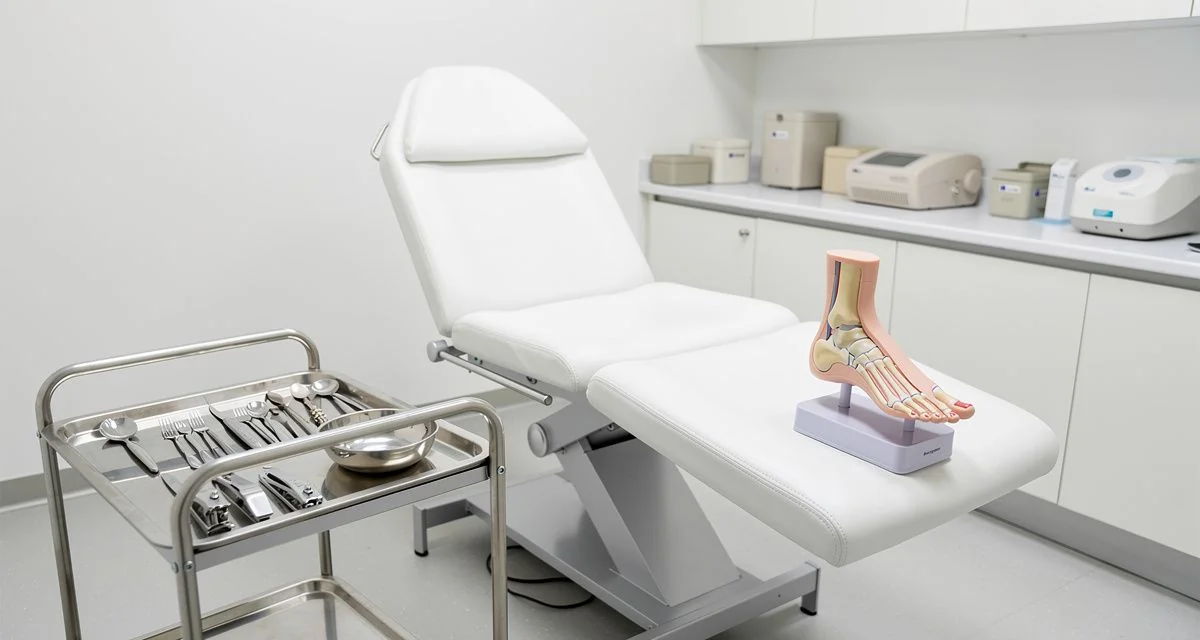
Ask about the instruments. Sterilisation, single-use blades, and the general standards of a clinical room distinguish a podiatry practice from a nail bar, and the difference matters when skin is being cut. It is also worth asking how long each appointment is booked for, since a fifteen-minute slot and a forty-minute slot are different products at a similar price. Anyone providing a health service in New Zealand is also subject to the standard consumer protections, which Consumer Protection explains.
Local Factors Worth Knowing
Running injuries and the flat streets
Christchurch runners cover a lot of hard, flat pavement, and heel and Achilles problems are the predictable result of increasing distance on that surface. Load management, footwear and strength work tend to solve what a change of shoes alone will not.
Diabetes and the funded foot check
A diabetic foot check is one of the few podiatry services that can be fully funded, provided it comes through the right referral. It is also the appointment most likely to prevent something serious, and it is the one people most often put off.
Mobile and home-visit services
For clients who cannot easily travel, several Christchurch providers offer home visits and rest home clinics. The fee is usually higher than a clinic appointment because of the travel, and it is worth asking about a regular schedule rather than a one-off. For anyone who cannot get to a clinic at all, a booked regular visit also works out cheaper per appointment than calling someone out in an emergency.
Questions You Might Have
Do I need a referral to see a podiatrist?
No, for a private appointment. You will need a referral or an approved pathway for funded care, and ACC cover needs an accepted claim.
Is ingrown toenail surgery painful?
It is done under local anaesthetic, so the procedure itself is not painful. The first day or two afterwards is uncomfortable, and the follow-up dressing matters for how quickly it settles.
How often should a diabetic foot check happen?
At least annually, and more often if you have reduced sensation or circulation; your general practice team will usually advise based on your assessment.
Can a podiatrist help with flat feet?
Often, yes, through footwear advice, strengthening and sometimes orthotics. Not everyone with flat feet needs treatment, and the decision should be based on pain and function, not appearance.
What Matters Most
Podiatry is a small profession with a wide range of roles. The same title covers a clinician who manages sports injuries and one who spends their week keeping diabetic feet safe, so choose based on what you actually need.
In Christchurch, where running and an older population produce both kinds of demand, the sensible approach is to check the ACC and funding position before booking, and to treat a foot problem as something to fix properly rather than to put up with.

The ValueHub Team built this site because finding clear, unbiased financial information in New Zealand was harder than it should be. Every guide is based on real research — we compare the actual fees, terms, and fine print so you don't have to. Our tip: shop around every year, read the policy docs, and never assume loyalty gets you the best deal.— The ValueHub Team
More Podiatrists in Christchurch
These businesses also operate in this area.
Christchurch Podiatrists offer treatment for a wide range of concerns, including general podiatry, sports podiatry and diabetes podiatry. 5 Christchurch clinics. It’s easy to take foot health for granted, yet our feet can play a huge part in the way we experience the world. Taking care of your feet means taking a step
We are a Christchurch podiatry practice that offers tailored foot care specific to your needs. We pride ourselves in offering an excellent, professional and comprehensive service. No foot concern is too big or small, we have treatment options for everyone. Welcome to complete Podiatry We offer bespoke foot care service
Try our Calculators
Use these free tools to crunch the numbers:
KiwiSaver Fund Comparison
Compare fees, returns, and risk levels across every KiwiSaver fund — the most up to date data in New Zealand.
Currency Converter — USD to NZD
Convert US Dollars to New Zealand Dollars instantly. See the latest exchange rate and 30-day trend.
Mortgage Repayment Calculator
Calculate your weekly, fortnightly, or monthly mortgage repayments. Free NZ mortgage calculator — try different rates, terms, and repayment frequencies.
Compound Interest Calculator
See how your savings grow with compound interest over time. Free NZ compound interest calculator with yearly, monthly, and weekly compounding options.
Term Deposit Calculator
Calculate your term deposit returns before you lock in. Compare interest earned across different terms and rates with ValueHub's free calculator.
Savings Goal Calculator
Calculate how long it will take to reach your savings goal — and what monthly deposit you need to get there. Free NZ savings planner.
Podiatrists in Other Cities
Latest Guides & Reviews
SuperLife KiwiSaver Scheme Review
SuperLife KiwiSaver review: 65 open funds, fund charges from 0.20 to 1.30 per cent, and net returns to 30 June 2026.
reviewSuperEasy KiwiSaver Scheme Review
SuperEasy KiwiSaver review: 8 open funds, a 0.32 per cent fund charge, and net returns to 31 March 2026.
reviewWestpac KiwiSaver Scheme Review
Westpac KiwiSaver review: 8 open funds, fund charges from 0.25 to 0.70 per cent, and net returns to 30 June 2026.
reviewANZ KiwiSaver Scheme Review
Review of ANZ KiwiSaver. Three schemes, fees from 0.22 per cent, the closed Default scheme, OneAnswer and the Lifetimes option.