Best Roofers in Gisborne
Published 03 April 2025 · Updated 08 October 2026 · Written by the ValueHub team · Reviewed by Steve Baron
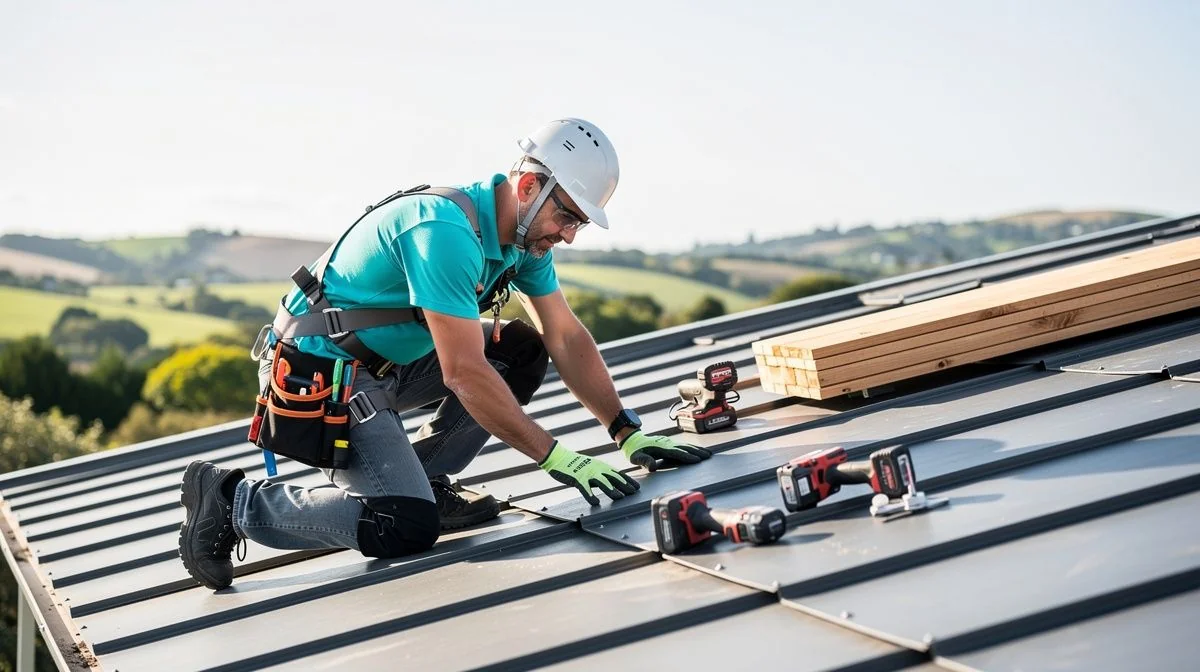
Best Roofers in Gisborne
Sunshine hours here are among the highest in the country, and the same nor'easters that make the summers so good drive salt-laden air across every roof on the coast. Put a century of timber villas and fibrolite bungalows underneath that, and you have a town where roofs age faster than their owners expect.
Most of the work here is long-run steel, because it copes with the wind, the salt and the heat better than anything else at a sensible price. We have set out what a replacement or a repair actually costs, what a roofer should check before quoting, and the local conditions that decide how long a new roof lasts.
How We Researched This Guide
We started with the New Zealand Standard for profiled metal roofing and the manufacturers' own installation guides, because those set the minimum pitch, the fixing spacing and the underlay that decide whether a roof holds up in a storm. The Standard is the document a good roofer is working to, whether or not they mention it.
For the figures, we used published supplier rate cards and per-square-metre rates quoted across the trade, then checked them against full-roof replacement quotes in the region. Where two sources disagreed, we have shown a range rather than pretend to a single number. Roofing is priced by area, and the range reflects that.
Our Trusted Roofers
We feature businesses that demonstrate strong performance, proven experience, and consistently positive customer feedback. Some of the providers listed may have commercial relationships with us, but all are selected based on quality and reliability.
To begin, reach out to them and speak with them directly — this helps you explain your job, ask questions, and confirm whether they're the right fit.

Roofing Industries | NZ's Metal Roofing & Cladding Manufacturer New Zealand's leading metal roofing & cladding manufacturer Locally designed and manufactured metal roofing, cladding, fencing and rainwater products for residential and commercial application.
The Quick Summary (60-Second Version)
If you want the short version before you ring anyone, this is it.
- A full roof replacement on a standard home costs $15,000 to $45,000, and steeper or larger roofs cost more than that.
- Long-run steel, the most common roof here, costs $90 to $180 per square metre installed.
- A professional roof inspection costs $300 to $500 and is worth it before you commit to a replacement.
- Stripping and disposing of the old roof adds roughly 25%, and scaffold is a separate cost on most quotes.
- Correct fixings and flashings matter more than the brand of steel on an exposed site.
- The mistake to avoid is a quote that does not name the underlay, the scaffold or who disposes of the old roof.
Who Is Licensed to Work on Your Roof
Roofing is a licensed building class. Roof cladding is part of a building's external moisture management system, and work on it is considered restricted building work under the Building Act 2004. The person doing it must hold a Licensed Building Practitioner licence in the roofing class, or be supervised by someone who does.
The licence is checked in about thirty seconds on the Licensed Building Practitioners public register. Search for the person's name rather than the company's, because a licence is held by an individual. A firm can employ licensed and unlicensed staff, so ask which of them will actually be up on your roof.
Not every job reaches that threshold. A replacement of the same cladding in the same position, a re-fix or a repair is generally treated as maintenance. Anything that changes the roof's structure, its shape or the way it sheds water is restricted building work. Ask plainly which one you are being quoted for.
Gisborne Pricing — What You Can Expect to Pay
Roofing is priced by the square metre of roof surface, not by the floor area of the house, so two homes the same size can attract very different quotes. A simple gable is quick to sheet. A roof cut up with valleys, dormers and several penetrations takes longer and uses more material.
Access is the other variable. A single-storey home can often be worked on with ladders and edge protection, while a two-storey home or one with a steep roof requires full scaffolding. Ask for the scaffold as its own line on the quote so you can see what it is adding.
| Item | Typical cost |
|---|---|
| Long-run steel, corrugated or Colorsteel, installed | $90-$180 per m² |
| Standing seam installed | $150-$250 per m² |
| Metal tiles installed | $110-$230 per m² |
| Concrete tiles installed | $120-$250 per m² |
| Clay tiles installed | $150-$350 or more per m² |
| Membrane or flat roof | $180-$280 per m² |
| Full replacement, standard home | $15,000-$45,000 |
| Professional roof inspection | $300-$500 |
| Stripping and disposing of the old roof | Adds roughly 25% |
| Steep or complex roof | adds roughly 10% |
Scaffolding is quoted separately by most roofers and can add several thousand dollars on a two-storey home. Old-roof disposal is the other line that moves a quote, because it is charged by weight. Ask for both by name before you compare two prices.
How to Choose a Roofer — What Actually Matters
Ask what coating, and what class of fixing
The steel is only half the roof. On an exposed coastal site, the fixings and the cut edges are where corrosion starts, so ask what coating the sheets carry and what class of screw is specified. A cheaper sheet with the right fixings will outlast a premium sheet with the wrong ones.
Get the underlay and the flashing detail in writing
Underlay is hidden the day it goes on, which makes it the easiest thing to leave out of a quote. Ask for the product name. Flashings come next, because most leaks start at a penetration or a valley rather than in the middle of a sheet.
Ask what the scaffold makes cheap to do at the same time
Once scaffold is up, replacing spouting, fascia or a chimney cowl costs far less than it will later. Ask the roofer to price those as options, then decide which are worth doing now rather than paying for the scaffold twice.
From Roof Check to Final Inspection
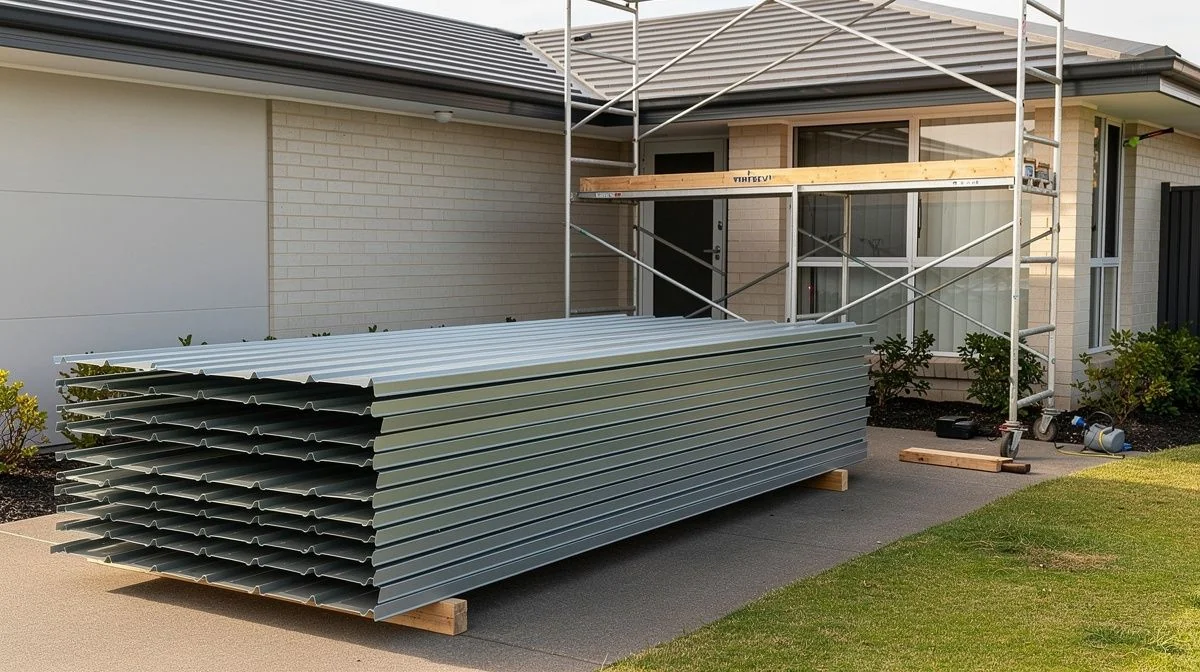
A straightforward replacement follows the same order every time, and knowing it tells you where the surprises usually appear.
- An inspection determines what is failing: the sheets, the flashings, the fixings, or the underlay beneath them.
- You receive a written quote that separates the roof, the scaffold and the disposal of the old material.
- The scaffold goes up, and the old roof comes off, at which point hidden damage to the purlins or framing becomes apparent.
- Any structural repairs are completed before the new underlay is laid, because nothing under it can be checked afterwards.
- The new roof is laid, the flashings are dressed and sealed, and the site is swept for nails before the scaffold comes down.
Gisborne-Specific Risks — What Your Roofer Should Know
Salt air and the nor'easters
The coast here faces the weather, so roofs within a few streets of the water are constantly exposed to salt spray. Corrosion begins at cut edges and around fixings long before a sheet looks tired from the ground. On these sites the coating and the fixing class are the difference between a thirty-year roof and a fifteen-year one.
High sunshine and the way steel moves
Gisborne records some of the country's highest sunshine hours, and long-run steel expands and contracts with that heat every day. The clips that hold it are designed to allow that movement. Fix a long sheet rigidly at both ends, and it will oil-can, work its fixings loose, and eventually tear a fastener.
Old flashings on old roofs
The villas and 1960s bungalows here mostly leak at the flashings and penetrations, not through the middle of a sheet. Lead flashings harden and crack, and old mortar around a chimney washes out. If a roofer talks only about re-screwing sheets, ask what they intend to do about those.
Questions You Might Have
How long should a new roof last?
Long-run steel is expected to last 40 to 60 years, metal tiles 40 to 50 years, and concrete tiles 50 years or more. Those figures assume the right coating, the right fixings and reasonable ventilation. Salt shortens all of them, which is why the detailing matters as much as the material on a coastal site.
Do I need a building consent to replace my roof?
It depends on whether the work changes the structure, the shape or the way the roof sheds water. A like-for-like replacement in the same position usually does not need one. Anything that changes the pitch, adds a dormer or alters the structure usually does. Confirm it with the council before work starts rather than afterwards.
Repair, or replace the whole thing?
A single failed flashing or a handful of loose fixings is a repair. Once the underlay has failed across a whole plane, or rust shows through the sheets in several places, patching becomes a series of visits that never quite finishes the job. An inspection costing a few hundred dollars is the cheapest way to find out which one you have.
What Matters Most
A roof is one of the few parts of a house you cannot properly inspect from the ground, which is why the paperwork matters as much as the price. A quote that names the steel, the coating, the underlay, the fixings and the scaffold is one you can hold somebody to.
On the coast here, the detailing decides the lifespan far more than the brand on the sheet. Check the licence, ask what happens at the flashings, and get the disposal and the scaffold as separate lines.

The ValueHub Team built this site because finding clear, unbiased financial information in New Zealand was harder than it should be. Every guide is based on real research — we compare the actual fees, terms, and fine print so you don't have to. Our tip: shop around every year, read the policy docs, and never assume loyalty gets you the best deal.— The ValueHub Team
Try our Calculators
Use these free tools to crunch the numbers:
KiwiSaver Fund Comparison
Compare fees, returns, and risk levels across every KiwiSaver fund — the most up to date data in New Zealand.
Currency Converter — USD to NZD
Convert US Dollars to New Zealand Dollars instantly. See the latest exchange rate and 30-day trend.
Mortgage Repayment Calculator
Calculate your weekly, fortnightly, or monthly mortgage repayments. Free NZ mortgage calculator — try different rates, terms, and repayment frequencies.
Compound Interest Calculator
See how your savings grow with compound interest over time. Free NZ compound interest calculator with yearly, monthly, and weekly compounding options.
Term Deposit Calculator
Calculate your term deposit returns before you lock in. Compare interest earned across different terms and rates with ValueHub's free calculator.
Savings Goal Calculator
Calculate how long it will take to reach your savings goal — and what monthly deposit you need to get there. Free NZ savings planner.
Roofers in Other Cities
Latest Guides & Reviews
Kōura KiwiSaver Scheme Review
Kōura KiwiSaver review: 13 open funds, fund charges from 0.63 to 1.10 per cent, and net returns to 30 June 2026.
reviewMaritime KiwiSaver Scheme Review
Maritime KiwiSaver review: 3 open funds, fund charges from 0.61 to 0.76 per cent, and net returns to 31 March 2026.
reviewMAS KiwiSaver Scheme Review
MAS KiwiSaver review: 7 open funds, fund charges from 0.25 to 0.98 per cent, and net returns to 30 June 2026.
reviewArotahi KiwiSaver Scheme Review
Arotahi KiwiSaver review: 1 open fund, a 0.77 per cent fund charge, and net returns to 31 March 2026. What the Government register shows you pay and get back.