Best Roofers in Porirua
Published 03 April 2025 · Updated 08 October 2026 · Written by the ValueHub team · Reviewed by Steve Baron
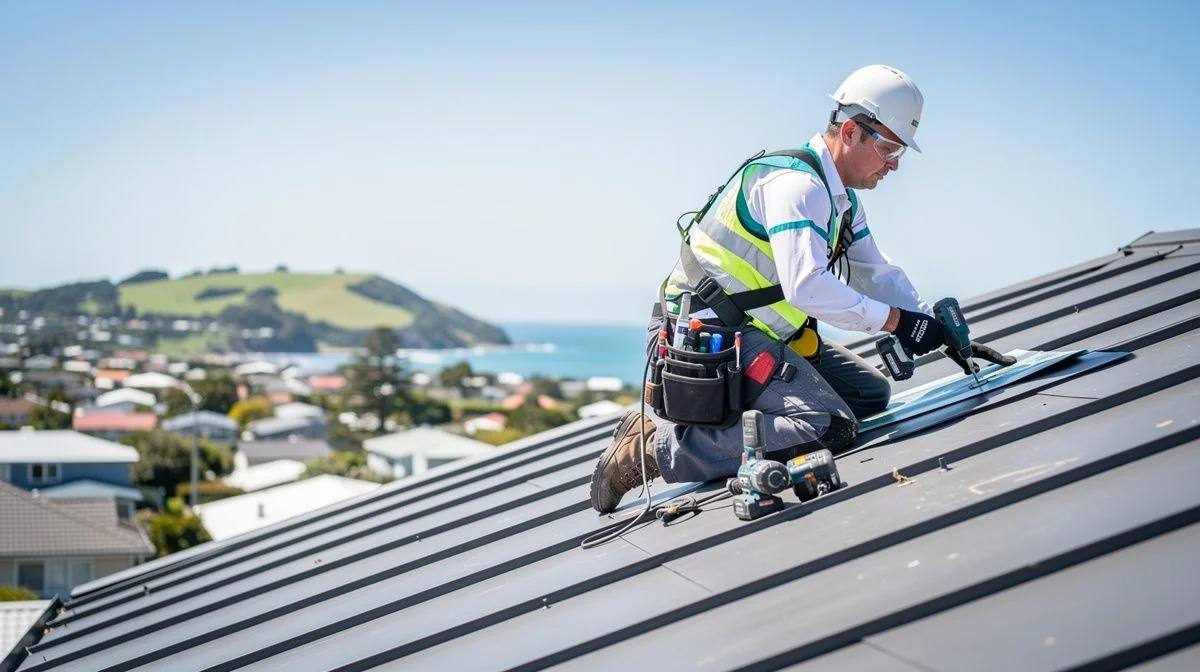
Best Roofers in Porirua
Roofs around the city face two different problems depending on where they sit. Along the coast, from Titahi Bay through Plimmerton and out to Pukerua Bay, wind-driven rain and salt spray attack every fixing and cut edge. Inland, in the older parts of the city, the roofs are simply getting old.
The city also spans two building booms, the state housing of the 1950s and 1960s and the hillside subdivisions at Aotea and Whitby, and the two need entirely different attention. We have set out the costs, the checks that matter, and the local conditions that determine how long a replacement lasts.
How We Researched This Guide
We read the New Zealand Standard that governs profiled metal roofing and the manufacturers' installation guides, because the required pitch, fixing spacing and underlay are set out there in plain terms. The same documents explain why a roof that performs well in a sheltered valley can fail on an exposed ridge a few hundred metres away.
The pricing comes from published supplier rate cards and the per-square-metre rates quoted across the trade, checked against replacements quoted around the Wellington region. Two things move the total more than anything else: the shape of the roof and the access to it, so we have kept both as separate considerations rather than burying them.
Our Trusted Roofers
We feature businesses that demonstrate strong performance, proven experience, and consistently positive customer feedback. Some of the providers listed may have commercial relationships with us, but all are selected based on quality and reliability.
To begin, reach out to them and speak with them directly — this helps you explain your job, ask questions, and confirm whether they're the right fit.

Roofing Industries | NZ's Metal Roofing & Cladding Manufacturer New Zealand's leading metal roofing & cladding manufacturer Locally designed and manufactured metal roofing, cladding, fencing and rainwater products for residential and commercial application.
The Quick Summary (60-Second Version)
Here is the short version if you are still deciding whether to get quotes.
- A full replacement of a standard home runs $15,000 to $45,000, and complex or steep roofs cost more than that.
- Long-run steel installed costs $90 to $180 per square metre and remains the most common choice.
- Wellington-region pricing sits at the upper end of the national range because of labour and access costs.
- Salt spray and wind-driven rain shorten roof life in the coastal suburbs specifically, not across the whole city.
- A professional inspection costs $300 to $500 and settles whether you need a repair or a replacement.
- The mistake to avoid is comparing quotes that treat scaffold and old-roof disposal differently.
Who Is Legally Allowed to Do the Work
Roof cladding is part of a building's external moisture management system, and altering it constitutes restricted building work under the Building Act 2004. Anyone carrying out that work must hold a Licensed Building Practitioner licence in the roofing class, or work under the supervision of somebody who holds one.
Licences are held by individuals rather than companies, so the register at the Licensed Building Practitioners public register is searched by a person's name. Ask which licence holder will be on site, because a firm can hold several and the name on the quote is not always the person doing the work.
Straight maintenance usually falls outside restricted building work. Replacing like-for-like in the same position, re-fixing sheets, or repairing flashing generally falls outside the licensed work. Once the structure or shape of the roof changes, it moves inside. Ask which category your job falls into.
Porirua Pricing — What You Can Expect to Pay
Wellington-region labour rates are among the highest in the country, and Porirua's mix of steep hillside sections and salt-laden onshore winds adds to access costs. A fascia-level roof on a flat section and a roof three storeys up a Whitby hillside are not comparable jobs.
The material you choose sets the floor price, and the geometry of the roof determines how far above that floor you end up. Valley count, storey height and how close a truck can get to the house all show up somewhere in the quote.
| Item | Typical cost |
|---|---|
| Long-run steel, corrugated or Colorsteel, installed | $90-$180 per m² |
| Standing seam installed | $150-$250 per m² |
| Metal tiles installed | $110-$230 per m² |
| Concrete tiles installed | $120-$250 per m² |
| Clay tiles installed | $150-$350 or more per m² |
| Membrane or flat roof | $180-$280 per m² |
| Full replacement, standard home | $15,000-$45,000 |
| Professional roof inspection | $300-$500 |
| Stripping and disposing of the old roof | Adds roughly 25% |
| Steep or complex roof | Adds roughly 10% |
These are the middle of the national market, and the Wellington region tends to price above the middle rather than below it. Scaffolding and old-roof disposal are the two lines that separate an honest comparison from a misleading one, so insist both appear on every quote you receive.
How to Choose a Roofer — What Actually Matters
Ask what the quote assumes about access
On a hillside section, how the scaffold is founded and how materials reach the roof can affect the job more than the roofing itself. Ask whether the quote assumes scaffolding from the ground, from a platform, or over a neighbour's boundary, because the latter requires permission and takes time to arrange.
Separate the roof from everything else on the quote
Spouting, fascia, downpipes, chimney work, and a ventilation cowl all become far cheaper once the scaffold is up. Ask for them priced as separate options. It also makes two quotes comparable, because one roofer may have included them while the other never mentioned them at all.
Say where you live before you ask for the specification
If your house is on the seaward side of the coast road, mention it before the quote is written. It changes the sensible coating and the class of fixing. A roofer who adjusts their exposure recommendation has dealt with it before. One who quotes the same specification everywhere has not asked.
What the Job Involves, Start to Finish
Every replacement follows a similar sequence, and each step is a chance to catch something before it is covered up.
- The roof is inspected to determine what has failed and how much of it, if anything, can be reused.
- You are given a written quote that lists the roofing, the scaffold and the disposal as separate amounts.
- Scaffold is erected, and the old cladding is removed, exposing the purlins and the framing underneath.
- Rotten or undersized framing is replaced before the new underlay is laid over it.
- New cladding and flashings go on, the site is cleared, and the nails are swept up before the scaffold is struck.
Porirua-Specific Risks — What Your Roofer Should Know
Wind-driven rain on the coastal edge
Wind-driven rain behaves differently from ordinary rain. It is pushed sideways and upwards, so it finds gaps that a vertically falling shower never would. On exposed sites, that makes the underlay, the laps between sheets and the direction those laps run far more important than the sheet itself.
Two housing booms with two failure patterns
The 1950s and 1960s state housing has light timber framing, simple gable roofs and hardware now well past its expected life. The Aotea and Whitby subdivisions are newer and largely tiled, so their problems are cracked and slipped tiles, failed ridge pointing and blocked valleys rather than corroded steel.
Salt spray and the damp shelter behind it
The coastal suburbs take a salt load on the exposed faces, while the sheltered valley behind them stays damp for longer. That combination fosters moss and lichen in the valleys and on the shaded planes of tiled roofs, holding moisture against the tiles until they lift or crack.
Questions You Might Have
How much does scaffold add to the job?
It varies with height and how the ground sits, but scaffolding is a significant line item on any two-storey job and is usually charged separately. On a hillside section it can be more again. Ask whether it is included, because a quote that quietly excludes it can look thousands of dollars cheaper than it really is.
Can a tiled roof be repaired, or do the tiles have to come off?
Individual cracked or slipped tiles can usually be replaced without disturbing the rest. Once the underlay beneath them is failing, replacing the tiles on top of rotten underlay is a waste of money, because water is getting in below the tiles anyway. That judgement is what an inspection is for.
Will a new roof affect my house insurance?
A roof at the end of its life can affect cover, and insurers ask about its age and condition. A documented replacement, with the specification in writing, is straightforward to answer. Keep the quote and the invoice, because an insurer asking about the roof will want the date the work was done.
What Matters Most
The two halves of Porirua need different advice, so the first useful question is which one your house is in. Salt and onshore wind change the specification, while inland the question is usually just age.
Compare quotes on the same lines. Scaffolding, disposal, spouting and the specification all have to appear in both for the numbers to mean anything.
Get the roof inspected before committing to a replacement, and confirm who holds the licence.

The ValueHub Team built this site because finding clear, unbiased financial information in New Zealand was harder than it should be. Every guide is based on real research — we compare the actual fees, terms, and fine print so you don't have to. Our tip: shop around every year, read the policy docs, and never assume loyalty gets you the best deal.— The ValueHub Team
More Roofers in Porirua
These businesses also operate in this area.
Looking for trusted roofing & re-roofing services in Wellington? Contact us today to discuss your roofing needs! Over 25 years in Service. New Roof and Re-roofing Specialists In Wellington. We specialise in new roofs, re-roofs, fascia systems and spouting, and we are dedicated to customer satisfaction. Welcome to Welli
Try our Calculators
Use these free tools to crunch the numbers:
KiwiSaver Fund Comparison
Compare fees, returns, and risk levels across every KiwiSaver fund — the most up to date data in New Zealand.
Currency Converter — USD to NZD
Convert US Dollars to New Zealand Dollars instantly. See the latest exchange rate and 30-day trend.
Mortgage Repayment Calculator
Calculate your weekly, fortnightly, or monthly mortgage repayments. Free NZ mortgage calculator — try different rates, terms, and repayment frequencies.
Compound Interest Calculator
See how your savings grow with compound interest over time. Free NZ compound interest calculator with yearly, monthly, and weekly compounding options.
Term Deposit Calculator
Calculate your term deposit returns before you lock in. Compare interest earned across different terms and rates with ValueHub's free calculator.
Savings Goal Calculator
Calculate how long it will take to reach your savings goal — and what monthly deposit you need to get there. Free NZ savings planner.
Roofers in Other Cities
Latest Guides & Reviews
Kōura KiwiSaver Scheme Review
Kōura KiwiSaver review: 13 open funds, fund charges from 0.63 to 1.10 per cent, and net returns to 30 June 2026.
reviewMaritime KiwiSaver Scheme Review
Maritime KiwiSaver review: 3 open funds, fund charges from 0.61 to 0.76 per cent, and net returns to 31 March 2026.
reviewMAS KiwiSaver Scheme Review
MAS KiwiSaver review: 7 open funds, fund charges from 0.25 to 0.98 per cent, and net returns to 30 June 2026.
reviewArotahi KiwiSaver Scheme Review
Arotahi KiwiSaver review: 1 open fund, a 0.77 per cent fund charge, and net returns to 31 March 2026. What the Government register shows you pay and get back.