Best Solar Panel Installers in Lower Hutt
Published 11 September 2026 · Written by the ValueHub team · Reviewed by Steve Baron

Lower Hutt Funnels the Wind and Empties Its Houses by Day
Wind and working patterns shape solar in Lower Hutt more than anything else. A northerly funnelling through the valley puts real uplift load on a roof-mounted array, so the mounting must be specified for the site's exposure: heavier rails, more fixing points, and hardware rated for the conditions. That is the main reason a Lower Hutt quote can sit above a comparable job in a sheltered inland suburb. Ask what wind zone the property falls into and insist the rating appears in writing.
The harder question is consumption. Lower Hutt sends a large share of its workforce out of the valley each day, so many houses sit empty while the panels are generating. Power used on site offsets the retail rate; power exported earns a fraction of that. A household is effectively selling most of its generation cheaply from morning until evening. Practical fixes are ordinary: run the heat pump and hot water cylinder during the day, set appliances to daytime cycles, or charge a car in daylight.
The valley's industrial base is the counterweight. Petone, Seaview and Gracefield carry manufacturing, engineering and storage work that runs during daylight, and large unshaded roofs over those buildings match generation almost perfectly. Households gain from the same logic wherever someone runs a workshop, a home business or shift work that overlaps with the sun. Two local considerations are worth raising early: the Wellington fault runs through the valley, and parts of the city sit in the river flood plain. No subsidy exists, so the numbers must stand alone.
How We Researched This Guide
We began with published installer pricing guides, then worked through how exposure and access affect what a quote actually contains. Lower Hutt's valley wind and hillside sections change both, so the mounting specification matters more here than the headline price.
We also reviewed the consumer protections covering installation work and the products supplied, along with local commuting patterns. Where sources disagree, we quote the range rather than a single figure.
Our Trusted Solar Panel Installers
We feature businesses that demonstrate strong performance, proven experience, and consistently positive customer feedback. Some of the providers listed may have commercial relationships with us, but all are selected based on quality and reliability.
To begin, reach out to them and speak with them directly — this helps you explain your job, ask questions, and confirm whether they're the right fit.
The experts in Plumbing & Electrical. When you hire a Laser Plumber or Electrician, you'll receive our 'Totally Dependable' service! Timely delivery, a promise of care and skill; appropriate work for customers' needs; well-presented, professional employees; responsibility for supplied materials, honouring manufacturer guarantees; and meeting and frequently exceeding our customers' expectations.
The 60-Second Version
If you read only one section, read this.
- A fair installed price is $1.70–$2.00 per watt including GST, and wind-rated mounting pushes quotes toward the top of that range.
- A 6.6 kW system usually costs $13,000–$15,000 before exposure or access premiums. New Zealand offers no subsidy or rebate. Nothing comes off the price.
- Payback is typically six to eight years without a battery.
- A battery adds $9,000–$15,000 for 10–13 kWh usable and rarely shortens payback.
- If the house is empty all weekdays, self-consumption is the number to get right.
What Solar Costs in Lower Hutt
Base pricing is national, with two local additions: exposure-rated mounting and access costs on hillside sections. The bands below assume a standard roof and straightforward access.
| System size | Typical installed cost |
|---|---|
| 3 kW | $8,000–$10,000 |
| 5 kW | $11,000–$13,000 |
| 6.6 kW | $13,000–$15,000 |
| 8–10 kW | $15,000–$18,000 |
| 13 kW and above | $20,000–$30,000 |
| Battery, 10–13 kWh usable | $9,000–$15,000 |
Installed prices including GST, based on published New Zealand installer pricing guides. Exposure-rated mounting, scaffolding and switchboard upgrades are additional.
Price per watt falls as the system grows. A 3–4 kW system averages around $2.31 per watt, while a 13–14 kW system averages around $1.42 per watt. The median system installed in New Zealand homes is around 7–8 kW, and for a commuter household that figure deserves scrutiny rather than automatic acceptance.
Wind Zones in the Valley
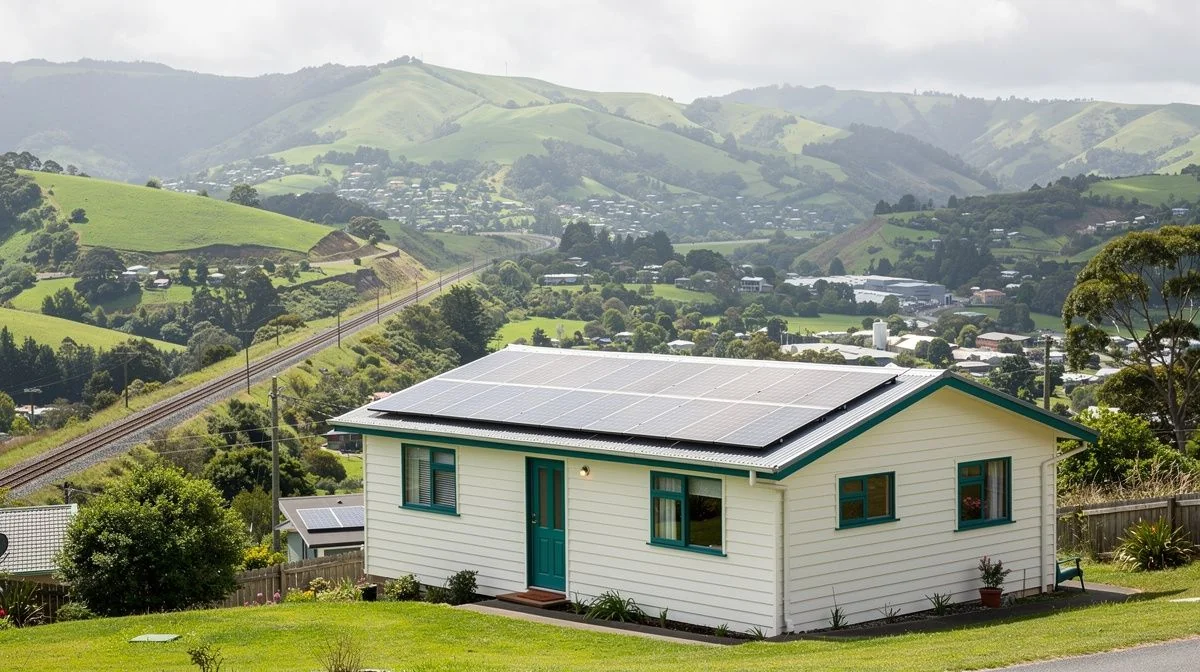
A northerly funnelling through the Hutt Valley puts real uplift load on a roof-mounted array. That doesn't prevent installation, but it does change the mounting specification: heavier rails, more fixing points, and hardware rated for the site's exposure.
Costs are higher wherever wind-rated mounting is required, and that is the main reason a Lower Hutt quote can sit above a comparable job in a sheltered inland suburb. Ask what wind zone the property falls into and whether the mounting rating is written into the quote.
The Commuter Problem: Nobody Home at Midday
Lower Hutt sends a large share of its workforce out of the valley each day, so many houses sit empty while the panels generate. That is the central weakness in the local solar case, and it deserves an honest answer rather than an optimistic projection.
Every kilowatt-hour used on site offsets a retail rate of roughly $0.28–$0.36 per kWh, among the highest in the OECD outside Europe. Exported power earns a fraction of that. So a household that is out from morning until evening is selling most of its generation cheaply.
The fixes are practical rather than technical: run the heat pump and the hot water cylinder during the day, set appliances to daytime cycles, or charge a car while the sun is up. Where that is not possible, a smaller system is the more sensible purchase.
Industrial Loads Along the Seaview Corridor
Petone, Seaview and Gracefield support a substantial industrial and commercial base, and much of that work happens during daylight. Large unshaded roofs, combined with steady daytime demand, offer the strongest solar conditions available, and businesses along the corridor are well placed to use them.
For households, the same logic applies at a smaller scale. If someone in the house runs a workshop, a home business or shift work that overlaps with daylight, the value captured rises sharply compared with a standard nine-to-five household.
No Subsidy, and a Case for Restraint
New Zealand has no government rebate or subsidy for residential solar. Nothing is discounted at the point of sale, there is no scheme to apply for, and there is nothing to trade. Australian households receive support that New Zealand households do not.
The local position adds a second reason for care. Lower Hutt sends a large share of its workforce out of the valley each day, so a system sized to actual daytime use will serve a household better than one sized to the roof.
A long-lived improvement to a home you intend to keep is a different decision from borrowing to buy more system than the house can use. Keep the two separate, and the purchase is easier to justify.
Lower Hutt Factors That Change the Numbers
River Flood Exposure and the Fault Line
The Wellington fault runs through the valley, ey and parts of the city sit in the river floodplain. These are siting considerations as much as structural ones, particularly for ground-mounted arrays, and they are worth raising before any work begins.
Hillside Sections and Access
Many Lower Hutt homes sit on sloping sections, which adds scaffolding, hoisting and sometimes difficult access to the quote. Ask for those costs to be itemised so you can see what the site itself is adding to the price.
Charging a Vehicle in the Driveway
An electric vehicle changes the arithmetic more than almost anything else, because it is a large, flexible load that can be charged during the day. A commuter household that charges at home overnight loses that benefit; charge timing matters.
Hybrid Work and the Changing Commute
Working patterns have shifted, and a household where one person is home two or three days a week will use noticeably more of its own generation than one that is empty every weekday. If your week has changed recently, the sizing calculation should change with it.
Choosing an Installer in Lower Hutt
Ask about wind exposure before you discuss price. A firm that works regularly in the valley will have a standard specification for exposed sites, and it should appear in writing rather than in conversation.
Then be direct about your daytime use. Tell the installer how many people are home during the day and what runs while the sun is up, because that determines whether a large system genuinely suits your household.
Get three written quotes for the same system size and compare the components, not just the totals. Inverter model, mounting grade and workmanship warranty length all vary, and the cheapest proposal is often the one with the most left out.
Warning Signs
- A quote that never mentions wind zone, exposure or mounting ratings.
- Any claim that a government solar subsidy is available.
- Savings projections based on total generation rather than on-site use.
- A system sized to the roof without asking about your daytime habits.
- No site visit, or access and scaffolding costs left unstated.
- A workmanship warranty shorter than the product warranties.
Questions Lower Hutt Homeowners Ask
Is solar worth it if nobody is home during the day?
It can still work, but the case is weaker, and sizing matters more. If you can shift the heat pump, hot water or vehicle charging into daylight hours, a modest system performs well. If not, a smaller array is usually the better buy.
Does the wind mean I cannot install solar?
No. It means the mounting must be rated for the site's exposure. The practical effect is cost rather than feasibility, and that cost belongs in the specification, not in a verbal assurance.
Should I buy a battery?
Rarely on the numbers alone. A battery adds $9,000–$15,000 for 10–13 kWh of usable capacity and mainly moves your own generation into the evening. It raises self-consumption but seldom shortens payback, so treat it as a separate decision.
How big a system suits a commuter household?
Start with daytime consumption. The national median is around 7–8 kW, but a household empty every weekday should size below that unless it can shift load into daylight hours.
What Matters Most
Lower Hutt asks two honest questions of anyone considering solar. Is the mounting specified for the valley's wind, and is there anything in the house using power while the panels generate? Answer both properly, and solar will perform. Guess at either, and the return disappoints.
There is no subsidy, so the numbers must work on their own. To see how they compare around the country, start with our solar panel installers hub.

The ValueHub Team built this site because finding clear, unbiased financial information in New Zealand was harder than it should be. Every guide is based on real research — we compare the actual fees, terms, and fine print so you don't have to. Our tip: shop around every year, read the policy docs, and never assume loyalty gets you the best deal.— The ValueHub Team
Try our Calculators
Use these free tools to crunch the numbers:
KiwiSaver Fund Comparison
Compare fees, returns, and risk levels across every KiwiSaver fund — the most up to date data in New Zealand.
Currency Converter — USD to NZD
Convert US Dollars to New Zealand Dollars instantly. See the latest exchange rate and 30-day trend.
Mortgage Repayment Calculator
Calculate your weekly, fortnightly, or monthly mortgage repayments. Free NZ mortgage calculator — try different rates, terms, and repayment frequencies.
Compound Interest Calculator
See how your savings grow with compound interest over time. Free NZ compound interest calculator with yearly, monthly, and weekly compounding options.
Term Deposit Calculator
Calculate your term deposit returns before you lock in. Compare interest earned across different terms and rates with ValueHub's free calculator.
Savings Goal Calculator
Calculate how long it will take to reach your savings goal — and what monthly deposit you need to get there. Free NZ savings planner.
Solar Panel Installers in Other Cities
Latest Guides & Reviews
KiwiSaver and Tax — PIR, ESCT and What You Actually Pay
KiwiSaver is taxed twice — ESCT on your employer's contribution and your PIR on the fund's returns. How each rate is set, and the two most members never check.
reviewInvestNow KiwiSaver Scheme Review
InvestNow KiwiSaver review: 45 open funds, fund charges from 0.03 to 1.38 per cent, and net returns to 30 June 2026.
reviewKernel KiwiSaver Scheme Review
Kernel KiwiSaver review: 25 open funds, fund charges from 0.25 to 0.45 per cent, and net returns to 30 June 2026.
guideTax Debt in New Zealand — The Numbers
Official figures on New Zealand's overdue tax debt: the total, the collectable share, which customer groups hold it, and how much is repaid or written off.