Best Solar Panel Installers in Palmerston North
Published 11 September 2026 · Written by the ValueHub team · Reviewed by Steve Baron
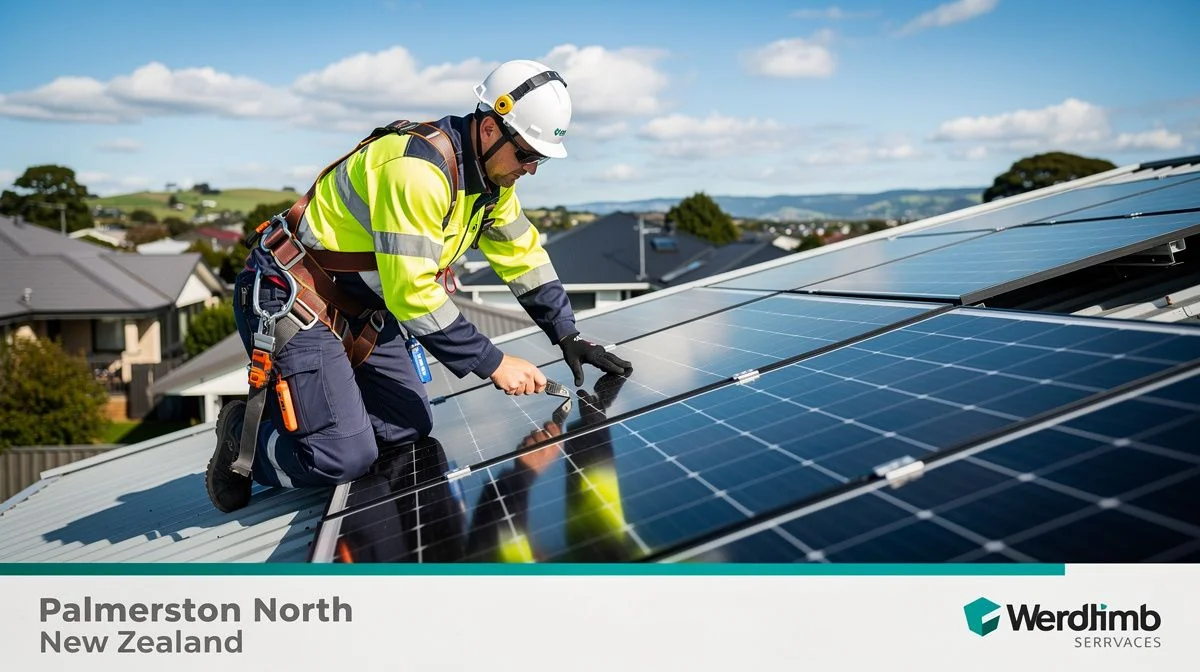
Solar Has to Earn Its Place in Palmerston North
Palmerston North's weather is changeable, and the region is known for wind, which puts uplift load on any roof-mounted array. Fixed for the conditions rather than a calm inland day, an array here performs well enough — but the sizing has to be honest. This is not a city where a household can afford to oversize and hope. A system built around real daytime consumption earns its keep; one sized to fill the roof is capital sitting idle.
What helps is that the city's working patterns suit solar. Food processing, logistics and rural services carry much of the local economy, and that work draws power during daylight. Households gain in the same way: a heat pump running through the day, a hot water cylinder on a daytime timer, or a home office all consume power while the panels are producing. Units used on site offset the retail rate, while exported power earns a fraction of it. Self-consumption, not total generation, decides whether the system pays for itself.
Two practical items shape most local quotes. In older homes, the switchboard often drives the price because an inverter needs a solid connection, and roof condition matters; both should be assessed before agreeing on a figure. Rental housing is the clearest case where solar struggles, since the landlord funds the system. At the same time, the tenant receives the savings, and Massey's student population keeps a large rental sector turning over. There is no subsidy to improve the numbers, so sizing to your own consumption matters.
How We Researched This Guide
We began with published installer pricing guides and worked through how price per watt changes as system size rises. For Palmerston North, we focused on the local variables that change a quote, since a system costs the same here as it does in Auckland.
We also reviewed the consumer protections covering installation work and the products supplied, along with the local housing stock and how it affects an installation. Where sources disagree, we give the range rather than a single figure.
The 60-Second Version
If you read only one section, read this.
- A fair installed price is $1.70–$2.00 per watt including GST.
- A 6.6 kW system, the most popular size, usually costs $13,000–$15,000.
- New Zealand has no solar subsidy or rebate, so nothing is deducted from the price.
- Payback is typically six to eight years without a battery.
- A battery adds $9,000–$15,000 for 10–13 kWh usable and rarely shortens payback.
- Self-consumption decides your return, not total generation.
What Solar Costs in Palmerston North
Pricing sits in the national middle band, with wind exposure and the condition of older switchboards the two local variables most likely to move a quote. The bands below assume a sound roof and straightforward access.
| System size | Typical installed cost |
|---|---|
| 3 kW | $8,000–$10,000 |
| 5 kW | $11,000–$13,000 |
| 6.6 kW | $13,000–$15,000 |
| 8–10 kW | $15,000–$18,000 |
| 13 kW and above | $20,000–$30,000 |
| Battery, 10–13 kWh usable | $9,000–$15,000 |
Installed prices including GST, based on published New Zealand installer pricing guides. Switchboard upgrades, scaffolding and non-standard mounting are additional.
Price per watt falls as the system grows. A 3–4 kW system averages around $2.31 per watt, while a 13–14 kW system averages around $1.42 per watt. The median system installed in New Zealand homes is around 7–8 kW, and in a market like this one there is a good argument for starting below that rather than above it.
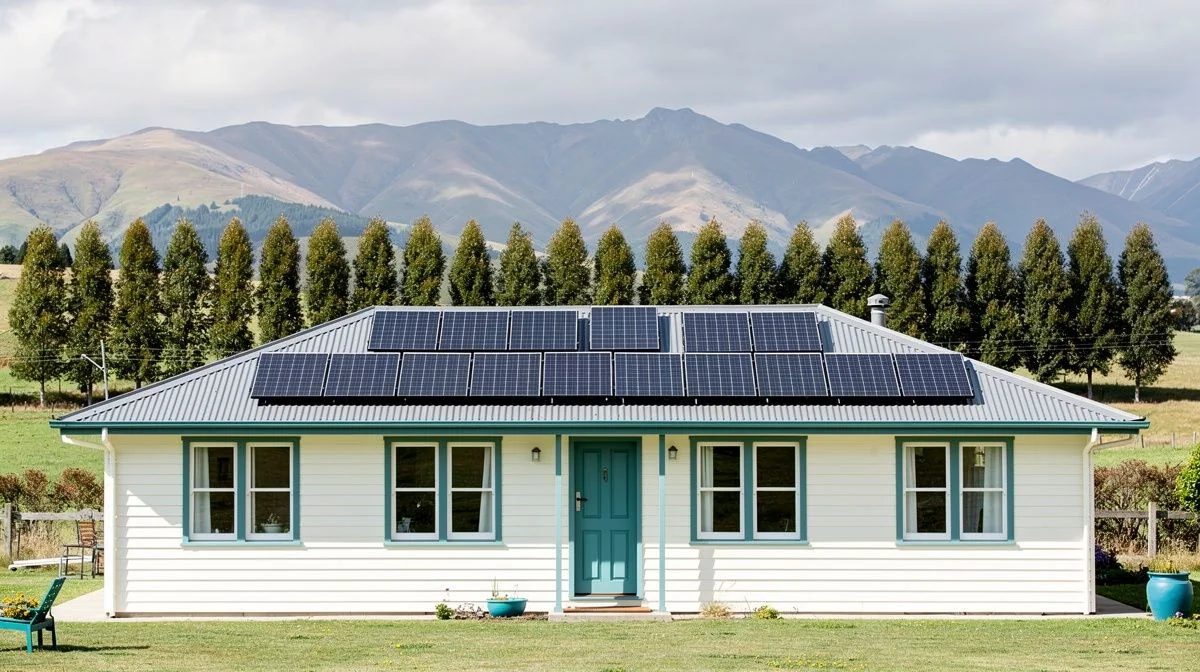
Manawatū Weather, Wind and Mounting
The Manawatū's weather is changeable, and the region is known for wind. That matters for solar because an exposed site adds uplift load to the mounting, and the fixings must be specified for the conditions rather than for a calm inland day.
Ask what wind zone your property falls into, and whether the mounting rating is included in the quote. Costs rise where wind-rated mounting is required, and a quote that never mentions exposure is worth questioning.
The Regional Economy Runs on Daytime Power
Food processing, logistics and rural services are central to Palmerston North's economy, and much of that work draws electricity during daylight. Large unshaded roofs over plants, cool stores, and warehouses, combined with steady daytime demand, create the strongest solar conditions there are.
Households benefit from the same principle at a smaller scale. A heat pump running through the day, a hot water cylinder on a daytime timer, or a home office all consume power while the panels are producing, and every unit used on site offsets a retail rate of roughly $0.28–$0.36 per kWh, among the highest in the OECD outside Europe.
Exported power earns a fraction of that. Self-consumption, not total generation, is what determines whether the system pays for itself.
Owning, Renting and the Split Incentive
A substantial student population supported by Massey University keeps a large rental market turning over. Rental properties remain the clearest case where solar does not stack up, because the landlord funds the system while the tenant receives the savings.
For owner-occupiers, the calculus is different, and a lower purchase price is not a reason to avoid solar. It simply means sizing the system to the household's actual consumption rather than an optimistic view of the roof.
No Subsidy, and Cautious Household Budgets
New Zealand has no government rebate or subsidy for residential solar. Nothing is discounted at the point of sale, there is no scheme to apply for, and there is no certificate to trade. Australian households receive support that New Zealand households do not, so prices across the Tasman are not comparable.
Without a subsidy to change the arithmetic, the case for solar rests entirely on how much of the power a household uses on site. That tends to reward improving the home you already own rather than trading up.
Palmerston North Factors That Change the Numbers
Sizing for a Modest Budget
The system costs the same here as anywhere, so the more modest the budget, the more the sizing matters. That is an argument for precision rather than for avoiding solar altogether — the wrong size costs more than it needs to when there is less room to absorb it.
System Size for a Modest Home
A smaller house with a smaller power bill needs a smaller array. Starting at the lower end of the national range and sizing against real consumption will usually produce a better return than copying a system installed on a larger home elsewhere.
Rural and Lifestyle Properties
Outside the city, rural services and lifestyle blocks often carry daytime loads that a suburban house does not. Pumps, irrigation, chillers and workshop equipment all run during the day, and a shed roof can host a larger array without touching the house.
Older Switchboards and Roof Condition
In older homes, the switchboard often changes a quote because an inverter needs a sound connection. Roof condition matters too. Assess both before agreeing on a price, rather than discovering issues during installation.
Choosing an Installer in Palmerston North
Ask for a site assessment covering the switchboard, the roof and wind exposure. Those three items account for most of the difference between a quote that holds and one that grows, and a firm that works locally will check them as a matter of course.
Then be specific about your daytime use. Tell the installer how many people are home through the day and what runs while the sun is up, because that determines the size that actually suits your household.
Get three written quotes for the same system size and compare the components rather than the totals. Inverter model, mounting grade, and warranty length all vary, and the cheapest quote is often cheapest because something has been left out.
Warning Signs
- Any mention of a government rebate or subsidy, because there is none.
- A quote that does not address wind exposure or mounting ratings.
- No assessment of the switchboard before giving a price.
- Savings estimates built on total generation rather than on-site use.
- A system sized to the roof rather than to your consumption.
- A workmanship warranty shorter than the product warranties.
Questions Palmerston North Homeowners Ask
Is solar worth it on a modest budget?
Yes, if it is sized to your use. Payback typically runs six to eight years without a battery, which is the same as anywhere else, but the outlay is harder to absorb on a modest budget, so precision matters more.
How big a system should I install?
Start below the national median if your household is small. The median system installed in New Zealand is around 7–8 kW, but a modest home with a modest bill will often do better with less.
Should I add a battery?
Rarely on the numbers alone. A battery adds $9,000–$15,000 for 10–13 kWh of usable capacity and mainly shifts your own generation into the evening. It raises self-consumption but seldom shortens payback, so treat it as a separate decision.
I rent. Is solar worth asking about?
Rarely. The landlord pays for the system while the tenant receives the savings, so the incentive is split. The practical alternative for a renter is shifting power use into daylight hours rather than investing in hardware.
What Matters Most
Palmerston North is a city where solar still makes sense, provided the system is sized to the household rather than to the roof. The economics are the same as elsewhere — payback typically six to eight years — but the margin for oversizing is thinner when the budget is modest.
Check the wind exposure, check the switchboard, and ignore anyone promising a subsidy that does not exist. To compare how the numbers work around the country, start with our solar panel installers hub.

The ValueHub Team built this site because finding clear, unbiased financial information in New Zealand was harder than it should be. Every guide is based on real research — we compare the actual fees, terms, and fine print so you don't have to. Our tip: shop around every year, read the policy docs, and never assume loyalty gets you the best deal.— The ValueHub Team
Try our Calculators
Use these free tools to crunch the numbers:
KiwiSaver Fund Comparison
Compare fees, returns, and risk levels across every KiwiSaver fund — the most up to date data in New Zealand.
Currency Converter — USD to NZD
Convert US Dollars to New Zealand Dollars instantly. See the latest exchange rate and 30-day trend.
Mortgage Repayment Calculator
Calculate your weekly, fortnightly, or monthly mortgage repayments. Free NZ mortgage calculator — try different rates, terms, and repayment frequencies.
Compound Interest Calculator
See how your savings grow with compound interest over time. Free NZ compound interest calculator with yearly, monthly, and weekly compounding options.
Term Deposit Calculator
Calculate your term deposit returns before you lock in. Compare interest earned across different terms and rates with ValueHub's free calculator.
Savings Goal Calculator
Calculate how long it will take to reach your savings goal — and what monthly deposit you need to get there. Free NZ savings planner.
Solar Panel Installers in Other Cities
Latest Guides & Reviews
SuperLife KiwiSaver Scheme Review
SuperLife KiwiSaver review: 65 open funds, fund charges from 0.20 to 1.30 per cent, and net returns to 30 June 2026.
reviewSuperEasy KiwiSaver Scheme Review
SuperEasy KiwiSaver review: 8 open funds, a 0.32 per cent fund charge, and net returns to 31 March 2026.
reviewWestpac KiwiSaver Scheme Review
Westpac KiwiSaver review: 8 open funds, fund charges from 0.25 to 0.70 per cent, and net returns to 30 June 2026.
reviewANZ KiwiSaver Scheme Review
Review of ANZ KiwiSaver. Three schemes, fees from 0.22 per cent, the closed Default scheme, OneAnswer and the Lifetimes option.