Best Solar Panel Installers in Tauranga
Published 11 September 2026 · Written by the ValueHub team · Reviewed by Steve Baron

Tauranga Has the Sun. The Coast Is the Catch.
Tauranga gets more sun than almost any other main centre, and a large share of its residents are at home through the working day. That is close to the ideal solar profile, because generation and consumption line up. Retired households on fixed incomes tend to value predictability over a headline return: solar does not stop power prices from rising, but it reduces how much of the bill is exposed to them. The system keeps producing for twenty years or more.
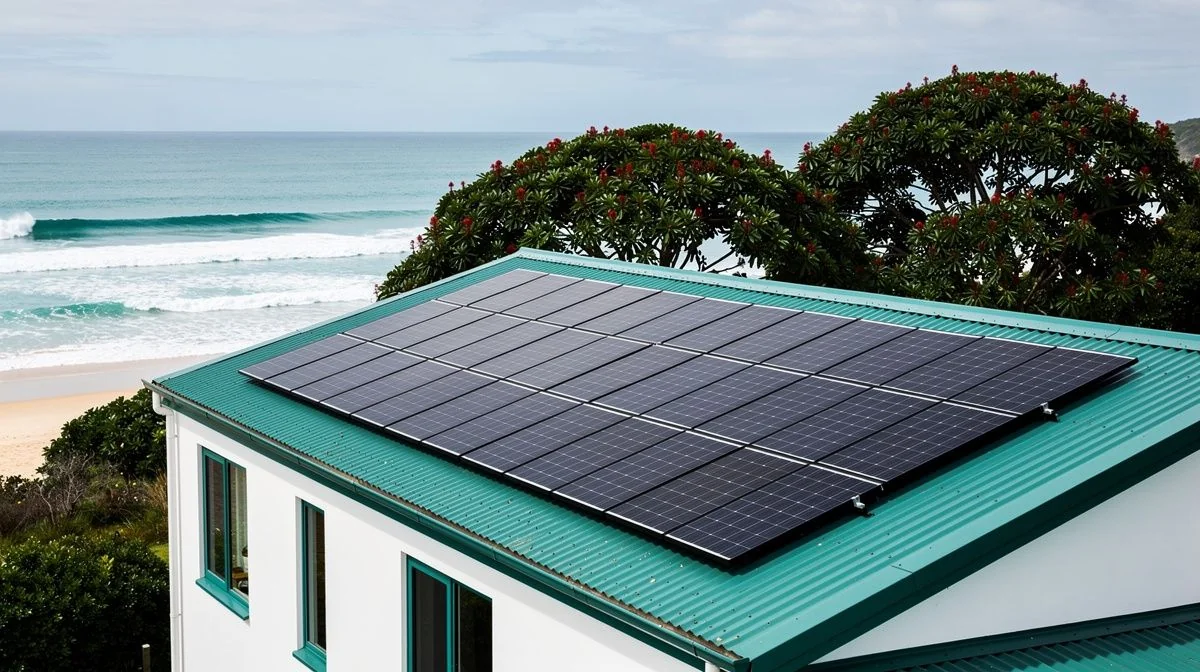
The catch is the coast. Salt-laden air attacks exposed metal, and the closer a property sits to the sea, the faster that happens. Mounting rails, brackets and fittings are the components most at risk, which is why coastal-grade hardware belongs in the specification rather than being treated as an upsell. Ask how your installer specifies for salt exposure, and expect the fixings to be described in writing. Rinsing panels after salt-laden winds and having the mounting checked periodically is sensible coastal practice.
Away from the coast, the region's economy makes a strong case. Kiwifruit and horticulture, the packhouses and cool stores that support them, and the Port of Tauranga all carry heavy daytime loads, and large unshaded roofs over commercial buildings match generation almost perfectly. For households, pricing sits in the national middle band, with coastal specification and difficult access on the peninsulas pushing quotes toward the upper end. A fair installed price is $1.70–$2.00 per watt including GST, and no subsidy reduces it.
How We Researched This Guide
We started with published installer pricing guides and worked through how price per watt changes with system size. Then we looked at what makes the Bay of Plenty different: strong local sunshine, the population's age profile, and corrosive coastal conditions that affect how long a system lasts.
We also reviewed the consumer protections covering installation work and the products supplied. Where sources disagree, we give a range rather than a single figure, and we checked every number against a source.
Our Trusted Solar Panel Installers
We feature businesses that demonstrate strong performance, proven experience, and consistently positive customer feedback. Some of the providers listed may have commercial relationships with us, but all are selected based on quality and reliability.
To begin, reach out to them and speak with them directly — this helps you explain your job, ask questions, and confirm whether they're the right fit.
Everything you need to know about solar panels in NZ and a fast way to get 3 free solar quotes. Connect with New Zealand's best, SEANZ approved solar power installers here. All solar installers have the tick of approval from SEANZ (Sustainable Energy Association New Zealand). Cloudy days? Yes — but at reduced powe
The 60-Second Version
If you read only one section, read this.
- A fair installed price is $1.70–$2.00 per watt including GST.
- A 6.6 kW system, the most popular size, usually costs $13,000–$15,000.
- New Zealand has no subsidy or rebate, unlike Australia. Nothing comes off the price.
- Payback is typically six to eight years without a battery.
- A battery adds $9,000–$15,000 for 10–13 kWh usable and rarely shortens payback.
- Self-consumption drives your return, and households that use most of their solar during the day capture the most.
What Solar Costs in Tauranga
Pricing sits in the national middle band, with coastal specifications and any difficult roof access pushing quotes toward the upper end. The bands below assume a standard roof and straightforward access.
| System size | Typical installed cost |
|---|---|
| 3 kW | $8,000–$10,000 |
| 5 kW | $11,000–$13,000 |
| 6.6 kW | $13,000–$15,000 |
| 8–10 kW | $15,000–$18,000 |
| 13 kW and above | $20,000–$30,000 |
| Battery, 10–13 kWh usable | $9,000–$15,000 |
Installed prices including GST, based on published New Zealand installer pricing guides. Coastal-grade mounting, scaffolding and switchboard upgrades are additional.
Price per watt falls as the system grows. A 3–4 kW system averages around $2.31 per watt, while a 13–14 kW system averages around $1.42 per watt. The median system installed in New Zealand homes is around 7–8 kW, and given the local sunshine, a Tauranga household with steady daytime use can often work comfortably inside that range.
Why Households Here Capture More of Their Own Power
Tauranga has an older population than the national average, and many residents are home during the workday. That is close to the ideal profile for solar, because the household is present while the panels are producing.
The value of that overlap is easy to state. Every kilowatt-hour used on site offsets a retail rate of roughly $0.28–$0.36 per kWh, among the highest in the OECD outside Europe. Exported power earns a fraction of that, so a household at home all day keeps far more of the value it generates.
For retired households on fixed incomes, the appeal is usually about predictability rather than return. Solar doesn't stop power prices from rising, but it reduces how much of the bill is exposed to them, and the system can keep producing for 20 years or more.
Coastal Exposure and Salt Corrosion
Salt air corrodes exposed metal, and the closer a property sits to the sea, the faster that happens. Mounting rails, brackets and fittings are the components most at risk, which is why coastal-grade or well-coated hardware matters here rather than being an upsell.
Ask how the installer specifies for coastal conditions, and how they protect the fixings. A system intended for an inland subdivision may physically fit your roof and still be the wrong specification for a property a few streets from the beach.
Maintenance expectations differ too. Rinsing panels after salt-laden winds and having the mounting checked periodically is sensible coastal practice, and it is a maintenance cost inland owners rarely think about.
Horticulture, Packhouses and the Port
Kiwifruit and horticulture are central to the local economy, and the packhouses and cool stores that support them carry heavy daytime loads. Large unshaded roofs combined with daytime demand create ideal solar conditions, which is why commercial and rural installations feature strongly around the region.
For a lifestyle block or orchard property, the same logic applies at a smaller scale. Pumps, irrigation and cool storage run while the sun is up, so generation is consumed on site rather than sold cheaply. The Port of Tauranga and the surrounding logistics operations add to the region's daytime electricity demand.
No Subsidy, and a Realistic View of Resale
New Zealand has no government rebate or subsidy for residential solar. Nothing is discounted at the point of sale, there is no scheme to enrol in, and there is no certificate to trade. Australian households receive support that New Zealand households do not, so overseas headline prices are not comparable.
Coastal specification adds to the cost here, and the region has an older population than the national average, so more households are weighing a long-lived purchase against a fixed income. That makes the honest payback figure matter more than the headline price.
A solar system is unlikely to add its full cost to a resale figure. That doesn't weaken the case, but it does mean you should judge the purchase on the savings it earns while you own the home, rather than on the hope of recovering the outlay at sale.
Tauranga Factors That Change the Numbers
Sunshine That Rewards a Smaller Array
Production per panel is high here, so a household with moderate daytime use can often meet its needs with a smaller system than it would need in a cloudier centre. That keeps upfront costs and the payback period lower.
Fixed Incomes and Rising Power Bills
With an older population than the national average, more local households are managing a fixed income against rising electricity prices. Reducing the units bought at retail rates is a straightforward way to make the power bill more predictable.
Peninsula and Island Access
Properties on the peninsulas and around the harbour can be harder to reach, and access adds labour to any installation. Ask for access and scaffolding costs to be itemised separately so you can see what the location is costing you.
Orchard, Lifestyle and Packhouse Loads
Rural and horticultural properties often carry daytime loads that a suburban house does not. Where the roof space exists, a larger array on a shed or packhouse can be justified by consumption rather than by export income.
Choosing an Installer in Tauranga
Ask specifically how the installer handles coastal conditions. A firm that works regularly in the Bay of Plenty will have a standard specification for salt exposure, and it should be written into the quote rather than described verbally.
Then get three written quotes on the same system size and compare the components. Inverter model, mounting grade, and workmanship warranty length vary widely, and those differences matter more in a coastal environment than the headline price.
Warning Signs
- Any claim that a government solar subsidy or rebate is available.
- A quote with no mention of coastal specification or corrosion protection.
- Savings estimates built on total generation rather than power used on site.
- No site visit, or shading assessed without stepping onto the property.
- Unclear answers about who carries out and certifies the electrical work.
- A workmanship warranty shorter than the panel and inverter warranties.
Questions Tauranga Homeowners Ask
Is solar worth it here without a subsidy?
For an owner-occupier with a decent roof and daytime use, yes. Payback typically runs six to eight years, and the system should last more than twenty. The strong local sun improves the case, and being home during the day improves it further.
Does coastal air really shorten the life of a system?
The panels themselves are long-lived, but exposed mounting hardware and fittings are what suffer. Specifying coastal-grade components and checking them periodically is what keeps a coastal system performing for its full life.
Should I add a battery?
Rarely on the numbers alone. A battery adds $9,000–$15,000 for 10–13 kWh of usable capacity and mainly shifts your own generation into the evening. It raises self-consumption but seldom shortens payback, so treat it as a separate decision.
How big a system do I need?
Start with your daytime consumption. The median system installed in New Zealand is around 7–8 kW, and a household that is home through the day can use more of what it generates, so it may not need to go larger than that.
What Matters Most
Tauranga gives solar two advantages most centres cannot match: excellent sunshine and households that are actually home to use the power. The discipline is to keep the specification suited to the coast and the size matched to your consumption rather than your roof.
There is no subsidy to wait for, so the numbers have to stand on their own, and here they usually do. To compare how that works around the country, start with our solar panel installers hub.

The ValueHub Team built this site because finding clear, unbiased financial information in New Zealand was harder than it should be. Every guide is based on real research — we compare the actual fees, terms, and fine print so you don't have to. Our tip: shop around every year, read the policy docs, and never assume loyalty gets you the best deal.— The ValueHub Team
More Solar Panel Installers in Tauranga
These businesses also operate in this area.
We are the specialists for solar energy panels NZ. Interested in saving money on your power bills? Call SkySolar today and we will show you how. Who we are End-to-end solar solution specialists. We allow smart kiwi homeowners and businesses to harness what’s already theirs - the solar energy hitting their property. End
Try our Calculators
Use these free tools to crunch the numbers:
KiwiSaver Fund Comparison
Compare fees, returns, and risk levels across every KiwiSaver fund — the most up to date data in New Zealand.
Currency Converter — USD to NZD
Convert US Dollars to New Zealand Dollars instantly. See the latest exchange rate and 30-day trend.
Mortgage Repayment Calculator
Calculate your weekly, fortnightly, or monthly mortgage repayments. Free NZ mortgage calculator — try different rates, terms, and repayment frequencies.
Compound Interest Calculator
See how your savings grow with compound interest over time. Free NZ compound interest calculator with yearly, monthly, and weekly compounding options.
Term Deposit Calculator
Calculate your term deposit returns before you lock in. Compare interest earned across different terms and rates with ValueHub's free calculator.
Savings Goal Calculator
Calculate how long it will take to reach your savings goal — and what monthly deposit you need to get there. Free NZ savings planner.
Solar Panel Installers in Other Cities
Latest Guides & Reviews
SuperLife KiwiSaver Scheme Review
SuperLife KiwiSaver review: 65 open funds, fund charges from 0.20 to 1.30 per cent, and net returns to 30 June 2026.
reviewSuperEasy KiwiSaver Scheme Review
SuperEasy KiwiSaver review: 8 open funds, a 0.32 per cent fund charge, and net returns to 31 March 2026.
reviewWestpac KiwiSaver Scheme Review
Westpac KiwiSaver review: 8 open funds, fund charges from 0.25 to 0.70 per cent, and net returns to 30 June 2026.
reviewANZ KiwiSaver Scheme Review
Review of ANZ KiwiSaver. Three schemes, fees from 0.22 per cent, the closed Default scheme, OneAnswer and the Lifetimes option.