Best Solar Panel Installers in Wanaka
Published 10 April 2025 · Updated 08 October 2026 · Written by the ValueHub team · Reviewed by Steve Baron
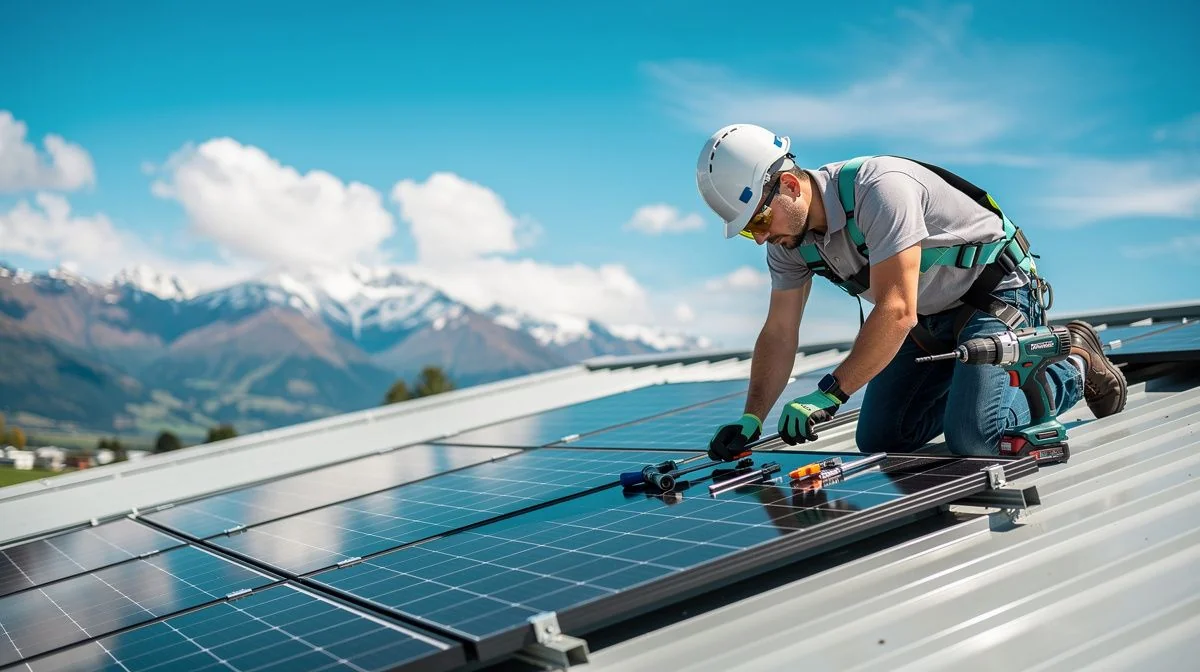
Best Solar Panel Installers in Wanaka
This is one of the better places in the country to generate power. Clear skies, cold air and long summer days all help a panel work, and the cold actually improves the output rather than reducing it. Roofs here tend to be large and unshaded, which is the other half of the equation.
What decides the return is not the sun but the timing. Power exported to the grid earns a fraction of what the same unit is worth used in the house, so the question is how much of what you generate you will actually use. We have set out the cost of the systems, what the payback looks like, and what to check before signing.
How We Researched This Guide
We used published 2026 New Zealand installed price data, expressed per watt and per system size, because the per-watt figure is the only way to compare quotes for differently sized systems.
The payback figures come from analysis of a large set of quotes provided to homeowners rather than from an installer's own modelling. The licensing position is set by statute, and the register is public.
The Quick Summary (60-Second Version)
If you want the short version before you ask anyone around, here it is.
- A fully installed system costs about $1.70 to $2.30 per watt including GST.
- A 5 kW system is roughly $11,000 to $13,000 and an 8 kW system $15,000 to $18,000.
- The median payback on a solar-only system is currently around 6.6 to 6.9 years.
- Adding a battery extends payback to around 9 years and roughly doubles the cost.
- Exported power earns roughly 7 to 12 cents per unit, compared with a retail price several times that.
- The mistake to avoid is sizing the system on the quote rather than on your daytime use, because exported power earns very little.
Who Is Allowed to Install a System
The electrical part of a solar installation is prescribed electrical work and must be performed or supervised by a licensed electrician. That covers the inverter, the wiring, the isolation and the connection to the switchboard. A designer or salesperson cannot perform that work, and whoever does must be able to certify it.
Check the licence on the Electrical Workers Registration Board register. It is public and free to search, and it takes less than a minute. A grid-connected system also needs approval from the local network company before it is connected, because the network has to know what is feeding into it. Ask who arranges that application, because it is a step that has to happen before the system is switched on.
The physical installation has its own rules. Panels go on a roof, which means working at height, and the array adds weight and wind loading to the structure. WorkSafe sets out the requirements for the work itself. Ask for the design to be signed off for wind loading, because a roof that is fine in still air is not the same as one carrying an array in a gale.
Wanaka Pricing — What You Can Expect to Pay
System prices are quoted per watt, and that figure lets you compare two quotes for different sizes on the same basis. Divide the total quote by the system size in watts. A fair installed price falls within a band, and a quote well outside it, either direction, is worth questioning rather than celebrating.
Batteries are the other decision point, and they are substantial. Adding storage roughly doubles the total and extends the payback period, so the case for one rests on using the stored power rather than selling it. New Zealand has no national solar rebate, so the full cost is borne by the owner and recouped through lower bills.
| Item | Typical cost |
|---|---|
| Installed cost per watt | $1.70-$2.30 per W incl GST |
| 3 kW system | $7,000-$10,000 |
| 5 kW system | $11,000-$13,000 |
| 6.6 kW system | $13,000-$15,000 |
| 8 kW system | $15,000-$18,000 |
| 10 kW system | $15,000-$19,000 |
| Battery, typical 11 kWh | about $13,000 |
| Median payback, solar only | about 6.6-6.9 years |
| Median payback with a battery | about 9 years |
| Export buyback rate | about 7-12 cents per kWh |
Installed prices include the panels, the inverter, the mounting, the wiring, and labour, and are usually quoted inclusive of GST. A battery is priced separately and is not required for a grid-connected system. Ask what a quote excludes, because scaffolding and any switchboard upgrade are the two most common additions.
How to Choose an Installer — What Actually Matters
Divide the quote by the watts, and compare that number
Per-watt pricing is the only fair way to compare two systems of different sizes. Divide the installed price by the system size in watts and compare the results. If a quote sits well above the market band, ask what the premium buys. If it sits well below it, ask about the panel and inverter warranty terms, because that is where the savings usually come from.
Ask what the quote assumes about your daytime use
The payback depends on how much of the generation you use rather than export. Ask the installer to show the assumption they have made about your daytime consumption and what happens to the numbers if you use less. A proposal that assumes the washer, the hot water and the car all run in daylight needs those habits to be realistic for your household.
Ask who signs the electrical certification and the network application
Ask for the name of the licensed electrician who will certify the work and confirm the design and installation are covered by that licence. Then ask who lodges the network connection application and what happens if approval is delayed. Those two answers tell you whether the business does the whole job or only the part that is visible from the road.
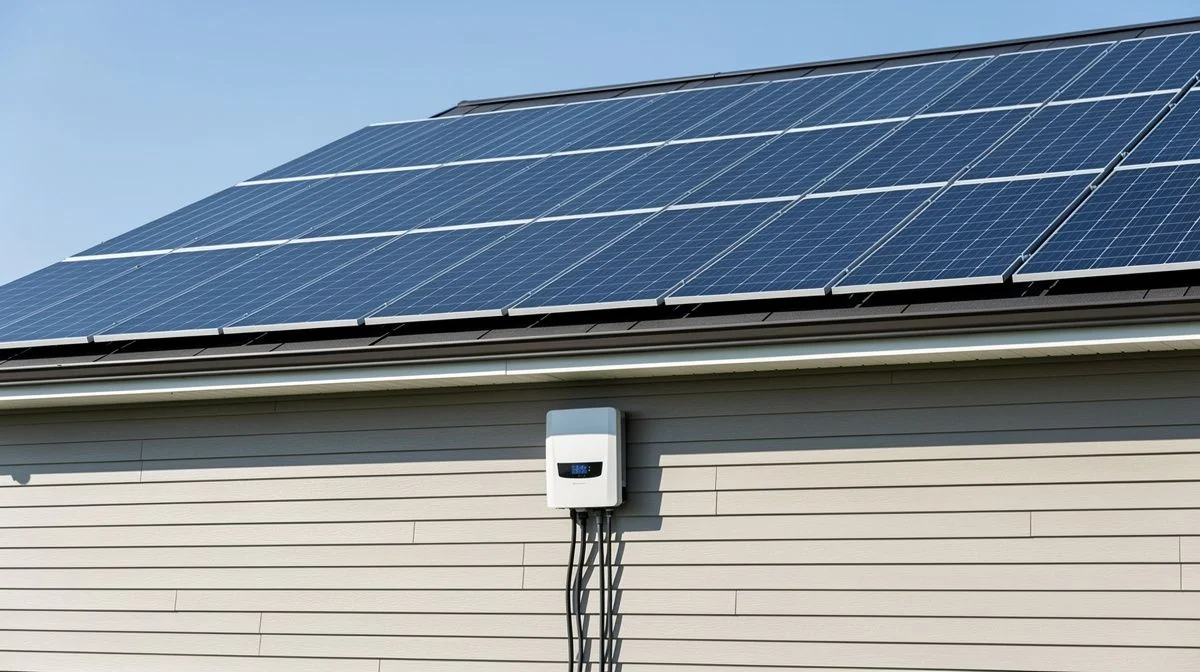
What the Process Involves
A residential installation is quick at the end and slow at the start, and the early steps determine the return.
- Your power use is reviewed, usually based on a year of billing data, and the roof is assessed for orientation, pitch, shading, and condition.
- A system size is proposed against that use, with the generation and consumption modelled rather than estimated by rule of thumb.
- The quote sets out the panels, the inverter, the mounting, the monitoring and any roof or switchboard work, and the connection application is lodged.
- Scaffolding or roof access is arranged, and the array and inverter are installed, usually within a day or two.
- The system is commissioned, inspected and certified, and the network approves the connection before it begins exporting.
Wanaka-Specific Risks — What Your Installer Should Know
Snow, frost and the winter generation dip
Winter days here are short, and the sun is low, so generation falls away even though the cold helps the panels themselves. Snow lying on an array stops it entirely until it clears. Ask what the installer's modelling shows for a winter month, not just the annual average, and ask about the tilt and mounting height if snow is a regular feature on your roof.
Roof condition, orientation and shading
Many homes here have roofs of an age where they will need replacement within the life of the array, and lifting panels to re-roof later adds cost. Ask what the roof is expected to give and whether it should be done first. Orientation and shading matter just as much, so have the proposed array modelled against the actual roof rather than the ideal one.
Buyback rates and the value of a unit you use yourself
Export earns only a fraction of the retail price, and the buyback figures offered by retailers vary and are unregulated. Ask what the current export rate is on your chosen retailer's plan, and what the same unit is worth if you use it in the house instead. Shifting hot water, appliances and charging into daylight does more for the return than any tariff shopping.
Questions You Might Have
Is there a rebate or subsidy for solar?
No. New Zealand has no national solar rebate, so the full installed cost is carried by the owner and recovered through lower power bills and export payments. That makes the per-watt price the main lever, and it makes a hard look at the payback figures worthwhile before committing.
Do I need a battery?
Not for a grid-connected system. A battery lets you use your own generation in the evening rather than buying power back at the retail rate, but it roughly doubles the cost and stretches the payback to around nine years. It makes most sense where evening use is heavy or where the connection is constrained, rather than as a default addition.
How long does the installation take?
The on-site work usually takes a day or two for a residential array, once access and the connection application are sorted. The part that takes longer is the assessment, modelling, and network approval, which can take several weeks. Ask for the timeline in the quote, because paperwork, rather than the installation, is normally what delays a switch-on.
What Matters Most
The sun here is not the limiting factor; timing is. A unit used in the house is worth several times what is exported, so the size and shape of the system should follow your daytime use rather than the roof's capacity.
Compare quotes on a per-watt basis, get the daytime consumption assumption in writing, and confirm who holds the electrical licence and who lodges the network application.

The ValueHub Team built this site because finding clear, unbiased financial information in New Zealand was harder than it should be. Every guide is based on real research — we compare the actual fees, terms, and fine print so you don't have to. Our tip: shop around every year, read the policy docs, and never assume loyalty gets you the best deal.— The ValueHub Team
Try our Calculators
Use these free tools to crunch the numbers:
KiwiSaver Fund Comparison
Compare fees, returns, and risk levels across every KiwiSaver fund — the most up to date data in New Zealand.
Currency Converter — USD to NZD
Convert US Dollars to New Zealand Dollars instantly. See the latest exchange rate and 30-day trend.
Mortgage Repayment Calculator
Calculate your weekly, fortnightly, or monthly mortgage repayments. Free NZ mortgage calculator — try different rates, terms, and repayment frequencies.
Compound Interest Calculator
See how your savings grow with compound interest over time. Free NZ compound interest calculator with yearly, monthly, and weekly compounding options.
Term Deposit Calculator
Calculate your term deposit returns before you lock in. Compare interest earned across different terms and rates with ValueHub's free calculator.
Savings Goal Calculator
Calculate how long it will take to reach your savings goal — and what monthly deposit you need to get there. Free NZ savings planner.
Solar Panel Installers in Other Cities
Latest Guides & Reviews
SuperLife KiwiSaver Scheme Review
SuperLife KiwiSaver review: 65 open funds, fund charges from 0.20 to 1.30 per cent, and net returns to 30 June 2026.
reviewSuperEasy KiwiSaver Scheme Review
SuperEasy KiwiSaver review: 8 open funds, a 0.32 per cent fund charge, and net returns to 31 March 2026.
reviewWestpac KiwiSaver Scheme Review
Westpac KiwiSaver review: 8 open funds, fund charges from 0.25 to 0.70 per cent, and net returns to 30 June 2026.
reviewANZ KiwiSaver Scheme Review
Review of ANZ KiwiSaver. Three schemes, fees from 0.22 per cent, the closed Default scheme, OneAnswer and the Lifetimes option.