Best Sports Massage Therapists in Masterton
Published 14 April 2025 · Updated 18 August 2026 · Written by the ValueHub team · Reviewed by Steve Baron

Best Sports Massage Therapists in Masterton
A rural working population, club sport, and a lot of aching shoulders
Wairarapa is a district where a great many people are physically active for a living rather than for a hobby. Shearing, fencing, stock work, orchard and vineyard labour all load the same shoulders, backs and forearms day after day, and the result is a steady demand for hands-on treatment from people who are not athletes in any formal sense.
Alongside that is club sport. Masterton has rugby, netball, hockey, cycling and a strong running community, and the local clubs are where most weekend-warrior injuries are picked up and nursed back.
The third group is people who simply sit too much. Wairarapa now has a substantial number of residents commuting to Wellington or working from home, and the complaints that come with a desk and a long drive are as common here as in the city.
A practical thing worth knowing before booking anywhere: massage therapists in New Zealand are not a regulated health profession. There is no registration requirement, which means qualifications and experience vary enormously, and asking about both is entirely reasonable.
How We Researched This Guide
We used published price lists from New Zealand massage and muscle therapy practices. Most practitioners publish their session lengths and rates, which makes the market unusually easy to compare once you know that the headline price is for a specific duration.
What stood out is that the hourly rate flattens as sessions get longer. A thirty-minute appointment can cost almost as much per minute as a ninety-minute one, because the setup, the consultation and the room time are the same regardless of duration. We also read the public information on what ACC can fund for treatment after an injury, published by the Accident Compensation Corporation, and the ordinary consumer protections that apply to any paid service, explained by Consumer Protection.
The 60-Second Version
The short version, before the detail.
- A sixty-minute sports or deep tissue massage is commonly $100–$115.
- Thirty minutes is usually $60–$70, and forty-five minutes $85–$100.
- Ninety minutes runs $130–$160, and two hours $190–$210.
- Mobile or home visits usually add a travel charge.
- ACC may contribute where an injury is covered and the therapist is an approved provider.
- Massage is not a regulated profession here, so ask about qualifications.
What Sports and Remedial Massage Actually Does
Sports massage is not a relaxation treatment with firmer hands. The aim is to change how tissue behaves: reducing tone in overworked muscle, improving how a joint moves, and helping you get back to training or work without the same problem returning in a fortnight.
That means the session should start with questions. What hurts, when it hurts, what changed, and what you have been doing differently. A therapist who begins without that conversation is treating a symptom rather than a person.
The treatment itself combines several techniques. Deep tissue work on specific muscles, trigger point release, myofascial work, and sometimes cupping. Which one is used should follow the assessment rather than the therapist’s preference.
There is a difference between maintenance and treatment, and it is worth being clear about which you are booking. A maintenance session keeps working tissue working and is best booked in advance on a schedule. A treatment session is for something that hurts and needs assessing, and it usually needs to be followed up within a week or two rather than a month later.
The most useful part of the appointment is often the last five minutes. Advice about load, stretching, strengthening or footwear is what stops the same complaint coming back, and a therapist who gives you nothing to do at home is not doing the whole job.
What Sports Massage Costs in Masterton
Published New Zealand rates, which apply across the Wairarapa.
| Session | Typical price |
|---|---|
| 30 minutes | $60–$70 |
| 45 minutes | $85–$100 |
| 60 minutes | $100–$115 |
| 75 minutes | $115–$135 |
| 90 minutes | $130–$160 |
| 120 minutes | $190–$210 |
| Mobile visit | clinic rate plus travel |
| Cupping, where offered | usually included in the session price |
Price ranges verified from published New Zealand massage and muscle therapy price lists as of September 2026. Practitioners who are Southern Cross Easy Claim providers can bill eligible health insurance claims directly.
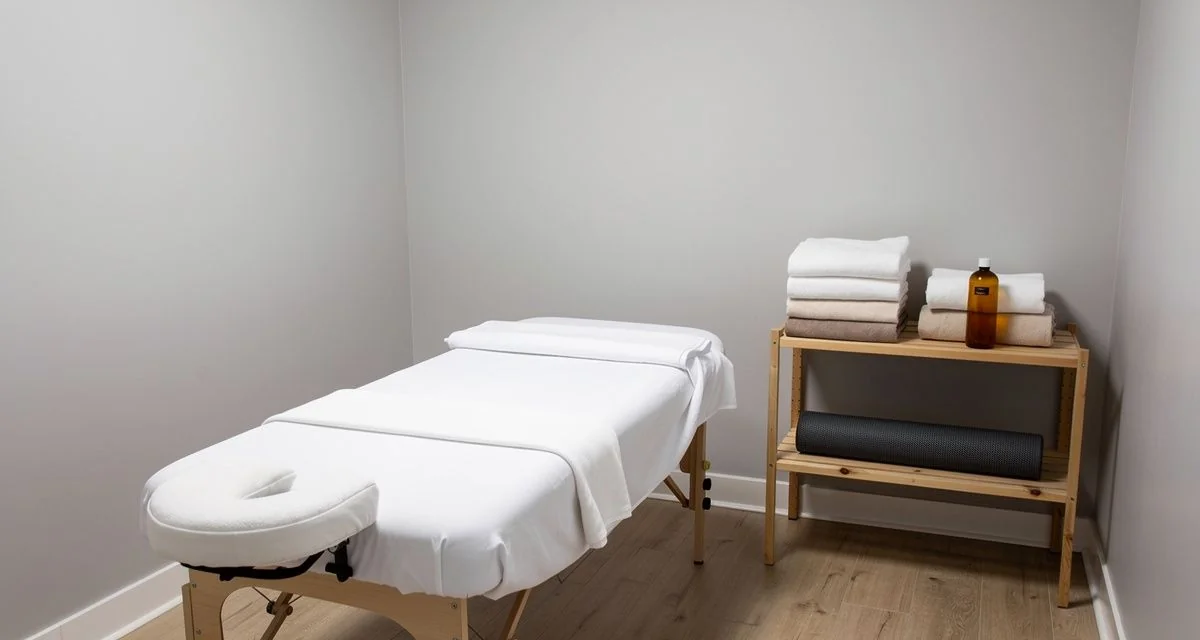
How the Session Length Changes What Is Possible
Thirty minutes is a targeted appointment. It suits one area that is misbehaving, a maintenance check, or an athlete in a competition week who wants specific work rather than a full treatment. It is not enough time to assess a complex problem and treat it properly.
Sixty minutes is the standard appointment and the one most practitioners recommend for a new complaint, because it allows time for a proper history, an assessment and treatment. Ninety minutes suits a first visit for a widespread problem, or someone whose work loads several areas at once.
What to Look For in a Therapist
Ask what qualification they hold and how long they have been practising. In a market with no registration requirement, this is the only filter available, and the answers range from a weekend course to a full diploma with clinical hours behind it.
Ask whether they work with ACC. If you have an accepted claim and the therapist is an approved provider, part of the cost may be covered. It is worth checking before you book, because it changes what you pay rather than what you receive.
Ask whether they are a Southern Cross Easy Claim provider if you have health insurance with an alternative benefit. Many massage practices are, and it means the claim can be submitted on the spot rather than by you afterwards.
Ask how they record what they find. A therapist who writes notes and refers back to them next time is building a picture of your problem, and that is what allows a treatment plan to progress rather than repeat the same session over and over.
Finally, ask what they would do differently for your situation. A therapist who can explain why your shoulder is complaining and what the plan is over the next few sessions is a therapist who will help you, regardless of the technique they use.
Local Factors Worth Knowing
Occupational loading rather than sport
A shearer, fencer or vineyard worker is asking their body to do something repetitive and heavy for weeks at a time, and the treatment pattern that suits them is regular maintenance rather than a one-off session after something goes wrong.
Club sport and the weekend cycle
In a district with strong club competition, most players train midweek and play at the weekend. Booking treatment in the two days after a game, rather than the night before, fits the recovery pattern better and leaves the tissue settled before the next training load.
Distance to specialist care
The Wairarapa is an hour from Wellington, and that matters when an injury needs imaging or a specialist opinion. A good local therapist knows when to refer, which is as valuable as knowing what to treat. If a problem is not improving in a reasonable number of sessions, that is the point to ask about a referral. A therapist who works with the local clubs will also know which injuries are doing the rounds and what the options are.
Questions You Might Have
How often should I have sports massage?
For a specific problem, weekly or fortnightly for a few weeks and then review. For general maintenance, every three to six weeks suits most people who train consistently or work physically.
Should I see a physiotherapist instead?
If the problem is an injury with a diagnosis to be made, a physiotherapist may be the better first stop, and plenty of people see both. Massage is excellent for tissue that is tight and overworked; it is not a diagnostic service.
Does deep tissue massage have to hurt?
It can be uncomfortable, but pain that makes you tense up is counterproductive. Tell the therapist what you are feeling; the pressure should be firm and tolerable rather than something to endure.
Can I have a massage with an injury?
Often yes, though it depends on the injury. Recent bruising, suspected fractures and some inflammatory conditions need assessment first, so be honest about what happened and when.
Is massage covered by health insurance?
Many policies have an alternative therapy benefit that includes massage. Check your limit and whether a referral or a registered provider is required, and ask the clinic whether it can claim on your behalf.
What Matters Most
Hands-on treatment works best as part of a plan rather than as an occasional emergency. The complaint that keeps coming back is usually a load problem, and massage is the part that makes the load manageable while the rest of the plan does the work.
In the Wairarapa, where so much of the demand comes from physical work rather than sport, the sensible approach is to choose a therapist who asks questions before they start, books you in on a regular pattern rather than a reactive one, and tells you honestly when something needs a different kind of attention.

The ValueHub Team built this site because finding clear, unbiased financial information in New Zealand was harder than it should be. Every guide is based on real research — we compare the actual fees, terms, and fine print so you don't have to. Our tip: shop around every year, read the policy docs, and never assume loyalty gets you the best deal.— The ValueHub Team
Try our Calculators
Use these free tools to crunch the numbers:
KiwiSaver Fund Comparison
Compare fees, returns, and risk levels across every KiwiSaver fund — the most up to date data in New Zealand.
Currency Converter — USD to NZD
Convert US Dollars to New Zealand Dollars instantly. See the latest exchange rate and 30-day trend.
Mortgage Repayment Calculator
Calculate your weekly, fortnightly, or monthly mortgage repayments. Free NZ mortgage calculator — try different rates, terms, and repayment frequencies.
Compound Interest Calculator
See how your savings grow with compound interest over time. Free NZ compound interest calculator with yearly, monthly, and weekly compounding options.
Term Deposit Calculator
Calculate your term deposit returns before you lock in. Compare interest earned across different terms and rates with ValueHub's free calculator.
Savings Goal Calculator
Calculate how long it will take to reach your savings goal — and what monthly deposit you need to get there. Free NZ savings planner.
Sports Massage Therapists in Other Cities
Latest Guides & Reviews
SuperLife KiwiSaver Scheme Review
SuperLife KiwiSaver review: 65 open funds, fund charges from 0.20 to 1.30 per cent, and net returns to 30 June 2026.
reviewSuperEasy KiwiSaver Scheme Review
SuperEasy KiwiSaver review: 8 open funds, a 0.32 per cent fund charge, and net returns to 31 March 2026.
reviewWestpac KiwiSaver Scheme Review
Westpac KiwiSaver review: 8 open funds, fund charges from 0.25 to 0.70 per cent, and net returns to 30 June 2026.
reviewANZ KiwiSaver Scheme Review
Review of ANZ KiwiSaver. Three schemes, fees from 0.22 per cent, the closed Default scheme, OneAnswer and the Lifetimes option.