Best Electricians in Christchurch: How to Choose, What to Pay, and What Matters
Published 11 September 2026 · Written by the ValueHub team · Reviewed by Steve Baron
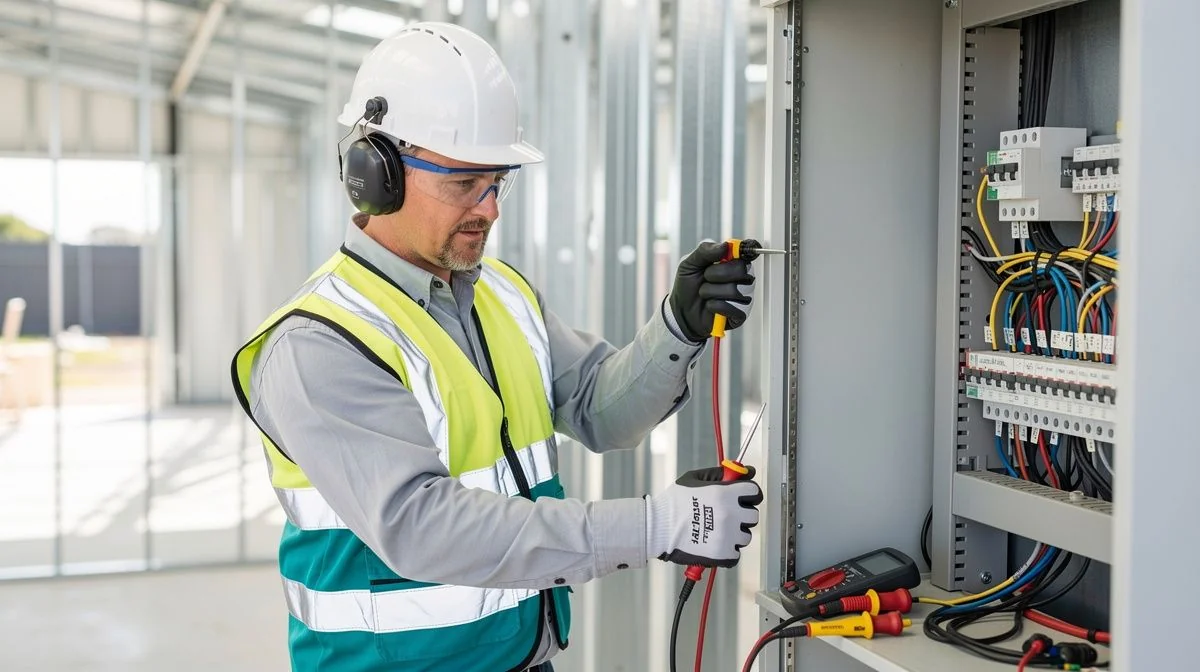
Why a Good Electrician Matters in Christchurch
The Canterbury earthquakes reshaped Christchurch's housing stock, its building regulations and the risk profile of thousands of homes, and that history still sits behind every electrical job in the city. Repair work was done under intense pressure, with foundations and framing engineered and signed off, while the wiring inside was assessed case by case. Some homes were fully rewired as part of the repair. Many were not.
Shaking can crack the brittle rubber insulation on older cabling without any visible sign, and the damage only surfaces when a renovation disturbs the wiring. The inner suburbs are full of character homes still carrying VIR or TRS wiring that insurers increasingly refuse to cover. At the same time, mid-century brick-and-tile units often have aluminium wiring, ceramic fuse boards and mains supplies too small for a modern household.
The land matters too. Christchurch is built on a floodplain, and homes on higher-risk land classifications can shift over time, straining conduits, switchboard mountings, and the service cable entry. The damp winter climate drives moisture into outdoor fittings and causes RCD nuisance tripping that drier cities rarely see. Christchurch electricians typically charge $80 to $120 an hour plus GST, with callout fees of $50 to $100.
How We Researched This Guide
We researched dozens of Christchurch electrical companies across Google Maps, No Cowboys, and Builderscrack to understand pricing structures, service specialisations, and customer feedback patterns. We reviewed the Electricity Act 1992 and the Electricity (Safety) Regulations 2010 to confirm licensing requirements, checked the EWRB public register for registration classes and work limits, and researched Master Electricians membership standards, including the $20,000 guarantee. We also reviewed Christchurch City Council building consent requirements, EQC and insurer electrical assessment standards post-earthquake, and the current NZS 3000 wiring standards.
Our Trusted Electricians
We feature businesses that demonstrate strong performance, proven experience, and consistently positive customer feedback. Some of the providers listed may have commercial relationships with us, but all are selected based on quality and reliability.
To begin, reach out to them and speak with them directly — this helps you explain your job, ask questions, and confirm whether they're the right fit.
Professional electricians in Christchurch for residential, commercial, and industrial projects. Choose Bronson Electrical for quality electrical solutions. Professional electrical services for homes and new builds across Christchurch. Deal directly with Ben — every time. Request a Free Quote We'll get back to you within 24 hours.
NZ Electrical Licensing — What Actually Matters
The Electricity Act 1992 and the Electricity (Safety) Regulations 2010 govern electrical work in New Zealand, and the EWRB enforces them. A new registration framework took effect on 1 September 2024, with updated registration notices in 2025, and full application from 1 September 2026. Understanding the licensing system is important before you start calling electricians.
| Registration Class | What It Allows |
|---|---|
| Electrician | The core residential registration class. Can carry out prescribed electrical work (PEW) on installations, works, and appliances. Can test and certify their own work. Can supervise up to two people at one time. This is the minimum licence you want for any residential electrical work. Cannot inspect PEW — that requires an Electrical Inspector registration. |
| Electrical Installer | A more limited registration class. Can carry out PEW on installations and works (but not appliances). Can test their own work. Can supervise one person. From 1 September 2026, an Electrical Installer can apply for Electrician registration after one year of registered experience plus an additional year of practical experience and passing the examination requirements. |
| Electrical Service Technician | Focused on appliances. Can service, repair, and test electrical appliances and fittings. Can connect and disconnect appliances from the power supply. Not authorised for general installation wiring work. |
| Electrical Appliance Serviceperson | The most limited registration class. Can service and repair specific types of appliances, typically under supervision or within a defined scope. Not authorised for general installation or wiring work. |
Endorsed registration classes exist for high-risk work areas — mining operations, hazardous areas, medical cardiac protected areas, and mains parallel generation systems. These are not relevant to standard residential work but demonstrate the tiered nature of the licensing framework.
Certification is mandatory. Any prescribed electrical work must include a Certificate of Compliance (CoC) and an Electrical Safety Certificate (ESC). These confirm the work meets the Electricity (Safety) Regulations and NZS 3000. The electrician lodges the CoC on the national database. Keep these certificates — they are essential for insurance purposes, for property sales, and specifically in Christchurch, for verifying that post-earthquake electrical repairs were properly certified. An administrative fee of around $30 to $60 covers the certification lodgement.
Annual practising licence renewal is mandatory. Verify any electrician's current licence status, registration class, and disciplinary history on the EWRB public register at ewrb. govt.nz — it takes 30 seconds and costs nothing. If an electrician will not give you their licence number, find another electrician.
Master Electricians membership is the industry body, not a regulator. Quality Assured members pass a rigorous assessment covering knowledge, experience, professionalism, and safety systems. The key consumer protection is the $20,000 Workmanship Guarantee on residential prescribed electrical work, covering labour and replacement materials for defective workmanship, up to $20,000 including GST, for claims within 12 months of the completion date or CoC date, whichever is later. Members must also carry public liability insurance. It is a strong quality signal, though many excellent non-member electricians also do outstanding work.
Christchurch Electrical Pricing — What You Can Expect to Pay
Christchurch has the most competitively priced electrical market of New Zealand's three main centres. A large, post-earthquake-trained workforce, flat urban geography (which cuts travel time between jobs), and a rebuilding culture that normalised multiple quotes and transparent pricing all contribute to rates below Auckland and Wellington. The figures below are for standard business hours — after-hours, weekend, and public holiday rates are significantly higher.
| Job | Typical Price Range (ex GST unless stated) |
|---|---|
| Standard callout (first hour, includes travel) | $80–$150 |
| Hourly rate (after first hour) | $80–$120 |
| After-hours emergency callout | 1.5x–2x standard rate ($120–$240/hr) |
| Single power point (add or relocate) | $150–$250 |
| New light fitting installation | $120–$300 |
| Switchboard upgrade (basic, fuse board to MCBs) | $1,200–$2,500 |
| Switchboard upgrade (full, with RCD protection on all circuits) | $1,500–$3,500 |
| Heat pump electrical wiring (dedicated circuit) | $250–$550 |
| EV charger installation (straightforward, modern switchboard) | $700–$1,300 |
| Full house rewire (standard 3BR, good access) | $10,000–$18,000 |
| Full house rewire (larger home, character home, difficult access) | $15,000–$25,000 |
| RCD safety switch installation (per circuit, board has capacity) | $140–$280 |
| Electrical safety inspection (visual, no repairs) | $180–$350 |
| Kitchen electrical package (complete) | $3,000–$8,000 |
| Bathroom electrical package (complete) | $1,500–$4,000 |
Price ranges verified from multiple Christchurch electrical provider websites and NZ industry cost guides as of August 2026. Final quotes depend on property access, switchboard condition, wiring type, cable run length, required materials, and whether the work falls within standard business hours.
What drives the price in Christchurch. The flat geography keeps travel costs and job durations more predictable than in Wellington or Auckland — there are few steep sections requiring scaffolding or complex cable runs. But the three biggest cost drivers in Christchurch are all linked to the age and condition of the home.
A 1950s weatherboard in St Albans with original TRS wiring and a 35-amp supply will cost significantly more to upgrade than a post-earthquake new build in Halswell with a modern switchboard and spare circuit capacity. The second cost driver is the switchboard — upgrading from an old ceramic fuse board to a modern RCBO-protected board adds $1,200 to $3,500 to a rewire, but it is rarely worth skipping, because old fuse boards cannot be brought up to current AS/NZS 3000:2023 standards.
The third driver is access — Christchurch's post-war brick-and-tile units with concrete slab floors and limited subfloor access can make cable runs more labour-intensive than in a timber-pile home with good underfloor space.
Fixed price versus hourly. Many Christchurch electricians quote fixed prices for common jobs — power point installation, switchboard upgrades, heat pump wiring. Fixed-price quotes give you certainty and make it straightforward to compare three quotes. For fault-finding, diagnostics, and older homes where the scope is genuinely uncertain, hourly billing is more common. Always ask which pricing model applies and get the quote in writing before work begins.
GST is usually additional. Most electrical quotes exclude GST. A $3,000 switchboard upgrade is actually $3,450 including GST. Always confirm whether the quoted price includes GST before comparing across electricians.
How to Choose an Electrician — What Actually Matters
Licensing gets an electrician through the door legally. Beyond that, what separates an electrician you would call again from one you would not comes down to a few specific things — and in Christchurch, several of them are unique to this city.
Check their licence — actually check it.
The EWRB public register at ewrb .govt.nz lets you verify an electrician's current licence status, registration class, and any disciplinary history in 30 seconds. You need their full name or licence number. Look for an Electrician registration class (not just Electrical Installer or Electrical Appliance Serviceperson), confirm the practising licence is current, and check for any disciplinary action. If an electrician hesitates to give you their licence number, find another one.
Experience with Christchurch's post-earthquake housing stock
Christchurch's housing stock is a patchwork of eras and conditions unlike any other New Zealand city. An electrician who has worked here since before the earthquakes — or who trained during the rebuild — has seen every combination: fully rewired post-earthquake rebuilds in TC3 zones, barely-touched pre-1970s character homes in the inner suburbs where insulation on the original wiring has degraded for 60 years, 1970s brick units with aluminium wiring and undersized supplies, and "repaired" homes where the electrical system was never fully assessed because the visible damage was elsewhere.
An electrician who knows to check for residual earthquake damage to wiring — not just to foundations and framing — is the electrician you want. Several Christchurch firms now use thermal imaging cameras to detect hot spots behind walls before they become fires, a practice that emerged directly from post-earthquake inspection work.
Whether they understand the land classification implications
The TC1, TC2, and TC3 land categories are unique to Christchurch — or at least, Christchurch is the only city where they are a household concept. If you own a home on TC2 or TC3 land, differential foundation movement over time is a reality, not a hypothetical. An electrician who understands this checks for strain on electrical conduits, tightness of switchboard mountings, and any signs that ground movement has affected the service cable entry point. These are not things a standard electrical inspection covers in any other city — but in Christchurch, they should be.
Experience with undersized electrical supplies
Christchurch homes built before the 1980s often have a 35-amp or 40-amp main electrical supply, while today's standard is 60 amps minimum. That 35-amp supply was adequate for a 1960s household running a few lights, a stove, and a fridge. It is not adequate for a modern household with a heat pump, dishwasher, induction cooktop, home office, entertainment system, and an EV charger.
An electrician who identifies an undersized supply during a routine job — rather than waiting for breakers to trip or wiring to overheat — is thinking ahead. Upgrading a main supply from 35 amps to 60 amps involves the network company (Orion in most of Christchurch) and costs more than a standard board swap, but it is a one-off investment that future-proofs the property.
Emergency availability
Christchurch has a large electrical workforce, but not all firms offer genuine 24/7 emergency response. A tripping RCD at 11 pm on a cold June night — common in Christchurch's damp winter climate — needs attention, not a voicemail returned on Monday. Ask about after-hours response times before you need them. The emergency premium is steep (1.5x to 2x standard rates, with callout minimums typically $200 to $350), but knowing who to call and that they will actually come is worth having sorted in advance.
Insurance and guarantees
Every reputable electrical company carries public liability insurance. Ask to see the certificate. Master Electricians members offer the $20,000 Workmanship Guarantee. Even if an electrician is not a Master Electricians member, they should stand behind their work with a written workmanship warranty of at least 12 months on new installations. If they will not put a warranty in writing, hire someone who will.
Red flags
- They will not give you their licence number. Walk away. Verification takes 30 seconds on the EWRB website and is free.
- They quote a price over the phone without seeing the job, and the job is not straightforward. In Christchurch's mixed-era housing stock, what looks like a simple power point replacement might reveal degraded VIR wiring or post-earthquake damage once the wall plate comes off. A sight-unseen quote for anything beyond the simplest job is a guess.
- They cannot or will not provide a written quote. Verbal estimates are not quotes. Get it in writing.
- They do not issue a Certificate of Compliance after prescribed electrical work. This is a legal requirement. In Christchurch, where undocumented post-earthquake repairs are a known issue, missing CoCs are a red flag for property sales and insurance.
- They dismiss or downplay the significance of TC land classification. If an electrician tells you TC2 or TC3 land doesn't matter for electrical work, they don't understand Christchurch's unique risks — find someone who does.
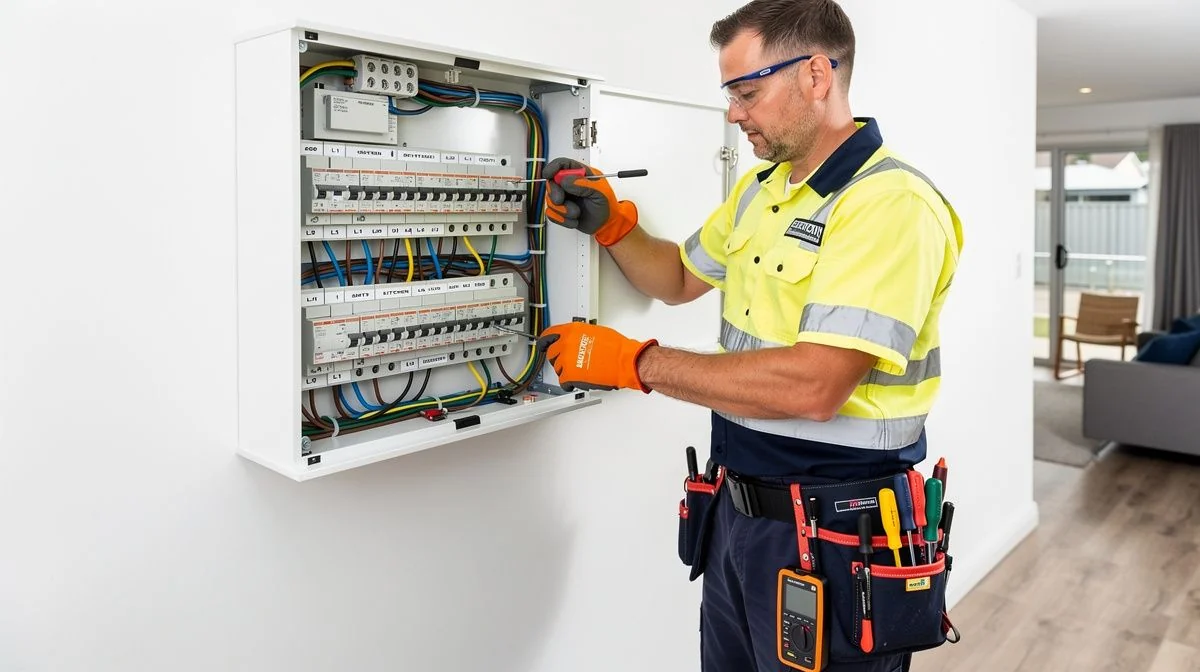
What to Expect When You Call an Electrician
Before they arrive, when you call to book, describe the problem as clearly as possible. If a circuit breaker keeps tripping, say which circuit it is, what appliances are on it, and whether the problem started recently or has been building. If lights are flickering, note whether it is one room or the whole house, and whether it coincides with a specific appliance starting.
In Christchurch, also mention if the problem started after heavy rain — moisture ingress through deteriorating wiring or outdoor fittings is a common trigger. If you have noticed a burning smell near a power point, say so explicitly — that is a priority call. The more detail you give, the better prepared the electrician will be with the right testing equipment and parts.
When they arrive, the electrician assesses the situation, tests the circuit or fitting, explains what they have found, and gives you a price before starting — either a fixed quote or an estimate with a clear explanation of what could push the cost higher.
For simple jobs, they will typically get straight into it. For larger jobs — switchboard upgrades, partial rewires, EV charger installations — they may need to assess and return with parts, or quote and book a separate installation day. In older Christchurch homes, a good electrician will also proactively flag any obvious electrical issues they notice while working — undersized supply cables, signs of degraded wiring, missing RCD protection — rather than silently fixing only what you called them for.
How long common jobs take.
- Power point addition or relocation: 30 minutes to 2 hours depending on wall access and cable route
- New light fitting installation (replacing existing): 15–45 minutes
- New light fitting (new location, new switch): 1–3 hours depending on ceiling access and wall type
- RCD safety switch installation (existing board, spare capacity): 30–60 minutes per circuit
- Switchboard upgrade (standard residential): 3–6 hours, power off for most of that period
- EV charger installation (straightforward, short cable run): 2–4 hours
- Full house rewire: 3–10 days depending on house size, wall construction, access, and whether you are living in the house during the work
After the work, the electrician tests every circuit, outlet, and fitting thoroughly, confirms everything is safe, and cleans up. For any prescribed electrical work, they must issue a Certificate of Compliance (CoC) and an Electrical Safety Certificate (ESC). Keep both certificates—in Christchurch, a documented electrical history is particularly important for insurance renewals and property sales.
Many Christchurch home buyers now specifically ask for electrical compliance documentation as part of their due diligence, particularly for homes in TC2 or TC3 zones where post-earthquake repairs may have been extensive. If the work involved a switchboard upgrade, the electrician should also provide updated circuit labelling.
Christchurch-Specific Risks — What Your Electrician Should Know
The earthquake legacy — residual wiring damage from the 2010-2011 sequence
This is the defining electrical risk in Christchurch, and it deserves more attention than homeowners in other cities never needed to give. The Canterbury earthquake sequence subjected every building in the city to forces that electrical systems were never designed to withstand. In some homes, that shaking caused obvious damage — cracked switchboards, pulled connections, broken conduits — and those issues were repaired.
In thousands of others, the damage was subtler. Brittle VIR or TRS insulation from the 1940s, 1950s, or 1960s — already degrading from age — may have cracked or fractured during the shaking without anyone noticing. The wiring still worked afterwards. The lights still came on. But the protective insulation was compromised, and the next time a renovation moved those wires — to add a power point, replace a light fitting, or open a wall — exposed copper could make contact and start a fire.
Firms across Christchurch have been dealing with this for 15 years now. Christchurch Electrical, JMW Electrical, Mister Sparky — every established Christchurch electrician has stories of opening a wall for what should have been a straightforward job and finding wiring that was never properly inspected after the earthquakes.
Some post-earthquake repairs were done under enormous time pressure during the immediate recovery period. Engineers signed off on foundations and framing. Electrical systems inside those repaired structures received varying levels of scrutiny depending on the extent of the visible damage.
The result is a city where a home's documented electrical condition may not match its actual condition, and where buying an older home without a dedicated electrical inspection is a genuine gamble.
VIR and TRS wiring in pre-1960s character homes
Christchurch's inner suburbs — specifically Merivale, Fendalton, St Albans, Riccarton, and the city centre fringe — are full of character homes built between the early 1900s and the 1950s. Many still have original VIR (Vulcanised Indian Rubber) or TRS (Tough Rubber Sheath) wiring — rubber-insulated cable that degrades with age, becoming brittle, cracking, and eventually crumbling away from the conductors.
This is the same problem Wellington and Auckland have, but Christchurch has a compounding factor: earthquake shaking may have accelerated the degradation of already-brittle rubber insulation. As Christchurch Electrical notes on its website, VIR wiring can perish and decay over time, and there is no way to know for sure whether an older home needs rewiring without a thorough inspection.
Many New Zealand insurers now refuse or cancel cover on homes with pre-1990 TRS or VIR rubber-sheathed wiring still in service. In Christchurch, where insurers are acutely aware of the compounding earthquake risk on older wiring types, the refusal rate is particularly high. If you own or are buying a pre-1960s home in Christchurch's inner suburbs, a dedicated electrical inspection is not optional — it should be done before settlement or before your insurance policy renews.
Undersized main electrical supplies — the 35-amp problem
Christchurch homes built before the 1980s frequently have a main electrical supply rated at just 35 or 40 amps. Modern homes are designed for a minimum of 60 amps, and the gap between what the supply can deliver and what a modern household demands is not trivial. A heat pump alone can draw 15 to 20 amps at peak load. An induction cooktop draws another 30 to 40 amps.
An EV charger adds 16 to 32 amps. A 35-amp supply was adequate in 1965, when the biggest electrical demand in the house was the oven, but it is dangerously inadequate today. An undersized supply doesn't just cause nuisance tripping—it creates sustained high-load conditions on wiring and switchboard components that were never designed to handle them; sustained high load equals heat, and heat equals fire risk.
Upgrading from a 35-amp supply to a 60-amp supply involves Orion (the electricity distribution network for most of Christchurch) and requires a mains upgrade from the street. The cost varies depending on the distance from the street connection point and the condition of the existing service cable. Still, it is a one-off investment that brings the entire electrical system up to a baseline that can safely handle modern loads.
An electrician who identifies an undersized supply during a routine job — rather than waiting for it to become a problem — is doing their job properly.
Old switchboards with marble or asbestos-based backing materials
Homes built between the 1920s and 1960s sometimes have switchboards mounted on marble or asbestos-based backing boards — materials that were standard at the time but pose health and safety risks now. Marble is conductive and creates a shock risk if it becomes energised. Asbestos-based boards are a health hazard if disturbed.
Neither can be brought up to current AS/NZS 3000:2023 standards — they must be replaced, not modified. Several Christchurch electrical companies specifically advertise their experience with these older board types because they are common enough in the city's pre-1960s housing stock to be a routine part of the job.
Damp climate and moisture ingress — RCD nuisance tripping
Christchurch is built on a floodplain with a high water table, and its winter climate is cold and damp. These conditions create electrical issues that are rare in drier inland cities. Moisture ingress into outdoor power points, external light fittings, and poorly sealed conduit connections causes RCD (residual current device) nuisance tripping — the RCD detects current leaking to earth through moisture and cuts the power, even though there is no actual fault.
In a dry city, a tripping RCD usually means a genuine problem. In Christchurch, it often means the outdoor power point on the south side of the house has taken on moisture during a week of winter rain.
The fix is usually straightforward — an electrician replaces the moisture-affected fitting with an appropriately IP-rated outdoor unit, checks the seal on the conduit entry point, and the problem is solved. But the pattern matters: if you are getting repeated RCD trips after heavy rain, the moisture is finding a path into the electrical system somewhere, and that path needs to be found and sealed.
It might be a cracked power point cover, a degraded outdoor junction box, or a conduit that was never properly sealed. An electrician who treats the first RCD trip as a one-off, rather than looking for the moisture-ingress pathway, is fixing the symptom, not the cause.
TC2 and TC3 land — foundation movement and electrical strain
The Technical Category (TC) land classifications — TC1, TC2, and TC3 — were introduced after the Canterbury earthquakes to categorise land by its expected behaviour in future seismic events. TC1 is the lowest-risk category and is suitable for standard foundations. TC2 requires specific foundation engineering. TC3 is the highest-risk category, concentrated in eastern suburbs, the Port Hills, and parts of the north, where deep piling and engineered foundations are mandatory.
Why this matters for electrical work: foundations on TC2 and TC3 land are designed to move in a controlled way during seismic events, but over 15 years of settlement and minor ground movement, even engineered foundations can shift slightly. That shift strains anything rigidly connected to the foundation — including electrical conduits, switchboard mountings, and the service cable entry point. An electrician who works regularly in Christchurch's TC3 suburbs — areas like Bexley, Aranui, parts of New Brighton, and the Port Hills — checks for these signs as a matter of routine. In any other city, they would not need to.
Post-earthquake repaired homes — the undocumented electrical history.
The most difficult category of Christchurch home to assess electrically is the one that was repaired rather than rebuilt. Foundations were relevelled, framing was straightened, walls were re-plastered and painted — but the electrical system inside those walls may have been assessed and certified, or it may have been left as "not damaged" and never properly inspected.
These homes often have a mix of wiring eras — original 1960s TPS cabling in the bedrooms, new circuits added for a kitchen renovation in the 1990s, a heat pump wired in 2010 just before the earthquakes, and post-earthquake repairs that may or may not have been properly certified.
If you are buying a repaired home, ask for the electrical documentation, specifically any CoCs issued for post-earthquake work, and any electrical inspection reports completed as part of the repair. If there are none, get a dedicated electrical inspection before settlement. In Christchurch, this isnotg overly cautious —it'ss recognising that thecity's uniquee history has created a unique set of electrical risks that a standard building inspectiondoesn't everr.
Questions You Might Have
What should I do if the power goes out to only part of the house?
First, check your switchboard. If a single circuit breaker has tripped, try to reset it once. If it trips again immediately, unplug everything on that circuit and try again. If the breaker holds, plug appliances back in one at a time to find the faulty one.
In Christchurch, if the problem started after heavy rain and you cannot find an appliance fault, moisture ingress into an outdoor fitting or a junction box may be the cause — call an electrician to trace it. If the breaker keeps tripping with nothing plugged in, or if you see any signs of burning or scorching, call an electrician immediately. Do not keep resetting a breaker that trips repeatedly.
Do I need a Certificate of Compliance when selling my house?
Solicitors and buyers increasingly ask for electrical compliance documentation as part of Christchurch property transactions, particularly for homes repaired after the earthquakes or in TC2/TC3 zones. You are not legally required to have a CoC for your entire existing installation — only for PEW carried out during your ownership.
But gaps in the documentation for a post-earthquake repaired home can delay settlement or become a point of negotiation. Before listing, gather any CoCs and ESCs you have for electrical work done on the property. If work was done and no certificate was issued, contact the electrician and request it — they are legally required to provide it.
Several Christchurch electrical firms now offer pre-sale electrical inspections for exactly this purpose.
Should I upgrade my switchboard proactively or wait until it fails?
Upgrade it now. Switchboards do not give warnings before failing — the first sign is often a circuit that will not reset, a burning smell, or visible scorching. If your switchboard still has ceramic rewireable fuses, lacks RCD protection on power and light circuits, has an undersized main supply (35 to 40 amps), shows signs of heat discolouration, or is mounted on an old marble or asbestos-based backing board, upgrade it proactively.
A standard residential switchboard upgrade in Christchurch costs $1,200 to $3,500 — far less than repairing the damage from an electrical fire. If you are planning any significant electrical addition — heat pump, EV charger, induction cooktop — upgrading the board first is almost always cheaper than doing it reactively.
What if I am buying an older Christchurch home?
A standard building inspection includes a visual electrical check — the inspector will flag an old ceramic fuse board, visible wiring damage, or missing RCD protection. But a building inspector is not an electrician. If the property is a character home from the VIR or TRS era (pre-1960s), was in the earthquake damage zone (regardless of whether damage was recorded), or is on TC2 or TC3 land, get a licensed electrician to do a dedicated electrical inspection before settlement.
This costs $180 to $350 and tells you exactly what you are looking at — which wiring types are present, whether the switchboard meets current standards, whether RCD protection is adequate, whether the main supply is adequate for modern loads, and whether any circuits show signs of heat damage or residual earthquake stress. For a Christchurch property, it may be the most valuable few hundred dollars you spend in the purchase process.
Will my insurance cover an electrical fault or rewire?
Standard home insurance does not cover the cost of replacing wiring just because it is old. However, if an insured event — fire, earthquake, storm — damages the wiring, the rewiring may be covered as part of the repair. The bigger issue is that many New Zealand insurers will refuse or cancel cover on homes with pre-1990 TRS or VIR rubber-sheathed wiring still in service.
In Christchurch, where insurers are particularly cautious about compounding risk on older housing stock in seismic zones, this refusal rate is high. Always disclose old cabling to your insurer rather than risk a refused claim. If you are buying an older home, check with your insurer before settlement what their position is on older wiring types.
What Matters Most
Electrical work is not a trade where you should buy on price. The cheapest quote means corners were cut somewhere — an apprentice doing Electrician-level work unsupervised, a certificate that was never lodged, a material that meets the minimum but will not last, or a problem that was temporarily cleared rather than permanently fixed.
In Christchurch, the equation is slightly different from any other New Zealand city, because the risks are different. The earthquakes exposed every weak point in thousands of electrical systems across the city — and while the major damage was repaired, the subtle damage inside walls, in degraded insulation cracked by shaking, in connections that have been loosening for 15 years since the ground first moved, is harder to find and easier to ignore.
A good Christchurch electrician knows this. They check what other cities' electricians don't think to check. They understand that TC2 and TC3 land affects more than foundations — it affects every rigid connection between the ground and your switchboard. They know a 35-amp supply in a 1960s home might have been fine for 60 years, but it's no longer adequate the moment you install an EV charger or a second heat pump.
Check the licence on the EWRB register. Get the quote in writing. Ask about their experience with Christchurch's specific challenges — the earthquake legacy, the TC land zones, the older housing stock, the damp climate. Keep the certificates. And if your home was in the earthquake damage zone — even if the visible damage was long ago repaired — ask about an electrical inspection. An electrician who understands why that matters in Christchurch is an electrician worth keeping.
.

The ValueHub Team built this site because finding clear, unbiased financial information in New Zealand was harder than it should be. Every guide is based on real research — we compare the actual fees, terms, and fine print so you don't have to. Our tip: shop around every year, read the policy docs, and never assume loyalty gets you the best deal.— The ValueHub Team
Try our Calculators
Use these free tools to crunch the numbers:
KiwiSaver Fund Comparison
Compare fees, returns, and risk levels across every KiwiSaver fund — the most up to date data in New Zealand.
Currency Converter — USD to NZD
Convert US Dollars to New Zealand Dollars instantly. See the latest exchange rate and 30-day trend.
Mortgage Repayment Calculator
Calculate your weekly, fortnightly, or monthly mortgage repayments. Free NZ mortgage calculator — try different rates, terms, and repayment frequencies.
Compound Interest Calculator
See how your savings grow with compound interest over time. Free NZ compound interest calculator with yearly, monthly, and weekly compounding options.
Term Deposit Calculator
Calculate your term deposit returns before you lock in. Compare interest earned across different terms and rates with ValueHub's free calculator.
Savings Goal Calculator
Calculate how long it will take to reach your savings goal — and what monthly deposit you need to get there. Free NZ savings planner.
Electricians in Other Cities
Latest Guides & Reviews
Kōura KiwiSaver Scheme Review
Kōura KiwiSaver review: 13 open funds, fund charges from 0.63 to 1.10 per cent, and net returns to 30 June 2026.
reviewMaritime KiwiSaver Scheme Review
Maritime KiwiSaver review: 3 open funds, fund charges from 0.61 to 0.76 per cent, and net returns to 31 March 2026.
reviewMAS KiwiSaver Scheme Review
MAS KiwiSaver review: 7 open funds, fund charges from 0.25 to 0.98 per cent, and net returns to 30 June 2026.
reviewArotahi KiwiSaver Scheme Review
Arotahi KiwiSaver review: 1 open fund, a 0.77 per cent fund charge, and net returns to 31 March 2026. What the Government register shows you pay and get back.