Best Electricians in Wellington: How to Choose, What to Pay, and What Matters
Published 14 August 2026 · Updated 18 August 2026 · Written by the ValueHub team · Reviewed by Steve Baron
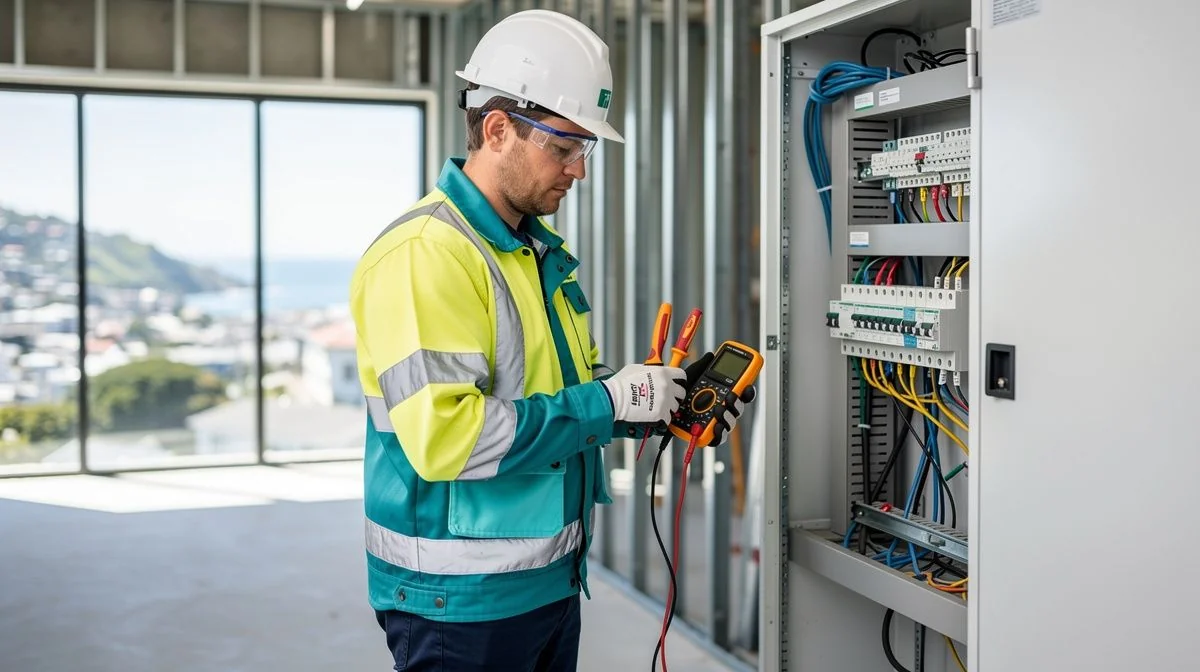
Why a Good Electrician Matters in Wellington
Electrical work is one of the most tightly regulated trades in New Zealand. Under the Electricity Act 1992, you cannot legally carry out prescribed electrical work — which covers virtually anything beyond changing a light bulb or plugging in an appliance — without a current practising licence from the Electrical Workers Registration Board (EWRB). That regulatory floor exists for good reason. Electricity is the single biggest safety risk in any home, and the gap between an electrician who meets the minimum legal standard and one who does consistently thorough work is the difference between a house that is safe and one that is not.
Wellington is a uniquely demanding market for electrical work, and for one reason that overshadows everything else: the city sits directly on the Wellington Fault. GNS Science estimates there is a 10 to 15 per cent probability of a major rupture in the next 50 years — not a theoretical risk, but a practical reality that should inform every decision you make about your home's electrical system. An earthquake strong enough to crack foundations and shift walls will also strain electrical cables, damage switchboard connections, and expose wiring faults that were invisible the day before. In that moment, whether your electrical system holds or fails can mean the difference between a repairable building and a fire.
Add to that Wellington's housing stock, which is dominated by character homes — Victorian and Edwardian villas in Thorndon, Northland, and Mt Victoria; 1920s bungalows in Khandallah and Wadestown; and dozens of hillside suburbs where homes cling to steep slopes with foundations engineered for a different century. Many of these homes still carry original VIR (Vulcanised Indian Rubber) or TRS (Tough Rubber Sheathed) wiring — rubber-insulated cable that predates modern safety standards by decades.
The rubber degrades, becomes brittle, cracks, and exposes live conductors. This is a direct fire risk in any city, but in Wellington, where a seismic event could simultaneously expose degraded wiring and rupture a gas line, the consequences compound.
Wellington's geography adds further challenges. Salt-laden southerly winds off Cook Strait accelerate corrosion on outdoor power points, meter boxes, and external fittings across the city's south coast suburbs — Island Bay, Houghton Bay, Lyall Bay. The city's notorious wind-driven rain tests the weatherproofing of every outdoor electrical installation.
Hillside properties with difficult access make cable runs longer, more expensive, and more complex. And overhead service cables — common in many Wellington suburbs — are a specific seismic vulnerability that needs to be checked and restrained.
A standard callout in Wellington costs somewhere between $130 and $180 plus GST for the first hour during business hours, with hourly rates after that running $85 to $130 plus GST. After-hours emergency callouts attract a 1.5x to 2x premium. That callout fee is modest compared to the cost of a house fire caused by degraded wiring that went unnoticed, an insurer declining a claim because the electrical installation predated modern standards, or an earthquake turning a loose connection into a catastrophic failure.
How We Researched This Guide
We spent time on the websites of Wellington electrical companies to understand how they structure their pricing, what they specialise in, and how they communicate with customers. We reviewed the Electricity Act 1992 and the Electricity (Safety) Regulations 2010 to confirm legal licensing requirements, checked the EWRB public register to understand registration classes and work limits, and researched Master Electricians membership standards including the $20,000 workmanship guarantee.
We also reviewed GNS Science data on Wellington Fault risk, Greater Wellington Regional Council earthquake preparedness guidance, the BRANZ renovate guide for 1940s-60s electrical systems, and the current NZS 3000 wiring standards to ensure we were not passing on anything unverified.
Our Trusted Electricians
We feature businesses that demonstrate strong performance, proven experience, and consistently positive customer feedback. Some of the providers listed may have commercial relationships with us, but all are selected based on quality and reliability.
To begin, reach out to them and speak with them directly — this helps you explain your job, ask questions, and confirm whether they're the right fit.
Electrician Wellington | Residential & Commercial Electrician: Stewart & Rogers Master Electricians. When you want a residential or commercial electrician you can trust choose residential or commercial electricians Stewart. SERVICE REPAIRS Quality electrical repairs and installations.
NZ Electrical Licensing — What Actually Matters
Electrical work in New Zealand is governed by the Electricity Act 1992 and the Electricity (Safety) Regulations 2010, enforced by the EWRB. A new registration framework took effect on 1 September 2024, with updated registration notices in 2025, and full application of the new standards from 1 September 2026. The licensing system is worth understanding before you pick up the phone.
| Registration Class | What It Allows |
|---|---|
| Electrician | The core residential registration class. Can carry out prescribed electrical work (PEW) on installations, works, and appliances. Can test and certify their own work. Can supervise up to two people at one time. This is the minimum licence you want for any residential electrical work. Cannot inspect PEW — that requires an Electrical Inspector registration. |
| Electrical Installer | A more limited registration class. Can carry out PEW on installations and works (but not appliances). Can test their own work. Can supervise one person. From 1 September 2026, an Electrical Installer can apply for Electrician registration after one year of registered experience plus an additional year of practical experience and passing the examination requirements. |
| Electrical Service Technician | Focused on appliances. Can service, repair, and test electrical appliances and fittings. Can connect and disconnect appliances from the power supply. Not authorised for general installation wiring work. |
| Electrical Appliance Serviceperson | The most limited registration class. Can service and repair specific types of appliances, typically working under supervision or within a defined scope. Not authorised for general installation or wiring work. |
Endorsed registration classes exist for high-risk work areas — mining operations, hazardous areas, medical cardiac protected areas, and mains parallel generation systems. These are not relevant to standard residential work, but they illustrate the tiered nature of the licensing system. The fact that the EWRB has created separate endorsed classes for the highest-risk environments tells you how seriously electrical safety is taken at the regulatory level.
Certification is mandatory. Any prescribed electrical work must be accompanied by a Certificate of Compliance (CoC) and an Electrical Safety Certificate (ESC). These documents confirm the work meets the requirements of the Electricity (Safety) Regulations and the relevant wiring standards — primarily NZS 3000. The electrician lodges the CoC on the national database. Keep these certificates — you will need them for insurance purposes and when you sell the property. There is usually a small administrative fee of around $30 to $60 for lodging certification documents.
Annual practising licence renewal is mandatory. Every licensed electrical worker must renew their practising licence annually. If a licence has lapsed, the person cannot legally carry out any PEW. You can verify any electrician's current licence status, registration class, and disciplinary history on the EWRB public register at ewrb.govt.nz — it takes 30 seconds and it is free. If an electrician hesitates to give you their licence number, that tells you everything you need to know.
Master Electricians — the industry body, not a regulator. Master Electricians is a membership organisation, not a government body. To become a Quality Assured member, a business must pass a quality assurance assessment covering knowledge, experience, professionalism, safety systems, and workplace health and safety compliance. The key consumer protection is the $20,000 Workmanship Guarantee on residential prescribed electrical work. It covers labour and replacement materials for defective workmanship, up to $20,000 including GST, for claims made within 12 months of either the completion date or the CoC date, whichever is later. Only Master Electricians members can offer this guarantee — it is exclusive to the organisation. Members must also carry public liability insurance. It is a strong quality signal, but it is not a government licence — plenty of excellent non-member electricians do outstanding work.
Wellington Electrical Pricing — What You Can Expect to Pay
Electrical prices in Wellington sit at the upper end of the national range, comparable to Auckland. Demand is driven by the city's concentration of older homes needing electrical upgrades, its role as the seat of government and a commercial hub, and the practical reality that Wellington's geography — steep hills, narrow streets, older building stock — adds time and complexity to almost every job. The figures below are for standard business hours (generally Monday to Friday, 7 am to 5pm). After-hours, weekend, and public holiday rates are significantly higher.
| Job | Typical Price Range (ex GST unless stated) |
|---|---|
| Standard callout (first hour, includes travel) | $130–$180 |
| Hourly rate (after first hour) | $85–$130 |
| After-hours emergency callout | 1.5x–2x standard rate |
| Single power point (add or relocate) | $150–$280 |
| New light fitting installation | $120–$300 |
| Switchboard upgrade (basic, fuse board to MCBs) | $1,200–$2,500 |
| Switchboard upgrade (full, with RCD protection all circuits) | $2,000–$3,500 |
| Heat pump electrical wiring (dedicated circuit) | $300–$600 |
| EV charger installation (straightforward, modern switchboard) | $800–$1,400 |
| Full house rewire (standard 3BR, accessible subfloor) | $10,000–$20,000 |
| Full house rewire (character home, steep site, difficult access) | $15,000–$30,000 |
| RCD safety switch installation (per circuit, if board has capacity) | $150–$300 |
| Electrical safety inspection (visual, no repairs) | $200–$400 |
| Overhead service cable strain relief fitting | $200–$500 |
Price ranges verified from multiple Wellington electrical provider websites and industry cost guides as of August 2026. Final quotes depend on property access, site steepness, switchboard condition, cable run length, materials required, and whether the work falls within standard business hours.
What drives the price. The biggest variables are access difficulty, switchboard condition, and site steepness — and Wellington has all three in abundance. A power point on an internal wall in a flat Thorndon villa with good subfloor access is a straightforward job. A power point on an external wall in a three-storey Wadestown home built into a hillside, requiring scaffolding or a narrow crawlspace, is a different proposition entirely.
Cable runs cost more when the switchboard is at one end of the house, and the new circuit needs to reach the opposite end, and Wellington's vertical geography makes long cable runs more common than in flatter cities. Character homes with lath-and-plaster walls, ornate ceiling roses, and heritage timber panelling require more careful work to avoid damage — which adds time, and time adds cost.
Fixed price versus hourly. Some electricians quote fixed prices for common jobs (power point installation, switchboard upgrades, hot water cylinder wiring). Others charge time and materials. A fixed-price quote gives you certainty — the price is the price regardless of how long the job takes. An hourly rate can work in your favour for small, straightforward tasks but carries an open-ended risk for more complex work. Always ask which pricing model applies and get the quote in writing before work begins.
GST is usually additional. Most electrical quotes exclude GST. A $2,500 switchboard upgrade is actually $2,875 including GST. Check whether the quote is GST-inclusive or exclusive before comparing prices.
How to Choose an Electrician — What Actually Matters
Licensing gets an electrician through the door legally. Beyond that, what separates an electrician you would call again from one you would not comes down to a few specific things.
Check their licence — actually check it
The EWRB public register at ewrb.govt.nz lets you verify an electrician's current licence status, registration class, and any disciplinary history in 30 seconds. You need their full name or licence number. Look for an Electrician registration class (not just an Electrical Installer or Electrical Appliance Serviceperson), confirm the practising licence is current (not expired), and check for any disciplinary action. If an electrician hesitates to give you their licence number, walk away. This is not optional — it is a legal requirement to be licensed for PEW, and verifying their licence costs you nothing.
Experience with older Wellington housing stock
An electrician who has worked across Wellington for years understands what is hiding in different eras of construction, and — critically — understands which eras of construction exist in which suburbs. A Victorian villa in Thorndon may still have sections of original VIR wiring in the ceiling that has not been touched since the house was built.
A 1960s-70s home in Johnsonville or Tawa may have aluminium wiring with connections that have been loosening for decades.
A 1920s bungalow in Khandallah with an inaccessible subfloor may have had incremental electrical additions over 80 years with no single coherent upgrade. An electrician who has seen these patterns hundreds of times knows where to look first — and knows what needs immediate attention versus what can be monitored.
Whether they understand seismic electrical risks
This is the question that separates Wellington electricians from electricians anywhere else in the country. In a significant earthquake, your electrical system faces multiple simultaneous threats: overhead service cables can snap if not properly strain-relieved at the house attachment point; switchboard connections can loosen if the board flexes; heavy appliances that are not seismically restrained can shift and tear their own wiring out; and any pre-existing loose connections or degraded wiring becomes an immediate fire risk the moment the shaking stops and the power comes back on.
A Wellington electrician who has thought about this — who checks overhead cable attachments, who secures switchboards properly, who flags unrestrained hot water cylinders during a routine visit — is worth far more than one who treats electrical work as if earthquakes do not happen.
Emergency availability
A circuit breaker that trips at 10 pm on a windy winter night and will not reset does not wait until Monday morning. Ask what the electrician's after-hours policy is before you need it. Some companies offer genuine 24/7 emergency response — someone answers the phone, an electrician is dispatched, and they arrive within the hour. Others have an answering service that takes a message and calls back the next business day.
The price difference on the actual callout is steep (after-hours rates are 1.5x to 2x the standard rate with emergency minimums often $200 to $350), but knowing who to call and that they will actually come is worth more than saving on an emergency rate you hope you never need.
Insurance and guarantees
Every reputable electrical company carries public liability insurance. Ask to see the certificate — any electrician who deflects or hesitates is not worth your time. Master Electricians members offer the $20,000 Workmanship Guarantee as an additional layer of consumer protection.
Even if an electrician is not a Master Electricians member, they should stand behind their work with a written workmanship warranty — at minimum 12 months on new installations. An electrician who will not put a warranty in writing is one you should not hire.
Red flags
- They will not give you their licence number. Walk away. This is not optional — it is a legal requirement to be licensed for prescribed electrical work, and verifying their licence takes you 30 seconds on the EWRB website.
- They quote a price over the phone without seeing the job. A flickering light might be a loose connection in the fitting or degraded VIR wiring in the ceiling that requires a partial rewire. Unless it is a genuinely straightforward job, an electrician who quotes sight-unseen is guessing.
- They cannot or will not provide a written quote. Verbal estimates are not quotes. If the electrician will not put numbers on paper, assume the final bill will be higher than what they told you on the phone.
- They do not issue a Certificate of Compliance after completing prescribed electrical work. This is a legal requirement. An electrician who does not issue a CoC is breaking the law, and your insurance may be void if something goes wrong. In Wellington, where earthquake-damaged electrical systems may need to be verified for insurance claims, missing CoCs for previous work create significant problems.
- They have no online presence — no Google reviews, no website, nothing. In 2026, a service business with zero digital footprint is a gamble. One or two bad reviews among many good ones is normal. Zero reviews at all is not.
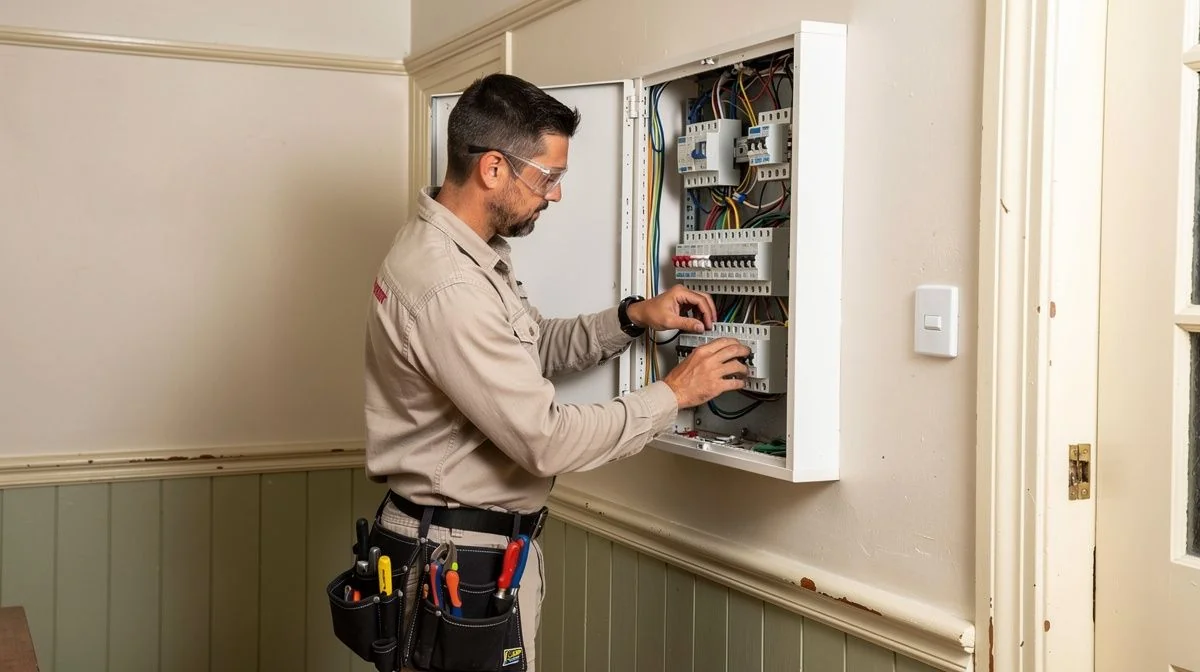
What to Expect When You Call an Electrician
Before they arrive. When you call to book, describe the problem as clearly as you can. If a circuit breaker keeps tripping, say which circuit it is, what appliances are on it, and whether the problem started recently or has been building. If lights are flickering, note whether it is one room or the whole house, and whether it happens when a specific appliance starts.
If you have noticed a burning smell near a power point, say so explicitly — that is a priority call. The more detail you give, the better prepared the electrician will be — they will bring the right testing equipment and the right parts, which means fewer callbacks and a faster resolution.
When they arrive. The electrician assesses the situation, tests the circuit or fitting in question, explains what they have found, and gives you a price before starting — either a fixed quote for the job or an estimate with a clear explanation of what could push the cost higher.
For simple jobs (power point replacement, light fitting installation, RCD installation where the board has spare capacity), they will usually get straight into it. For larger jobs (switchboard upgrade, partial rewire, EV charger installation), they may need to assess and return with parts, or quote and book a separate installation day.
How long common jobs take.
- Power point addition or relocation: 30 minutes to 2 hours depending on wall access and cable route
- New light fitting installation (replacing existing): 15–45 minutes
- New light fitting (new location, new switch, harder in character homes): 1–3 hours depending on ceiling access and wall type
- RCD safety switch installation (existing board, spare capacity): 30–60 minutes per circuit
- Switchboard upgrade (standard residential): 3–6 hours, power off for most of that period
- EV charger installation (straightforward, short cable run): 2–4 hours
- Full house rewire: 3–10 days depending on house size, wall construction, access, and whether you are living in the house during the work
After the job. The electrician tests their work thoroughly — every circuit, every outlet, every fitting — confirms everything is safe, and cleans up. For any prescribed electrical work, they must issue a Certificate of Compliance (CoC) and an Electrical Safety Certificate (ESC). The CoC confirms the work meets the requirements of the Electricity (Safety) Regulations and NZS 3000. The electrician lodges the CoC on the national database.
Keep both certificates — you will need them for your home insurance, and in Wellington specifically, having a documented electrical history makes earthquake-related insurance claims smoother. If the work involved a switchboard upgrade, they should also provide updated circuit labelling so you know exactly which breaker controls what.
Wellington-Specific Risks — What Your Electrician Should Know
VIR and TRS wiring in pre-1960s character homes
The single most common electrical issue in Wellington is VIR (Vulcanised Indian Rubber) and TRS (Tough Rubber Sheathed) wiring in the city's large stock of pre-1960s character homes. These were the standard wiring types from the early 1900s through to the late 1950s, and they were reliable for their time. The problem is the materials — rubber insulation degrades over decades, becoming brittle, cracking, and eventually crumbling away from the conductors. This process accelerates with heat, so wiring in ceiling spaces and near light fittings deteriorates faster.
Wellington has a higher proportion of pre-1940s housing than almost any other New Zealand city — concentrated in inner suburbs like Thorndon, Northland, Mt Victoria, Mt Cook, and Aro Valley. Many of these homes have never been fully rewired. Instead, they have been modified incrementally — a kitchen renovation in the 1980s, a heat pump added in the 2000s, a bathroom renovation in the 2010s — leaving a patchwork of original VIR or TRS cabling mixed with newer TPS wiring.
A system can appear modern at the surface — a tidy switchboard, modern power points — while degraded rubber-insulated wiring still runs through ceiling cavities and behind walls, carrying loads it was never designed to handle.
VIR and TRS cabling is not compatible with modern RCD safety switches — circuits wired with it cannot be properly protected. The conductors themselves are often aluminium rather than copper, creating connection problems at outlets and switches.
Most importantly, many New Zealand insurers now refuse or cancel cover on homes with pre-1990 TRS or VIR rubber-sheathed wiring still in service. If you own or are buying a character home in an older Wellington suburb, a dedicated electrical inspection is not optional — a standard building inspection does not assess wiring condition in any meaningful depth.
Seismic electrical risks — the Wellington Fault factor
This is the risk that sets Wellington apart from every other New Zealand city. The Wellington Fault runs directly through the city, and the electrical implications of a major rupture deserve serious attention. In an earthquake, your electrical system faces multiple simultaneous threats:
- Overhead service cables. Many Wellington homes — particularly in older suburbs like Kelburn, Wadestown, and Roseneath — still have an overhead electrical service cable running from a street pole to the house. This thick black cable must be securely fixed to the house with a strain relief connection. If it is not — and many older installations are not — the cable can snap during shaking, creating a live fallen conductor near the house. This is a specific check a Wellington electrician should perform as part of any inspection or visit. Do not touch the cable or its connections yourself — this is a job for a licensed electrician only.
- Switchboard and connection integrity. A switchboard that flexes during an earthquake can loosen terminal connections, crack busbars, and displace circuit breakers. When power is restored after an earthquake — or if power stays on and a damaged circuit energises — loose connections become arcing points, and arcing equals fire. A modern switchboard securely mounted and properly wired is far more likely to survive intact than an old ceramic fuse board screwed to a timber backing from the 1950s.
- Unrestrained heavy appliances. Hot water cylinders, heat pump outdoor units, and heavy fixed appliances that are not seismically restrained can shift during shaking, tearing their own wiring out of terminals and creating exposed live conductors. A Wellington electrician who checks appliance restraints during routine visits is thinking ahead — and that is the kind of electrician you want.
- Post-earthquake verification. After any significant earthquake, a licensed electrician should inspect the switchboard, test the RCDs, and verify circuit integrity before the system is treated as safe. Having a documented electrical history — CoCs for all previous work, an up-to-date switchboard, a known wiring condition — makes this process faster and more reliable.
Aluminium wiring in 1960s-70s homes
Aluminium wiring was used in New Zealand homes built during the late 1960s and early 1970s when copper prices were high. In Wellington, this era of construction is concentrated in suburbs like Johnsonville, Tawa, parts of Newlands, and the Hutt Valley — family homes built during the post-war expansion. Aluminium expands and contracts more than copper with temperature changes, and over decades of heating and cooling cycles, connections at power points, switches, and switchboard terminals loosen.
Aluminium also oxidises at connection points, increasing electrical resistance and generating heat. Electricians opening aluminium-wired outlets in Wellington homes frequently find discoloured terminals and carbon deposits from heat build-up — a progressive problem that gets worse, not better, with time. If your home was built between roughly 1965 and 1975 and has not been fully rewired, every connection point should be inspected for proper termination with aluminium-rated connectors.
Ceramic fuse boards and missing RCD protection
A large portion of Wellington's older housing stock — particularly 1920s-1950s bungalows and villas across the inner suburbs — still runs on ceramic rewireable fuse boards. These boards were designed for an era when a household ran an oven, a fridge, and a few lights. Today's homes draw far more — heat pumps (essential in Wellington's damp winters), modern kitchen appliances, home office equipment, entertainment systems, and increasingly EV chargers.
Ceramic fuses have a much lower fault-current breaking capacity than modern circuit breakers, and they offer zero RCD protection. An RCD — residual current device — cuts power within milliseconds when it detects current leaking to earth, which is what happens when a person touches a live conductor.
Without RCD protection on power and light circuits, a fault that would trip a modern switchboard instantly can instead deliver a fatal electric shock. Switchboard upgrades should be considered every 25 years as a matter of course.
Wind-driven rain and coastal corrosion
Wellington's weather is legendary for a reason. The city's exposure to Cook Strait means high winds and wind-driven rain are routine, and salt-laden southerlies carry corrosive chlorides across the south coast suburbs — Island Bay, Houghton Bay, Lyall Bay, Owhiro Bay — and inland across exposed hillsides. Outdoor power points, external light fittings, meter boxes, and any exposed metal conduit or junction boxes degrade faster in these conditions than in almost any other New Zealand city. BRANZ research shows sheltered positions can collect three to eight times more salt deposits than exposed positions, because sheltered areas see less rain washing — meaning a power point tucked under the eaves on the south side of a coastal property may actually be more at risk than one fully exposed to rain.
Every outdoor electrical fitting on a Wellington property should have an appropriate IP rating for its exposure level, and an electrician working in coastal Wellington should check external fittings for corrosion as a matter of routine.
Hillside properties and difficult access
Wellington's vertical geography is not just a fitness challenge — it directly affects electrical work. Homes on steep sites in suburbs like Kelburn, Oriental Bay, Hataitai, and Roseneath often have limited or dangerous subfloor access, complex multi-level floor plans, and cable routes that are significantly longer and more difficult than in a flat suburban home.
A full rewire on a three-storey hillside villa with no subfloor access on the bottom level takes longer and costs more than the same job on a single-level bungalow on a flat section. External cable runs on steep sites may need to navigate retaining walls, decks, and difficult terrain — all of which add labour time.
An electrician who has experience with Wellington's hillside homes understands this and quotes accordingly, rather than discovering the access problem after the job has started.
Partial upgrades and undocumented electrical history
Many Wellington character homes have been modified over decades with no single comprehensive electrical upgrade. A kitchen renovation added circuits here, a bathroom upgrade added underfloor heating there, a heat pump was wired in, a garage was converted — each addition likely compliant at the time, but the cumulative effect is a system where it is genuinely unclear what has been upgraded, when, and how thoroughly.
An electrician assessing a home like this looks at patterns, not just components — checking cable types at different points in the house, testing earth continuity, and verifying that circuit labelling matches reality. In Wellington, where earthquake preparedness depends on knowing the starting condition of your electrical system, an undocumented patchwork is a liability.
Questions You Might Have
What should I do if the power goes out to only part of the house?
First, check your switchboard. If a single circuit breaker has tripped, try to reset it — but only once. If it trips again immediately, there is a fault on that circuit. Unplug everything on that circuit and try again. If the breaker holds, plug appliances back in one at a time — the one that trips the breaker is the faulty appliance. If the breaker continues to trip with nothing plugged in, or if you see any signs of burning, scorching, or smell anything unusual near the switchboard, call an electrician.
Do not keep resetting a breaker that trips repeatedly — the breaker is doing its job protecting you from an electrical fault, and overriding it repeatedly risks a fire.
Do I need a Certificate of Compliance when selling my house?
Solicitors and buyers increasingly ask for electrical compliance documentation as part of the sale and purchase process, particularly for homes with recent renovations, heat pump installations, or EV charger additions. You are not legally required to have a CoC for your entire existing installation — only for PEW carried out during your ownership. But missing certificates for known electrical work can delay settlement or become a negotiation point.
Before listing, gather any CoCs and ESCs you have for electrical work done on the property. If you have had work done and no certificate was issued, contact the electrician and request it — they are legally required to provide it. In Wellington, where insurers are increasingly asking about wiring age and condition before providing or renewing cover, a documented electrical history is worth its weight.
Should I upgrade my switchboard proactively or wait until it fails?
Switchboards do not give you a warning before they fail — the first sign of a serious problem is often a circuit that will not reset, a burning smell, or visible scorching. If your switchboard still has ceramic rewireable fuses, lacks RCD protection on power and light circuits, shows signs of heat damage or discolouration, or is mounted on an old zincalume or timber backing board, upgrade it now rather than waiting for a failure.
A standard residential switchboard upgrade in Wellington costs $1,200 to $3,500 — far less than repairing the damage from an electrical fire, and far less stressful than discovering your board is inadequate when you are trying to install a heat pump in the middle of a Wellington winter. If you are planning any significant electrical addition — heat pump, EV charger, induction cooktop — upgrading the board first is almost always cheaper than doing it reactively.
What if I am buying an older Wellington home and the electrical system worries me?
A standard building inspection includes a visual electrical check — the inspector will look for obvious issues like an old ceramic fuse board, visible wiring damage, and missing RCD protection. But a building inspector is not an electrician. If the property is a character home from the VIR or TRS era (pre-1960s), the aluminium wiring era (1965-1975), or the ceramic fuse board era (pre-1980s), get a licensed electrician to do a dedicated electrical inspection. This costs $200 to $400 and tells you exactly what you are looking at — which wiring types are present, whether the switchboard meets current standards, whether RCD protection is adequate, and whether any circuits need immediate attention.
For an older Wellington property, it is one of the most valuable few hundred dollars you can spend before settlement. If the inspection turns up VIR or TRS cabling, factor the cost of a rewire into your purchase decision — insurers are increasingly refusing cover on homes with rubber-sheathed wiring.
Will my insurance cover an electrical fault or rewire?
Standard home insurance does not cover the cost of replacing wiring just because it is old. However, if wiring is damaged by an insured event — fire, earthquake, storm — the rewiring may be covered as part of the repair. The bigger issue is that many New Zealand insurers will refuse or cancel cover on homes with pre-1990 TRS or VIR rubber-sheathed wiring still in service. Always disclose old cabling to your insurer rather than risk a refused claim. If you are buying a character home, check with your insurer before settlement what their position is on older wiring types.
What Matters Most
Electrical work is not a trade where you should buy on price. The cheapest quote on a switchboard upgrade or a rewire often means corners were cut — an apprentice doing Electrician-level work unsupervised, a certificate that was never lodged, a material that meets the minimum standard but will not last, or a problem that was temporarily cleared rather than permanently fixed.
In a city that sits on a major fault line, where thousands of character homes still carry original rubber-insulated wiring, where aluminium connections have been loosening for half a century in post-war suburbs from Johnsonville to the Hutt Valley, where salt-laden winds accelerate corrosion on outdoor fittings as far inland as exposed hillsides.
Where overhead service cables need seismic strain relief, and where the homes themselves cling to slopes that would make a builder from another city think twice, a good electrician is not a luxury — they are the person who ensures that when the ground shakes, your electrical system does not make a bad situation catastrophic.
Check the licence on the EWRB register. Get the quote in writing. Ask about their experience with Wellington's specific challenges — the character homes, the hills, the earthquakes. Keep the certificates. And if your home was built before 1960, ask about VIR and TRS wiring — even if you called them for something else entirely. An electrician who spots it during a routine job, explains what it means, and gives you a clear path forward is an electrician worth keeping.

The ValueHub Team built this site because finding clear, unbiased financial information in New Zealand was harder than it should be. Every guide is based on real research — we compare the actual fees, terms, and fine print so you don't have to. Our tip: shop around every year, read the policy docs, and never assume loyalty gets you the best deal.— The ValueHub Team
More Electricians in Wellington
These businesses also operate in this area.
Trusted Master Electricians in Wellington for residential work, switchboards, lighting & EV chargers. Book online & save $20. Areas we serve in Wellington Our electricians work across the Wellington region: Wellington Lower Hutt Wainuiomata Porirua If you live outside the areas listed above, please feel free to get in touch.
Electrical Solutions Wellington - Master Electrician Wellington (site:orientationstatement). Honest, reliable and professional Master Electricians Servicing the Wellington region 04 460 2369. Honest, reliable and professional Master Electricians. The Master Electricians at Fellow Electrical work on residential projects of all sizes across Wellington.
Try our Calculators
Use these free tools to crunch the numbers:
KiwiSaver Fund Comparison
Compare fees, returns, and risk levels across every KiwiSaver fund — the most up to date data in New Zealand.
Currency Converter — USD to NZD
Convert US Dollars to New Zealand Dollars instantly. See the latest exchange rate and 30-day trend.
Mortgage Repayment Calculator
Calculate your weekly, fortnightly, or monthly mortgage repayments. Free NZ mortgage calculator — try different rates, terms, and repayment frequencies.
Compound Interest Calculator
See how your savings grow with compound interest over time. Free NZ compound interest calculator with yearly, monthly, and weekly compounding options.
Term Deposit Calculator
Calculate your term deposit returns before you lock in. Compare interest earned across different terms and rates with ValueHub's free calculator.
Savings Goal Calculator
Calculate how long it will take to reach your savings goal — and what monthly deposit you need to get there. Free NZ savings planner.
Electricians in Other Cities
Best Electricians in Christchurch: How to Choose, What to Pay, and What Matters
Best Electricians in Hamilton
Latest Guides & Reviews
InvestNow KiwiSaver Scheme Review
InvestNow KiwiSaver review: 45 open funds, fund charges from 0.03 to 1.38 per cent, and net returns to 30 June 2026.
reviewKernel KiwiSaver Scheme Review
Kernel KiwiSaver review: 25 open funds, fund charges from 0.25 to 0.45 per cent, and net returns to 30 June 2026.
guideTax Debt in New Zealand — The Numbers
Official figures on New Zealand's overdue tax debt: the total, the collectable share, which customer groups hold it, and how much is repaid or written off.
reviewKōura KiwiSaver Scheme Review
Kōura KiwiSaver review: 13 open funds, fund charges from 0.63 to 1.10 per cent, and net returns to 30 June 2026.