Best Firewood Suppliers in Rotorua
Published 07 January 2025 · Updated 18 August 2026 · Written by the ValueHub team · Reviewed by Steve Baron
Best Firewood Suppliers in Rotorua
A forestry town with cold, damp winters and strict burner rules
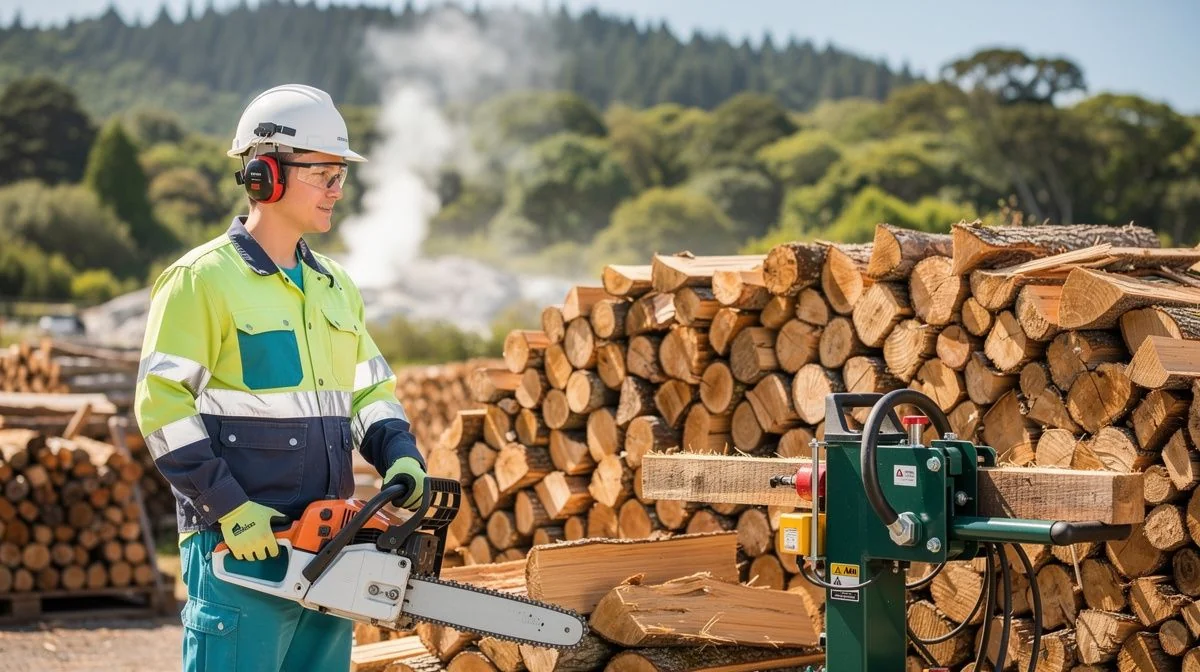
Rotorua has an advantage most of the country does not: the wood is grown next door. The forests around the city and the wider Central Plateau produce a steady supply of pine, Douglas fir and macrocarpa, and much of it ends up in local firewood yards.
That supply is a benefit, but it does not automatically mean cheap dry wood. The local market is dominated by softwoods, which light easily and burn hot but do not hold heat for long, and the hardwoods that burn overnight cost considerably more per cubic metre.
The other local factor is the weather. Rotorua winters are wet and foggy rather than bitterly frosty, and damp air makes an underperforming fire feel much worse. Wet wood in a cold, humid house is the single most common reason people are disappointed with a wood burner.
There is also a regulatory side. Rotorua’s winter air quality has been an issue for years, which is why the district has some of the country’s tighter rules on wood burners and what may be burned in them.
How We Researched This Guide
We used published price lists from New Zealand firewood suppliers, because firewood is one of the few products where the unit of sale, the species and the moisture content are all advertised. That makes it possible to work out a genuine price per cubic metre rather than comparing loads of unknown size.
The most useful finding is that the delivered price per cubic metre falls as the load gets bigger, and that delivery is often free above a certain volume. We also confirmed how firewood must be sold in New Zealand under weights and measures rules, and the ordinary guarantees that apply to a purchase, explained by Consumer Protection.
The 60-Second Version
The short version, before the detail.
- Softwood such as pine is commonly $100–$150 per cubic metre delivered.
- Douglas fir and macrocarpa sit around $114–$200 per cubic metre.
- Hardwoods such as gum run $136–$250 per cubic metre.
- Kiln-dried wood carries a premium and is usually $170–$230 per cubic metre.
- Delivery is often free on loads of 3 cubic metres or more, and around $40 otherwise.
- Firewood must be sold by the cubic metre, not by the cord.
What Firewood Costs
Published New Zealand rates, which reflect the local market.
| Wood | Typical price per cubic metre |
|---|---|
| Pine, seasoned | $100–$150 |
| Douglas fir | $114–$185 |
| Macrocarpa | $114–$200 |
| Old man pine | around $175 |
| Kiln-dried pine | $170–$200 |
| Gum | $136–$250 |
| Manuka or tea tree | $300–$400 |
| Delivery, small load | from $40 |
| Delivery, 3 cubic metres or more | often free within the local area |
| Kindling, bagged | $10–$20 |
Prices verified from published New Zealand firewood supplier price lists as of September 2026. Local availability depends on what has been processed last, and species rotate through the season.
Buying by the Cubic Metre, Not the Load
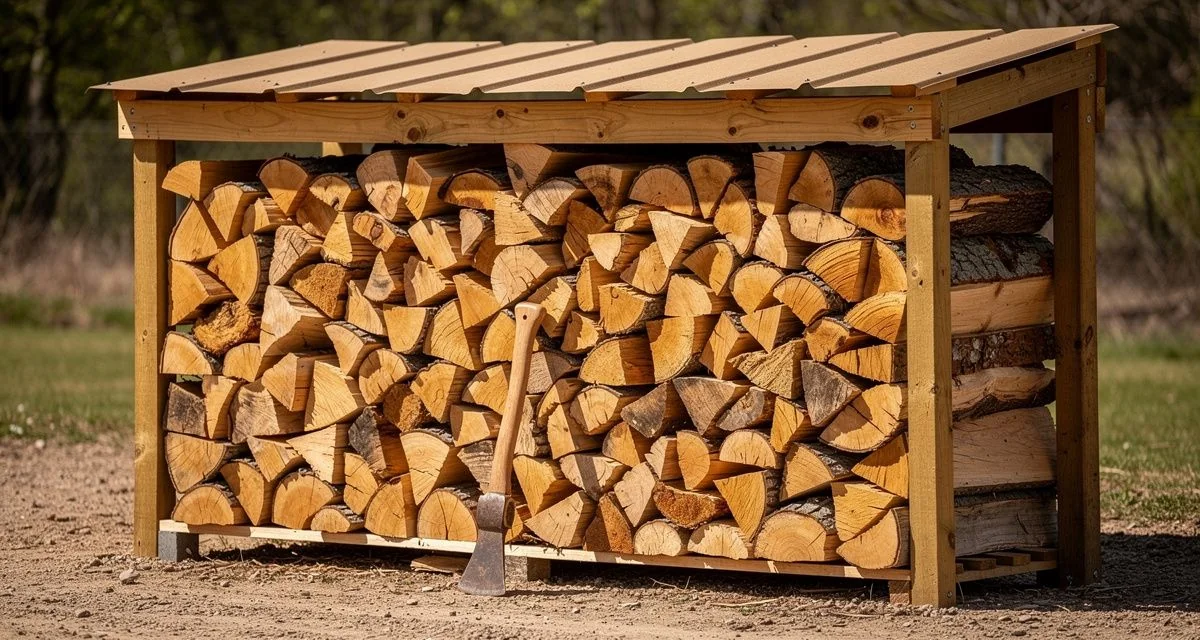
Firewood in New Zealand must be sold by volume in cubic metres, not by a cord, a trailer or a ute load. A cord is roughly 3.6 cubic metres, and the old measure has caused a lot of confusion over the years.
That matters because a load described only as a trailer or a ute is not a measurement. Two suppliers selling the same price can be delivering very different amounts, and the only way to compare is to ask for the volume in cubic metres.
When the wood arrives, look at it. Split, stacked wood that has been cut to a consistent length is what you are paying for, and a load that is mostly bark, sawdust or oversized rounds is not the same product.
Dry Wood, Wet Wood and What It Costs You
Moisture content is the number that decides how well a fire performs. Wood sold as seasoned or ready to burn should be around 25 per cent moisture or below, and kiln-dried wood is dried to well under that so it lights and burns cleanly straight away.
Green or freshly cut wood is cheaper and needs a season under cover before it is worth burning. Burning wet wood wastes most of its energy driving off water, produces more smoke and creosote, and is the main reason a fire feels cold even when it is going.
The practical test at home is simple. Two pieces knocked together should sound sharp rather than dull, the cut ends should not feel damp, and a fire should catch without a fight. A cheap moisture meter costs about the same as a bag of kindling and settles the argument.
If you buy green wood, buy it in spring and stack it now. Cover the top, leave the sides open to the wind, and keep it off the ground on pallets or old timber.
Softwood, Hardwood and Getting Through the Night
Pine and Douglas fir are the local staples. They light quickly, produce good heat and are the reason a Rotorua fire gets going easily on a cold morning. What they do not do is hold a bed of embers, so a softwood fire needs feeding.
Hardwoods such as gum, and the denser natives like manuka, burn hotter and for longer. A fire built on softwood with a couple of hardwood pieces on top will still be going in the morning, and that mix is what most experienced burners use.
Macrocarpa is the quiet all-rounder in the middle. It is not as hot as gum but it is a good steady burn and is widely available.
Mixing is not a compromise. It is how a fire is best run: softwood to establish heat quickly and hardwood to hold it overnight.
Burner Rules and What You May Burn
Rotorua has some of the strictest wood burner rules in New Zealand because of the district’s winter air quality. Houses in the Rotorua airshed have faced requirements to replace older burners, and only certain models and fuel types are permitted.
The practical points are worth knowing before you buy wood or a burner. Older, non-compliant burners are restricted, treated or painted timber must never be burned because of the toxins released, and any wood that has been in the sea or in contact with preservatives is unsuitable.
If you are unsure what your burner is allowed to burn, or whether it still complies, the regional council is the place to ask. Getting this wrong is a health issue as well as a compliance one, particularly on still winter days when smoke sits in the valley.
Choosing a Firewood Supplier in Rotorua
Ask for the price per cubic metre, the species and the moisture content in the same conversation. A supplier who can answer all three promptly is telling you they know their product.
Ask whether the load is seasoned or green. Some suppliers sell both and the price difference is significant, so confirm what you are getting rather than assuming.
Ask about delivery. Loads of 3 cubic metres or more often come free within the local area, while a single cubic metre usually attracts a charge. Access matters too: a tipping truck needs space, and a trailer delivery needs somewhere to reverse.
Where the purchase fails to match the description, the ordinary consumer guarantees apply, and Consumer Protection sets out what you can do about it.
Local Factors Worth Knowing
Forestry supply and rotating species
Local suppliers work through one log truck at a time, so what is available changes through the season. Ordering early for winter, rather than during the first cold snap, is how people here get the species they want.
Humidity, fog and slow drying
Rotorua’s damp winters mean wood left uncovered will not dry out between rain events. A roof over the top and air through the sides is the difference between wood that burns and wood that smoulders.
Central heating alternatives
Some parts of the district have access to other heat sources, including geothermal, and plenty of households now run a heat pump as the main heat with a wood burner for ambience and for cold snaps. Wood is often bought in smaller volumes than it once was.
Questions You Might Have
How much firewood do I need for a winter?
A household burning most evenings typically uses 4 to 8 cubic metres, depending on how well the house holds heat and how cold the winter runs.
Is kiln-dried wood worth the premium?
If you need to burn this week, yes. If you have dry storage and can plan ahead, seasoned wood left under cover performs well at a lower price.
How should I store it?
Off the ground, top covered, sides open to the wind. Stack loosely rather than dumping it in a heap so air moves through.
Can I burn treated timber?
No. Treated, painted or preserved timber releases toxic compounds and must never be burned in a domestic fire.
What Matters Most
Firewood is sold by volume and judged by moisture, and getting both right is worth more than chasing the cheapest load. Dry wood produces more heat per dollar than wet wood ever will.
In Rotorua, where the supply is local and the winters are damp, the sensible approach is to buy by the cubic metre, confirm the species and moisture, and get the wood in early so it is ready before you need it.

The ValueHub Team built this site because finding clear, unbiased financial information in New Zealand was harder than it should be. Every guide is based on real research — we compare the actual fees, terms, and fine print so you don't have to. Our tip: shop around every year, read the policy docs, and never assume loyalty gets you the best deal.— The ValueHub Team
Try our Calculators
Use these free tools to crunch the numbers:
KiwiSaver Fund Comparison
Compare fees, returns, and risk levels across every KiwiSaver fund — the most up to date data in New Zealand.
Currency Converter — USD to NZD
Convert US Dollars to New Zealand Dollars instantly. See the latest exchange rate and 30-day trend.
Mortgage Repayment Calculator
Calculate your weekly, fortnightly, or monthly mortgage repayments. Free NZ mortgage calculator — try different rates, terms, and repayment frequencies.
Compound Interest Calculator
See how your savings grow with compound interest over time. Free NZ compound interest calculator with yearly, monthly, and weekly compounding options.
Term Deposit Calculator
Calculate your term deposit returns before you lock in. Compare interest earned across different terms and rates with ValueHub's free calculator.
Savings Goal Calculator
Calculate how long it will take to reach your savings goal — and what monthly deposit you need to get there. Free NZ savings planner.
Firewood Suppliers in Other Cities
Latest Guides & Reviews
KiwiSaver and Tax — PIR, ESCT and What You Actually Pay
KiwiSaver is taxed twice — ESCT on your employer's contribution and your PIR on the fund's returns. How each rate is set, and the two most members never check.
reviewInvestNow KiwiSaver Scheme Review
InvestNow KiwiSaver review: 45 open funds, fund charges from 0.03 to 1.38 per cent, and net returns to 30 June 2026.
reviewKernel KiwiSaver Scheme Review
Kernel KiwiSaver review: 25 open funds, fund charges from 0.25 to 0.45 per cent, and net returns to 30 June 2026.
guideTax Debt in New Zealand — The Numbers
Official figures on New Zealand's overdue tax debt: the total, the collectable share, which customer groups hold it, and how much is repaid or written off.