Best Heat Pump Specialists in Wairarapa
Published 24 February 2025 · Updated 18 August 2026
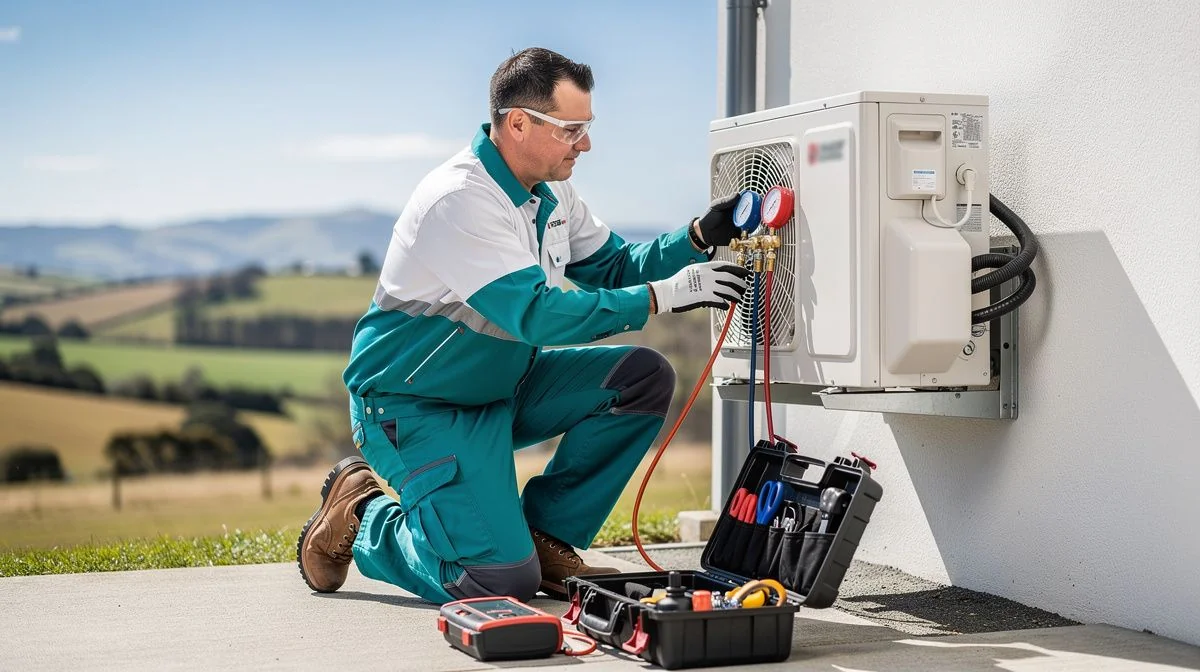
Best Heat Pump Specialists in Wairarapa
Living in the Wairarapa means you get crisp frosty mornings, hot dry summers, and everything in between. A good heat pump can keep your home warm in winter and cool in summer — which makes a huge difference to your comfort and your power bill.
Finding a reliable heat pump specialist in this region isn’t hard, but you want someone who knows local conditions and can recommend a system that suits your home. Whether you’re in Masterton, Carterton, Greytown, or Martinborough, the right installer will make sure your heat pump performs year after year.
This guide covers what to look for, questions to ask, and how to get the best result for your home.
What to look for when hiring a Heat Pump Specialist in Wairarapa
Not every installer is the same. Here are the key things to check before you book anyone.
- Licensing and certification — Heat pump installation involves electrical work. The installer must be a licensed electrician or work under one. Check they are registered with the Electrical Workers Registration Board (EWRB). For gas-assisted heat pumps, they also need a gasfitter licence.
- Local experience — A specialist who has worked across the Wairarapa will understand the region’s climate. They’ll know which brands handle our humidity and temperature swings best, and which models suit older villas versus new builds.
- Insurance — Public liability insurance is a must. It protects you if something goes wrong during installation.
- Warranty coverage — Good installers offer a workmanship warranty (usually 2–5 years) on top of the manufacturer’s warranty. Make sure you get this in writing.
- References and reviews — Ask for recent examples of similar installations in your area. Online reviews on Google or local Facebook groups can also give you a sense of their reputation.
- After‑sales service — Heat pumps need regular servicing. Choose a specialist who offers maintenance and can handle repairs down the track.
Key questions to ask before hiring
When you’re comparing quotes or talking to potential installers, these questions will help you sort the good from the average.
- Are you a licensed electrical contractor or do you subcontract the electrical work? — You want one company responsible for the whole job.
- What size heat pump do you recommend for my home and why? — A proper heat load calculation (using the Manual J method or similar) is essential. An installer who just guesses based on floor area might oversize or undersize your unit.
- Do I need a building consent for this installation? — Many heat pump installations are exempt, but if you’re mounting on a structural wall or adding new ductwork, your council (Masterton, Carterton, or South Wairarapa) may have requirements. A good specialist will guide you.
- What brand do you recommend and why? — There are reliable brands like Fujitsu, Mitsubishi Electric, Daikin, and Panasonic. A specialist should explain the pros and cons for your specific situation.
- What’s included in the quoted price? — Does it cover the unit, installation, electrical work, pipework, and any consent fees? Get a detailed breakdown.
- How long will the installation take and what disruption should I expect? — Most single‑head installations take one day. Multi‑head systems or ducted units may take longer.
Tips for getting the best results
A great installation is about more than just the unit. Here’s how to set yourself up for success.
- Get at least three quotes — This gives you a sense of fair pricing and lets you compare approaches. Be wary of a quote that’s much lower than the others — it might cut corners.
- Think about placement — The indoor unit should be where you spend most of your time (living area, not a hallway). The outdoor unit needs good airflow and should be away from bedrooms or neighbours’ fences to avoid noise complaints.
- Check insulation and draughts first — A heat pump works much better in a home that’s well‑insulated. If your ceiling, walls, or floors are under‑insulated, consider upgrading before you install. The Warmer Kiwi Homes programme or local council grants might help with insulation.
- Plan for servicing — Heat pumps need filter cleaning every month or two, and a professional service every 1–2 years. Ask your installer about a service plan.
- Read the fine print on warranties — Manufacturer warranties vary (usually 5–7 years on the compressor, 1–3 on parts). Make sure you register the warranty after installation.
A note about costs and getting quotes
Heat pump prices in the Wairarapa can vary a fair bit. You’re not just paying for the unit — you’re paying for expertise, travel time, and the quality of the install.
For a standard single‑head system (a common choice for a living room), total costs typically range from around $2,500 to $7,000, installed. Larger homes needing multi‑head or ducted systems can cost anywhere from $8,000 to $15,000 or more. Brand, capacity, and installation complexity all play a part.
When you get quotes, ask for a written itemised breakdown. That way you can see exactly what you’re paying for — the unit,

The ValueHub Team built this site because finding clear, unbiased financial information in New Zealand was harder than it should be. Every guide is based on real research — we compare the actual fees, terms, and fine print so you don't have to. Our tip: shop around every year, read the policy docs, and never assume loyalty gets you the best deal.— The ValueHub Team
Try our Calculators
Use these free tools to crunch the numbers:
KiwiSaver Fund Comparison
Compare fees, returns, and risk levels across every KiwiSaver fund from all 31 NZ providers.
Currency Converter — USD to NZD
Convert US Dollars to New Zealand Dollars instantly. See the latest exchange rate and 30-day trend.
Mortgage Repayment Calculator
Calculate your weekly, fortnightly, or monthly mortgage repayments. Free NZ mortgage calculator — try different rates, terms, and repayment frequencies.
Compound Interest Calculator
See how your savings grow with compound interest over time. Free NZ compound interest calculator with yearly, monthly, and weekly compounding options.
Term Deposit Calculator
Calculate your term deposit returns before you lock in. Compare interest earned across different terms and rates with ValueHub's free calculator.
Savings Goal Calculator
Calculate how long it will take to reach your savings goal — and what monthly deposit you need to get there. Free NZ savings planner.
Heat Pump Specialists in Other Cities
Latest Guides & Reviews
New Zealand Financial Markets Authority Guide: Investor Protection in NZ
Protect your investments with this practical guide to the FMA — how to check licences, spot scams, and what to do if a provider fails. Verified against...
comparisonEV Home Charger NZ: Costs & Buying Guide
Compare EV home charger costs in NZ — verified prices from $1,299, installation fees, smart features, and what actually matters for your home's power supply.
guideThe Most Popular EVs in New Zealand
The best-selling electric cars in New Zealand, ranked by official registration data. Top BEV and PHEV models and brands, updated monthly.
guideEV Market Stats
New Zealand's EV market in numbers — market share, fleet size, top-selling models and used imports, updated with the latest NZTA and MIA data.