Best Interior Designers in Rotorua
Published 05 March 2025 · Updated 18 August 2026 · Written by the ValueHub team · Reviewed by Steve Baron
Best Interior Designers in Rotorua
Geothermal air and timber walls change what works indoors
Rotorua is the one New Zealand city where the outside air is an interior design problem. Hydrogen sulphide from the geothermal fields tarnishes metals, dulls paint and discolours soft furnishings faster than almost anywhere else in the country, and every experienced local designer has a story about a light fitting that did not survive two winters.
That sits on top of a housing stock that is a designer’s dream and a practical challenge at the same time. There are timber villas, baches that became permanent homes, and a great deal of native timber panelling inside houses built in the middle of the last century. Panelling is beautiful and it absorbs light, which is why so many Rotorua interiors feel darker than the section outside would suggest.
Winter is cold and damp by inland North Island standards, summer brings real humidity, and the lake sits in a basin that holds both. Insulation, ventilation and heating decisions are not cosmetic here; they change how a room performs and how long the finishes last.
The result is a market where good design work is less about a look and more about material selection: which metals survive, which fabrics hold their colour, and how to get light into a room with timber on three walls.
Our Trusted Interior Designers
We feature businesses that demonstrate strong performance, proven experience, and consistently positive customer feedback. Some of the providers listed may have commercial relationships with us, but all are selected based on quality and reliability.
To begin, reach out to them and speak with them directly — this helps you explain your job, ask questions, and confirm whether they're the right fit.
Marlene Hudson Design is an award winning interior design studio based in Rotorua, we work throughout NZ. Our goal is to save you time and energy and most importantly prevent you from having doubts / second guessing decisions, so that your finsihed project isbeautiful and functional. We create 3D renders/fly so you can
How We Researched This Guide
We began with published fee schedules from New Zealand designers, because the way a design fee is structured tells you more about the eventual cost than the hourly number does. Hourly rates, room packages, whole-home fees and percentage-of-project models are all in use, and the published ranges for each are reasonably consistent across studios.
We also spent time on the part of this page that is specific to Rotorua, which is materials. The geothermal effect on metals and fabrics is well understood locally and less so by designers new to the region, so we have described what to ask about rather than pretending to have tested every finish. On the regulatory side we stuck to the official guidance on building work that needs consent. Any figure we could not source has been left out rather than guessed at.
The 60-Second Version
Six lines, then the detail.
- Design fees in Rotorua follow the national range — roughly $100–$250 an hour plus GST.
- Room packages are the common purchase: a bathroom from around $2,400 plus GST, a kitchen $4,000–$6,000.
- A whole-home scheme is typically $10,000 and up, with the top of the range driven by detail and site time.
- Ask any designer you shortlist how they specify metal fixtures here, because not all of them survive the air.
- Timber panelling and low winter light mean a lighting plan matters more than the colour scheme.
- Avoid buying soft furnishings before you have lived through a damp winter in the room.
What the Job Involves
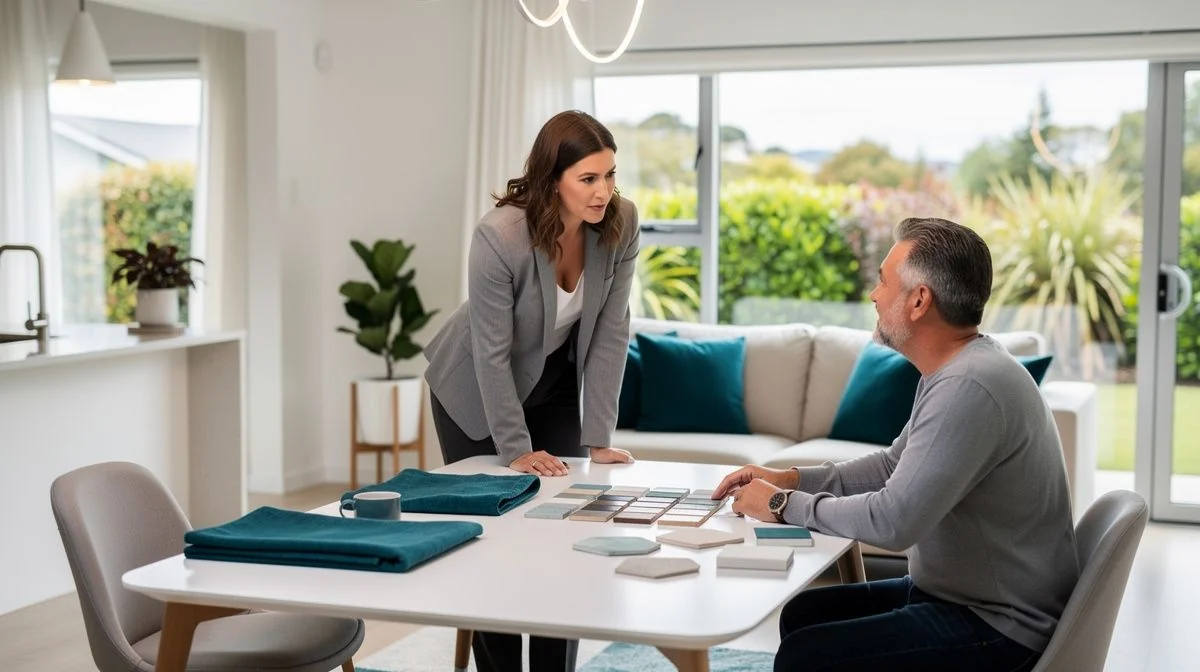
A designer produces spatial and technical decisions and then documents them: plans, joinery drawings, a finishes schedule and a lighting layout. That package is what a builder prices and works from, and it is the difference between a scheme that gets built and a Pinterest board that does not.
Design is usually sold in three sizes. A consultation is a fixed block of advice, often credited against a package. A room package covers one space completely, with a defined number of revision rounds. Full service covers the house and typically includes sourcing, coordination and site visits, which is where the cost climbs fastest.
In Rotorua there is a fourth consideration that belongs in the brief from the start: how the finishes will age in this air. If a designer has not worked here before, expect that question to come from you rather than from them.
What Interior Design Costs in Rotorua
Published New Zealand ranges, which apply locally with the usual variation between studios.
| Service | Typical price |
|---|---|
| Hourly design rate | $100–$250 + GST |
| Consultation, one to two hours | $165–$350 + GST |
| Bathroom package, from | $2,400 + GST |
| Kitchen design package | $4,000–$6,000 |
| Whole-home scheme | $10,000–$50,000+ |
| Percentage-of-project model | 10–20% of project value |
| Furniture sourcing | Hourly, often plus a margin |
| 3D visualisation | Sometimes included, sometimes extra |
| Site visits and trade coordination | Hourly |
Fee ranges verified from published New Zealand interior design price lists as of September 2026. Quotes typically exclude GST, and furnishings, products and trades are additional.
What Drives the Price Here
Layout is the first lever, and it is the expensive one. A refresh that keeps the kitchen where it is sits at the bottom of the range. Move a wall or relocate plumbing and you are buying design time, a builder and probably a consent, and the design fee rises with the complexity of the drawings.
Material selection is the second, and in Rotorua it is not just about looks. Powder-coated fittings, brass, and some painted finishes behave differently in geothermal air, and a designer who specifies the same package they would use in Tauranga may hand you a problem. Worth discussing explicitly, and worth accepting a slightly different finish if it lasts.
Site time is the third. A full-service engagement includes visits and coordination, which suits a busy owner and costs more. If you are happy to run the trades yourself, an hourly or package arrangement is cheaper, as long as someone owns the decisions.
How to Choose a Designer in Rotorua
Start with local experience, and be specific about it. Ask how many projects they have completed in the region and what they learned about materials from the first one. A designer who has worked here for a decade will have a view on metals, curtains and paint that no national brand can give you.
Then ask for the scope in writing, including revision rounds, what happens if the brief changes, and who deals with consent. The official position on what needs consent is worth reading before you sign anything, and if the project involves moving a wall or a bathroom, ask who is arranging the structural input.
Signals to take seriously: no written scope, a percentage fee with no defined budget, a portfolio of renders rather than photographs, and no willingness to name a client you can ring. There is no register for interior design in New Zealand, so references are your verification.
Local Factors a Rotorua Designer Should Already Know
What the geothermal air does to finishes
The tarnish and discolouration problem is real and it is specific to the region. Metals are the usual casualty, followed by fabrics near windows and paint on exterior-facing walls. The practical answer is not to avoid nice things, it is to choose fittings with a track record here, and to accept that some finishes need replacing sooner than they would in Hamilton or Napier.
Timber, light and a dark interior
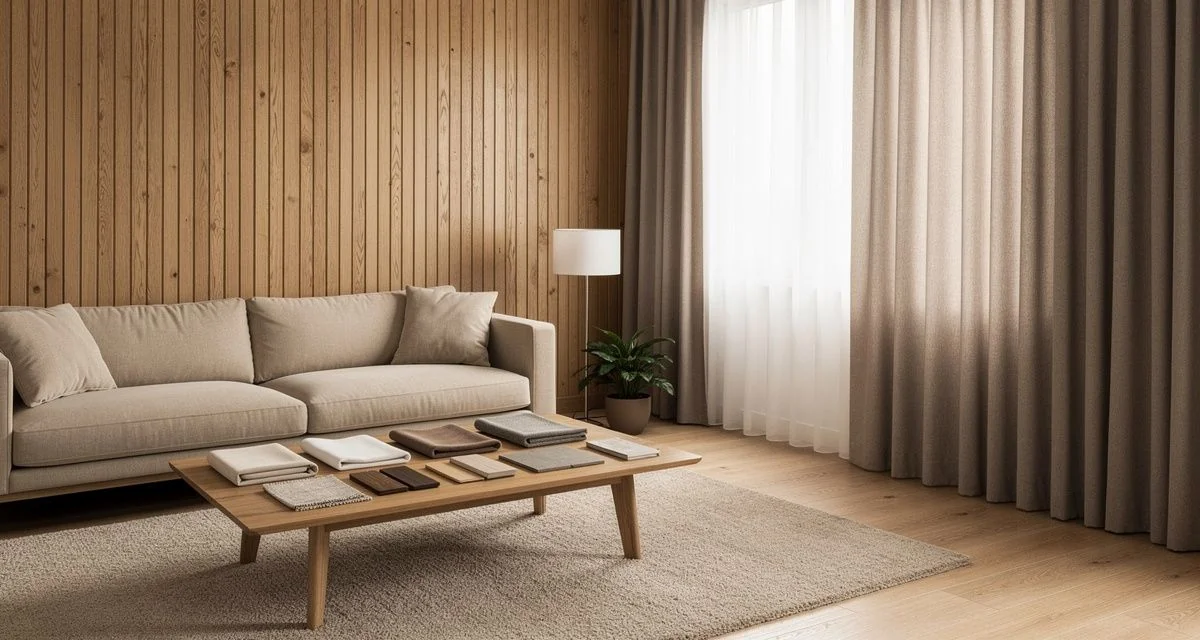
Native timber panelling is a feature worth keeping, and it eats light. Rooms with panelling on two or three walls need a deliberate lighting plan rather than a single ceiling fitting, and ceilings and floors often need to stay light to compensate. This is one place where a designer genuinely earns their fee in Rotorua.
Damp winters, humid summers and ventilation
The basin holds moisture and winter is cold, so ventilation and heating decisions shape how the interior performs for years. Opening a ceiling for other reasons is the moment to get insulation right, and any bathroom work should be treated as a moisture problem first and a tile problem second. Ask your designer to build these into the brief rather than leaving them to the builder. That conversation costs nothing, and it prevents a problem that is expensive to unwind.
Questions You Might Have
Is a consultation worth it on its own?
Often yes, especially if the problem is one room. Two hours with someone experienced will usually save more than it costs in avoided mistakes.
Can I keep my timber panelling?
Usually you should. The work is in lighting and in choosing adjacent colours that let the timber sit forward rather than recede into a dark room.
Does a designer handle the builder?
Some do, as part of full service, and it is billed. If you would rather run the job yourself, say so at the start and get it written into the scope.
How do I check credentials with no register?
References and completed work. Ask for two projects from the last couple of years, and ask to speak to the owners.
What Matters Most
Rotorua is a market where the specification matters as much as the styling, and where a beautiful scheme can be undone by the air or by a room that never gets enough light. The designers worth hiring here know both of those things without being told.
So ask the awkward questions early: what survives the sulphur, how will you light a panelled room, and who owns the consent. Then get the fee and the scope in writing, and keep a few dollars aside for the finishes that will need replacing sooner than the rest.

The ValueHub Team built this site because finding clear, unbiased financial information in New Zealand was harder than it should be. Every guide is based on real research — we compare the actual fees, terms, and fine print so you don't have to. Our tip: shop around every year, read the policy docs, and never assume loyalty gets you the best deal.— The ValueHub Team
Try our Calculators
Use these free tools to crunch the numbers:
KiwiSaver Fund Comparison
Compare fees, returns, and risk levels across every KiwiSaver fund — the most up to date data in New Zealand.
Currency Converter — USD to NZD
Convert US Dollars to New Zealand Dollars instantly. See the latest exchange rate and 30-day trend.
Mortgage Repayment Calculator
Calculate your weekly, fortnightly, or monthly mortgage repayments. Free NZ mortgage calculator — try different rates, terms, and repayment frequencies.
Compound Interest Calculator
See how your savings grow with compound interest over time. Free NZ compound interest calculator with yearly, monthly, and weekly compounding options.
Term Deposit Calculator
Calculate your term deposit returns before you lock in. Compare interest earned across different terms and rates with ValueHub's free calculator.
Savings Goal Calculator
Calculate how long it will take to reach your savings goal — and what monthly deposit you need to get there. Free NZ savings planner.
Interior Designers in Other Cities
Latest Guides & Reviews
Kōura KiwiSaver Scheme Review
Kōura KiwiSaver review: 13 open funds, fund charges from 0.63 to 1.10 per cent, and net returns to 30 June 2026.
reviewMaritime KiwiSaver Scheme Review
Maritime KiwiSaver review: 3 open funds, fund charges from 0.61 to 0.76 per cent, and net returns to 31 March 2026.
reviewMAS KiwiSaver Scheme Review
MAS KiwiSaver review: 7 open funds, fund charges from 0.25 to 0.98 per cent, and net returns to 30 June 2026.
reviewArotahi KiwiSaver Scheme Review
Arotahi KiwiSaver review: 1 open fund, a 0.77 per cent fund charge, and net returns to 31 March 2026. What the Government register shows you pay and get back.