Best Painters in Auckland
Published 11 September 2026 · Written by the ValueHub team · Reviewed by Steve Baron

Why Auckland Is Hard on Exterior Paint
Auckland spreads across a wide isthmus with two harbours, and that geography shapes every painting job. Coastal salt spray settles on cladding, humid summers slow drying between coats, and the region's strong ultraviolet light breaks down exterior coatings faster than it does inland. A paint system that lasts a decade in a drier, sheltered district may need attention years sooner on an exposed Auckland elevation.
The city also carries a large stock of older villas, bungalows and plaster homes, and each demands different preparation. Weatherboards need scraping, filling and priming where coatings have failed; plaster surfaces absorb paint and often need sealing. In most Auckland jobs, preparation is what separates a cheap quote from a durable finish, not the brand of paint.
Access is the other variable. Steep sites and two-storey homes often need scaffolding, and on some properties that alone is the largest line item after labour. Ask for scaffolding, number of coats, and preparation to be itemised separately, because a single total hides the work that decides how long the finish lasts.
How We Researched This Guide
We started with current market rates, comparing published price guides from New Zealand painting businesses and cross-checking regional figures against national averages. Hence, the Auckland premium reflects real quotes rather than assumptions.
We then worked through what actually drives a painting price: surface area, cladding type, access and the condition of the existing coating. Those four factors explain most of the variation between two quotes for houses of identical size.
We verified every figure against a live source. Where published ranges differ, we give the range rather than a single number, because painting prices genuinely vary that much between properties.
Our Trusted Painters
We feature businesses that demonstrate strong performance, proven experience, and consistently positive customer feedback. Some of the providers listed may have commercial relationships with us, but all are selected based on quality and reliability.
To begin, reach out to them and speak with them directly — this helps you explain your job, ask questions, and confirm whether they're the right fit.
Bring your project to life with Resene — New Zealand’s trusted name in colour, paint, and decorating innovation. Explore bold hues, eco‑friendly formulas, and expert advice to transform any space. From DIY touch‑ups to full renovations, Resene helps Kiwis create homes that feel vibrant, stylish, and uniquely theirs.
The 60-Second Version
If you read only one section, read this.
- Interior repaints in Auckland run about $42 per square metre. Exterior work is nearer $58.
- A qualified painter's charge-out rate sits around $62 an hour, the highest in New Zealand.
- A full three-bedroom repaint, inside and out, typically lands between $11,000 and $13,000 nationally, with Auckland toward the upper end.
- Prep work commonly accounts for 30 to 50 per cent of labour time. Be sceptical of quotes that skip it.
- Exterior work on plaster or stucco costs far more than weatherboard, because the surface absorbs coating and needs sealing.
- Get at least three written quotes. Never accept a per-hour agreement on an open-ended job.
What Painters Charge in Auckland
Rates are quoted either per square metre or per hour. Reputable businesses prefer fixed quotes based on measured area, because hourly billing gives you no certainty about the final invoice.
| Region | Interior /m² | Exterior /m² | Hourly |
|---|---|---|---|
| Auckland | $42 | $58 | $62 |
| Wellington | $40 | $55 | $60 |
| Tauranga | $36 | $50 | $56 |
| Christchurch | $35 | $48 | $55 |
| Hamilton | $33 | $46 | $52 |
| Dunedin | $32 | $44 | $50 |
| National average | $35 | $50 | $55 |
Rates verified from published New Zealand painting cost data as at September 2026. Figures are indicative and exclude GST unless stated. Every property differs — always obtain a written quote.
The gap between Auckland and Dunedin is roughly 30 per cent on interior work and 32 per cent on exterior. On a $12,000 job, that difference is several thousand dollars, and it reflects genuine cost pressure rather than a local pricing whim.
Watch the GST question closely. Many published per-square-metre rates exclude it, and 15 per cent on a $10,000 job is $1,500. Ask whether the figure you are comparing is inclusive before you use it to judge a quote.
What Actually Drives the Price
Two painters can quote $8,000 and $16,000 for the same house and both be honest—the differences are usually in scope, often in preparation rather than paint.
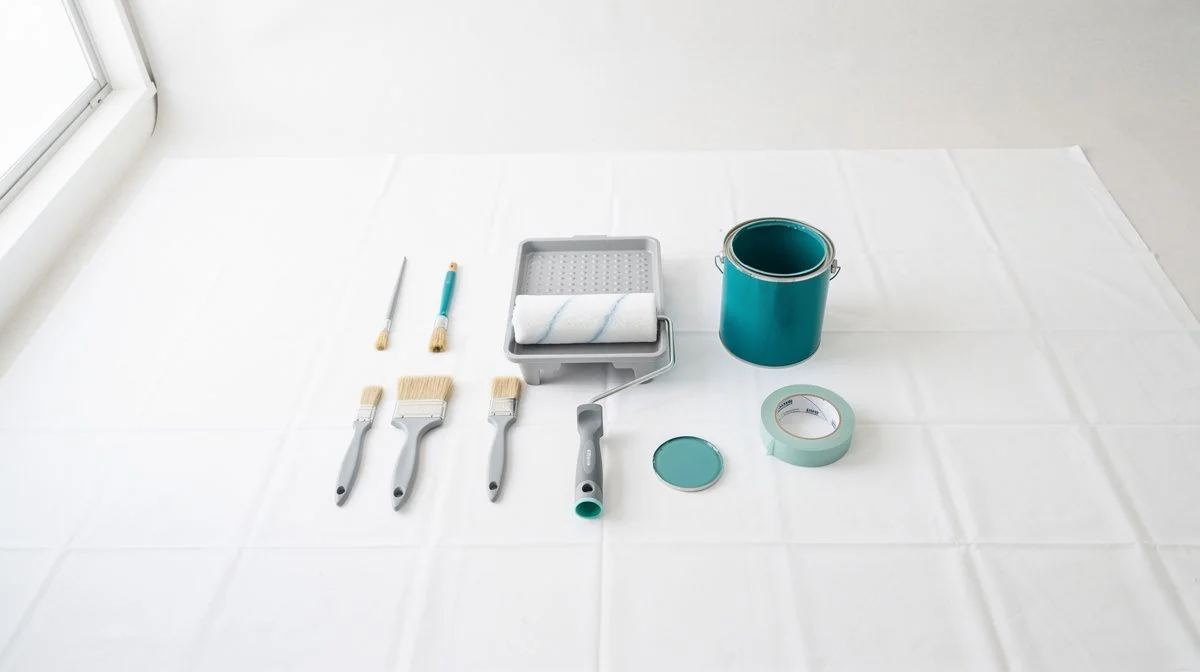
Surface Area and Ceiling Height
Quotes are built on measured area, not floor plan. A home with high studs, multiple levels, or extensive trim has far more paintable surface than its floor area suggests, and the difference can be substantial.
Cladding Type
Weatherboard is the cheapest exterior surface to coat. Brick and concrete block need specialty primers, which add both time and product cost. Plaster and stucco are the most demanding, because the surface absorbs coating, often needs sealing, and frequently requires more than one application.
Condition of Existing Paint: Remove flaking, blistering, or chalking paint before recoating, and stabilise ailing surfaces.
Access and Scaffolding
Two-storey homes, steep sections and tight driveways all demand scaffolding or elevated work platforms. On some Auckland properties, scaffolding alone runs to several thousand dollars, and it is often the largest line item after labour.
Occupancy
An empty house can be painted faster, because rooms need not be cleared and repainted in sequence. If you live in the property during the work, expect extra time and cost for staging and protection.
How to Choose a Painter in Auckland
Start by asking whether the business is a member of a recognised trade association, and whether it carries public liability insurance. Both matter when someone is working at height on your property.
Ask how many coats are included. Two full coats are standard for a durable finish, and a quote that names only one isn't comparable to one that names two. Also ask what preparation is included in writing.
Warning Signs
- A price far below the others. Painting is labour-intensive, and a very low quote usually means skipped preparation.
- No written scope. You should have a document listing surfaces, coats and prep before work starts.
- Hourly billing with no cap. Open-ended billing transfers all risk to you.
- No insurance details offered. Ask directly and expect a quick, clear answer.
- Cash-only and no paperwork. Without an invoice, you have no practical remedy if the finish fails.
- Pressure to start immediately. A full schedule is normal in Auckland, but a good painter plans.
What Your Quote Should Include
A complete painting quote names the surfaces being painted, the number of coats, the products being used and the preparation method. It should also state what is excluded, because exclusions cause most disputes.
- Surface preparation: sanding, filling, priming, and how much rectification is allowed.
- Products by brand and line, not simply "premium exterior paint".
- Number of coats on each surface, including trim and doors.
- Scaffolding, masking and drop sheets, shown as separate items.
- Whether the price includes or excludes GST.
- A start date and an expected completion window.
- Any warranty on workmanship, and for how long.
Auckland Factors That Change Painting Costs
Coastal and Humidity Exposure
Properties near the coast or on exposed ridges face more aggressive conditions. Salt spray and moisture demand better preparation and a more durable coating system, which raises the cost but also extends the interval before the next repaint.
Older Housing Stock
Villas, bungalows and 1970s plaster homes dominate much of the city. Each brings its own issues: lead-based paint on pre-1970s properties, degraded plaster, and joinery that needs filling before applying any coating.
Labour Availability
Auckland painters are in steady demand, and good ones are frequently booked weeks ahead. That scarcity supports the hourly rate and means the cheapest available option often has spare capacity for a reason.
A Market Where Maintenance Protects Value
With median values near $940,000, deferred maintenance costs a lot. Paint protects the cladding and joinery beneath it, and letting it fail risks water ingress that costs far more than the repaint you avoided.
Questions You Might Have
How often should an Auckland house be repainted?
Exteriors generally need attention every seven to ten years, with coastal and exposed properties toward the shorter end. Interiors typically last longer, perhaps ten to fifteen years in low-traffic areas.
Is it cheaper to paint in winter?
Some painters are more available outside the peak summer months, which can help with price. But most coatings need specific temperature and moisture conditions, so winter work carries genuine risk if the weather turns.
Can I paint the exterior myself and hire someone for the interior?
Plenty of people do, and it can work. Be realistic about the prep, which is the part most owners underestimate, and about working safely at height.
What if my house has lead-based paint?
Homes built before the 1970s may contain lead. You must manage it under specific safety requirements during removal. Ask your painter directly how they handle it, and expect a documented procedure.
Should I use the same painter for interior and exterior?
Usually yes, and often at a better combined rate, since scaffolding and site setup are shared. Sequencing exterior first also lets you see the finish before committing to interior colours.
What Matters Most
Painting is mostly preparation. The coating that fails after two years almost always failed because the surface underneath was never properly dealt with, not because of the brand on the tin.
For Auckland homeowners, that makes the cheapest quote the riskiest choice. Ask what preparation is included, insist on two full coats, and require the scope in writing before anyone starts. Get three quotes, compare them on scope rather than headline price, and check the trade hub for painters across New Zealand if you want to compare how quotes differ around the country.

The ValueHub Team built this site because finding clear, unbiased financial information in New Zealand was harder than it should be. Every guide is based on real research — we compare the actual fees, terms, and fine print so you don't have to. Our tip: shop around every year, read the policy docs, and never assume loyalty gets you the best deal.— The ValueHub Team
More Painters in Auckland
These businesses also operate in this area.
House Painting, Roof Painting, Roof Repairs, Waterblasting, Moss Treatments, Gutter Cleaning & Tree Services & Stump Removal. Services that are essential home maintenance tasks that can help to protect and enhance your property. Give your home a facelift. A fresh coat of paint can transform your home. Improved value, road appeal & longevity.
Try our Calculators
Use these free tools to crunch the numbers:
KiwiSaver Fund Comparison
Compare fees, returns, and risk levels across every KiwiSaver fund — the most up to date data in New Zealand.
Currency Converter — USD to NZD
Convert US Dollars to New Zealand Dollars instantly. See the latest exchange rate and 30-day trend.
Mortgage Repayment Calculator
Calculate your weekly, fortnightly, or monthly mortgage repayments. Free NZ mortgage calculator — try different rates, terms, and repayment frequencies.
Compound Interest Calculator
See how your savings grow with compound interest over time. Free NZ compound interest calculator with yearly, monthly, and weekly compounding options.
Term Deposit Calculator
Calculate your term deposit returns before you lock in. Compare interest earned across different terms and rates with ValueHub's free calculator.
Savings Goal Calculator
Calculate how long it will take to reach your savings goal — and what monthly deposit you need to get there. Free NZ savings planner.
Painters in Other Cities
Latest Guides & Reviews
Kōura KiwiSaver Scheme Review
Kōura KiwiSaver review: 13 open funds, fund charges from 0.63 to 1.10 per cent, and net returns to 30 June 2026.
reviewMaritime KiwiSaver Scheme Review
Maritime KiwiSaver review: 3 open funds, fund charges from 0.61 to 0.76 per cent, and net returns to 31 March 2026.
reviewMAS KiwiSaver Scheme Review
MAS KiwiSaver review: 7 open funds, fund charges from 0.25 to 0.98 per cent, and net returns to 30 June 2026.
reviewArotahi KiwiSaver Scheme Review
Arotahi KiwiSaver review: 1 open fund, a 0.77 per cent fund charge, and net returns to 31 March 2026. What the Government register shows you pay and get back.