Best Pest Controllers in Whanganui
Published 27 March 2025 · Updated 18 August 2026 · Written by the ValueHub team · Reviewed by Steve Baron
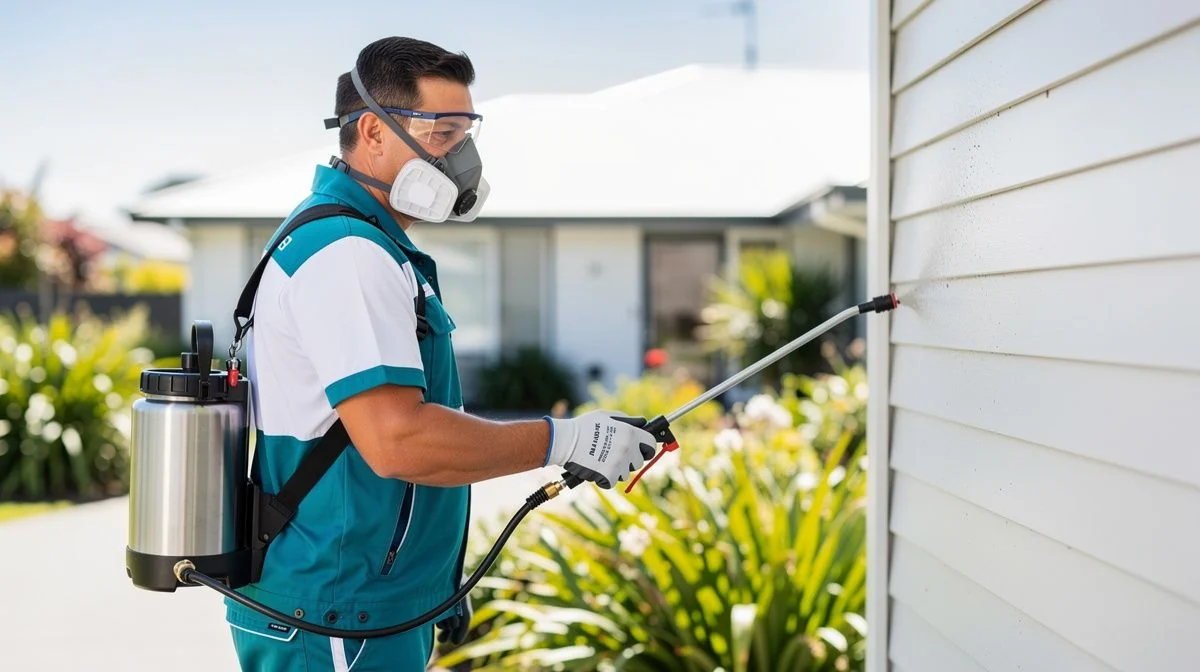
Best Pest Controllers in Whanganui
A river city with old houses, a rural fringe and a lot of winter visitors
Whanganui has a housing stock that suits pests. There are a great many villas and older homes with timber floors, gaps under doors, unlined subfloors and roof spaces that have been accessible to the outside for a century. Rodents need a gap the width of a pencil, and old houses have hundreds of them.
The city also sits in a river valley, which means humidity, and it is surrounded by farmland and bush, so there is a permanent population of wasps, rats and mice in the landscape waiting to move in. There is no way to keep them out of a district entirely; the job is keeping them out of a house.
Winter changes the pattern. As the weather cools, rodents look for somewhere warm and move from sheds and hedgerows into ceilings and walls, and calls climb sharply. Wasps follow a seasonal cycle of their own, building nests through the warmer months and becoming a problem around late summer when colonies peak.
Because the district is a mix of town and rural properties, a pest controller working here needs to be comfortable with both. A suburban villa with mice in the ceiling and a lifestyle block with a rat problem in a feed shed are different jobs.
Our Trusted Pest Controllers
We feature businesses that demonstrate strong performance, proven experience, and consistently positive customer feedback. Some of the providers listed may have commercial relationships with us, but all are selected based on quality and reliability.
To begin, reach out to them and speak with them directly — this helps you explain your job, ask questions, and confirm whether they're the right fit.
Ecomist delivers smart, effective pest control with safe, automated systems that keep your home or business protected year‑round. Their expert technicians target insects, rodents, and problem pests using proven, eco‑friendly solutions. Enjoy cleaner, healthier spaces with reliable Kiwi service and long‑lasting results.
How We Researched This Guide
We used published price lists from New Zealand pest control companies. This is a trade that publishes real numbers — per-nest wasp treatments, per-room flea treatments, and flat rates for ants and rodents — because customers booking a one-off job want to know the price before they commit.
What stood out is how much of the cost is the visit itself rather than the product. Most treatments are priced as a call-out covering a defined scope, with additional charges for follow-up visits, larger properties or difficult access. We also read the official position on who may use which treatments and how pest control must be carried out, which is set out by WorkSafe New Zealand and by the Ministry for Primary Industries, along with the consumer guarantees that apply to any paid service, explained by Consumer Protection.
The 60-Second Version
The short version, before the detail.
- Wasp nest treatment is typically $140–$350, depending on how the nest is reached.
- Ant treatments commonly run $160–$300, or more for a full internal and external treatment.
- Rodent work starts around $150, and fleas, spiders and cockroaches sit in the $160–$325 range.
- Bed bugs are priced per room, commonly $215–$265 a room.
- A combined interior and exterior spray is typically $340–$420.
- A three-month warranty on the treatment is standard, and callbacks within it should be free.
How Pest Control Actually Works
A treatment starts with identification. It sounds obvious, but the treatment for ants, cockroaches and spiders is not the same, and neither is the treatment for rats and mice. A company that quotes over the phone without asking what you have seen is guessing.
Then comes the treatment itself. Most residential work is a targeted application of bait or a residual product at the places pests travel and nest: skirting lines, roof voids, subfloors, and the exterior perimeter. This is why the technician walks the property rather than simply spraying one room.
The third element is exclusion. Killing what is inside a house does nothing to stop the next lot, and a proper job includes identifying and sealing entry points. In a Whanganui villa that conversation is often the longest part of the visit, and it is the part that determines whether you call again in three months.
Finally there is monitoring. Bait stations and follow-up visits are how you confirm that a rodent problem is actually finished rather than quiet. A company that offers a callback period within the warranty is doing that work on its own account.
Timing matters as much as method. Treating ants while the colony is active, or wasps before a nest has grown through a season, is far more effective than dealing with a population that is already well established. In this district the sensible pattern is to deal with wasp nests as soon as they are found and rodents before winter rather than during it.
What Pest Control Costs in Whanganui
Published New Zealand prices by pest type.
| Treatment | Typical price |
|---|---|
| Wasp nest treatment, per nest | $140–$350 |
| Ant treatment | $160–$300 |
| Rodents | from $150 |
| Cockroaches | $160–$325 |
| Fleas and ticks | $175–$310 |
| Spiders | $175–$310 |
| Bed bugs, per room | $215–$265 |
| Interior and exterior combined spray | $340–$420 |
| Ongoing maintenance plan | from $99 per month |
| Nest removal after treatment | additional charge if a second visit is needed |
Price ranges verified from published New Zealand pest control price lists as of September 2026. Prices are usually quoted for an average three-bedroom home, and larger properties, difficult access and repeat visits are charged on top.
What Makes a Quote Move
Access is the first factor. A wasp nest in an open shed is a short job. The same nest under a fascia board two storeys up needs a ladder, height safety and a second person, and it is priced for that.
Property size is the second. Most published prices assume a standard three-bedroom home. A large villa with a subfloor, a sleepout and multiple roof voids takes materially longer.
The third is whether the problem is an infestation or a sighting. One mouse seen in a kitchen may be a small exclusion job. A ceiling that sounds busy at night is a treatment with follow-up, and the two are not comparable. A property with a subfloor and two roof voids simply has more harbourage, and that is priced as time.
Choosing a Pest Controller in Whanganui
Ask what is being used, and ask to see the safety documentation. Any treatment applied inside a home should be explained, including how long to keep children and pets away from treated areas. Ask whether the product is a bait, a residual spray or a dust, because the right choice depends on where the pest is travelling.
Ask whether the price includes a follow-up visit and what the warranty period is. Three months is standard for most treatments, and a company that will not offer one is not confident in its work.
Ask about exclusion work and whether it is included. Sealing entry points is the difference between a treatment and a solution, and it is usually quoted separately. Because pest control is a service, the ordinary consumer guarantees apply, and Consumer Protection explains what you can expect if the treatment does not do what it was sold to do.
Local Factors Worth Knowing
Old wooden villas with a hundred ways in
Timber floors, open subfloors and original joinery mean an older Whanganui home will never be sealed perfectly. The practical aim is to reduce entry points and keep the population outside, rather than to achieve a rodent-proof house, which the building itself makes impossible.
Wasps and the rural fringe
Properties with hedges, sheds and fruit trees near farmland deal with wasps every summer. Nests in the ground are the ones people walk into, and early treatment of a nest near a doorway or a path is a safety matter rather than a nuisance.
Winter rodent movement
As the temperature drops, rodents move from outdoor harbourage into wall cavities and roof spaces, and the phone rings for everyone at once. Autumn is the cheapest time of year to deal with it, because exclusion work done before the move-in is simpler than a treatment after it.
Questions You Might Have
Do I need to leave the house during a treatment?
For most residential treatments, no, though you will be asked to keep away from treated surfaces until they are dry. Some products require a longer exclusion period, and the technician should tell you which applies.
Is pest control safe around children and pets?
When applied properly and with the correct products, yes. Ask which product is being used and follow the re-entry instructions exactly, particularly for anything applied to floors where a crawling baby spends time.
Why did the wasps come back?
Because a new colony built a nest. Treatment kills the nest, not the species. If wasps return to the same spot within the warranty period, that is usually a callback rather than a new charge.
Should I set my own traps first?
Traps are useful for monitoring and for small numbers, and they help identify what you actually have. They are not a substitute for treatment where there is an established population inside a wall or ceiling.
What Matters Most
Pest control is one of the few trades where the customer can judge the result themselves. Either the scratching stops and the wasps are gone, or it did not work.
In Whanganui, where old houses and a rural fringe combine, the sensible approach is to deal with entry points as well as the pest, treat wasp nests early rather than at peak season, and use a company that offers a warranty period and actually comes back within it.

The ValueHub Team built this site because finding clear, unbiased financial information in New Zealand was harder than it should be. Every guide is based on real research — we compare the actual fees, terms, and fine print so you don't have to. Our tip: shop around every year, read the policy docs, and never assume loyalty gets you the best deal.— The ValueHub Team
Try our Calculators
Use these free tools to crunch the numbers:
KiwiSaver Fund Comparison
Compare fees, returns, and risk levels across every KiwiSaver fund — the most up to date data in New Zealand.
Currency Converter — USD to NZD
Convert US Dollars to New Zealand Dollars instantly. See the latest exchange rate and 30-day trend.
Mortgage Repayment Calculator
Calculate your weekly, fortnightly, or monthly mortgage repayments. Free NZ mortgage calculator — try different rates, terms, and repayment frequencies.
Compound Interest Calculator
See how your savings grow with compound interest over time. Free NZ compound interest calculator with yearly, monthly, and weekly compounding options.
Term Deposit Calculator
Calculate your term deposit returns before you lock in. Compare interest earned across different terms and rates with ValueHub's free calculator.
Savings Goal Calculator
Calculate how long it will take to reach your savings goal — and what monthly deposit you need to get there. Free NZ savings planner.
Pest Controllers in Other Cities
Latest Guides & Reviews
KiwiSaver and Tax — PIR, ESCT and What You Actually Pay
KiwiSaver is taxed twice — ESCT on your employer's contribution and your PIR on the fund's returns. How each rate is set, and the two most members never check.
reviewInvestNow KiwiSaver Scheme Review
InvestNow KiwiSaver review: 45 open funds, fund charges from 0.03 to 1.38 per cent, and net returns to 30 June 2026.
reviewKernel KiwiSaver Scheme Review
Kernel KiwiSaver review: 25 open funds, fund charges from 0.25 to 0.45 per cent, and net returns to 30 June 2026.
guideTax Debt in New Zealand — The Numbers
Official figures on New Zealand's overdue tax debt: the total, the collectable share, which customer groups hold it, and how much is repaid or written off.