Best Solar Panel Installers in Christchurch
Published 11 September 2026 · Written by the ValueHub team · Reviewed by Steve Baron

Christchurch Is the Most Forgiving City for Solar
If solar is straightforward anywhere in New Zealand, it is here. Christchurch is flat, the sections are generous, the sunlight is strong, and the trades market that rebuilt the city is deep and competitive. Those four things remove most of the problems that make solar awkward elsewhere.
As a result, a Christchurch quote is usually easier to compare than one from a hill suburb in another region. Mounting is simpler, access is easier, and there is less need for the exposure engineering that drives up costs in windier cities. The arithmetic of the savings doesn't change. The system still has to be sized around the power your household uses during the day, and no subsidy brings the price down. Christchurch makes installation easier, not automatically cheaper to run.
How We Researched This Guide
We began with published installer pricing guides, then worked through how system size affects price per watt. Because Canterbury has such a large population of self-employed trades, we also looked at what a competitive market does to quotes and how to tell a genuine one from a trimmed one.
We also reviewed how local housing suits roof-mounted solar, and the consumer protections that cover installation work and supplied products. Every figure here comes from a source we checked, and where those sources disagree, we quote the range.
Our Trusted Solar Panel Installers
We feature businesses that demonstrate strong performance, proven experience, and consistently positive customer feedback. Some of the providers listed may have commercial relationships with us, but all are selected based on quality and reliability.
To begin, reach out to them and speak with them directly — this helps you explain your job, ask questions, and confirm whether they're the right fit.
BeBuilder | Best WordPress theme for building companies. Power your future with a solar provider you can trust. Your trusted Christchurch solar panel partner. At Garden City Solar, we help people take control of their energy with thoughtfully designed solar and battery systems built for long-term performance and relia
The experts in Plumbing & Electrical. When you hire a Laser Plumber or Electrician, you'll receive our 'Totally Dependable' service! Timely delivery, a promise of care and skill; appropriate work for customers' needs; well-presented, professional employees; responsibility for supplied materials, honouring manufacturer guarantees; and meeting and frequently exceeding our customers' expectations.
The 60-Second Version
If you read only one section, read this.
- A fair installed price is $1.70–$2.00 per watt including GST.
- A 6.6 kW system, the most popular size, typically costs $13,000– 15,000. New Zealand offers no subsidy or rebate. Nothing comes off the price.
- Payback is typically six to eight years without a battery.
- A battery adds $9,000–$15,000 for 10–13 kWh usable and rarely pays back quickly.
- Self-consumption decides your return, not total generation.
What Solar Costs in Christchurch
Because the city has so many established trades, competitive quotes are the norm and prices tend to sit mid-range rather than at the top. The bands below assume a standard roof on a flat section, with no unusual access costs.
| System size | Typical installed cost |
|---|---|
| 3 kW | $8,000–$10,000 |
| 5 kW | $11,000–$13,000 |
| 6.6 kW | $13,000–$15,000 |
| 8–10 kW | $15,000–$18,000 |
| 13 kW and above | $20,000–$30,000 |
| Battery, 10–13 kWh usable | $9,000–$15,000 |
Installed prices including GST, based on published New Zealand installer pricing guides. Scaffolding, switchboard upgrades and non-standard mounting are additional.
Price per watt falls as the system grows: a 3–4 kW system averages around $2.31 per watt, while a 13–14 kW system averages around $1.42 per watt. The median system installed in New Zealand homes is around 7–8 kW, and on a large Canterbury section, that is rarely a difficult fit.
Why Flat Sections and Strong Sun Help
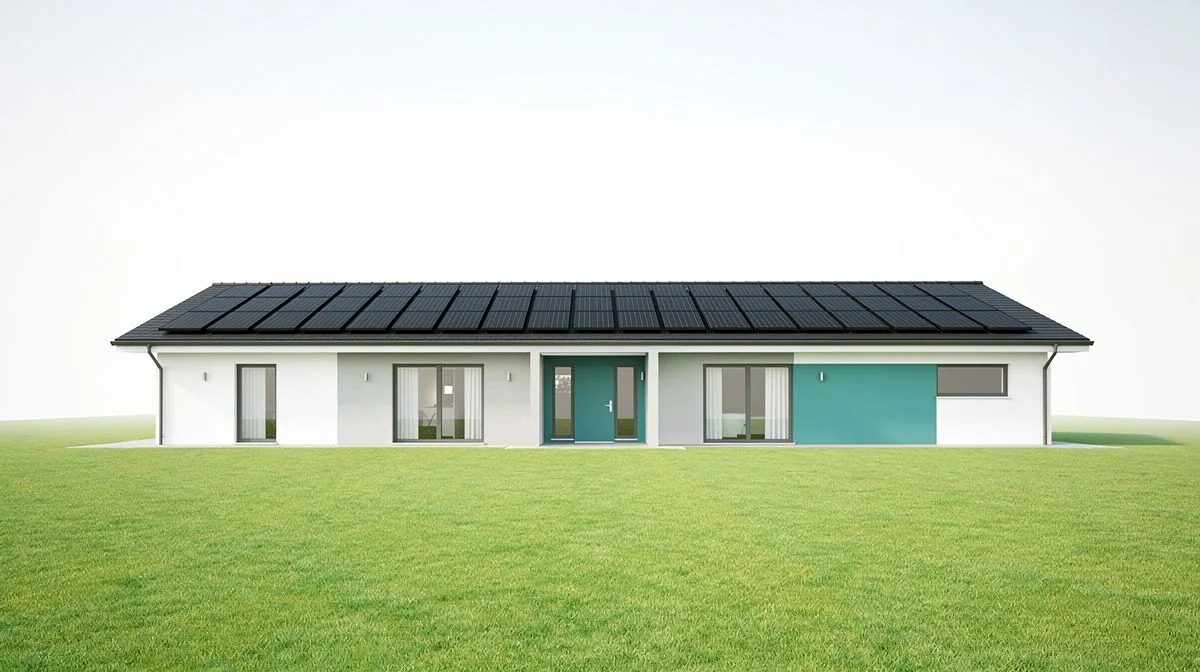
Orientation is the first thing an installer checks, and a flat, roomy section gives them options. You usually have room to put the array on the true north face rather than compromising on an east or west pitch, plus space to avoid shade from trees or neighbouring buildings.
Strong sunlight hours do the rest. Generation on a clear Canterbury day is high, which means a smaller array can produce the same output as a larger one somewhere cloudier. That is money saved on panels, and it is why local systems can sometimes be sized down without losing useful production.
A Deep Trades Market Keeps Quotes Honest
Christchurch has an unusually large population of self-employed tradespeople from the rebuild years; for homeowners, that's a real advantage. More interest from homeowners means sellers compete for the same job, so quotes are easier to obtain and compare, and there is less room for the inflated pricing that appears in thinner markets.
It also means you should shop around properly. Three written quotes should be easy to get, and comparing them line by line is what keeps the market working in your favour. Do not accept the first number you are given just because the installer was prompt.
Self-Consumption on a Big Section
A larger home on a big section usually has more daytime load than a compact city apartment, and that helps. Heat pumps, a hot water cylinder and pool pumps all draw power while the sun is up. Every kilowatt-hour used on site offsets a retail rate of roughly $0.28–$0.36 per kWh, among the highest in the OECD outside Europe.
Exported power earns a fraction of that, which is why self-consumption decides your return. A larger array only makes sense if something in the house is ready to use the output. Otherwise, you are building a power station for the grid at your own expense.
No Subsidy — What Canterbury Owners Should Ignore
New Zealand has no government rebate or subsidy for residential solar. Nothing is discounted at the point of sale, there is no scheme to enrol in, and there is nothing to trade. Any quote that mentions a subsidy referring to a scheme that does not exist; you should challenge it on the spot.
The comparison with Australia comes up constantly because Australian support makes headline prices there look lower. It is not a like-for-like figure. Here, the price you are quoted is the price you pay, and the decision rests entirely on whether the system earns its cost back through your own power bill.
Christchurch Factors That Change the Numbers
Flat Land and Straightforward Mounting
Flat ground makes scaffolding, hoisting and access simpler, which trims labour from the quote. It is one reason Christchurch pricing tends to be more predictable than in cities where every second section is on a hill.
How Much Capital to Commit
Solar is a long-lived improvement, so it is worth deciding how much capital you want tied up in the house before you compare quotes. A system sized to your daytime consumption is usually the better answer than the largest array the roof can carry, and the payback figure is where that shows up.
Sunshine That Suits a Smaller Array
Clear skies and strong sun hours mean each panel produces more. A household with modest daytime use can often meet its needs with a smaller system than it would need in a cloudier city, keeping both the upfront cost and the payback period down.
Rural and Agricultural Properties
Rural Canterbury and the agricultural support sector are a large part of the regional economy, and properties outside the city often have both the roof space and the daytime load to run a bigger system. Sheds, pumps and irrigation all draw power during the day, which suits solar well.
Choosing an Installer in Christchurch
Use the depth of the local market. Ask three firms for a written quote on the same system size, and require a site visit rather than an estimate based on your address. Shading from trees and neighbouring buildings is the detail most often missed.
Read the quotes as specifications, not prices. Compare the inverter model, the mounting system, the number of panels and the length of the warranties. A noticeably cheaper quote is usually cheaper because something has been substituted or left out.
Warning Signs
- Any mention of a government rebate or subsidy, because there is none.
- A quote provided without a site visit or a shading assessment.
- Savings projections that assume every unit generated is used at retail rates.
- Vague answers about who carries out the electrical work and who certifies it.
- A workmanship warranty shorter than the panel and inverter warranties.
- Pressure to sign immediately, or a price that expires the same day.
Questions Christchurch Homeowners Ask
Is solar worth it here without a subsidy?
For most owner-occupiers with a north-facing roof, yes. Payback typically runs six to eight years, and the system should last more than twenty. A shaded roof or a house empty all day weakens the case considerably.
Do I need a battery?
Usually not at the outset. A battery adds $9,000–$15,000 for 10–13 kWh of usable capacity and mainly shifts your own generation into the evening. It improves self-consumption but rarely shortens payback, so treat it as a separate decision.
How big a system suits a Christchurch home?
Start with daytime consumption rather than roof size. The median system installed in New Zealand is around 7–8 kW, and given the strong local sun, a household with modest daytime load may do well on less.
Will I still have a power bill?
Yes. You keep the grid connection, buy at night and on cloudy days, and export the surplus. Fixed charges remain, so solar reduces your bill rather than removing it.
What Matters Most
Christchurch gives you an easier starting point than almost anywhere else: flat sections, strong sun, simple mounting and a competitive trades market. That makes it tempting to buy the biggest system the roof will take, but the discipline is the same as anywhere. Size it around the power you use on site, and treat the export rate as a bonus rather than the plan.
There is no subsidy, so the numbers have to stand on their own, and in Canterbury they usually do. To compare how the maths works elsewhere, start with our solar panel installers hub.

The ValueHub Team built this site because finding clear, unbiased financial information in New Zealand was harder than it should be. Every guide is based on real research — we compare the actual fees, terms, and fine print so you don't have to. Our tip: shop around every year, read the policy docs, and never assume loyalty gets you the best deal.— The ValueHub Team
More Solar Panel Installers in Christchurch
These businesses also operate in this area.
Ice Solar NZ Leading Solar Experts. Made for New Zealand Conditions, Shop Solar Hot Water. We supply & install nationwide Freeze your bills with the sunshine. Only the Purest Energy supplied from above. Freeze your power bills with Ice Solar! Hot water typically makes up 40-60% of your home's energy bill!
Smart commercial & home solar energy systems. CPS Solar will design and install the best solar system for you, customised to meet your needs. Commercial Solar With a possible ROI of more than 11%, your business, school or farm can benefit from the multiple rewards of solar energy. Now with payment plan options.
Try our Calculators
Use these free tools to crunch the numbers:
KiwiSaver Fund Comparison
Compare fees, returns, and risk levels across every KiwiSaver fund — the most up to date data in New Zealand.
Currency Converter — USD to NZD
Convert US Dollars to New Zealand Dollars instantly. See the latest exchange rate and 30-day trend.
Mortgage Repayment Calculator
Calculate your weekly, fortnightly, or monthly mortgage repayments. Free NZ mortgage calculator — try different rates, terms, and repayment frequencies.
Compound Interest Calculator
See how your savings grow with compound interest over time. Free NZ compound interest calculator with yearly, monthly, and weekly compounding options.
Term Deposit Calculator
Calculate your term deposit returns before you lock in. Compare interest earned across different terms and rates with ValueHub's free calculator.
Savings Goal Calculator
Calculate how long it will take to reach your savings goal — and what monthly deposit you need to get there. Free NZ savings planner.
Solar Panel Installers in Other Cities
Latest Guides & Reviews
Kōura KiwiSaver Scheme Review
Kōura KiwiSaver review: 13 open funds, fund charges from 0.63 to 1.10 per cent, and net returns to 30 June 2026.
reviewMaritime KiwiSaver Scheme Review
Maritime KiwiSaver review: 3 open funds, fund charges from 0.61 to 0.76 per cent, and net returns to 31 March 2026.
reviewMAS KiwiSaver Scheme Review
MAS KiwiSaver review: 7 open funds, fund charges from 0.25 to 0.98 per cent, and net returns to 30 June 2026.
reviewArotahi KiwiSaver Scheme Review
Arotahi KiwiSaver review: 1 open fund, a 0.77 per cent fund charge, and net returns to 31 March 2026. What the Government register shows you pay and get back.