Best Solar Panel Installers in Upper Hutt
Published 10 April 2025 · Updated 18 August 2026 · Written by the ValueHub team · Reviewed by Steve Baron
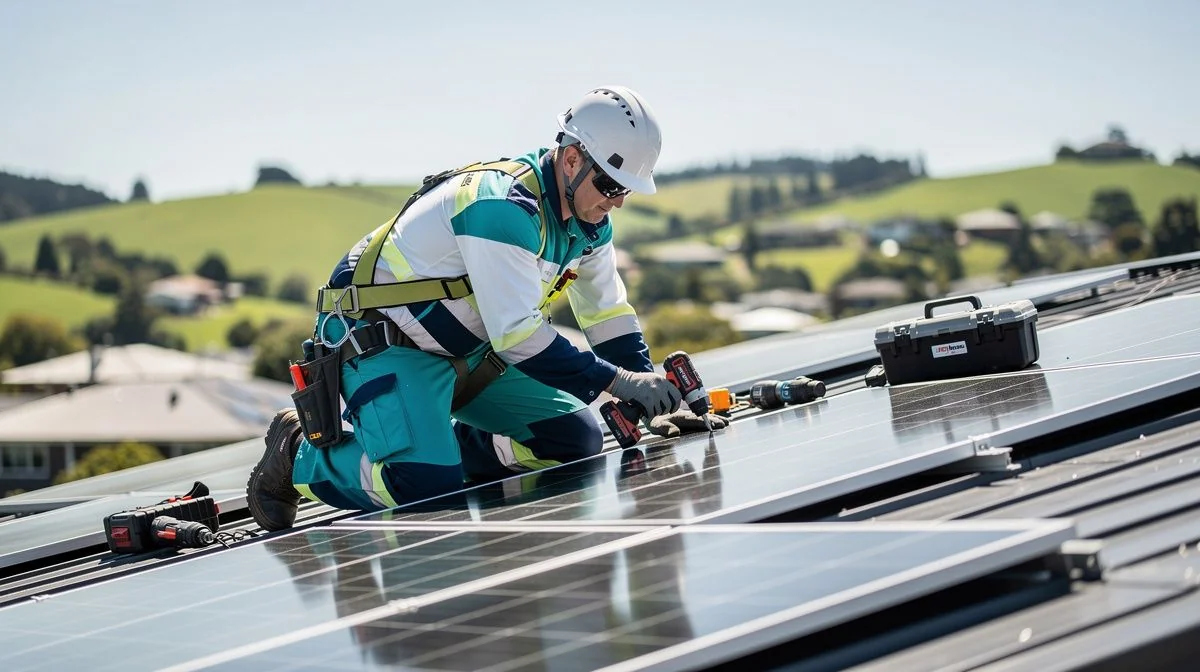
Finding Solar Panel Installers in Upper Hutt
Upper Hutt gets more sun than many parts of the Wellington region, which makes it a solid spot for solar energy. Whether you're looking to cut power bills or reduce your carbon footprint, finding the right installer is the most important step. The local market has grown quickly, and now there are several experienced companies that know Upper Hutt's specific conditions.
That said, choosing the wrong installer can cost you time and money. Poorly installed systems can underperform, void warranties, or even cause roof damage. So it pays to do your homework before you commit. This guide will walk you through what to look for, what to ask, and how to get the best outcome for your home or business.
What to Look for When Hiring a Solar Panel Installer in Upper Hutt
Not all solar installers are the same. Here are the key factors to check before you hire anyone.
Experience and track record
How long has the company been operating? An installer with several years of experience in the Wellington region will understand local weather patterns, council regulations, and grid connection processes. Look for recent Upper Hutt installations – a company that has worked on houses similar to yours is a safer bet.
Accreditations and certifications
In New Zealand, there's no single mandatory solar license, but reputable installers hold certain credentials. Check for membership in the Solar Industry Association (SIA) – this shows they follow a code of ethics. Also look for Master Electrician or Registered Electrician credentials, as solar installation involves electrical work. All electrical work must be done by a licensed electrician under New Zealand regulations.
Product warranties and workmanship guarantees
A good installer will offer a strong warranty on both the panels and the installation work. Typical panel warranties range from 10 to 25 years, but the workmanship guarantee should be at least 5 years. Ask specifically what the warranty covers – some only cover defects, while others include performance guarantees.
Local knowledge of Upper Hutt
Upper Hutt has its own microclimate, with frosts in winter and strong nor'west winds sometimes. An installer who knows local roof pitches and shading patterns (e.g. from hills or trees) will design a more efficient system. Also, they should be familiar with Upper Hutt City Council's building consent requirements – solar panels often need a building consent, but rules vary. Check with your local council for current requirements.
Online reviews and references
Read Google reviews, but also ask the installer for recent customer references from Upper Hutt. A trustworthy company will happily provide a list. Look for comments about communication, punctuality, and how the system performed after installation.
Key Questions to Ask Before Hiring
When you've shortlisted a few installers, ask these questions. Their answers will tell you a lot about their professionalism.
- Are you a licensed electrician or do you subcontract to one? The person doing the electrical connection must be a registered electrician. Some installers handle the design and mounting themselves, then bring in a sparky – that's fine as long as everyone is properly qualified.
- What brand and model of panels and inverters do you use? Quality varies. Ask why they chose specific products and whether those products have a good track record in New Zealand conditions.
- Do you conduct a site assessment before quoting? A proper quote should include a roof inspection, shading analysis, and energy usage review. Anyone giving a price over the phone without seeing your roof is cutting corners.
- What permits or consents are required? Building consent is often needed for roof-mounted solar panels in Upper Hutt. The installer should handle the consent process or at least guide you through it. Electrical work also requires a certificate of compliance.
- What ongoing support do you offer? What happens if a panel fails in three years? Is there a troubleshooting hotline? How do you handle warranty claims? Make sure you understand the support after the install.
- How long will the installation take? Most residential installations take one to three days, but larger systems may take longer. Delays can happen if weather or council inspections are involved.
- Do you have public liability insurance and health and safety procedures? This protects you if something goes wrong on your property.
Tips for Getting the Best Results
Getting the right installer is half the battle. The rest depends on preparation and ongoing care.
Know your energy usage first
Before you talk to any installer, check your power bills for the last 12 months. Look at how much you use at different times of day. Solar is most valuable when you use power during daylight hours – if you're out all day, you'll need to think about battery storage or exporting to the grid. This information helps the installer design a system that's the right size for you.
Choose the right roof orientation
In Upper Hutt, north-facing roofs produce the most energy. East and west are also good, especially if you use more power in the morning or evening. A good installer will model different orientations and pitch angles to maximise your specific roof's potential. They can also advise on whether partial shading from trees or chimneys will be a problem.
Consider battery storage now or later
Batteries let you store excess solar energy for use at night or during cloudy periods. They're still relatively expensive, but prices are dropping. Your installer can design a system that's "battery-ready" – meaning you can add a battery later without major rewiring. If you're on a tight budget, starting with panels and adding batteries later is a good strategy.
Check your roof condition
Solar panels last 25+ years. If your roof is due for replacement in the next 5–10 years, it's better to replace it before installing panels. Taking panels off to replace a roof is an extra cost. Some installers can work with the roofer to coordinate the timing.
Don't forget ongoing maintenance
Solar panels need very little maintenance – just the occasional clean from rain. But in Upper Hutt, you might want to check them after heavy frosts or if you have dense trees nearby. Some installers offer a monitoring service that alerts you if the system is underperforming. Ask about this during the quoting process.
A Note About Costs and Getting Quotes
Solar panel system costs vary a lot depending on the size, quality, and complexity of the install. A typical residential system in New Zealand might range from $8,000 to $15,000 after the government's Warmer Kiwis Homes Programme or other subsidies – but those figures are approximate and change frequently. Check with the Energy Efficiency and Conservation Authority (EECA) for current grants or low-interest loans for solar.
The best way to get a fair price is to get at least three written quotes from different Upper Hutt installers. Don't automatically choose the cheapest option – compare the quality of components, warranty terms, and the installer's reputation. A slightly higher upfront cost can pay off in better long-term performance.
When comparing quotes, make sure each one lists the exact same system size and brand so you're comparing apples with apples. Ask about any hidden costs like scaffolding, electrical upgrades, or meter changes. Also find out what the payment schedule looks like – a reputable installer will ask for a deposit (typically 10–20%) and the balance on completion. Never pay the full amount before the system is installed and inspected.

The ValueHub Team built this site because finding clear, unbiased financial information in New Zealand was harder than it should be. Every guide is based on real research — we compare the actual fees, terms, and fine print so you don't have to. Our tip: shop around every year, read the policy docs, and never assume loyalty gets you the best deal.— The ValueHub Team
Try our Calculators
Use these free tools to crunch the numbers:
KiwiSaver Fund Comparison
Compare fees, returns, and risk levels across every KiwiSaver fund — the most up to date data in New Zealand.
Currency Converter — USD to NZD
Convert US Dollars to New Zealand Dollars instantly. See the latest exchange rate and 30-day trend.
Mortgage Repayment Calculator
Calculate your weekly, fortnightly, or monthly mortgage repayments. Free NZ mortgage calculator — try different rates, terms, and repayment frequencies.
Compound Interest Calculator
See how your savings grow with compound interest over time. Free NZ compound interest calculator with yearly, monthly, and weekly compounding options.
Term Deposit Calculator
Calculate your term deposit returns before you lock in. Compare interest earned across different terms and rates with ValueHub's free calculator.
Savings Goal Calculator
Calculate how long it will take to reach your savings goal — and what monthly deposit you need to get there. Free NZ savings planner.
Solar Panel Installers in Other Cities
Latest Guides & Reviews
SuperLife KiwiSaver Scheme Review
SuperLife KiwiSaver review: 65 open funds, fund charges from 0.20 to 1.30 per cent, and net returns to 30 June 2026.
reviewSuperEasy KiwiSaver Scheme Review
SuperEasy KiwiSaver review: 8 open funds, a 0.32 per cent fund charge, and net returns to 31 March 2026.
reviewWestpac KiwiSaver Scheme Review
Westpac KiwiSaver review: 8 open funds, fund charges from 0.25 to 0.70 per cent, and net returns to 30 June 2026.
reviewANZ KiwiSaver Scheme Review
Review of ANZ KiwiSaver. Three schemes, fees from 0.22 per cent, the closed Default scheme, OneAnswer and the Lifetimes option.