Best Window Tinting Specialists in Levin
Published 25 April 2025 · Updated 08 October 2026 · Written by the ValueHub team · Reviewed by Steve Baron
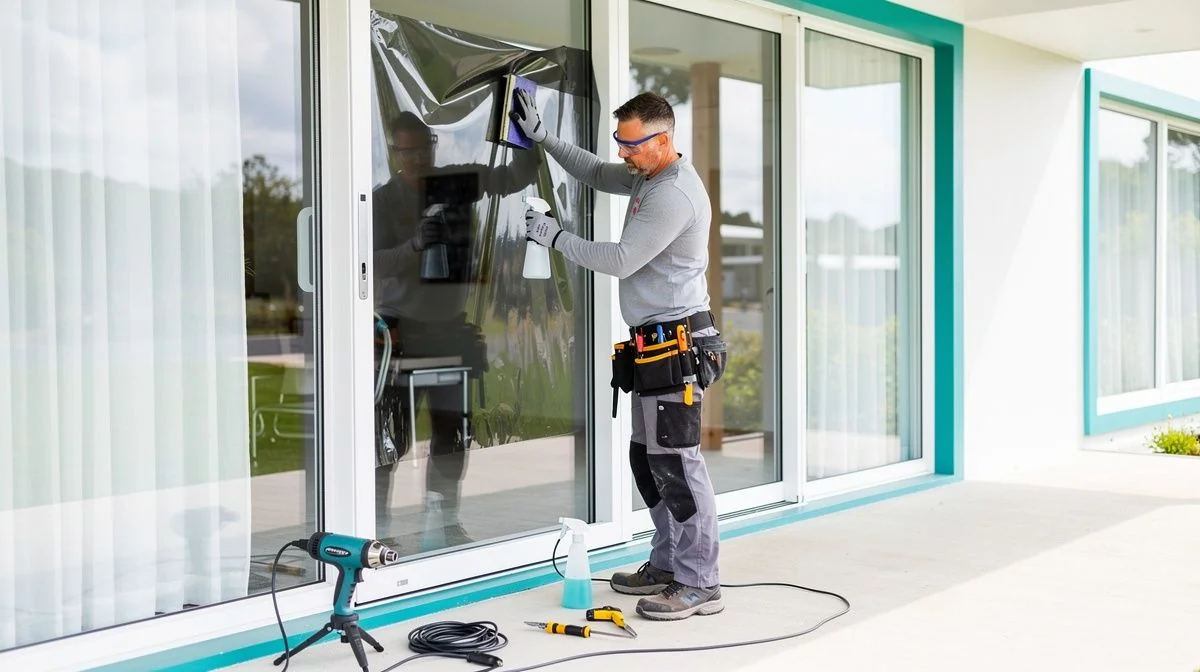
Best Window Tinting Specialists in Levin
The town sits on the flat between the Tararua ranges and the coast, which gives it humid summers and a lot of low-angle sun in the mornings and evenings. Utes and farm vehicles are common here, and a tray-backed ute has more glass around the driver than most people realise.
Tint does two useful things in that light. It cuts the sideways glare at either end of the day, and it stops a parked cab from turning into an oven. We have set out what it costs, the light limits set by the law, and how to pick a film that survives a Horowhenua summer.
How We Researched This Guide
We went to the Land Transport Rule covering vehicle glazing and the inspection standard used at the time of warrant, because those are the two documents that define what a legal tint is. Neither is open to interpretation, and both are free to read.
For pricing, we compared published price lists from tinting businesses around the country, separating the film grades rather than averaging them. A tint is quoted per vehicle or per window, and the gap between the cheapest dyed film and a ceramic one is large enough that an average would mislead rather than inform.
The Quick Summary (60-Second Version)
Here is the short version if you are deciding whether it is worth doing.
- A full-car tint on a ute or a light commercial runs about $330 to $440.
- Passenger cars and SUVs sit slightly higher, at roughly $370 to $490 for the full vehicle.
- Front-side windows must maintain at least 35% overall light transmission, measured through the glass and film.
- Nothing may be fitted to the windscreen except an anti-glare strip across the top.
- Ceramic film costs more up front and rejects more heat than a dyed film, which fades and turns purple.
- The mistake to avoid is choosing a film by its shade rather than by how it handles heat and glare.
What the Tint Rules Actually Allow
The law here is about the glass, not the person fitting the film. A windscreen must maintain at least 70% visible light transmittance, and no tint overlay may be applied to it. Only an anti-glare strip across the top of the glass is permitted.
Front-side windows must maintain at least 35% overall transmission. The word "overall" is the one that catches people out because it is measured by the glass and the film together. A film marketed as a 35% tint applied over factory glass produces a figure below the legal minimum, and the warrant will find it.
Rear side windows and the rear screen are handled differently on many vehicles, so a full-car tint is often legitimately darker behind the driver. Which rule applies depends on the vehicle's class. The vehicle inspection standard for glazing sets out exactly what an inspector measures.
Levin Pricing — What You Can Expect to Pay
Most tinters quote a full-vehicle price rather than a per-window price, and it usually covers the rear screen and all side windows but excludes the windscreen. That exclusion is not a shortcut; it is the law. Ask what is included before you compare.
Film grade is where the money goes. A dyed film is the cheapest option and looks fine for a year or two. A ceramic film rejects more heat, keeps its colour and does not interfere with reception. On a vehicle that sits outside all day, the upgrade pays for itself in comfort long before it pays for itself in resale.
| Item | Typical cost |
|---|---|
| Front two side windows only | $150-$250 |
| Full car, hatchback or light commercial | $330-$440 |
| Full car, sedan, wagon or SUV | $370-$490 |
| Full car, van or caravan | $450-$570 |
| Full car in a premium ceramic film | $550-$700 |
| Windscreen glare strip | from about $150 |
| Sunroof | from about $130 |
| Removing old tint before refitting | extra, quoted on inspection |
Prices are per vehicle, including film and labour, and exclude GST unless stated. Removing old film that has bubbled or gone purple is charged as separate work, so ask what that adds. A van or caravan costs more simply because there is more glass to cover.
How to Choose a Tinter — What Actually Matters
Ask for the finished reading on your vehicle
The film's advertised percentage is not the number that matters. Factory glass is already tinted, and the film adds to it. Ask the installer what the finished reading will be on a light meter for your specific vehicle, and ask them to write it on the quote so there is something to check afterwards.
Ask what happens if the warrant fails
A professional will guarantee the tint passes inspection because they measure first and choose the right film. Ask that question plainly. A business that measures the glass before quoting has nothing to worry about, and one that fits a standard film to every vehicle does.
Look at how they store and cut the film
Film quality shows in how a workshop handles it. Rolls should be stored sealed and cut fresh rather than pre-cut and left exposed. Asking to see the work area tells you more about the install than a showroom does, and it takes a minute.
What Happens on the Day
The visit is short, and the part after it matters as much as the part during it.
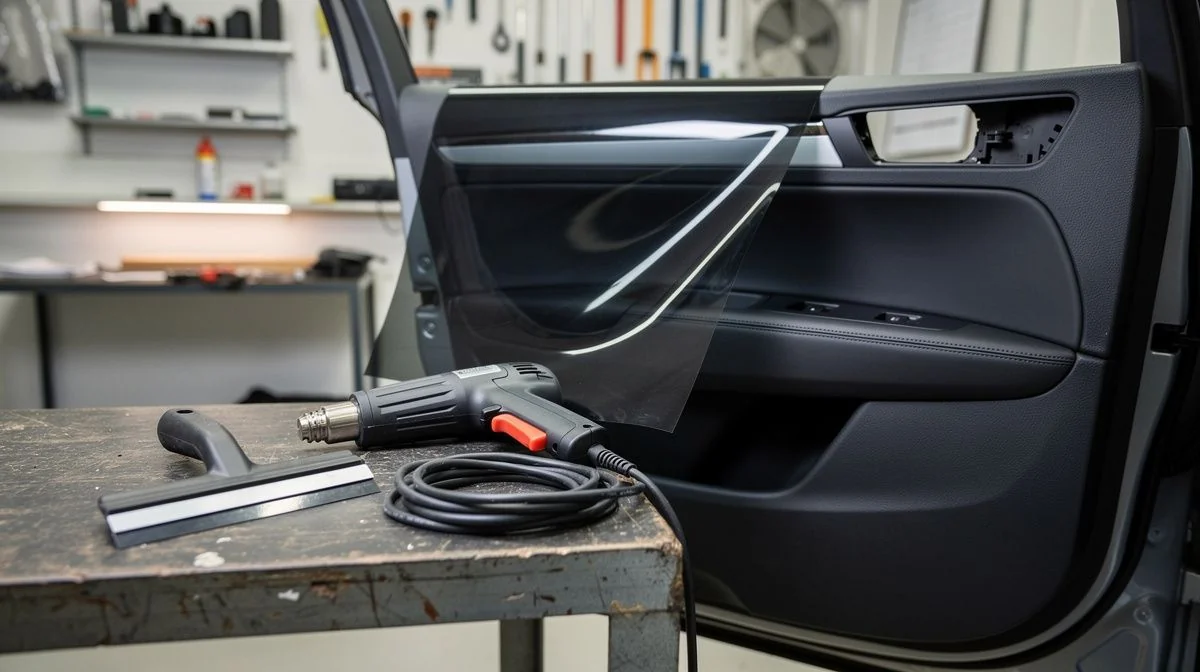
- The glass is measured with a light meter to select the correct film grade for a legal result.
- Windows are cleaned, and the film is cut, either from a template or by hand for an unusual shape.
- The film is laid down wet, squeegeed flat, and trimmed along the edges.
- The vehicle is left to cure, with the windows kept up for the period specified by the installer.
- Any faint hazing or small blisters in the first fortnight are normal and disappear as the film dries.
Levin-Specific Risks — What Your Tinter Should Know
Low sun at either end of the day
The town sits between the ranges and the sea, so the sun comes in low through the windscreen and the driver's-side window in the morning and evening. That is the glare a tint helps with most, and it is why the front-side windows matter here, even though they are limited by law. Ask for the darkest film that stays legal on those two windows.
Humidity and film that lifts at the edges
Humid summers are hard on a cheap film. Moisture gets under a lifting edge and travels, and once it does, the film has to be replaced rather than re-stuck. A ceramic film is applied the same way but holds its edge better, which is the practical difference over a few seasons.
Utes, farm vehicles and fleet work
A ute used for work needs tint that survives dust and being left out. Several vehicles at once are usually priced better than one at a time, so a small fleet is worth quoting together. Ask whether the price changes for a second or third vehicle brought in on the same day.
Questions You Might Have
Will a tint pass a warrant of fitness?
A tint within the legal limits will pass every time. The front side windows must retain at least 35% overall light transmission, and the windscreen cannot be tinted at all. The risk is not the law but the film choice, so ask for the finished reading before anything is applied.
Why can't the windscreen be tinted?
Because no overlay is allowed on it. The rule permits an anti-glare strip across the top, and nothing else, and requires the glass itself to maintain at least 70% light transmission. If a business offers to tint a full windscreen, that is the point to walk away.
Does tint actually keep a ute cooler?
It does, and the film grade decides how much. A ceramic film rejects a large share of the heat that passes through the glass, while a dyed film mostly reduces glare and light transmission. If the reason you are tinting is the temperature of a cab left in the sun, ask for the heat rejection figure.
What Matters Most
The legal limits are not the interesting part of a tint; the film grade is. Two vehicles with the same shade can have completely different cabins on a hot afternoon, depending on what the film is made of.
Have the glass measured before anything is fitted, and ask what the warranty covers if the film lifts.

The ValueHub Team built this site because finding clear, unbiased financial information in New Zealand was harder than it should be. Every guide is based on real research — we compare the actual fees, terms, and fine print so you don't have to. Our tip: shop around every year, read the policy docs, and never assume loyalty gets you the best deal.— The ValueHub Team
Try our Calculators
Use these free tools to crunch the numbers:
KiwiSaver Fund Comparison
Compare fees, returns, and risk levels across every KiwiSaver fund — the most up to date data in New Zealand.
Currency Converter — USD to NZD
Convert US Dollars to New Zealand Dollars instantly. See the latest exchange rate and 30-day trend.
Mortgage Repayment Calculator
Calculate your weekly, fortnightly, or monthly mortgage repayments. Free NZ mortgage calculator — try different rates, terms, and repayment frequencies.
Compound Interest Calculator
See how your savings grow with compound interest over time. Free NZ compound interest calculator with yearly, monthly, and weekly compounding options.
Term Deposit Calculator
Calculate your term deposit returns before you lock in. Compare interest earned across different terms and rates with ValueHub's free calculator.
Savings Goal Calculator
Calculate how long it will take to reach your savings goal — and what monthly deposit you need to get there. Free NZ savings planner.
Window Tinting Specialists in Other Cities
Latest Guides & Reviews
Kōura KiwiSaver Scheme Review
Kōura KiwiSaver review: 13 open funds, fund charges from 0.63 to 1.10 per cent, and net returns to 30 June 2026.
reviewMaritime KiwiSaver Scheme Review
Maritime KiwiSaver review: 3 open funds, fund charges from 0.61 to 0.76 per cent, and net returns to 31 March 2026.
reviewMAS KiwiSaver Scheme Review
MAS KiwiSaver review: 7 open funds, fund charges from 0.25 to 0.98 per cent, and net returns to 30 June 2026.
reviewArotahi KiwiSaver Scheme Review
Arotahi KiwiSaver review: 1 open fund, a 0.77 per cent fund charge, and net returns to 31 March 2026. What the Government register shows you pay and get back.