Best Builders in Upper Hutt
Published 08 August 2026 · Updated 18 August 2026 · Written by the ValueHub team · Reviewed by Steve Baron
Choosing a Builder in Upper Hutt: Why It Pays to Do This Properly
Let’s be honest: picking a builder is a bit like picking a life partner. You’re going to spend months together, you’ll see each other in all kinds of weather, and you’ll need to communicate clearly when things don’t quite go to plan. In Upper Hutt, this relationship matters even more because the local conditions throw up challenges you simply don’t see in other parts of the country.
The first thing to understand is that Upper Hutt has its own microclimate. We get frosts that can halt concrete pours in winter, and the valley can funnel wind in ways that make roofing work a logistical nightmare. A builder who has only ever worked in Auckland or even Wellington city might not instinctively know to schedule exterior work around the prevailing nor’wester, or to protect timber frames from dew that lingers well into mid-morning.
Soil conditions here are another beast entirely. Depending on which suburb you’re in, you could be building on firm Papa clay, alluvial river gravels, or reclaimed swampy ground near the Hutt River. Each of these requires different foundation engineering. A builder with local experience will already have relationships with geotechnical engineers who know the area’s quirks, and they’ll have a feel for when a standard slab is fine versus when you need screw piles or deep footings.
Council consent timelines in Upper Hutt have their own rhythm too. While Hutt City Council processes consents for Lower Hutt, Upper Hutt City Council handles its own. The team there is generally responsive, but they have specific expectations about documentation. Builders who work in the area regularly know exactly what the council wants to see first time around, which can save you weeks of back-and-forth.
Subcontractor availability is another local consideration. Upper Hutt isn’t short of skilled trades, but the good ones are booked out weeks or months in advance. A builder with established relationships can pull in a reliable electrician or plumber at short notice, whereas a newcomer to the area might be scraping the bottom of the barrel. That sounds harsh, but it’s the reality of a tight labour market.
Labour shortages across New Zealand have hit the construction industry hard, and Upper Hutt is no exception. The demand for housing in the region has surged over the past few years, with people moving north from Wellington city for more affordable sections and bigger backyards. That means builders are busier than ever, and the really good ones are often turning away work. If you rush into a decision just to secure someone, you could end up with a team that’s overstretched and underperforming.
Local building styles in Upper Hutt are worth understanding too. The area has a mix of classic 1950s and 1960s weatherboard homes, some charming brick villas, and a growing number of modern infill builds. Renovating an older home here comes with its own set of surprises, from asbestos in ceiling tiles to timber framing that doesn’t meet modern tolerances. A builder who has worked on similar homes will know where to look for hidden issues before they become expensive surprises.
There’s also the matter of the Hutt River itself. Properties near the river corridor have specific floodplain considerations that affect both insurance and building methods. A local builder will know which areas are affected and how to design around potential flood risks. That knowledge is genuinely invaluable, and it’s not something you can easily find online.
So, why does choosing carefully matter so much? Because the cheapest quote can end up costing you twice as much in the long run. Because a builder who doesn’t understand local conditions will make mistakes that a local would never make. Because the relationship you build with your builder over six months of work will determine whether the process is stressful or genuinely enjoyable.
This guide is designed to walk you through everything you need to know about hiring a builder in Upper Hutt. We’ll cover pricing, contracts, timelines, consent pathways, and the specific challenges of building in this part of the world. By the end, you’ll feel confident about asking the right questions and making a decision you can live with.
Take your time with this. A good builder is worth waiting for, and a bad one is worth avoiding at all costs. The hours you spend researching now will save you weeks of headaches later.
How Builder Pricing Actually Works in Upper Hutt
Money is the awkward part of any building project, but understanding how pricing works will save you from sticker shock and nasty surprises down the track. In Upper Hutt, the way builders price their work is shaped by local demand, material costs, and the specific challenges of building in the valley.
Let’s start with the basics. Builder pricing generally falls into two main components: labour and materials. Labour rates in Upper Hutt typically sit between $80 and $120 per hour for a qualified builder, depending on their experience and the complexity of the work. Apprentices and labourers come in cheaper, but you’re paying for the lead builder’s expertise, so don’t expect to save much by having juniors on site.
Materials are where costs can really balloon. Timber, steel, concrete, insulation, and finishing products have all gone up significantly over the past few years. Supply chain issues have made some materials harder to source, and that’s reflected in the quotes you’ll receive. A builder with good relationships with local suppliers might be able to get better pricing, but they’ll still pass on market rates.
So, what does that mean in dollar terms? For a renovation in Upper Hutt, you’re typically looking at anywhere from $2,500 to $4,500 per square metre, depending on the scope of work. A basic kitchen and bathroom update might come in at the lower end, while a full interior reconfiguration with new structural work will push you toward the higher end.
Extensions are a different beast. Adding a room or a second storey involves new foundations, framing, roofing, and cladding, so costs per square metre are higher. Expect to pay between $3,000 and $5,500 per square metre for an extension in Upper Hutt. The wide range reflects factors like site access, soil conditions, and how much work is needed to tie the new structure into the existing home.
New builds are where the big numbers live. A standard single-storey home in Upper Hutt will cost somewhere between $2,800 and $4,000 per square metre to build, before you factor in the cost of the section. That puts a 180-square-metre home at anywhere from $500,000 to $720,000 just for construction. Two-storey homes are slightly cheaper per square metre because they share foundations and roofing, but they come with their own complexities.
Recladding is a growing niche in Upper Hutt, particularly for older homes that need their weatherboard or fibre-cement replaced. This work typically costs between $1,500 and $2,500 per square metre, depending on the cladding material you choose and the condition of the existing structure underneath.
Local demand has a big impact on pricing. Upper Hutt has seen a construction boom in recent years, and builders are in high demand. That means they can afford to charge premium rates, especially for work that requires specific skills or tight timelines. If you’re flexible on timing, you might be able to negotiate a better rate, but don’t expect builders to discount their work just to keep busy.
Now, let’s talk about the different ways builders quote. An estimate is exactly what it sounds like: a rough idea of what the work might cost. It’s not binding, and it can change significantly as the project progresses. Estimates are useful for budgeting purposes, but they shouldn’t be treated as a firm commitment.
A fixed-price quote is a binding agreement. The builder commits to completing the work for a set price, regardless of what happens on site. This gives you certainty, but it also means the builder will build in a contingency margin to protect themselves. That margin is typically 10 to 15 per cent, and it’s built into the price you see.
Cost-plus is another option, where you pay the builder’s actual costs plus an agreed margin. This is transparent, but it leaves you exposed to cost overruns. It’s generally only recommended for projects where the scope is genuinely unknown, like a major renovation of an old home where you can’t predict what you’ll find behind the walls.
In Upper Hutt, most residential work is done on a fixed-price basis, particularly for well-defined projects like new builds and extensions. Renovations are more likely to be quoted on an estimate or cost-plus basis because of the unknowns involved.
Why do quotes vary so much between builders? The short answer is that different builders have different overheads, different margins, and different approaches to pricing. A large company with a big office and lots of admin staff will need to charge more to cover those costs. A small independent operator with minimal overheads might be able to offer a more competitive rate.
There’s also the question of quality. A builder who uses premium materials, employs experienced trades, and takes the time to do things properly will naturally charge more than someone who cuts corners. That’s not a bad thing, as long as you’re getting value for your money.
When you receive quotes, don’t just look at the bottom line. Ask each builder to break down their pricing so you can see where the money is going. A detailed quote shows that the builder has thought carefully about your project. A vague quote with a single number should raise red flags.

Our Trusted Builders
We feature businesses that demonstrate strong performance, proven experience, and consistently positive customer feedback. Some of the providers listed may have commercial relationships with us, but all are selected based on quality and reliability.
To begin, reach out to them and speak with them directly — this helps you explain your job, ask questions, and confirm whether they're the right fit.
Hayden and Kylie Rau are a husband and wife team who operate the Wellington and Kapiti Coast Sentinel Homes franchise areas. 18/21 Masefield Street, Trentham, Upper Hutt. Recent clients Brad & Unre share their story. Looking for a new home in Wellington & Kapiti. Looking to build your new home in Wellington, come and d
How to Compare Quotes Properly (Without Losing Your Mind)
Comparing builder quotes feels a bit like trying to compare apples with oranges, especially when every builder presents their pricing differently. But with a bit of preparation, you can make sense of the numbers and choose the right person for the job.
The first step is to prepare a clear scope of work. This sounds obvious, but you’d be surprised how many people approach builders with a vague idea and expect them to fill in the gaps. Write down exactly what you want done, including materials, finishes, and any specific requirements you have. The more detail you provide, the more accurate your quotes will be.
When you have your scope ready, send it to at least three builders and ask them to quote on the same work. This gives you a solid basis for comparison. If you ask each builder to quote on something different, you’re not comparing like with like, and you’ll end up with a confusing mess of numbers.
Once the quotes come in, don’t just look at the total. Break each quote down line by line so you can see how the builder has priced materials, labour, and any other costs. A good quote will be transparent, with clear descriptions of what’s included and what’s not. A vague quote that lumps everything into one number is a warning sign.
Pay attention to the assumptions each builder has made. One builder might assume you want mid-range fixtures and fittings, while another might have priced premium options. If the quotes differ wildly, it’s worth going back to each builder to clarify what they’ve included. You might find that the cheapest quote is only cheap because it’s missing half the work.
Red flags to watch out for include quotes that are significantly lower than the others, quotes that don’t include GST, and quotes that have vague terms like “as required” or “to be advised.” These are all signs that the builder hasn’t fully understood the job or is planning to hit you with extras later.
Bait-and-upgrade pricing is a common tactic in the building industry. A builder might quote a low price to win the job, then pressure you into upgrading materials or adding scope once work has started. This isn’t always malicious, but it’s something to be aware of. Ask each builder to confirm that their quote includes everything you’ve specified, and get any changes in writing.
Budget blowouts are the biggest fear for most homeowners, and they usually happen because of poor communication. Before you sign anything, sit down with each builder and talk through their quote in detail. Ask them what could change the price, and how they handle variations. A builder who is upfront about potential extras is more trustworthy than one who promises the world with no caveats.
Negotiating with builders is perfectly reasonable, as long as you do it respectfully. If you’ve received a quote that’s slightly over budget, ask the builder if there are ways to bring the cost down. They might suggest alternative materials, or they might be willing to trim their margin to secure the work. Just don’t try to beat them down to a price that’s unsustainable, because that will only cause problems later.
It’s also worth asking each builder about their payment schedule. Some builders ask for a deposit upfront, while others bill monthly based on progress. Make sure you understand how payments work before you commit, and never pay more than the industry standard for any given stage.
Finally, trust your instincts. If a builder seems evasive, disorganised, or too good to be true, walk away. The right builder will be happy to answer your questions, provide references, and explain their quote in detail. If they can’t be bothered during the quoting process, they probably won’t be much better once work starts.
Comparing quotes properly takes time and effort, but it’s one of the most important things you can do to protect yourself and your budget. The process might feel tedious, but it’s nothing compared to the stress of dealing with a botched build or a builder who disappears halfway through the job.
How to Choose the Right Builder in Upper Hutt: A Practical Checklist
You’ve done your research, shortlisted a few builders, and now it’s time to make a decision. This checklist is designed to help you ask the right questions and avoid common pitfalls. Print it out, take it to your meetings, and tick off each item as you go.
Check their LBP status. In New Zealand, any builder doing restricted building work must be a Licensed Building Practitioner. Ask to see their licence card and verify it online. This isn’t just a formality; it’s your protection against shoddy workmanship.
View their past work. A good builder will be proud to show you examples of their work. Ask for a list of recent projects in Upper Hutt, and if possible, visit a few. Seeing their work in person tells you more than any photo ever could.
Get references. Don’t just ask for names; actually call them. Ask about the builder’s communication, punctuality, and attention to detail. Ask whether the project came in on budget and on time. Ask if they’d hire the builder again.
Check their insurance. Every reputable builder should have public liability insurance and be willing to provide proof. This protects you if anything goes wrong on site, whether that’s damage to your property or an injury to a worker.
Read the contract carefully. Before you sign anything, read every word. If there’s something you don’t understand, ask. A good builder will be happy to explain their terms, and they won’t pressure you into signing quickly.
Understand the payment schedule. Know exactly what you’re paying for and when. Payments should be tied to milestones, not just a date on the calendar. Be wary of builders who ask for a large deposit upfront.
Ask about their team. Will the builder be on site every day, or will they be overseeing multiple projects? Who will be doing the actual work? Are they using subcontractors, and if so, who are they?
Check their communication style. How quickly do they respond to your calls and emails? Are they happy to explain things in plain English? Good communication is essential, and if it’s missing at the start, it won’t magically appear later.
Trust your gut. If something feels off, it probably is. You’re going to be working closely with this person for months, so it’s important that you feel comfortable with them.
Get everything in writing. Verbal promises are worth nothing if things go wrong. Make sure every detail of your agreement is captured in the contract, including variations and changes to the scope of work.
Taking the time to work through this checklist will give you confidence in your decision. It might feel like a lot of effort, but it’s a small price to pay for peace of mind.
Builder Availability in Upper Hutt: The Brutal Truth
Let’s not sugarcoat it: getting a good builder in Upper Hutt right now is hard. The region is booming, and the demand for construction work far outstrips the supply of skilled tradespeople. If you’re planning a project, you need to factor in availability as much as cost and quality.
Seasonal demand plays a big role. Builders in Upper Hutt are busiest from late spring through to early autumn, when the weather is good, and everyone wants to get their projects done. If you try to book a builder for a January start, you’ll be competing with dozens of other homeowners. If you’re flexible and willing to start in the middle of winter, you might have more luck.
Council bottlenecks add to the problem. While Upper Hutt City Council is generally efficient, processing times for building consents can still stretch to several weeks or even months. This creates a knock-on effect, with builders unable to start work until consent is granted, and then rushing to complete projects once it arrives.
Subcontractor shortages are another issue. Even if you find a great builder, they might not be able to secure an electrician, plumber, or roofer for the dates they need. This can cause delays that push your project out by weeks. Builders with established subcontractor relationships have an advantage here, so it’s worth asking about this during your initial meetings.
The labour shortage in the construction industry is real. Many experienced tradespeople have retired or moved into project management roles, and there simply aren’t enough apprentices coming through to replace them. This means builders are turning away work, and the ones who are available are often overstretched.
So, what does this mean for you? First, start your search early. If you’re planning a project for next summer, start talking to builders now. The best ones are booked out months in advance, and if you wait too long, you’ll be left with whoever is available, which might not be who you want.
Second, be flexible with your timeline. If a builder you really want to work with can’t start for six months, it might be worth waiting. A good builder is worth the wait, and rushing into a project with the wrong team will only cause problems later.
Third, be realistic about how long things take. Builders in Upper Hutt are juggling multiple projects, and delays are common. Build a buffer into your timeline so you’re not stressed if things slip by a few weeks.
Finally, don’t be afraid to ask builders about their availability upfront. A reputable builder will be honest about their workload and whether they can realistically take on your project. If they’re too busy to give you the attention you need, that’s a sign to look elsewhere.
The brutal truth is that finding a builder in Upper Hutt takes time and patience. But if you’re prepared to do the groundwork and wait for the right person, you’ll end up with a better result in the long run.
Common Mistakes Homeowners Make When Hiring a Builder
Every year, homeowners in Upper Hutt make the same mistakes when hiring builders, and many of them end up regretting it. Here are the most common pitfalls, and how to avoid them.
The biggest mistake is choosing the cheapest quote. It’s tempting to save money, but a low quote usually means something is missing. Maybe the builder has underestimated the work, or they’re planning to cut corners. In either case, you’ll end up paying more in the long run, either through variations or through having to fix shoddy workmanship.
Not checking references is another classic error. A builder might have a great website and a charming personality, but that doesn’t mean they do good work. Always ask for references and actually call them. Ask about the builder’s communication, their attention to detail, and whether they stuck to the agreed timeline and budget.
A vague scope of work is a recipe for disaster. If you don’t know exactly what you want, how can the builder quote accurately? Spend time writing down your requirements before you approach builders, and be as specific as possible. This will save you from misunderstandings and disputes later.
Paying too much upfront is another common mistake. Some builders ask for a deposit to secure materials or book subcontractors, and that’s reasonable. But if a builder asks for a large percentage of the total cost before work has even started, that’s a red flag. A reputable builder will structure payments around milestones, so you’re not left out of pocket if things go wrong.
Making assumptions is dangerous. Just because a builder says they’ll “look after everything” doesn’t mean they will. You need to understand exactly what’s included in your quote and what’s not. If you’re not sure, ask. And get everything in writing, so there’s no ambiguity.
Changing your mind mid-project is a surefire way to blow your budget. Every change you make, whether it’s swapping a light fitting or moving a wall, costs money and time. If you’re indecisive, you’ll end up paying for it. Try to finalise your decisions before work starts, and if you must change something, be prepared for the cost.
Skipping a contingency fund is a mistake that can leave you in serious financial trouble. Building projects almost always come in over budget, whether it’s because of unexpected site conditions, material price increases, or changes you decide to make along the way. Set aside at least 10 to 15 per cent of your total budget as a buffer, and don’t touch it unless you absolutely have to.
There’s also the mistake of not checking insurance. If a builder damages your property or someone gets injured on site, you could be liable if the builder doesn’t have adequate insurance. Always ask for proof of public liability insurance before you sign anything.
Finally, there’s the mistake of ignoring your instincts. If a builder seems evasive, disorganised, or too good to be true, walk away. Your gut is usually right, and it’s better to be safe than sorry.
Avoiding these mistakes comes down to doing your homework, communicating clearly, and being prepared. It might take a bit more time upfront, but it will save you a world of pain later.
Payment Stages and Financial Protections
Understanding how payments work is essential if you want to protect yourself financially during a building project. In New Zealand, there are industry-standard practices that reputable builders follow, and it’s worth knowing what they are.
Most building projects are paid in stages, tied to specific milestones. For example, you might pay a deposit upfront, then make progress payments as work reaches certain points, such as foundations, framing, and lock-up. The final payment is due on completion, after you’ve had a chance to inspect the work and ensure everything is done correctly.
The deposit is usually around 10% of the total contract price. Some builders ask for more, but anything above 20 per cent should raise questions. The deposit covers the cost of materials and booking subcontractors, so it’s a reasonable request. Just make sure you’re not paying for work that hasn’t been done.
Progress claims are invoices from the builder for work completed to date. These are usually submitted monthly, and they should include a breakdown of what’s been done and what’s been spent. You have the right to ask questions about any progress claim, and you don’t have to pay until you’re satisfied that the work is genuinely complete.
Retentions are a financial protection mechanism. A retention is a percentage of each progress payment that is held back until the project is complete. This gives you leverage if the builder doesn’t finish the work or if there are defects that need fixing. The standard retention is around 5 to 10 per cent of the contract price.
Variations are changes to the scope of work, and they can have a big impact on your budget. Any variation should be agreed in writing before the work is done, and it should include the cost and the impact on the timeline. If a builder starts doing extra work without discussing it with you first, you shouldn’t have to pay for it.
In Upper Hutt, most reputable builders follow these practices, but it’s still worth being vigilant. Before you sign a contract, make sure you understand the payment schedule and what happens if there are disputes. A good contract will include a process for resolving disagreements, whether that’s through mediation or adjudication.
There are also legal protections available to you. The Construction Contracts Act provides a framework for resolving payment disputes, and it gives you the right to withhold payment if work isn’t done properly. You should also be aware of your rights under the Consumer Guarantees Act, which applies to building work done for personal use.
Finally, never pay cash for building work. Always use a traceable method of payment, and keep records of every transaction. If something goes wrong, you’ll need those records to protect yourself.
Financial protection is all about being informed and asking the right questions. Don’t be afraid to negotiate the payment schedule, and don’t agree to anything you’re not comfortable with. A reputable builder will be happy to work with you on this.
Guarantees, Insurance and Compliance: The Legal Stuff
Building work is a significant investment, so it’s worth understanding the legal protections available to you. In New Zealand, there are several layers of compliance and guarantee that apply to residential construction.
First, there’s the Licensed Building Practitioner (LBP) scheme. Anyone doing restricted building work, which includes structural work, weathertightness, and fire safety, must be licensed. This is your assurance that the builder has the necessary skills and experience. You can verify a builder’s LBP status online, and you should always do this before hiring anyone.
Master Builders and Certified Builders are industry associations that offer guarantees on their members’ work. If you hire a builder who belongs to one of these organisations, you get additional protection. For example, Master Builders offers a guarantee of up to two years for workmanship and up to 10 years for structural defects. These guarantees are valuable, so it’s worth asking about them.
Public liability insurance is a must-have. This covers you if someone is injured on your property or if the builder damages your home or a neighbour’s property. Always ask for proof of insurance before work starts, and check that the policy is current.
Workmanship warranties are another form of protection. Under the Consumer Guarantees Act, builders are required to complete work with reasonable care and skill. If they don’t, you have the right to have the work fixed at their expense. This applies even if the builder goes out of business, although in practice it can be hard to enforce.
Building consent obligations are also important. Most building work requires a building consent from the council, and you can’t legally start work until it’s been granted. The builder should manage this process, but it’s ultimately your responsibility as the property owner. Make sure you understand what’s required and that your builder is following the rules.
Once the work is complete, you’ll need a Code Compliance Certificate (CCC) from the council. This certifies that the work meets the Building Code and is fit for purpose. Don’t make the final payment until you have this certificate, as it’s your proof that the work was done properly.
There’s also the matter of the Building Act’s implied warranties. These are protections that are automatically included in every building contract, even if they’re not written down. They cover things like compliance with the Building Code, use of suitable materials, and reasonable care and skill. If your builder breaches any of these warranties, you can take legal action.
Finally, it’s worth considering a building inspection. While the council will inspect the work at various stages, it’s a good idea to have an independent building inspector review the work before you make the final payment. This can catch issues that the council might miss and give you peace of mind.
Understanding these legal protections will help you navigate the building process with confidence. Don’t be afraid to ask your builder about guarantees, insurance, and compliance. A reputable builder will be happy to provide the information you need.
Timeline Expectations: How Long Things Actually Take
If there’s one thing that causes stress in a building project, it’s time. Everyone wants their project finished yesterday, but the reality is that building takes time. Here’s a realistic look at how long things actually take in Upper Hutt.
A small renovation, like a bathroom or kitchen update, typically takes four to eight weeks. This includes demolition, plumbing and electrical work, installation of new fixtures, and finishing. If you’re doing a more extensive renovation, like opening up walls or reconfiguring the layout, expect it to take three to six months.
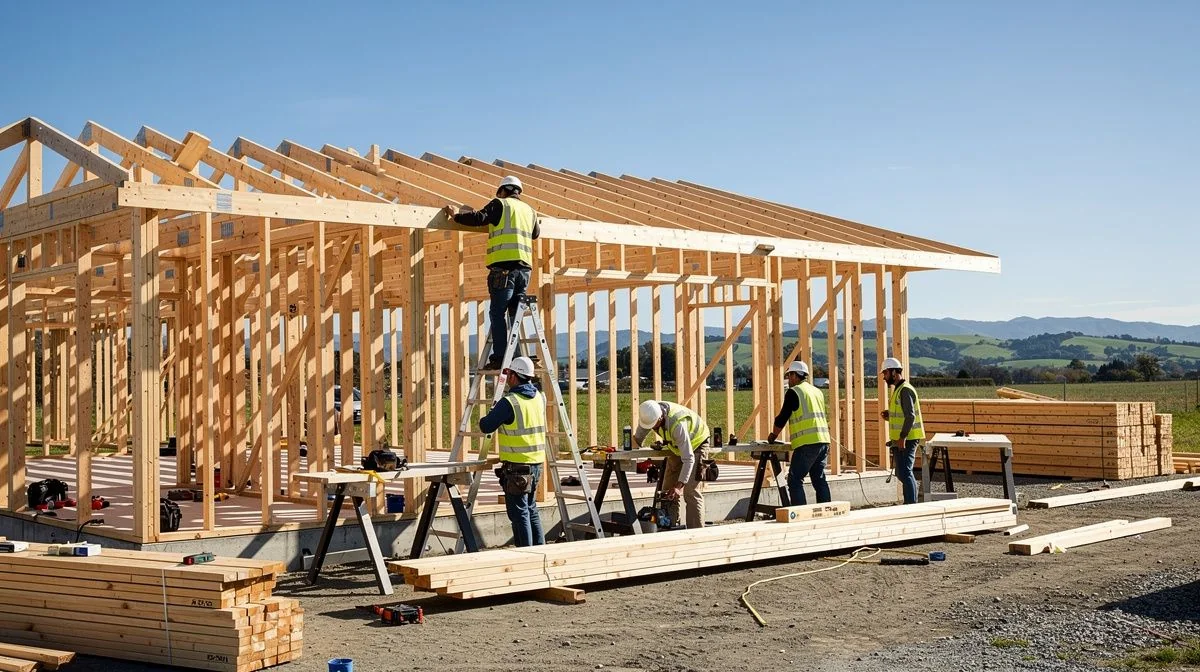
Extensions are a bigger commitment. Adding a room or a second storey involves foundations, framing, roofing, and cladding, so it’s not a quick job. A single-storey extension will typically take three to six months, depending on the size and complexity. A two-storey extension can take six to nine months or longer.
New builds are the longest projects. From breaking ground to handing over the keys, a standard single-storey home will take around six to nine months to build. Two-storey homes take longer, typically nine to twelve months. This assumes everything goes smoothly, which it rarely does.
Recladding is a specialised job that can take anywhere from four to twelve weeks, depending on the size of the home and the materials being used. The timeline is heavily dependent on the weather, as exterior work can’t be done in heavy rain or strong winds.
What causes delays? The weather is the biggest factor in Upper Hutt. Winter frosts can halt concrete pours, and heavy rain can make sites inaccessible. Builders will work around the weather as best they can, but some delays are unavoidable.
Council processing times are another common cause of delay. Even if your consent is approved quickly, there are inspections at various stages of the build. If an inspector is booked out, your builder might have to pause work until the inspection can happen.
Materials shortages have become a major issue in recent years. Timber, steel, and other key materials can have long lead times, and if something is out of stock, your project can be delayed by weeks. A good builder will order materials well in advance, but there are always surprises.
Variations are another source of delay. Every time you change something, the builder has to adjust their plans, order new materials, and reschedule trades. This can add days or even weeks to your timeline, so try to finalise your decisions before work starts.
Finally, there’s the simple fact that builders juggle multiple projects. Your build might not be the only one they’re working on, and if another project falls behind, yours could be delayed as a result. This is frustrating, but it’s the reality of the industry.
The best way to manage your expectations is to build a buffer into your timeline. If your builder says the project will take six months, plan for seven or eight. That way, you won’t be stressed if things slip by a few weeks.
It’s also worth asking your builder about their typical timelines and what could cause delays. A good builder will be upfront about the risks and will keep you informed throughout the process.
Communication and Project Management: The Glue That Holds It Together
You can have the best plans, the best materials, and the best builder in Upper Hutt, but if communication is poor, the project will suffer. Good communication is the glue that holds everything together, and it’s something you should prioritise from day one.
A good builder will keep you informed throughout the project. They’ll let you know what’s happening, what’s coming up, and what decisions you need to make. They won’t leave you in the dark, and they’ll be happy to answer your questions, no matter how trivial they seem.
Weekly updates are a common practice in the industry. Your builder might send you a text, an email, or a quick phone call to let you know how things are going. This keeps you in the loop and helps you feel involved in the process. If your builder doesn’t offer regular updates, ask for them.
Managing expectations is another key part of communication. A good builder will be honest about what’s realistic and what’s not. They won’t promise the world if they can’t deliver, and they’ll warn you about potential issues before they become problems.
Disputes are almost always the result of poor communication. If you feel like your builder isn’t listening to you, or if they’re making decisions without consulting you, it’s time to have a conversation. Most disputes can be resolved if they’re addressed early, before they escalate.
Real-world example: a homeowner in Upper Hutt wanted to change the colour of their kitchen cabinets halfway through a renovation. Instead of getting annoyed, their builder sat down with them, explained the cost and timeline implications, and helped them make an informed decision. The homeowner appreciated the honesty, and the project continued smoothly.
Another example: a builder noticed that the soil on a site was different from what the geotechnical report had indicated. Instead of proceeding and hoping for the best, they called the homeowner, explained the issue, and recommended a solution. The homeowner was grateful for the transparency, even though it meant additional cost.
Good communication also extends to the paperwork. A good builder will keep detailed records of everything, including variations, payments, and inspections. This protects both of you if there’s a dispute, and it makes the process much smoother.
If you’re not a naturally assertive person, it’s worth appointing a friend or family member to be your advocate. They can ask questions on your behalf and make sure your concerns are being heard. Building projects can be stressful, and it helps to have someone in your corner.
Finally, remember that communication is a two-way street. If you have concerns, raise them early. If you’re happy with the work, say so. Building a positive relationship with your builder will make the whole process more enjoyable, and you’re more likely to get a good result.
The Consent Pathway: A Simple Overview
Building consents are one of the most confusing parts of any construction project, but they don’t have to be. Here’s a simple overview of how the consent process works in Upper Hutt.
First, you need to determine whether your project requires a building consent. Most building work does, but there are some exemptions. For example, minor repairs, small sheds, and some decking can be done without consent. The Ministry of Business, Innovation and Employment has a list of exemptions, but it’s always worth checking with the council if you’re unsure.
If your project requires consent, you’ll need to submit an application to Upper Hutt City Council. The application includes detailed plans, specifications, and supporting documents. This is where having a good builder or architect is invaluable, as they’ll know exactly what the council wants to see.
Processing times vary, but in Upper Hutt, you can expect a straightforward consent to take around 20 working days. More complex projects can take longer, especially if the council requests additional information. It’s a good idea to factor consent processing into your timeline.
Resource consent is a separate process that applies to projects that don’t comply with the district plan. This might include things like building over a boundary, exceeding height limits, or working on a heritage property. Resource consent can take several months, so it’s best to avoid it if you can.
Engineering reports are often required as part of the consent process. For example, if you’re building on a sloping site or in a flood-prone area, you’ll need a geotechnical engineer to assess the conditions and recommend appropriate foundations. This adds time and cost, but it’s essential for a safe build.
Once consent is granted, the building work can begin. Throughout the build, the council will carry out inspections at key stages, such as foundations, framing, and insulation. These inspections are designed to ensure the work meets the Building Code, and they’re an important safety net.
After the work is complete, the builder will apply for a Code Compliance Certificate. This certifies that the work complies with the building consent and the Building Code. You should receive this certificate before you make the final payment, as it’s your proof that the work was done properly.
It’s worth noting that the consent process can be frustrating, especially if you’re not used to dealing with bureaucracy. But it exists for a reason, and it protects you from shoddy workmanship. A good builder will manage the process for you, so you don’t have to worry about the paperwork.
Finally, keep all your consent documents in a safe place. You’ll need them if you ever sell your home, and they’re also useful if you decide to do further work in the future.
Upper Hutt-Specific Building Challenges
Building in Upper Hutt comes with its own set of challenges, and understanding them before you start will save you from nasty surprises. Let’s dive into what makes this area unique.
Weather is the first thing on everyone’s mind. Upper Hutt has a cooler, frostier climate than Wellington city, and this affects building work in several ways. Concrete can’t be poured in freezing conditions, so winter starts are risky. Frost can also damage materials that are left exposed, so builders need to be careful about storing and protecting supplies.
The wind is another factor. The valley funnels wind in a way that can make roofing and scaffolding work dangerous. A good builder will monitor weather forecasts and schedule exterior work for calmer days, but this can cause delays. If you’re building on an exposed site, it’s worth discussing this with your builder upfront.
Soil conditions in Upper Hutt vary significantly. Some areas have firm Papa clay, which provides excellent foundations. Other areas, particularly near the Hutt River, have alluvial gravels and reclaimed land that require more careful engineering. Before you start any project, you should have a geotechnical assessment done to understand what you’re dealing with.
Sloping sites are common in the hills around Upper Hutt, and they present their own challenges. Building on a slope requires careful foundation design, and it can add significantly to the cost. Access can also be an issue, as machinery and materials need to be brought in safely. If you’re building on a slope, make sure your builder has experience with this type of work.
Coastal exposure isn’t a major issue in Upper Hutt, but the valley’s position between the Rimutaka and Tararua ranges means it gets its fair share of rain. This can affect exterior work, and it’s something to plan for. A good builder will have strategies for working around the weather, but you should expect some delays.
Heritage overlays are a consideration in some parts of Upper Hutt. Certain suburbs have character protections that restrict what you can do to the exterior of older homes. If you’re planning a renovation, check with the council to see if your property is affected. This can add complexity to your project, so it’s best to know upfront.
Local building styles are another factor. Upper Hutt has a mix of mid-century weatherboard homes, brick villas, and modern infill builds. Renovating an older home requires a builder who understands the quirks of these buildings, from asbestos in ceiling tiles to timber framing that doesn’t meet modern standards. A builder with local experience will know where to look for hidden issues.
Council processing times in Upper Hutt are generally reasonable, but they can be affected by the volume of applications. During busy periods, you might find that consent takes longer than expected. It’s worth submitting your application early and being prepared to chase things up if necessary.
Flood risk is a real consideration in parts of Upper Hutt. Properties near the Hutt River or its tributaries can be affected by flooding, which has implications for both building methods and insurance. If your property is in a flood-prone area, you’ll need to design your build to minimise risk, and you might face higher insurance premiums.
Finally, there’s the issue of local demand. Upper Hutt has seen a construction boom in recent years, and this has put pressure on the supply of builders and materials. This means you might pay more than you would in other areas, and you might have to wait longer for your project to start.
Understanding these challenges is the first step to overcoming them. A good builder with local experience will know how to navigate these issues, and they’ll be upfront about the risks and costs involved. Don’t be afraid to ask questions, and make sure you’re working with someone who genuinely knows the area.
Builder Types and Which One You Need
Not all builders are the same, and the type of builder you need depends on the project you’re planning. Here’s a rundown of the different types of builders in Upper Hutt and what they’re best suited for.
Renovation specialists focus on updating and improving existing homes. They’re skilled at working within the constraints of an existing structure, and they know how to handle the surprises that come with older buildings. If you’re planning a kitchen or bathroom renovation, or a more extensive remodel, a renovation specialist is your best bet.
New-build companies focus on constructing homes from scratch. They have established relationships with suppliers and subcontractors, and they’re experienced at managing the entire process from site preparation to handover. If you’re building a new home on a bare section, a new-build company is the way to go.
Recladding specialists are a niche group that focuses on replacing exterior cladding. This is a specialised job that requires knowledge of weathertightness and moisture management. If your home needs recladding, look for a builder who has done this type of work before.
Design-and-build firms offer both design and construction services. They have architects or architectural designers on staff, so you can work with one team from concept to completion. This can simplify the process and ensure the design is practical and buildable.
Small independents are sole traders or small teams who take on a variety of projects. They offer a personal service, and you’ll often be dealing directly with the person doing the work. They’re a good option for smaller projects, but they might not have the capacity for larger builds.
Large companies have bigger teams and more resources. They can take on large-scale projects, and they often have project managers who oversee the work. They’re a good option for complex builds, but they can be more expensive, and you might not have as much direct contact with the people doing the work.
Project-management-led firms are a newer model where the company manages the project but subcontracts the actual building work. This can work well, but it relies on the project manager having good relationships with reliable subcontractors. Make sure you understand how this model works before you commit.
Which type of builder do you need? It depends on your project. For a simple renovation, a small independent or a renovation specialist is a good choice. For a new build, a new-build company or design-and-build firm is more appropriate. For a complex project with multiple elements, a larger company with project management capabilities might be the best option.
It’s also worth considering the size of your project. Some builders specialise in small jobs, like repairing a deck or replacing a roof. Others only take on large projects. Be upfront about the size of your project when you’re approaching builders, so you don’t waste anyone’s time.
Finally, don’t be afraid to mix and match. You might use a design-and-build firm for a major renovation, but hire a small independent for a separate project, like building a garden shed. The key is to match the builder to the job.
How to Prepare for Your First Meeting With a Builder
Your first meeting with a builder is your chance to make a good impression and set the tone for the project. Here’s how to prepare so you get the most out of it.
Bring your documents. This includes your property title, any existing plans or drawings, and any reports you have, like a geotechnical assessment or a building inspection. The more information you can provide, the better the builder can understand your project.
Write down your vision. Before the meeting, spend some time thinking about what you want to achieve. Write down your goals, your priorities, and any specific requirements you have. This will help you communicate your vision clearly and help the builder give you an accurate quote.
Prepare your questions. You should have a list of questions to ask the builder, covering things like their experience, availability, team, and approach to communication. Don’t be afraid to ask tough questions, like how they handle variations or what happens if there are delays.
Have a budget in mind. You don’t need to have a precise figure, but you should have a realistic range in mind. This will help the builder understand what’s feasible and avoid awkward conversations later. Be honest about your budget, and ask the builder if your expectations are realistic.
Be open to advice. You might have a clear vision, but a good builder will have valuable insights based on their experience. Listen to their suggestions, and be willing to compromise if they recommend a different approach. This is especially important when it comes to things like materials and construction methods.
Watch for red flags. During the meeting, pay attention to how the builder communicates. Are they listening to you, or are they just trying to sell you something? Are they upfront about costs and timelines, or are they vague? Trust your instincts, and don’t be afraid to walk away if something feels off.
Take notes. You’ll be meeting with multiple builders, and it’s easy to forget who said what. Take notes during each meeting, and compare them afterwards. This will help you make an informed decision.
Finally, don’t rush. Your first meeting is just the beginning of the process. Take your time, ask questions, and make sure you’re comfortable with the builder before you commit to anything.

Best Builders for Different Project Types in Upper Hutt
Different projects require different skills, and finding the right type of builder for your specific job is crucial. Here’s a guide to what to look for in Upper Hutt, based on the type of project you’re planning.
Villa renovations are a speciality in their own right. Older villas have unique charm, but they also have unique challenges, from dodgy wiring to timber framing that doesn’t meet modern standards. You need a builder who has experience with period homes and understands the importance of preserving character while improving functionality.
Extensions require a builder who is skilled at integrating new structures with existing ones. This is more complex than a new build, as the builder needs to match the existing roofline, cladding, and finishes. Look for a builder who has done similar projects and can show you examples of their work.
Recladding is a job for a specialist. It requires knowledge of weathertightness, moisture management, and the specific requirements of different cladding materials. A builder who has done recladding before will know how to avoid the pitfalls that can lead to leaks and rot.
New builds are best handled by a company that specialises in this type of work. They’ll have established relationships with suppliers and subcontractors, and they’ll be experienced at managing the entire process. Look for a builder who has completed new builds in Upper Hutt and can show you examples of their work.
Architectural projects require a builder who is comfortable working with complex designs and unusual materials. This isn’t the kind of work that every builder can handle, so look for someone with experience building high-end, architecturally designed homes.
Small jobs, like repairing a deck or replacing a roof, are often best handled by a small independent builder. They’re more likely to take on small projects, and they’ll offer a more personal service. Just make sure they have the right skills and insurance for the job.
Coastal builds aren’t a big thing in Upper Hutt, but if you’re building near the river or in an exposed area, you’ll need a builder who understands the challenges of building in a harsh environment. This includes everything from wind loads to moisture management.
Rural builds come with their own set of challenges, from site access to power and water connections. A builder with experience in rural construction will know how to handle these issues, and they’ll be prepared for the logistics of building in a remote location.
Ultimately, the best builder for your project is one who has done similar work before and can show you evidence of their success. Don’t be afraid to ask for examples of their work, and don’t be afraid to walk away if they don’t have the right experience.
What Builders Wish Their Clients Knew
Builders are a patient bunch, but there are a few things they wish their clients understood before the work begins. Here’s some insight from the other side of the fence.
Good work costs more. It’s that simple. A builder who uses quality materials, employs experienced trades, and takes the time to do things properly has higher costs. That’s reflected in their quote. If you choose the cheapest option, you’re often getting what you pay for.
Timelines slip. No matter how well a project is planned, things go wrong. The weather doesn’t cooperate, materials don’t arrive on time, and unexpected issues are discovered. Builders want to finish on time, but they can’t control everything. A little patience goes a long way.
Indecision costs money. Every time you change your mind, it costs time and money. The builder has to adjust their plans, order new materials, and reschedule trades. If you’re indecisive, you’ll end up paying for it. Try to make your decisions before work starts, and stick to them.
Paying on time matters. Builders have bills to pay, just like everyone else. When you delay a payment, it puts pressure on their cash flow, and it can delay your project. Pay on time, and your builder will be happier and more motivated.
Fixed price requires full design. If you want a fixed-price quote, you need to have a fully designed project with no unknowns. If there are gaps in the design, the builder will have to build in a contingency, which means a higher price. If you want to save money, get your design sorted before you ask for quotes.
Communication is a two-way street. Builders are happy to keep you informed, but they also need you to respond promptly to questions and decisions. If you take a week to answer a simple question, it delays the project. Be responsive, and your builder will appreciate it.
Variations are stressful for everyone. Builders don’t enjoy telling clients that the price has gone up. It’s stressful for them too. If you can avoid variations by making decisions early, everyone will be happier.
Finally, builders take pride in their work. They want to do a good job, and they want you to be happy with the result. A little appreciation goes a long way. A simple “thank you” or a positive review can make a builder’s day.
Understanding these things will help you build a better relationship with your builder and make the whole process smoother for everyone involved.
How to Get the Best Results from Your Build
Getting the best results from your build comes down to preparation, communication, and a bit of flexibility. Here are some practical tips to help you get the outcome you want.
Prepare your brief. The more detail you can provide, the better. Write down exactly what you want, including materials, finishes, and any specific requirements. This will help your builder understand your vision and give you an accurate quote.
Choose your materials early. Nothing delays a project more than indecision about materials. Choose your tiles, your kitchen benchtop, your paint colours, and your light fittings before work starts. This gives your builder time to order everything and avoids delays.
Avoid indecision. Once you’ve made a decision, stick to it. Changing your mind mid-project costs time and money, and it can cause stress for everyone involved. If you’re struggling to decide, ask your builder for advice, but make a decision and move on.
Manage variations carefully. If you need to make a change, discuss it with your builder first. Get a written quote for the variation, and understand the impact on the timeline. Don’t agree to anything until you’re sure it’s what you want.
Keep the project moving. Respond promptly to questions and decisions from your builder. If they need you to choose a colour or approve a change, do it quickly. Every day you delay is a day added to your timeline.
Avoid disputes. Disputes are almost always the result of poor communication. Keep the lines of communication open, and address issues as they arise. If you’re unhappy with something, raise it early, before it becomes a bigger problem.
Be realistic about your budget. Building projects almost always come in over budget, so set aside a contingency fund of at least 10 to 15 per cent. This will give you peace of mind and protect you from unexpected costs.
Finally, trust your builder. You’ve done your research, you’ve checked their references, and you’ve hired them for a reason. Let them do their job. If you hover over them and second-guess every decision, it will only cause stress for both of you.
By following these tips, you’ll be well on your way to a successful build that you can be proud of.
Frequently Asked Questions
How much does a renovation cost in Upper Hutt?
Renovation costs in Upper Hutt vary widely depending on the scope of the work. A basic kitchen or bathroom update might cost anywhere from $30,000 to $60,000, while a full home renovation can easily exceed $150,000. As a rough guide, expect to pay between $2,500 and $4,500 per square metre for renovation work. The best way to get an accurate figure is to prepare a detailed scope of work and get quotes from at least three builders. Remember to factor in a contingency fund of 10 to 15 per cent for unexpected issues.
How long do building consents take in Upper Hutt?
Upper Hutt City Council generally processes straightforward building consents within 20 working days. However, this can vary depending on the complexity of the project and the time of year. During busy periods, processing times can stretch to 30 working days or more. If your project requires resource consent, expect the process to take significantly longer, often several months. It’s a good idea to factor consent processing into your overall timeline and submit your application as early as possible.
What's the difference between an estimate and a fixed-price quote?
An estimate is a rough idea of what the work might cost, and it’s not binding. It’s useful for budgeting, but the final price could be higher or lower. A fixed-price quote is a binding agreement, where the builder commits to completing the work for a set price. This gives you certainty, but the builder will build in a contingency margin to protect themselves, usually 10 to 15 per cent. For a fixed-price quote to be accurate, you need a fully designed project with no unknowns.
How do I avoid budget blowouts?
The best way to avoid budget blowouts is to plan carefully and communicate clearly. Prepare a detailed scope of work before you get quotes, and make sure every builder is quoting on the same thing. Set aside a contingency fund of at least 10 to 15 per cent of your budget. Avoid making changes mid-project, as variations are a common cause of cost overruns. Finally, make sure you understand what’s included in your quote and what’s not, and get everything in writing.
What guarantees should I ask for?
You should ask about workmanship warranties, which are implied under the Consumer Guarantees Act. If your builder is a member of Master Builders or Certified Builders, they may offer additional guarantees, such as two years for workmanship and up to 10 years for structural defects. You should also ask for proof of public liability insurance, and make sure you receive a Code Compliance Certificate from the council when the work is complete.
Should I get multiple quotes?
Yes, you should always get at least three quotes from different builders. This gives you a basis for comparison and helps you understand what a fair price looks like. Just make sure each builder is quoting on the same scope of work, so you’re comparing like with like. Don’t automatically choose the cheapest quote, as it might mean the builder has missed something or is planning to cut corners.
What if something goes wrong during the build?
If something goes wrong during the build, the first step is to talk to your builder. Most issues can be resolved through open communication. If you can’t resolve the issue directly, your contract should include a process for disputes, which might involve mediation or adjudication. You also have legal protections under the Construction Contracts Act and the Consumer Guarantees Act. If the issue is serious, you might need to seek legal advice, but this should be a last resort.

The ValueHub Team built this site because finding clear, unbiased financial information in New Zealand was harder than it should be. Every guide is based on real research — we compare the actual fees, terms, and fine print so you don't have to. Our tip: shop around every year, read the policy docs, and never assume loyalty gets you the best deal.— The ValueHub Team
More Builders in Upper Hutt
These businesses also operate in this area.
EasyBuild Homes builds new homes across New Zealand, the clear and guided way, so the home you've been picturing can be closer than you'd think. Enjoy superior quality, at an affordable price. We offer a wide range of spacious, modern 1-4 bedroom homes and multi-unit solutions, perfectly designed for modern life.
Try our Calculators
Use these free tools to crunch the numbers:
KiwiSaver Fund Comparison
Compare fees, returns, and risk levels across every KiwiSaver fund — the most up to date data in New Zealand.
Currency Converter — USD to NZD
Convert US Dollars to New Zealand Dollars instantly. See the latest exchange rate and 30-day trend.
Mortgage Repayment Calculator
Calculate your weekly, fortnightly, or monthly mortgage repayments. Free NZ mortgage calculator — try different rates, terms, and repayment frequencies.
Compound Interest Calculator
See how your savings grow with compound interest over time. Free NZ compound interest calculator with yearly, monthly, and weekly compounding options.
Term Deposit Calculator
Calculate your term deposit returns before you lock in. Compare interest earned across different terms and rates with ValueHub's free calculator.
Savings Goal Calculator
Calculate how long it will take to reach your savings goal — and what monthly deposit you need to get there. Free NZ savings planner.
Builders in Other Cities
Latest Guides & Reviews
Kōura KiwiSaver Scheme Review
Kōura KiwiSaver review: 13 open funds, fund charges from 0.63 to 1.10 per cent, and net returns to 30 June 2026.
reviewMaritime KiwiSaver Scheme Review
Maritime KiwiSaver review: 3 open funds, fund charges from 0.61 to 0.76 per cent, and net returns to 31 March 2026.
reviewMAS KiwiSaver Scheme Review
MAS KiwiSaver review: 7 open funds, fund charges from 0.25 to 0.98 per cent, and net returns to 30 June 2026.
reviewArotahi KiwiSaver Scheme Review
Arotahi KiwiSaver review: 1 open fund, a 0.77 per cent fund charge, and net returns to 31 March 2026. What the Government register shows you pay and get back.