Best Plumbers in Levin
Published 28 March 2025 · Updated 18 August 2026 · Written by the ValueHub team · Reviewed by Steve Baron
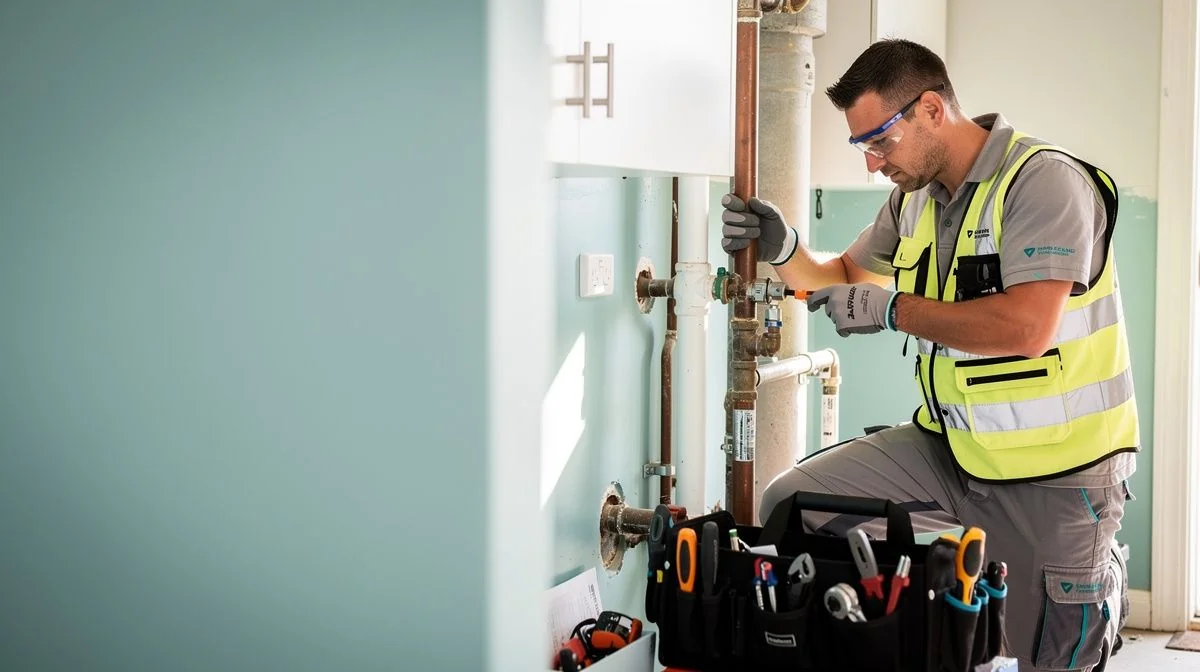
Best Plumbers in Levin
A growing commuter town where old houses and new subdivisions sit side by side
Levin has changed shape over the past decade. The town is now an easy commute to Palmerston North and, for some, to Wellington, which has brought new subdivisions on the edges and a steady stream of buyers into a housing stock that includes plenty of older homes on generous sections.
That mix produces two very different plumbing jobs. In a new build, the work is planned, documented and straightforward. In a house built decades ago, the plumbing may have been added to by three different owners, and the first job is often working out what is actually behind the wall.
The town also sits in a district where many households run a septic system or a rural water supply rather than a town connection, which is a specialism of its own. Plumbers working here need to be comfortable with both worlds.
Practically, Levin has a limited pool of trades. There are good plumbers, but not dozens of them, and in a wet winter or a cold snap the phone rings all at once. Booking ahead is the difference between a scheduled job and an emergency rate.
Our Trusted Plumbers
We feature businesses that demonstrate strong performance, proven experience, and consistently positive customer feedback. Some of the providers listed may have commercial relationships with us, but all are selected based on quality and reliability.
To begin, reach out to them and speak with them directly — this helps you explain your job, ask questions, and confirm whether they're the right fit.
The experts in Plumbing & Electrical. When you hire a Laser Plumber or Electrician, you'll receive our 'Totally Dependable' service! Timely delivery, a promise of care and skill; appropriate work for customers' needs; well-presented, professional employees; responsibility for supplied materials, honouring manufacturer guarantees; and meeting and frequently exceeding our customers' expectations.
How We Researched This Guide
We used published price lists from New Zealand plumbing companies rather than averaging quotes we could not see. Plumbing is one of the trades that publishes real numbers, particularly in the main centres, and the structure of those prices — a call-out fee plus an hourly rate, with a premium outside business hours — is remarkably consistent around the country.
What we looked at closely was what sits outside that structure. Parts, materials and after-hours surcharges are where a bill diverges from the advertised hourly rate, and the difference between a scheduled job and an emergency one is larger than most people expect. We also checked the trade framework at the WorkSafe New Zealand site, because plumbing work in some situations touches regulated gasfitting and drainage, and the ordinary service guarantees set out by Consumer Protection. Every figure below came from a live published source.
The 60-Second Version
The short version, before the detail.
- Plumbers charge roughly $90–$150 an hour, with a call-out fee of about $70–$150 on top.
- A day rate of $550–$750 is common for a full day of work.
- After-hours call-outs run $150–$250, with labour at $160–$300 an hour.
- A small repair such as a tap washer usually lands at $120–$250 all up.
- Always ask whether the quote includes GST, parts and travel.
- If the job can safely wait until morning, waiting saves hundreds of dollars.
What a Plumber Actually Does
The everyday work is maintenance. Leaking taps and toilets, blocked drains, failing hot water cylinders, replacement of old fittings and the slow drip under a vanity that has been getting worse for a year. This is the bulk of the phone calls and it is priced by the hour plus the call-out.
Then there is installation work. Renovations, new bathrooms, kitchen replacements, and the plumbing for a new build. This is quoted as a job rather than by the hour, because the scope is knowable in advance and both sides prefer a fixed number.
The third category is the one that needs care, which is anything involving gasfitting, drainage or a rural supply. Gasfitting is regulated and must be done by a licensed practitioner, and drainage work on a shared or council line can need consents.
Finally, there is the emergency side. A burst pipe at ten at night is a different transaction from a dripping tap on a Tuesday, and it is priced accordingly. Knowing where your toby is and how to shut the water off is free and saves money. It also means knowing who to call for the jobs a plumber cannot do, whether that is an electrician for a cylinder or a drainlayer for a blocked main.
What a Plumber Costs in Levin
Published New Zealand rates, which apply across the Horowhenua.
| Charge | Typical rate |
|---|---|
| Standard hourly rate | $90–$150 |
| Regional hourly rate, outside main centres | $85–$115 |
| Call-out fee, standard hours | $70–$150 |
| Day rate | $550–$750 |
| After-hours call-out | $150–$250 |
| After-hours hourly rate | $160–$300 |
| Small repair, all up | $120–$250 |
| Weekend or public holiday work | premium on standard rates |
Rate ranges verified from published New Zealand plumbing price guides as of September 2026. Most published rates exclude GST, and parts are charged on top of labour unless the quote states otherwise.

Why Two Quotes Differ So Much
The first variable is whether the plumber is replacing parts or repairing them. A new tap cartridge is a cheap fix and a new tap is not, and both solve the same complaint for a while. Ask which is being recommended and why.
The second is access. A cylinder in a hallway cupboard is a straightforward swap. The same cylinder in a ceiling cavity with a solar panel above it takes longer, and labour is the bulk of the bill.
The third is the age of what is being worked on. Old brass fittings seize, old pipework is brittle, and a job that starts as a washer replacement can end up as a section of new pipe. A good plumber will tell you that in advance rather than afterwards.
There is also the question of parts quality. A cheap cartridge from a hardware shop and a manufacturer’s replacement part do the same job on the day and very different jobs three years later, and the difference in the invoice is a few dollars.
Choosing a Plumber in Levin
Ask whether they hold current registration and licences for the work involved. Sanitary plumbing, gasfitting and drainlaying are separately licensed in New Zealand, and the right person for one is not automatically certified for the others.
Ask for the call-out fee and the hourly rate in the same sentence, then ask what the first hour includes. Some plumbers include travel and the first half hour in the call-out; others charge both. On a small job that is the difference between a reasonable bill and an irritating one.
Ask how they handle a job that grows. Plumbing has genuine unknowns behind walls and under floors, and the plumbers worth keeping are the ones who stop, explain and re-quote rather than simply doing the work and invoicing later. Because a plumber is providing a service, the usual consumer guarantees about reasonable care and skill apply, and Consumer Protection sets out what that means if the work is not up to standard.
Local Factors Worth Knowing
Older homes with plumbing that has been added to over the years
A large share of Levin housing was built when the town was smaller, and much of it has had a bathroom or kitchen replaced at some point by someone working to the standards of the day. Dux quest piping and old galvanised supply lines turn up regularly, and both change the scope of what looked like a simple repair.
Rural supplies and septic systems
Outside the town boundary, many properties run on tank or bore water and a septic system rather than a council connection. That work is a genuine specialism, and it is worth asking directly whether a plumber does it before you book them for a pump or a blocked line.
Winter demand and the emergency premium
Cold snaps produce burst pipes, and wet winters produce blocked drains. When that happens every plumber in the district is busy at once, and the only jobs available are emergency ones. Anything you can schedule in advance is cheaper by a wide margin.
Questions You Might Have
Why is there a call-out fee as well as an hourly rate?
The call-out covers travel, the vehicle and the first part of the visit. It is standard across the trade. Ask what it includes before you book, because policies differ.
Should I repair or replace an old hot water cylinder?
If the cylinder is old and the element or thermostat has failed, replacing it is usually the better value. If it is recent and the fault is a single part, repair makes sense.
Can I do small plumbing work myself?
Some of it, in your own home, though the rules around sanitary plumbing and gasfitting are strict for good reason. Anything involving gas, drainage or a mains connection should go to a licensed tradesperson.
How do I avoid the emergency rate?
Know where your toby is, shut the water off if something bursts, and book the repair for the next working day. Almost every after-hours call-out can be turned into a standard appointment with one valve.
What Matters Most
Plumbing is a trade where the difference between a good job and a poor one is invisible for years. The pipe that was joined properly does not leak, and the cylinder that was installed to the right standard does not rust through in five years.
In Levin the sensible approach is to find a plumber before you need one, ask what the call-out covers, and keep the water shut-off within reach so that an urgent problem does not automatically become an expensive one.

The ValueHub Team built this site because finding clear, unbiased financial information in New Zealand was harder than it should be. Every guide is based on real research — we compare the actual fees, terms, and fine print so you don't have to. Our tip: shop around every year, read the policy docs, and never assume loyalty gets you the best deal.— The ValueHub Team
Try our Calculators
Use these free tools to crunch the numbers:
KiwiSaver Fund Comparison
Compare fees, returns, and risk levels across every KiwiSaver fund — the most up to date data in New Zealand.
Currency Converter — USD to NZD
Convert US Dollars to New Zealand Dollars instantly. See the latest exchange rate and 30-day trend.
Mortgage Repayment Calculator
Calculate your weekly, fortnightly, or monthly mortgage repayments. Free NZ mortgage calculator — try different rates, terms, and repayment frequencies.
Compound Interest Calculator
See how your savings grow with compound interest over time. Free NZ compound interest calculator with yearly, monthly, and weekly compounding options.
Term Deposit Calculator
Calculate your term deposit returns before you lock in. Compare interest earned across different terms and rates with ValueHub's free calculator.
Savings Goal Calculator
Calculate how long it will take to reach your savings goal — and what monthly deposit you need to get there. Free NZ savings planner.
Plumbers in Other Cities
Latest Guides & Reviews
Kōura KiwiSaver Scheme Review
Kōura KiwiSaver review: 13 open funds, fund charges from 0.63 to 1.10 per cent, and net returns to 30 June 2026.
reviewMaritime KiwiSaver Scheme Review
Maritime KiwiSaver review: 3 open funds, fund charges from 0.61 to 0.76 per cent, and net returns to 31 March 2026.
reviewMAS KiwiSaver Scheme Review
MAS KiwiSaver review: 7 open funds, fund charges from 0.25 to 0.98 per cent, and net returns to 30 June 2026.
reviewArotahi KiwiSaver Scheme Review
Arotahi KiwiSaver review: 1 open fund, a 0.77 per cent fund charge, and net returns to 31 March 2026. What the Government register shows you pay and get back.