Solar Power For Homes: A Complete Guide to Solar Panels in New Zealand
Published 12 August 2026 · Updated 11 September 2026 · Written by the ValueHub team · Reviewed by Steve Baron
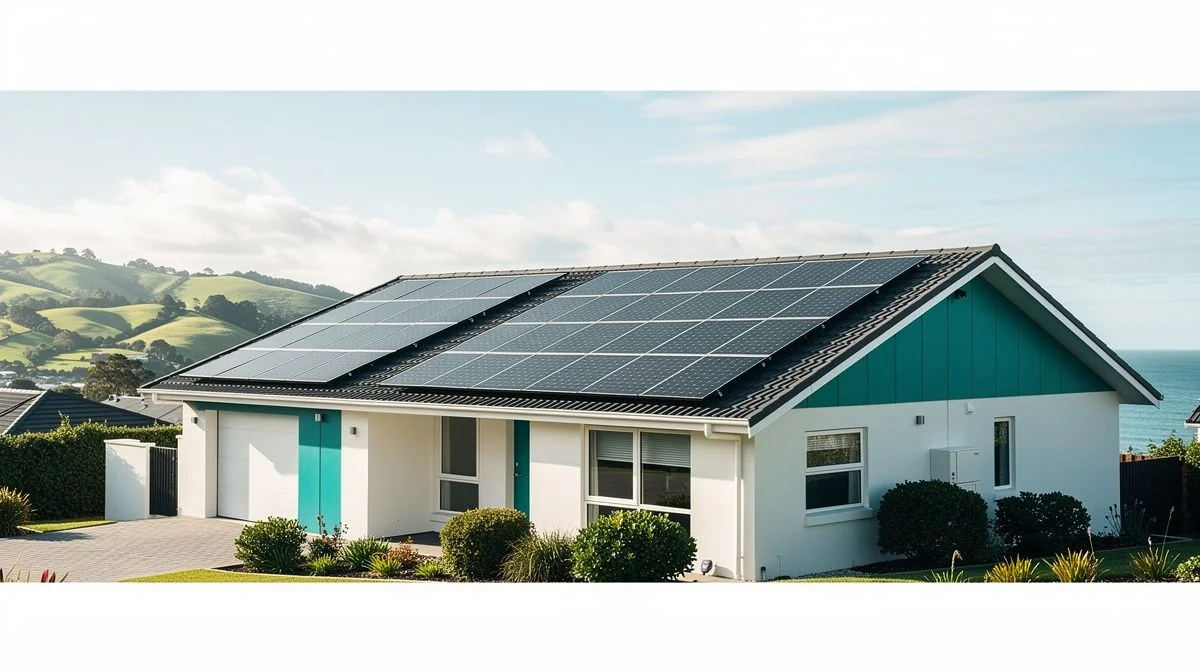
Why Good Solar Advice Matters in New Zealand
Installing solar panels is one of the biggest financial decisions you will make for your home — right up there with buying a car or renovating a kitchen. A typical system costs $11,000 to $18,000, and you will live with it for 25 years. Get it right, and you save tens of thousands of dollars. Get it wrong — the wrong size, cheap panels, an installer who ghosts you when the inverter throws a fault code — and you are staring at a very expensive mistake on your roof.
New Zealand is unusual among developed countries. We have no government subsidy for solar. No rebate. No feed-in tariff. Nothing. The entire financial case rests on one thing: avoiding the retail electricity price. Every kilowatt-hour you generate and use yourself saves you roughly 30 to 38 cents. Every kilowatt-hour you export to the grid earns you 9 to 17 cents, depending on your retailer. That gap — self-consumed power being worth two to four times exported power — is the only maths that matters.
This guide walks you through everything: what a system costs, how licensing works, how to spot a good installer, what questions to ask, what the banks will lend you, and what a realistic payback period looks like. No fluff, no sales pitch. Just the facts you need before spending five figures on 25 years of electricity.
How We Researched This Guide
We spent time digging through installer websites, price lists, and the PumpSwap Solar Cost Index (which tracks pricing across 1,209 NZ suburbs as of June 2026) to understand what solar actually costs. We checked the licensing requirements with the EWRB, the industry standards (AS/NZS 3000, 5033, 4777, 5139), and what SEANZ membership actually means. If a number is on this page, we found a real source for it.
ValueHub's Trusted Providers
We've researched the providers below — here are our picks for this category.
The experts in Plumbing & Electrical. When you hire a Laser Plumber or Electrician, you'll receive our 'Totally Dependable' service! Timely delivery, a promise of care and skill; appropriate work for customers' needs; well-presented, professional employees; responsibility for supplied materials, honouring manufacturer guarantees; and meeting and frequently exceeding our customers' expectations.
High-quality solar energy and EV charging systems installed by experts. Whether you are looking to improve your business's sustainability credentials, add value to your house, reduce your carbon footprint, or simply take control of your energy bills, CPS Solar Christchurch will design and install the best system for you, customised to meet your needs.
Quick Summary — The 60-Second Version
If you read nothing else, here are the six numbers that matter for every solar decision in New Zealand:
- Typical system cost: $14,000–$15,000 for a 6.6 kW system (the most popular size)
- Payback: 7–10 years for most NZ homes
- Best value: 6.6 kW with Tier 1 panels and a Fronius or Enphase inverter
- Verify: EWRB licence with Mains Parallel Generation endorsement (free check at ewrb.govt.nz) plus SEANZ membership
- Bank deals: Westpac 0% for 5 years on up to $50,000 — effectively a $10,200 interest subsidy
- Biggest factor: Self-consumption — how much solar power you use yourself versus export to the grid
Everything below explains how we arrived at those numbers and what you need to know before signing a contract.
NZ Solar Licensing — What Actually Matters
Solar installation in New Zealand is regulated electrical work. The person connecting panels to your switchboard must hold the right credentials, and the system must comply with specific standards. Here is what you need to know before hiring anyone.
EWRB — Mains Parallel Generation Endorsement
Since 2024, the Electrical Workers Registration Board has required electricians who install grid-connected solar systems to hold a Mains Parallel Generation Systems endorsement on their practising licence. This is separate from a standard electrician's licence. To qualify, an electrician must have held their practising licence for at least two years, completed at least two years of practical experience, and demonstrated competency in PV system design, inverter installation, and grid connection safety. They can meet the knowledge requirement through two Level 4 micro-credentials — Grid-connected PV Systems (Design and Install) and Grid-connected Battery Storage Systems (Design and Install) — or through recognition of prior learning.
The deadline for electricians to hold this endorsement is 1 September 2026. Until then, electricians with less than two years' experience can still sign off solar work under transitional provisions. After that date, any electrician installing grid-connected solar without the endorsement is doing so unlawfully.
What this means for you: Verify your installer holds a current EWRB practising licence with the Mains Parallel Generation endorsement. You can check this for free on the EWRB public register at ewrb. govt.nz — it takes 30 seconds. If an installer cannot show you their registration number, walk away.
SEANZ — The Industry Body
The Sustainable Energy Association of New Zealand (SEANZ) is the peak industry body for solar installers. Membership is voluntary — SEANZ is not a regulator — but it signals that an installer follows a code of conduct, stays current with training, and carries appropriate insurance. ANZ requires SEANZ membership for its Good Energy Home Loan, so if you are financing through ANZ, this is non-negotiable. Even if you are paying cash, SEANZ membership is a useful filter. It does not guarantee quality, but it screens out the cowboys.
Standards Your System Must Meet
Every grid-connected solar system in NZ must comply with:
- AS/NZS 3000 — The Wiring Rules (general electrical installation safety)
- AS/NZS 5033 — Installation and safety requirements for photovoltaic arrays (DC side safety, fire risk, isolation)
- AS/NZS 4777.1 — Grid connection of energy systems via inverters (installation requirements)
- AS/NZS 4777.2 — Inverter requirements (the inverter itself must be certified to this standard)
- AS/NZS 5139 — Safety of battery systems (applies if you install a battery)
A reputable installer will provide a Certificate of Compliance and an Electrical Safety Certificate on completion. Keep both. If you sell your home, the buyer's lawyer will want to see them. If something goes wrong, they prove the work was done properly.
Grid Connection — Lines Company Approval
Your local lines company must approve every grid-connected solar system. This is not optional — connecting without approval can get you disconnected. Your installer should handle this as part of the job. It involves submitting system specifications, inverter details, and a connection application. Most residential systems under 10 kW qualify for a simplified approval process. Your electricity retailer also needs to install an import/export meter (sometimes called a bidirectional meter) to separately track what you draw from the grid and what you send back. This typically costs around $150 and takes up to 15 working days.
What Solar Actually Costs in New Zealand
NZ solar pricing is broadly national. Hardware and labour costs are similar from Kaitaia to Invercargill. What really drives the quote is roof complexity, access difficulty, whether you need scaffolding or a switchboard upgrade, and whether your installer uses budget or premium components.
Here is what fully installed systems cost in 2026, including GST:
| System Size | Panels (approx) | Price Range (incl. GST) | Best For |
|---|---|---|---|
| 3 kW | 7–8 | $8,000 – $10,000 | Small households, flats, low daytime use |
| 5 kW | 12–14 | $11,000 – $13,000 | Average 3–4 person home, moderate daytime use |
| 6.6 kW (most popular) | 16 | $14,000 – $15,000 | Family home with someone home during the day |
| 8–10 kW | 20–25 | $15,000 – $18,000 | Large homes, EV owners, pool pumps |
| 13 kW+ | 30+ | $20,000 – $30,000+ | Very large homes, lifestyle blocks, off-grid |
Price ranges verified from multiple NZ installer websites, the PumpSwap Solar Cost Index (June 2026, covering 1,209 suburbs), and published industry cost guides as of August 2026. These are indicative estimates, not quotes. Final quotes depend on roof type, access, switchboard condition, and component selection. All prices include panels, inverter, mounting hardware, electrical work, labour, and GST.
What Size System Should I Get?
The right system size depends on how much electricity you use during daylight hours — not your total annual consumption. A household of five that is empty all day needs a smaller system than a retired couple who run the washing machine, heat pump, and oven between 10 AM and 3 PM. Use this table as a starting point:
| Household Type | Recommended Size | Why |
|---|---|---|
| 1–2 people, away during the day | 3–5 kW | Lower daytime load — oversized system over-exports at low buy-back rates |
| 3–4 people, someone home during the day | 6.6 kW | Best return on investment for most NZ homes — matches typical daytime demand |
| EV owners (charge during the day) | 8–10 kW | EV charging at 7 kW draws heavily — larger array covers both house and car |
| Rural lifestyle block | 10–13 kW+ | Water pumps, sheds, freezers, longer distances — daytime loads add up fast |
Battery Storage — The Real Numbers
Adding a battery roughly doubles the system cost. Here is what you actually pay in NZ, fully installed with GST:
| Battery | Usable Capacity | Installed Price (incl. GST) | Warranty |
|---|---|---|---|
| Tesla Powerwall 3 | 13.5 kWh | $14,000 – $16,000 | 10 years, 70% capacity |
| BYD Battery-Box (entry) | 5.1 kWh | From ~$9,000 | 10 years / 6,000 cycles, 60% |
| BYD Battery-Box (mid to large) | 10–22 kWh | $10,000 – $22,000+ | 10 years / 6,000 cycles, 60% |
| Sungrow (entry) | 6.4 kWh | From ~$9,000 | 10 years / 6,000 cycles, 70% |
Prices verified from installer websites and industry cost data; indicative for June–August 2026. All prices are GST-inclusive. Tesla Powerwall 3 pricing is for supply and installation as a standalone battery — the integrated inverter can partially offset cost if it replaces a separate solar inverter. BYD entry pricing as quoted by PumpSwap; mid-to-large range reflects installer pricing for 10–22 kWh stackable configurations.
The Tesla Powerwall 3 is the most popular option for good reason: it integrates a solar inverter, battery, and backup gateway into one unit. That means you do not need a separate solar inverter, which partially offsets the higher battery cost. BYD and Sungrow are strong value alternatives that let you start smaller and add capacity later.
The Price-Per-Watt Rule
The best way to compare quotes is cost per watt installed. Divide the total quote by the system size in watts. For example, a $14,000 quote for a 6,600W system equals $2.12 per watt. Aim for $1.70 to $2.00 per watt for Tier 1 equipment. Below $1.40 per watt is suspiciously cheap — check the warranty terms and panel brand. Above $2.30 per watt is premium territory — make sure you are paying for genuine quality, not just a brand markup.
Rule of thumb: If the quote does not state the system wattage, multiply panel count by panel wattage. For example, 15 panels at 440W each = 6,600W total system size. Then divide the total quote by that number to get your cost per watt.
No Subsidy, But the Banks Help
New Zealand has no government solar rebate. What we do have is green home loan top-ups from the major banks. These sit on top of your existing mortgage at heavily discounted rates:
| Bank | Rate | Max Loan | Term |
|---|---|---|---|
| Westpac Greater Choices | 0% | $50,000 | 5 years |
| ANZ Good Energy | 1% | $80,000 | 3 years |
| ASB Better Homes | 1% | $80,000 | 3 years |
| BNZ Green Home Loan | 1% | $80,000 | 3 years |
Rates verified from bank websites as of August 2026. After the fixed term, rates revert to standard bank floating or fixed rates—typically requiring a minimum of 20% equity. ANZ requires a SEANZ member installer. Westpac requires you to have or qualify for a Choices Home Loan with a minimum $150,000 balance. Terms and conditions apply — check with each bank for current eligibility.
Westpac's 0% rate for five years is objectively the best deal for most homeowners — it saves roughly $10,200 in interest on a $50,000 loan compared to a standard 7.39% rate. If you need more than $50,000, ANZ, ASB, and BNZ all go up to $80,000 at 1%. For rural properties, ASB Rural offers 0% on up to $150,000.
Payback Worked Example — How the Maths Actually Works
Here is a realistic payback calculation for the most popular system size in New Zealand — a 6.6 kW array on an average family home:
| Factor | Calculation | Result |
|---|---|---|
| System cost (installed) | 6.6 kW × $2.20/watt | $14,500 |
| Annual generation | 6.6 kW × 1,360 sun hours (NZ average) | ~9,000 kWh |
| Self-consumed (60%) | 5,400 kWh × $0.32/kWh saved | $1,728/year saved |
| Exported (40%) | 3,600 kWh × $0.12/kWh earned | $432/year earned |
| Total annual benefit | $2,160 | |
| Payback period | $14,500 ÷ $2,160 | 6.7 years |
This example assumes a 32c/kWh retail rate and a 12c/kWh buy-back rate — realistic numbers for most major retailers in 2026. The most important variable is self-consumption. At 40% self-consumption (household empty during the day), the annual benefit drops to $1,584 and payback stretches to 9.2 years. At 80% self-consumption (retirees home all day with electric hot water on a timer), payback drops below 6 years. The gap between 40% and 80% self-consumption is roughly $13,000 over 25 years. That is why system sizing and usage timing matter far more than the number of panels on your roof.
How to Choose a Solar Installer — What Actually Matters
Roughly 90 to 100 solar installation companies operate across New Zealand. Quality varies enormously. Here is what separates the good from the risky.
Credentials to Verify
- EWRB licence with Mains Parallel Generation endorsement. Check the public register. Not "my boss has one" — the person actually doing the work.
- SEANZ membership. Not a guarantee of quality, but screens out the worst operators. Mandatory for ANZ green loan borrowers.
- Written workmanship warranty. At least five years on the installation work itself, separate from the manufacturer warranties on panels and inverter.
- Insurance. Public liability cover. Ask to see the certificate.
What a Good Quote Looks Like
A proper solar quote is not a one-line email. It should include:
- Site-specific shade analysis. Not "your roof looks sunny." An actual solar pathfinder reading or software simulation showing shading patterns across the year. If they skip this, they are guessing.
- Generation estimate in kilowatt-hours per year. Specific to your roof orientation, pitch, and location. Not a generic "a 6.6kW system produces X."
- Self-consumption modelling. How much of your generation will you actually use versus export, based on your power bills and usage patterns. This drives the payback calculation.
- Panel make and model. Not just "Tier 1 panels." The specific brand, model number, wattage, and warranty terms.
- Inverter make and model. With warranty length and whether extended warranty registration is included.
- Total price, GST inclusive. Broken down by panels, inverter, mounting, electrical, labour, and any extras (scaffolding, switchboard upgrade, meter change).
- Estimated payback period. With the assumptions stated: self-consumption percentage, electricity price used, buy-back rate used.
Panel Brands — What Tier 1 Actually Means
Tier 1 is a Bloomberg ranking of panel manufacturers based on financial stability and bankability — not a direct measure of panel quality. It means the manufacturer is large enough and financially sound enough to still exist in 25 years to honour the warranty. In practice, it is a useful shortlist filter. The Tier 1 brands most commonly installed in NZ are:
- Value: Jinko, JA Solar, Canadian Solar — good performance, strong warranties, competitive pricing
- Mid-range: Trina Solar, LONGi — excellent track records, widely available, most common on NZ roofs
- Premium: REC, Aiko — higher efficiency, lower degradation rates, longer warranties, higher cost
Almost all residential panels sold in NZ today are monocrystalline — made from a single silicon crystal, achieving higher efficiency than the older polycrystalline type. Most are also N-type (using TOPCon or similar technology) rather than the older P-type (PERC) design, which offers better low-light performance and slower degradation over time.
Inverter Types — String vs Microinverter
The inverter is the box that converts DC power from your panels into AC power your home can use. It is the component most likely to fail during the system's life, so your choice matters.
- String inverter (Fronius, Sungrow, GoodWe): One central box on the wall handling all your panels. Cost-effective, reliable, and the right choice for unshaded roofs all facing the same direction. Fronius is the NZ standard: Austrian build, NZ-based service, and a 5-year warranty that extends to 10 years with registration. A good string inverter adds $1,400 to $3,200 to your install.
- Microinverters (Enphase): A small inverter behind every panel. Each panel operates independently — if one is shaded, the others keep producing at full power. Panel-level monitoring, 25-year warranty on the IQ8 series (since October 2024). Best for complex roofs, multiple orientations, or partial shading. Adds $1,800 to $3,500 over a string inverter for a 6.6kW system.
- Power optimisers (SolarEdge): A middle ground. Each panel gets an optimiser that maximises individual output, but they feed into a central inverter. Adds $1,000 to $2,500 over a standard string system.
Red Flags — Walk Away If
- No EWRB registration number. If they cannot give you a number to verify on the public register, end the conversation.
- No shading analysis. Any installer who quotes without measuring shade on your specific roof — at your specific address, at your specific time of year — is guessing. Solar is a site-specific investment. No two roofs are the same.
- The installer will not specify panel model numbers. "Tier 1 panels" is not a model number. If they cannot tell you which exact panel make and model they are installing, they are reserving the right to substitute whatever is cheapest on the day. Insist on model numbers in the contract.
- They push batteries as "essential." For most NZ homes in 2026, batteries do not pay for themselves financially. If an installer claims you must have a battery, they are overselling. A battery is a lifestyle choice — backup power and energy independence — not a financial necessity.
- No written warranty on the installation work. Panel and inverter warranties are from the manufacturer. If your roof leaks because of bad mounting, that is on the installer. Get it in writing.
- Quote expires in 24 hours. High-pressure sales tactics do not belong in a five-figure, 25-year investment decision. A legitimate quote is good for at least 30 days.
- Refuses to provide references. Any decent installer has customers willing to vouch for them. Ask for two recent jobs you can drive past.
- No generation estimate. If they cannot tell you — with numbers specific to your roof — how many kilowatt-hours the system will produce per year, they are not designing a system. They are selling boxes.
Common Upsells You Probably Do Not Need
When comparing quotes, you will encounter upsells. Some add value. Many do not. Here are the ones worth questioning:
- Panel cleaning packages. NZ gets enough rain that panels are effectively self-cleaning. Unless you live in an exceptionally dusty area (rural Canterbury during nor'westers, for example), an annual rinse with a garden hose is all you need. Paid cleaning contracts are rarely good value.
- Extended inverter warranties. Fronius already auto-extends its warranty to 10 years with free online registration. Paying extra to "extend" a warranty you already get for free wastes money. Check what the manufacturer already offers before paying for an upsold warranty.
- Oversizing beyond your daytime load. A 10 kW system on a house where both adults work 9-to-5 will export 80% of its generation at a low buy-back rate. You are effectively building a mini power station for your retailer at your own expense. Size the system to your daytime consumption, not your annual electricity bill.
- "Premium" mounting systems for standard roofs. Standard corrugated iron on a single-storey home does not need aerospace-grade racking. The mid-range mounting systems from reputable brands are perfectly adequate. Save premium racking for coastal, very high-wind, or architecturally complex roofs.
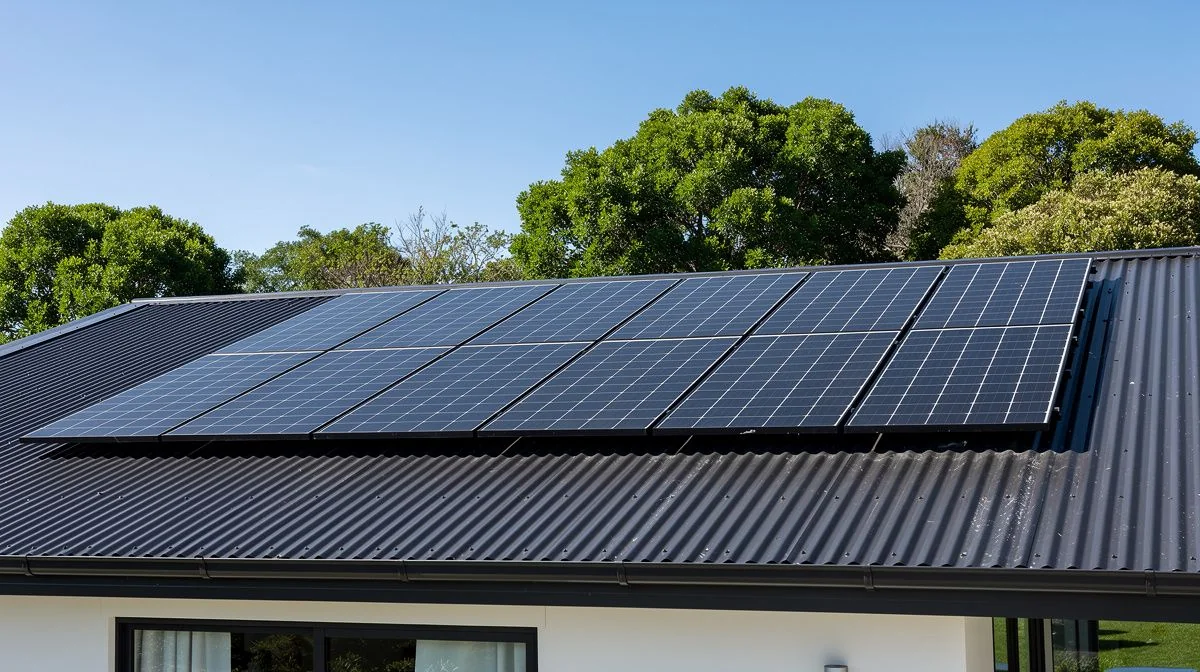
What to Expect When You Get Solar Installed
The process from signed quote to generating your own power typically takes 4 to 8 weeks. Here is how it works.
Before Installation Day
- Site assessment: The installer visits your property, measures the roof, checks the switchboard, takes shading readings, and confirms panel placement. This is where they catch things the quote missed — like a switchboard that needs upgrading or rafters that need reinforcing.
- Lines company application: Your installer submits the connection application. For systems under 10 kW, this is usually a simple notification rather than a full approval process. Processing takes 1 to 4 weeks depending on the lines company.
- Meter upgrade: Your electricity retailer arranges an import/export meter. Most homes with smart meters already have a compatible meter — the retailer may need to reconfigure it remotely. If a physical meter swap is needed, it takes up to 15 working days and costs around $150.
- Scaffolding (if needed): Multi-storey homes or steep roofs need scaffolding, which may add $500 to $1,500.
Installation Day
Installation takes one to two days for most residential systems. The crew will:
- Install roof mounting rails and flashings
- Mount the panels and connect the DC wiring
- Install the inverter on an external wall (preferably shaded, out of direct afternoon sun)
- Run AC cabling to your switchboard
- Install DC and AC isolator switches (safety requirement — allows firefighters to disconnect the system)
- Connect to your switchboard and commission the system
- Set up monitoring (most inverters come with a phone app)
After Installation
- Inspection: A licensed electrical inspector (separate from the installer) must inspect the system. This is a legal requirement — the inspector verifies the work complies with AS/NZS 3000 and issues a Record of Inspection.
- Certificates: You should receive a Certificate of Compliance (CoC), an Electrical Safety Certificate (ESC), and the Record of Inspection. File these somewhere safe. You will need them if you sell.
- Retailer activation: Once your import/export meter is installed and the system is certified, your electricity retailer activates the buy-back. This is when you start earning credits for exported power.
- Monitoring setup: Download your inverter's app, check that generation data is showing, and start tracking what you produce versus what you use.
Timeline Summary
| Stage | Typical Duration |
|---|---|
| Quote to signed contract | 1–3 weeks |
| Lines company approval | 1–4 weeks |
| Meter installation | 1–3 weeks |
| Panel and inverter installation | 1–2 days |
| Electrical inspection | 1–2 weeks |
| Retailer activation of buy-back | 1–2 weeks after inspection |
NZ-Specific Considerations — What Your Installer Should Know
New Zealand is not Australia. Our solar market is different in ways that directly affect your system design and financial outcome.
Roof Types — What Works
Most NZ homes have corrugated iron or concrete tile roofs. Both work well for solar. Key considerations:
- Corrugated iron: The most solar-friendly roof type. Mounting brackets clamp directly to the ribs without penetrating the roof — no holes, no leaks. Lightweight, easy to work on.
- Concrete tile: Heavier and more delicate. Installers use tile-replacement brackets — they remove a tile, install a metal bracket in its place, and route the cable underneath. More labour-intensive, slightly more expensive.
- Longrun steel: Similar to corrugated iron but with a different profile. Uses specialised clamps.
- Asphalt shingle: Less common in NZ but found on some newer builds. Requires flashing-based mounting that seals around the bracket. More expensive and needs a careful installer — poor flashing work leaks.
Roof age matters. If your roof has 5 to 10 years of life left, re-roof first or at least have the installer assess whether the mounting points will outlast the iron. Removing and reinstalling panels for a re-roof costs several thousand dollars.
Orientation and Shading
In the Southern Hemisphere, north-facing roofs produce the most energy, followed by northwest and northeast. East-west split arrays (panels on both east and west faces) generate less peak power but spread generation more evenly across the day — useful if you are home in the mornings and evenings. South-facing roofs are generally not worth the cost.
Shading is the biggest performance killer. A single shaded panel on a string inverter system drags down every panel on that string. Microinverters or power optimisers solve this by letting each panel operate independently — worth the extra cost if shading is unavoidable. Common shading sources in NZ: neighbour's trees, your own chimney, power lines, hills in Wellington and Dunedin, and the neighbour's two-storey extension they built right on the boundary.
NZ Weather — What It Means for Output
Solar panels work on light, not heat. They actually perform better in cooler temperatures — a crisp, sunny Canterbury winter day can produce more power than a humid Auckland summer afternoon. NZ's peak sun hours vary by region:
- Bay of Plenty, Nelson, Marlborough: Highest sunshine hours. Payback in 6 to 8 years.
- Auckland, Waikato, Hawke's Bay: Good sunshine. Payback in 7 to 9 years.
- Wellington, Christchurch: Moderate sunshine. Payback in 8 to 10 years. Wind loading is a consideration — mounting must be rated for Wellington's gusts.
- Southland, West Coast, coastal Otago: Lower sunshine hours. Payback in 10 to 12 years. Still viable, but the maths is tighter.
Wind Zones
NZ building code divides the country into wind zones — Low, Medium, High, Very High, and Extra High. Most urban areas are Medium or High. Wellington, parts of Canterbury, and exposed coastal sites can be Very High or Extra High. Your mounting system must be rated for your specific wind zone. A reputable installer will check this and use appropriate rails and clamps. The cost difference is modest — maybe $200 to $500 — but skipping it risks panels lifting in a storm. Ask to see the wind zone calculation.
Snow Loading
In Central Otago, inland Canterbury, and the Central Plateau, snow loading is a design consideration. Panels are typically installed at a steeper angle (30 to 40 degrees) to help snow slide off. The mounting system must handle the additional weight. Again, a minor cost increase for a significant safety margin.
Coastal Corrosion
Within 500 metres of the coast — especially on the west coast and in spray zones — mounting hardware should be marine-grade aluminium or stainless steel. Standard galvanised steel will corrode within a few years. Most Tier 1 panels have corrosion-resistant frames, but ask your installer to confirm the mounting components are rated for corrosive environments.
Lines Company Requirements
Each of NZ's 29 lines companies has its own connection requirements. Some are straightforward (Auckland — Vector, Christchurch — Orion). Others have export limits or require specific inverter settings. A local installer should know their lines company's requirements. If they look confused when you ask, find someone else.
Questions You Might Have
Will solar panels increase my home's value?
Industry data suggests solar adds roughly 3 to 4% to property values in New Zealand. A $14,000 system on an $800,000 home is a 1.75% premium — within the range where it adds net value. The bigger factor is buyer perception. A well-documented system with certificates, monitoring history, and remaining warranty is a selling point. A mystery system installed by a company that no longer exists is a liability. Keep your paperwork.
Do I need a battery?
No — solar panels feed power directly into your home through the inverter. Your fridge, heat pump, washing machine, and everything else running during the day draw directly from the panels. You are using solar power in real time—no battery required.
A battery does only one thing: it stores excess daytime generation so you can use it at night instead of selling it back to the grid. Financially, that still doesn't stack up for most households. A battery extends payback from 7 to 10 years to 11 to 15 years because the battery itself costs as much as the panels and inverter combined. The financial case improves if you use a lot of electricity in the evening (electric heating, EV charging after work), have frequent power cuts, or are on a time-of-use plan where evening power is expensive. For most households right now, a battery is a lifestyle purchase — energy independence and backup power — rather than a strict financial investment. Battery prices are falling 10 to 15 per cent per year, so the maths improves every year you wait.
What happens during a power cut?
Without a battery, your solar system shuts down during a grid outage. This is a safety requirement — if your panels kept exporting to the grid during a blackout, they could electrocute line workers trying to restore power. With a battery and the right backup gateway (standard on Tesla Powerwall 3, optional on most others), your system isolates from the grid and powers selected circuits — lights, fridge, internet, phone charger. Whole-home backup needs a larger battery and a more complex installation.
How long do solar panels last?
Quality Tier 1 panels come with a 25-year performance warranty guaranteeing at least 80-85% of original output in year 25. They don't stop working at year 25—they degrade slowly, typically 0.3 to 0.5% per year. Inverters have shorter lifespans: 10 to 15 years for string inverters, 25 years for Enphase microinverters. Budget for one inverter replacement during the system's life.
Do I need council consent?
Most residential rooftop solar installations are exempt from building consent under Schedule 1 of the Building Act, provided the panels do not lift the roof's dead load beyond its design capacity, and the mounting system is a proprietary product installed to the manufacturer's specifications. Your installer should confirm this in writing. Ground-mounted systems and systems on very old or unconventional roof structures may need consent.
What maintenance is required?
Very little. Panels are self-cleaning in rain — NZ gets enough of it. In particularly dusty or coastal areas, an annual rinse with a garden hose (not a water blaster — it can damage seals) keeps output up. Check your monitoring app monthly for unexpected output drops. Have an electrician check connections and isolators every 5 years. That is about it.
Top 5 Questions to Ask Any Installer Before You Sign
Print this or save it to your phone. Ask every installer these five questions and compare their answers:
- "What is your EWRB registration number, and do you hold the Mains Parallel Generation endorsement?" — If they hesitate or say "my boss has one," move on. Verify it at ewrb. govt.nz while they wait.
- "What specific panel make and model are you quoting, and what is the degradation rate on the warranty?" — If the answer is "Tier 1 panels," push back. You want a model number and a degradation curve. 0.5% per year is standard. 0.25% is excellent. 0.7% is bottom-tier.
- "What is my estimated self-consumption percentage, and what happens to my payback if it drops 10%?" — If they have not modelled this, they have not designed your system. They have picked a system size from a catalogue.
- "Which lines company are we applying to, and what is their export limit for residential systems?" — If they do not know your local lines company by name, they do not work in your area regularly. Every lines company has different rules.
- "Can I have the contact details of two customers you installed for at least two years ago?" — A two-year-old installation has been through two winters, two summers, and at least one billing dispute. If it is still performing well, the installer did their job. If the installer cannot provide references this old, they are probably new to the industry.
Solar Companies Operating in New Zealand
The installer you choose is the single biggest factor in whether your solar system delivers on its promises. Below is a list of companies currently offering solar installation services to NZ homeowners. This is a reference list, not an endorsement — you should verify every company's EWRB credentials and SEANZ membership before engaging them. Companies are listed alphabetically.
National and Multi-Region Installers
- Advance Energy — Nationwide service, residential and commercial solar and battery systems
- EcoSolar — Nationwide, specialises in residential solar, battery storage, and off-grid systems
- Ecotricity NZ — Nationwide, emphasises sustainable energy solutions for homes and businesses.
- Energy Smart — Nationwide, residential and commercial solar PV and hot water systems
- Green Power Solutions — Multi-region, residential and commercial solar, battery storage, EV charging
- Harrison's Energy — Nationwide franchise network, residential and commercial solar, hot water, and battery storage
- HRV Solar — Nationwide (part of HRV Group), residential solar PV systems and battery storage
- Independent Power — Nationwide, residential and commercial solar and battery systems
- Lightforce Solar — Nationwide, residential and commercial solar installations, Tesla Powerwall certified installer
- Powersmart — Multi-region, large-scale residential and commercial solar projects
- PumpSwap — Nationwide, known for transparent online pricing via their Solar Cost Index, residential solar and battery systems
- Revolve Energy — Nationwide, residential and commercial solar PV and battery storage
- SEANZ Members — The SEANZ website maintains a searchable member directory of accredited installers across all NZ regions at seanz.org.nz
- Simply Energy — Nationwide, residential solar PV and battery systems
- SkySolar — Multi-region, residential and commercial solar PV and battery storage
- SolarHub — Nationwide, residential, commercial, and rural solar installations
- Solarwise — Multi-region, residential and commercial solar PV systems
- Solartive — Nationwide, residential and commercial solar and battery systems
- Sunergy Solar — Multi-region, residential and commercial solar PV and battery storage
- SunPower NZ — Nationwide distributor, works through authorised local installers
- Turboweb — Nationwide online quoting platform connecting homeowners with vetted local installers
- ZEN Energy — Nationwide, residential solar, battery storage, and energy management systems
Regional and City-Specific Installers
- Able Electrical (Auckland) — Residential solar PV systems, EV charger installation
- AllSpark Electrical (Waikato, Bay of Plenty) — Residential and lifestyle-block solar PV
- Absolute Solar & Electrical (Auckland) — Residential and commercial solar PV and battery systems
- Bay Solar (Hawke's Bay) — Residential and commercial solar, battery, and off-grid
- Beacon Energy (Auckland) — Residential and commercial solar PV and battery storage
- Choice Technologies (Auckland) — Residential solar and smart home energy management
- Current Generation (Hawke's Bay, Gisborne) — Residential and commercial solar PV and battery storage
- Elemental Energy (Canterbury) — Residential and commercial solar PV, battery, and off-grid
- Energiser Solar (Marlborough) — Residential and lifestyle-block solar PV systems
- Freesolar (Auckland) — Residential solar PV, battery storage, and EV charging
- Go Solar (Canterbury) — Residential solar PV and hot water systems
- Infinite Energy (Wellington region) — Residential and commercial solar PV and battery systems
- Koru Solar (Bay of Plenty) — Residential and commercial solar PV and battery storage
- Morrison Energy (Auckland) — Residential and commercial solar and battery systems, Enphase and Tesla certified
- MySolar (Canterbury) — Residential solar PV, battery storage, and off-grid systems
- Nelson Solar (Nelson, Tasman) — Residential and commercial solar and battery systems
- Nu-Wave Energy (Auckland, Waikato) — Residential and commercial solar PV and battery storage
- Orbis Energy (Otago, Southland) — Residential and commercial solar, battery, and off-grid
- Pacific Solar (Auckland) — Residential and commercial solar PV and battery systems
- Peak Power (Canterbury) — Residential solar PV, battery, and off-grid systems
- Pioneer Energy (Otago, Southland) — Residential and commercial solar PV
- PowerGen Electrical (Auckland) — Residential solar and general electrical
- PowerZone (Northland) — Residential and rural solar PV and off-grid systems
- Red Solar (Auckland) — Residential and commercial solar PV, battery storage, EV charging
- ReneSolar (Auckland) — Residential solar and battery systems
- Riwai Solar (Auckland) — Residential and commercial solar PV and battery systems
- Soar Solar (Canterbury) — Residential solar PV and battery storage
- Solar Electric Technology (Auckland) — Residential and light commercial solar PV
- Solar Energy NZ (Auckland, Waikato) — Residential and commercial solar and battery systems
- Solar Fx (Waikato) — Residential and lifestyle-block solar PV
- Solar Installations (Canterbury) — Residential solar PV, battery, and off-grid
- Solar Maestros (Auckland) — Residential and commercial solar PV systems
- Solar Power Bay of Plenty (Bay of Plenty) — Residential solar PV and battery systems
- Solar South (Southland) — Residential and rural solar PV and off-grid systems
- SolarVision (Auckland) — Residential and commercial solar PV and battery storage
- Southern Solar (Otago) — Residential solar PV and battery systems
- SunCapture (Auckland) — Residential and commercial solar and battery systems
- Sunergy (Wellington) — Residential solar PV and battery storage
- SunFlow (Bay of Plenty) — Residential solar PV, battery storage, and off-grid
- Surge Electrical (Auckland) — Residential solar, battery, and EV charging solutions
- Tranz Solar (Manawatu, Taranaki) — Residential and rural solar PV and off-grid
- Vector Powersmart (Auckland) — Residential and large-scale commercial solar, battery, and microgrids
- Vision Solar (Auckland, Waikato) — Residential and commercial solar PV and battery systems
- Westsolar (West Coast, Tasman) — Residential and off-grid solar PV systems
- Zero Energy (Auckland) — Residential solar PV, battery, and energy monitoring
What Matters Most
Solar in New Zealand works. The maths is sound — a well-designed system on a reasonably sunny roof pays for itself in 7 to 10 years and delivers another 15 to 18 years of heavily discounted electricity. There is no subsidy, no rebate, and no mandated feed-in tariff, and the numbers still stack up because our retail power prices are high enough to make self-consumed solar genuinely valuable.
The single biggest factor in whether your system pays back in 7 years or 13 is self-consumption. Every kilowatt-hour you use yourself saves 30 to 38 cents. Every kilowatt-hour you export earns 9 to 17 cents, depending on your retailer. A household with someone home during the day, a hot water cylinder on a timer, and an EV charging from solar will see radically better returns than a house where everyone leaves at 7 AM and comes home at 6 PM with nothing smart running in between. Design your system around how you actually use power, not around a theoretical maximum output.
Get three quotes. Compare them on price per watt, panel brand, inverter quality, and warranty terms. Verify the installer's EWRB endorsement. Ask for a shading analysis and a generation estimate tailored to your roof. Check the bank green loan you qualify for — Westpac's 0% offer for five years effectively subsidises the interest cost. And keep every certificate. In 15 years, when you sell, a folder with the CoC, ESC, monitoring history, and original quote will be worth far more than you think.
A solar system is a 25-year relationship with your roof. The upfront cost is significant, but the long-term savings are real; the technology is mature, and the installer market has enough competition to keep pricing honest. Take your time, ask hard questions, and do not let anyone rush you into a five-figure decision. The sun is not going anywhere.
Our Recommended Businesses You May Find Helpful
At Garden City Solar, we help people take control of their energy with thoughtfully designed solar and battery systems built for long-term performance and reliability. Whether your goal is to reduce power bills, protect against outages, or lower your environmental impact, our systems are designed to deliver reliable performance and quiet resilience — while integrating cleanly with your home.

The ValueHub Team built this site because finding clear, unbiased financial information in New Zealand was harder than it should be. Every guide is based on real research — we compare the actual fees, terms, and fine print so you don't have to. Our tip: shop around every year, read the policy docs, and never assume loyalty gets you the best deal.— The ValueHub Team
Try our Calculators
Use these free tools to crunch the numbers:
KiwiSaver Fund Comparison
Compare fees, returns, and risk levels across every KiwiSaver fund — the most up to date data in New Zealand.
Currency Converter — USD to NZD
Convert US Dollars to New Zealand Dollars instantly. See the latest exchange rate and 30-day trend.
Mortgage Repayment Calculator
Calculate your weekly, fortnightly, or monthly mortgage repayments. Free NZ mortgage calculator — try different rates, terms, and repayment frequencies.
Compound Interest Calculator
See how your savings grow with compound interest over time. Free NZ compound interest calculator with yearly, monthly, and weekly compounding options.
Term Deposit Calculator
Calculate your term deposit returns before you lock in. Compare interest earned across different terms and rates with ValueHub's free calculator.
Savings Goal Calculator
Calculate how long it will take to reach your savings goal — and what monthly deposit you need to get there. Free NZ savings planner.
Related Articles
Best EVs in NZ: Costs, Charging & Buying Guide
Compare the best EV cars in NZ for 2026 — prices, real-world range, charging costs, RUC, and which models suit Kiwi roads. Updated monthly.
comparisonEV Home Charger NZ: Costs & Buying Guide
Compare EV home charger costs in NZ — verified prices from $1,299, installation fees, smart features, and what actually matters for your home's power supply.