Best EVs in NZ: Costs, Charging & Buying Guide
Published 25 August 2026 · Written by the ValueHub team · Reviewed by Steve Baron
Best EVs in NZ: Costs, Charging & Buying Guide
Why Electric Cars Matter for Kiwis
New Zealand is quietly becoming one of the most EV-friendly countries in the world. Electricity is around 80 per cent renewable, which means charging an EV here genuinely cuts carbon emissions in ways it doesn't in coal-dependent nations. That's a big part of why EVs made up about 10 per cent of new car sales in 2025 — a figure that keeps climbing as more affordable models hit the market.
But the real reason Kiwis are switching isn't just environmental. It's financial. The running-cost gap between petrol and electric vehicles has widened dramatically.
Charging at home overnight can cost roughly 30–40 cents per litre of petrol, depending on your electricity plan. And with road user charges (RUC) now applying to EVs, that gap has narrowed a bit — but electric cars still come out well ahead on a per-kilometre basis. The flip side?
EVs still cost more upfront than comparable petrol cars, depreciation can be brutal on some models, and charging away from home needs planning. Get the choice wrong — say, buying a short-range used Leaf for regular Auckland-to-Hamilton commutes — and you'll be the person at the fast charger at 10 pm on a Sunday, watching your battery creep up while everyone else drives past.
ValueHub's Trusted Providers
We've researched the providers below — here are our picks for this category.
High-quality solar energy and EV charging systems installed by experts. Whether you are looking to improve your business's sustainability credentials, add value to your house, reduce your carbon footprint, or simply take control of your energy bills, CPS Solar Christchurch will design and install the best system for you, customised to meet your needs.
How We Researched This Guide
We started with the official data: the Motor Industry Association's new vehicle registration figures for 2026 (year-to-date through July), which show exactly which EV models Kiwis are actually buying. We then cross-checked pricing against manufacturers' NZ websites — Tesla, BYD, MG, Zeekr, XPeng, and Nissan — as well as listings on Trade Me and major dealership networks to see what cars are actually selling for, not just the advertised drive-away price. For charging, we looked at the public networks operated by ChargeNet, Z Energy, BP, and others, checking their pricing structures and coverage maps.
We also pulled electricity tariff data from several major retailers to calculate realistic home-charging costs. For running costs and RUC, we used the official NZ Transport Agency Waka Kotahi rates and compared them against petrol price data from the Ministry of Business, Innovation and Employment. We read owner forums, warranty documents, and independent range tests.
Where numbers conflicted, we've shown the range rather than picking a single figure. This guide reflects the market as of mid-2026, and we'll update it as prices and models shift.
The 60-Second Version
- Typical cost: New EVs range from about $35,000 for a base MG4 to over $100,000 for premium models. Used Nissan Leafs start around $8,000–$12,000.
- Payback: Most EV owners save $1,500–$2,500 per year on fuel and maintenance versus a comparable petrol car, so the premium pays back in 3–7 years.
- Best value: The MG4 and BYD Atto 3 offer the best balance of price, range, and features for most Kiwi households.
- What to check: Whether your home can support a charger, the car's real-world range (not the WLTP figure), and the battery warranty terms.
- Most important factor: Match the car's range to your actual driving patterns — not your idealised ones.
- One mistake to avoid: Buying a cheap used EV with a degraded battery that can't handle your commute or a long road trip.
What You Need to Know Before Choosing
The NZ EV market has split into two very different worlds. On one side, you have the used-market segment, dominated by the Nissan Leaf. These cars are cheap — some under $10,000 — but they come with real trade-offs.
Battery degradation is the big one. A 2018 Leaf with a 40kWh battery might have lost 15–20 per cent of its original range, and the air-cooled battery degrades faster in NZ's warmer northern climates. On the other hand, you have the new-car market, which is now fiercely competitive.
Chinese brands have shaken up pricing in a way that's made EVs genuinely affordable. The MG4 starts at around $35,000, the BYD Atto 3 at around $40,000, and the Zeekr 7X and XPeng G6 in the $55,000–$70,000 range. Tesla's Model Y, still the best-seller, starts around $60,000.
Key terminology you'll encounter:
- WLTP range — the official European test figure. Real-world range is typically 10–20 per cent lower, more in winter or at highway speeds.
- Battery size (kWh) — bigger means more range but also more weight and cost. A 40kWh Leaf manages about 200km in real-world use; a 75kWh Model Y does closer to 450km.
- DC fast charging — high-power charging (50kW to 350kW) at public stations. Most home chargers are AC and much slower.
- RUC (road user charges) — a per-kilometre tax that EV owners now pay, currently around $76 per 1,000km for light vehicles.
- Bidirectional charging — the ability to power your house from your car's battery (vehicle-to-home) or export to the grid.
The rules you need to know: RUC for EVs came into effect on 1 April 2024. You buy RUC in advance — either from the NZ Transport Agency online or at selected agents — and you need to display a RUC licence. The current rate for light EVs is about $76 per 1,000km. There's also a $12.44 admin fee per licence. This adds roughly 7.6 cents per kilometre to your running costs. Plug-in hybrids pay a lower rate, around $38 per 1,000km, because they still use petrol for part of their driving.
| Model | Battery (kWh) | WLTP Range (km) | Real-world Range (km) | Approx. New Price (NZ$) |
|---|---|---|---|---|
| Nissan Leaf (used) | 24–62 | 135–385 | 100–300 | 8,000–35,000 |
| MG4 (standard) | 51 | 350 | 280 | ~35,000 |
| BYD Atto 3 | 60 | 420 | 340 | ~40,000 |
| MG ZS EV | 72 | 440 | 350 | ~45,000 |
| BYD Sealion 7 | 82.5 | 500 | 400 | ~60,000 |
| Tesla Model Y | 60–75 | 430–530 | 350–450 | ~60,000–75,000 |
| XPeng G6 | 66–87.5 | 460–570 | 380–470 | ~55,000–70,000 |
| Zeekr 7X | 75–100 | 480–600 | 390–490 | ~65,000–80,000 |
| Tesla Model 3 | 60–75 | 430–530 | 350–450 | ~55,000–70,000 |
The numbers that actually matter: Efficiency drives your running costs more than the brochure figure does — a typical EV uses around 15kWh per 100km, which is what the running-cost figures on this page are based on. Most new EVs carry an 8-year or 160,000km battery warranty, whichever comes first, though the exact terms vary between brands, so check the fine print before you commit. And don't assume an EV will hold its value — some models have lost 30–40 per cent of their value in the first two years, while others hold up far better.
EV Car Costs — What You Can Expect to Pay
Compare EV vs petrol running costs →
The EV market in NZ spans a huge price range, from an $8,000 used Leaf to a $120,000 luxury SUV. Your choice depends on your budget, your driving needs, and how long you plan to keep the car. The biggest cost shock for most buyers isn't the purchase price — it's depreciation.
Some Chinese-brand EVs have lost 30–40 per cent of their value in the first two years, partly because of aggressive new-car pricing and rapid model updates. Tesla's frequent price cuts have also hit resale values hard. A three-year-old Model Y that cost $75,000 new might sell for $45,000–$50,000 today.
Running costs, by contrast, are genuinely low. Home charging at the average NZ electricity rate of around 30 cents per kWh means a car using 15kWh per 100km costs about $4.50 per 100km. Add RUC at $7.60 per 100km, and you're at roughly $12 per 100km.
A petrol car consuming 7 L/100 km at $2.40 per litre costs about $17 per 100km. The gap narrows further if you can't charge at home and rely on public fast chargers, which cost two to three times more per kWh.
| Item | Typical Cost (NZ$) | Notes |
|---|---|---|
| Used Nissan Leaf (2013–2018) | 8,000–15,000 | 24–40kWh battery, 100–200km real range |
| Used Nissan Leaf (2019+) | 20,000–35,000 | 40–62kWh, better battery chemistry |
| New MG4 (standard) | ~35,000 | Cheapest new EV with decent range |
| New BYD Atto 3 | ~40,000 | Popular family SUV |
| New MG ZS EV | ~45,000 | Larger SUV, good value |
| New BYD Sealion 7 | ~60,000 | Premium SUV, long range |
| New Tesla Model Y | 60,000–75,000 | Best-selling EV in NZ |
| New Zeekr 7X | 65,000–80,000 | Luxury, very fast charging |
| New XPeng G6 | 55,000–70,000 | Tech-focused SUV |
| Home charger (7kW) + install | 1,500–3,500 | Requires electrician, may need board upgrade |
| Public fast charging (per kWh) | 0.60–1.00 | ChargeNet, Z, BP rates vary by location and speed |
| RUC (per 1,000km) | 76 + 12.44 admin | Bought in advance from Waka Kotahi |
| Annual warrant of fitness | 60–80 | EVs need WOF like any car |
| Annual maintenance | 200–500 | Tyres, wipers, cabin filter — no oil changes |
Price ranges verified from multiple NZ sources as of July 2026.
What drives the price? Battery size is the single biggest cost factor. A 60kWh battery costs significantly more than a 40kWh unit, and that difference shows in the sticker price. Brand positioning matters too — Tesla and Zeekr charge premiums for their tech and performance, while MG and BYD compete on value.
Fixed vs variable costs: The purchase price and home charger are fixed costs. RUC, electricity, tyres, and maintenance are variable — they scale with how much you drive. If you drive less than 10,000km a year, the running-cost savings of an EV shrink considerably, and the maths favours keeping your petrol car for longer.
GST note: All prices above include GST, which is standard for NZ car pricing. The Clean Car Discount was scrapped in December 2023, so there are currently no government rebates on new EVs — though some councils offer free or discounted parking for EVs.
How to Choose — What Actually Matters
Estimate real-world EV range →
Start with your driving patterns, not the marketing. Write down your longest regular trip — your daily commute, the weekly school run, the monthly family visit. Then add a buffer of at least 30 per cent for winter, headwinds, and hills.
That's the minimum real-world range you need. For most urban Kiwis, a 350km WLTP range is plenty. For rural drivers or anyone doing regular intercity trips over 200km, you'll want 450km WLTP or more — and you'll need to plan around fast-charger locations.
Red flags to watch for:
- A battery warranty that isn't transferable — if you buy used, check the warranty follows the car, not the original owner. Some brands only honour battery warranties for the first owner.
- A used Leaf with a degraded battery and no service history — battery health reports are essential. Ask for the LeafSpy data or walk away.
- An EV that can't handle your terrain — if you live on a steep hill or tow anything, check the car's towing capacity and how range drops under load. Most EVs lose 20–30 per cent range when towing.
- A dealer quoting WLTP range as if it's real-world — it's not. A 400km WLTP car will do closer to 320km on the open road at 100km/h.
- No home charging solution — if you rent or park on the street, relying solely on public chargers makes EV ownership expensive and inconvenient. Check your situation before you buy.
What to Expect — The Day-to-Day
Work out home charging time & cost →
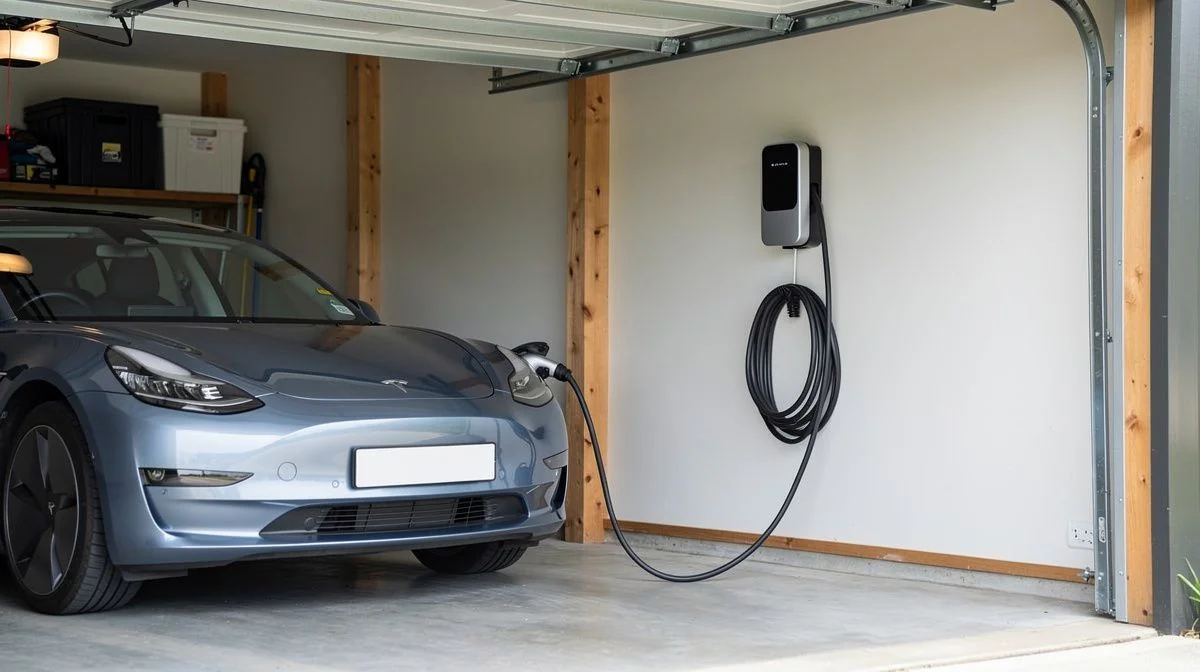
Before you commit, check your home's electrical setup. A standard 10-amp wall socket can charge an EV but very slowly — roughly 15km of range per hour. For overnight charging, that's often enough.
A dedicated 7kW wall box delivers about 40–50km of range per hour of charging, which is the sweet spot for most households. The process of buying an EV is similar to any car purchase — test-drive, negotiate, sort out finance. The difference is the charging setup.
You'll need to arrange for an electrician to install a charger if you want one, and set up accounts with public charging networks.
Typical timeline:
- Test driving and research: 2–4 weeks
- Home charger install (if needed): 1–2 weeks, including electrician visit and council approval if required
- Purchase and delivery: 1–4 weeks for new cars, immediate for used
- RUC setup: 10 minutes online once you have the car
- First fast-charge session: plan to spend 20–40 minutes at a 50kW charger, or 10–20 minutes at a 150kW+ unit
After you buy, keep track of your charging costs. Most home chargers have apps that log usage, and your electricity bill will show the increase. Watch your tyre wear — EVs are heavier than petrol cars and chew through tyres faster, especially if you enjoy the instant acceleration.
NZ-Specific Factors — What's Different Here
The Fast-Charging Network Is Good, but Patchy
New Zealand's public charging network has grown quickly. ChargeNet operates the largest network of DC fast chargers nationwide, with over 300, and Z Energy and BP have added their own sites. Most main highways now have chargers every 75–100km, which covers most intercity routes.
But "most" isn't "all". Rural areas — particularly the West Coast of the South Island, parts of Northland, and the East Cape — have thin coverage. If you live in these areas, you'll need to plan carefully and possibly carry a portable charger for emergencies.
The gap between urban and rural charging is one of the biggest practical differences between EV ownership in Auckland versus, say, Whanganui.
Range Anxiety Is Real — But Manageable
The classic Auckland–Hamilton run is about 130km each way. Most modern EVs handle that easily on a single charge, even in winter. Wellington to Palmerston North is similar.
Christchurch to Timaru is about 160km. These routes are all comfortably within range for any EV with a 300 km+ WLTP range. The tricky routes are the long hauls — Auckland to Wellington (650km) or Christchurch to Queenstown (480km).
These require one or two fast-charging stops. A 50kW charger will add about 200km of range in 30–40 minutes. An ultra-fast 150kW+ charger does the same in 10–15 minutes, but these are less common and often busy at peak times.
Hills and Weather Hit Range Harder Than You Think
New Zealand's terrain is uniquely challenging for EVs. The Desert Road, the Lindis Pass, and the Rimutaka Hill all involve sustained climbs that drain batteries faster than flat motorway driving. A car rated at 400km WLTP might only manage 300km on a hilly route with a headwind.
The flip side is regenerative braking — descending those same hills puts energy back into the battery. Experienced EV drivers learn to use one-pedal driving and plan their routes to take advantage of this. But it's a skill, not an automatic benefit.
RUC Changes the Running-Cost Maths
Since April 2024, EVs pay road user charges at $76 per 1,000km. This added about 7.6 cents per kilometre to running costs, narrowing the gap with petrol. A typical EV driver doing 15,000km a year now pays about $1,140 in RUC, on top of electricity costs.
The government has said RUC rates will be reviewed as the EV fleet grows, and there's discussion about moving to a distance-based charging system for all vehicles. For now, factor RUC into your running-cost calculations — it's roughly equivalent to adding $1.50–$2.00 per litre to petrol prices, depending on your car's efficiency.
The Used Market Is a Minefield of Battery Health
New Zealand's used EV market is dominated by the Nissan Leaf, which was the country's best-selling EV for years. Many of these cars came from Japan with degraded batteries, and some have been further worn down by NZ's warmer climate and fast charging. If you're buying a used Leaf — or any used EV — get the battery health checked.
For Leafs, this means a LeafSpy diagnostic, which reads the battery's state of health and internal resistance. A Leaf at 85 per cent state of health will have noticeably less range than one at 95 per cent, and the price should reflect that.
Questions You Might Have
How much does it actually cost to charge an EV at home in NZ? At the average NZ electricity rate of around 30 cents per kWh, a car using 15kWh per 100km costs about $4.50 per 100km. If you're on a night rate — many retailers offer 12–18 cents per kWh between 9 pm and 7 am — that drops to $2–$3 per 100km. A full charge for a 60kWh battery costs $8–$18 depending on your tariff.
Are EVs cheaper to run than petrol cars in NZ? Yes, but the gap has narrowed since RUC was introduced. An EV doing 15,000km a year costs roughly $1,350 in electricity (home charging) plus $1,140 in RUC, totalling about $2,490. A petrol car doing 7 L/100 km at $2.40 per litre costs about $2,520 in fuel alone, plus maintenance. The EV saves maybe $500–$800 a year on fuel and maintenance, but that's before you factor in higher purchase price and faster depreciation.
Can I charge an EV from a normal NZ power socket? Yes, but slowly. A standard 10-amp socket delivers about 2.3kW, adding roughly 15km of range per hour. Overnight (10 hours), that's about 150km — enough for most commutes. For faster charging, you'll want a dedicated 7kW wall box, which requires an electrician and possibly an upgrade to your switchboard.
What's the real-world range of the most popular EVs in NZ? The Tesla Model Y Long Range is rated at 533km WLTP but typically does 420–450km in real-world NZ conditions. The BYD Atto 3 (420km WLTP) manages around 330–350km. The MG4 (350km WLTP) does about 280km. The used Nissan Leaf with a 40kWh battery — rated at 270km WLTP — will realistically do 180–220km, and less in winter.
Do I need to worry about battery degradation? All EV batteries degrade, but modern ones are much better than the early Leafs. Most new EVs have 8-year/160,000km battery warranties that guarantee at least 70 per cent state of health. To slow degradation, avoid regularly charging to 100 per cent (80 per cent is the sweet spot for daily driving), avoid letting the battery drop below 10 per cent, and limit fast charging on hot days.
What Matters Most
The best EV for you isn't the one with the longest range or the fastest charging — it's the one that fits your actual driving patterns, your home setup, and your budget. For most urban Kiwis, that's a mid-range model like the MG4 or BYD Atto 3, which costs $35,000–$45,000 and covers all but the longest road trips. For rural drivers, the calculus is different.
You need the longer range of a Model Y, Sealion 7, or Zeekr 7X, and you need to verify that fast chargers exist on the routes you actually drive. The network is improving, but it's not uniform. The NZ-specific factors — RUC, hilly terrain, patchy rural charging, and the used Leaf market — all matter more than the headline specs.
Understand those, and you'll make a choice that saves you money and serves you well for years. Get it wrong, and you'll be the one regretting your purchase at a busy fast charger on a rainy Sunday night.
Our Recommended Businesses You May Find Helpful
Appointed by the NZ Transport Agency - New Zealand's independent vehicle inspection specialists. What sets us apart? Fast, efficient inspections backed by reliable, honest advice and a team that genuinely cares about getting you back on the road safely. We've built our reputation on outstanding customer service, no hidden costs, and the kind of straight-up expertise.

The ValueHub Team built this site because finding clear, unbiased financial information in New Zealand was harder than it should be. Every guide is based on real research — we compare the actual fees, terms, and fine print so you don't have to. Our tip: shop around every year, read the policy docs, and never assume loyalty gets you the best deal.— The ValueHub Team
Try our Calculators
Use these free tools to crunch the numbers:
KiwiSaver Fund Comparison
Compare fees, returns, and risk levels across every KiwiSaver fund — the most up to date data in New Zealand.
Currency Converter — USD to NZD
Convert US Dollars to New Zealand Dollars instantly. See the latest exchange rate and 30-day trend.
Mortgage Repayment Calculator
Calculate your weekly, fortnightly, or monthly mortgage repayments. Free NZ mortgage calculator — try different rates, terms, and repayment frequencies.
Compound Interest Calculator
See how your savings grow with compound interest over time. Free NZ compound interest calculator with yearly, monthly, and weekly compounding options.
Term Deposit Calculator
Calculate your term deposit returns before you lock in. Compare interest earned across different terms and rates with ValueHub's free calculator.
Savings Goal Calculator
Calculate how long it will take to reach your savings goal — and what monthly deposit you need to get there. Free NZ savings planner.
Related Articles
EV Home Charger NZ: Costs & Buying Guide
Compare EV home charger costs in NZ — verified prices from $1,299, installation fees, smart features, and what actually matters for your home's power supply.
guideEV Public Charging in NZ: Prices & Networks
Compare EV public charging prices across all NZ networks — ChargeNet, BP, Tesla, Zero, Meridian and more. See verified per-kWh rates, idle fees and smart...