Best Home Security Specialists in Upper Hutt
Published 25 February 2025 · Updated 08 October 2026 · Written by the ValueHub team · Reviewed by Steve Baron
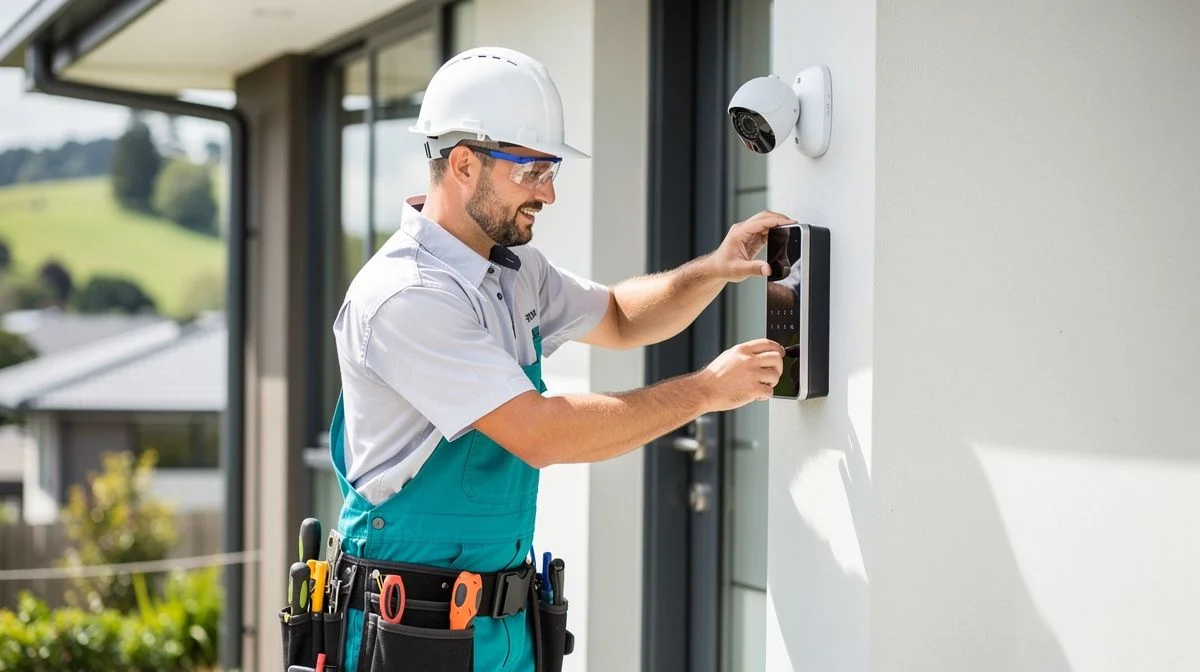
Best Home Security Specialists in Upper Hutt
The city has larger sections than most of the region and a lot of older housing, and together they shape the security work. Detached garages, garden sheds, and sleepouts are common, and properly covering them requires more thought than covering the house itself with sensors.
There is limited installer coverage based in the city, so most quotes come from firms working across the Hutt Valley and Wellington. We have set out which systems and monitoring are included, who is licensed to do the work, and what to separate in a quote.
How We Researched This Guide
We started with the fixed prices installers publish for themselves, because in this trade the packages are standardised enough to compare: a panel, a set of sensors, sometimes cameras, and optionally a monitoring contract on top. The installation bands agree closely, and the monthly monitoring figure is where quotes diverge most.
We also worked through the licensing rules, because installing an alarm or a camera system on someone else's property is a licensed activity in New Zealand. That is not widely known, and it is the first thing worth checking about anyone you invite into your home.
Our Trusted Home Security Specialists
We feature businesses that demonstrate strong performance, proven experience, and consistently positive customer feedback. Some of the providers listed may have commercial relationships with us, but all are selected based on quality and reliability.
To begin, reach out to them and speak with them directly — this helps you explain your job, ask questions, and confirm whether they're the right fit.
ADT Security keeps your home and business protected with smart alarms, 24/7 monitoring, and fast-response support. From break‑in detection to connected cameras, ADT gives you reliable Kiwi security you can trust. Stay safe, stay in control, and safeguard what matters most with ADT’s proven protection.
The Quick Summary (60-Second Version)
If you want the short version before you ring anyone, this is it.
- A self-monitored alarm, supplied and fitted, starts at around $450, and a professionally installed wired system runs $900 to $2,000.
- 24/7 monitoring costs roughly $25 to $60 a month, with around $35 plus GST the common figure.
- A four-camera CCTV installation costs $2,150 to $2,500, and most residential camera jobs range from $1,500 to $3,500.
- An attended response to an alarm activation is usually charged separately, at $150-$300 per call.
- Anyone installing an alarm or camera system for payment must hold a Security Technician licence, and their staff need a Certificate of Approval.
- Compare the monitoring contract as carefully as the hardware. The monthly fee is the recurring cost.
Who Is Allowed to Do the Work
Installing a burglar alarm or a camera system on a property you do not own or occupy is a licensed activity. The definition appears in the Private Security Personnel and Private Investigators Act 2010, which refers to the work as security technician work, and the licence is issued by the Private Security Personnel Licensing Authority at the Ministry of Justice. New Zealand legislation carries the full definition for anyone who wants to read it.
The licence applies at two levels. The business must hold a licence for each class of service it provides, and every individual doing the work must hold a Certificate of Approval in that class. The authority requires evidence of competence and, for an individual licence, at least 12 months of relevant experience in the last 5 years.
One exemption is worth knowing. A registered electrician is exempt from the Security Technician certificate for installing and servicing systems, because the electrical licensing regime covers that work. But an electrician who sells the system or advises on what to install is acting as a security consultant and needs a certificate for that class. The New Zealand Security Association publishes a plain-English summary of how the categories fit together.
How to Choose an Installer — What Actually Matters
Ask to see the licence, not just the brand on the van
The licence and the certificates of approval are the qualifications for the work, and a professional firm will produce them without hesitation. This matters both practically and legally: an installer without a licence cannot be held to industry standards, and the monitoring centre arrangements that make an alarm useful usually come through licensed channels.
Separate the hardware price from the monitoring contract
They are two different purchases and should be quoted separately. The hardware is yours once fitted, so the questions are what is covered by the warranty and how long it runs. The monitoring is a subscription, so the questions are the monthly figure, the contract length, the notice period, and what happens if you cancel.
Find out what a response actually involves
Monitoring and response are not the same thing. A monitored alarm tells a monitoring centre; what follows depends on the contract. Some plans dispatch a guard, and that call-out is normally charged on top at $150 to $300. Others simply notify you. Ask which one you are buying, because the difference is the whole point of paying monthly.
Check the camera rules before you point one at a neighbour
A camera covering a shared driveway or a neighbouring property is recording other people, and the Office of the Privacy Commissioner has published guidance on how the Privacy Act applies. Ask what the field of view will be before anything is mounted.
What Security Costs in Upper Hutt
Prices fall within the national bands, and because sections are larger here, a job can involve more sensors and longer cable runs than in the same house in a denser suburb. That is worth understanding before comparing a local quote against one from elsewhere.
The split that decides the real cost is between the system and the monitoring. The hardware is a one-off with a warranty; monitoring is a monthly subscription. Compare both figures, and check the contract length rather than assuming it is month-to-month.
| System | Typical price |
|---|---|
| Self-monitored alarm, supplied and fitted | from $450 |
| Professionally installed wired alarm | $900–$2,000 |
| Monitored system, 6 to 8 zones | $1,180–$1,890 |
| 24/7 monitoring, per month | $25–$60 |
| Attended response, per call-out | $150–$300 |
| CCTV, four cameras fitted | $2,150–$2,500 |
| CCTV, most residential installs | $1,500–$3,500 |
| CCTV, six to eight cameras with 4K | $3,450–$4,800 |
| Alarm, four cameras and 12 months of monitoring | from $4,500 |
| Full smart system with intercom | $6,000–$15,000 |
Some installers quote including GST, and some exclude it, so confirm the basis before comparing two quotes. Monitoring is a separate subscription and is not part of the hardware price.
Upper Hutt — What Changes Locally
Outbuildings and long driveways need covering too
Larger sections here mean a shed, a garage or a sleepout that holds tools and equipment worth stealing, and those are usually a shorter route in than the front door. A system planned only around interior rooms leaves the obvious entry point uncovered, so ask for the exterior doors and outbuildings to be part of the walk-through.
Bush edges and boundary access change sensor placement
Properties backing onto bush or reserve land have more than one likely approach, which affects where cameras are worth placing. Ask the installer to plan coverage around the way in rather than around the easiest mounting points, because a camera covering a wall is not the same as a camera covering a route.
Older houses and existing wiring are the cost variable
A large share of the local housing is older, and some of it already has an alarm that is no longer useful. Where the cabling is sound, a new panel and sensors can go on the existing runs for less than a fresh install. Where it is not, a wireless system usually works out cheaper than remediating the wiring.
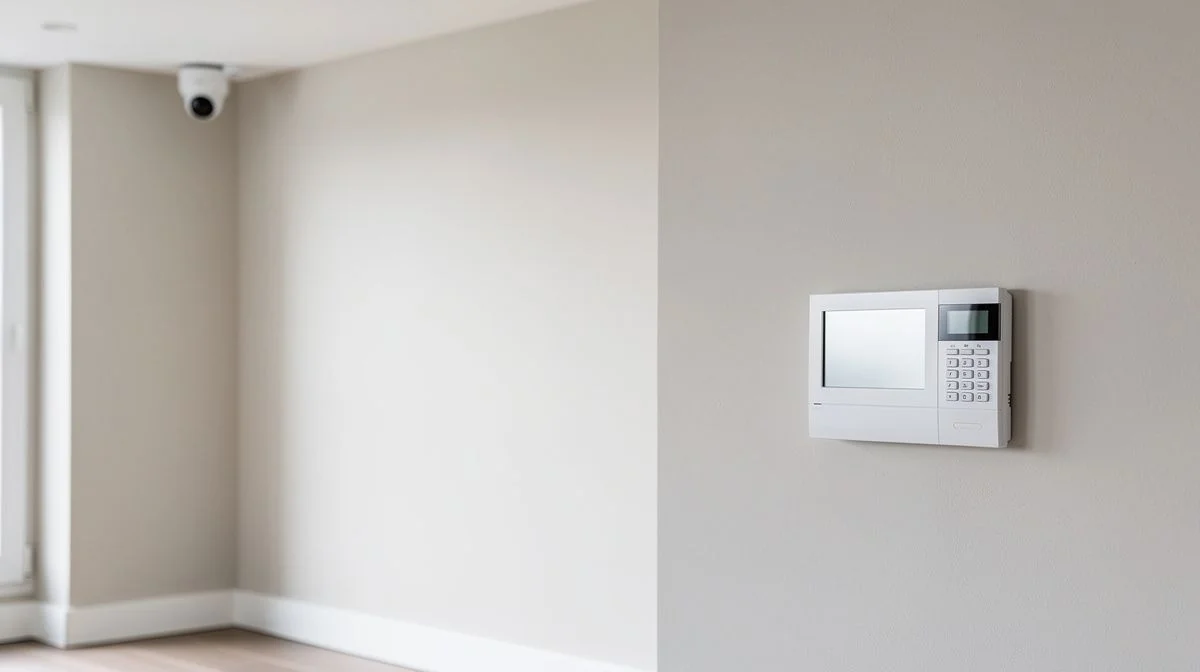
What Happens on an Installation
A properly run installation follows a set order, and knowing it tells you what you are paying for.
- Someone walks the property and works out where an intruder would actually enter, rather than where the wiring is easiest.
- You receive a written quote that separates the hardware, installation labour, and monitoring, and specifies the warranty period.
- Sensors, the panel and any cameras are fitted and tested, including a live test of each zone rather than a check that the panel powers up.
- The app is set up on your phone, and you are shown how to arm, disarm and check the event log.
- The monitoring connection is tested end-to-end, so there is a record that a signal actually reached the monitoring centre.
Questions You Might Have
Is a monitored alarm worth the monthly fee?
It depends on whether anyone is likely to be home. If someone usually is, a self-monitored system with phone alerts is a sensible and much cheaper choice, and you can call the police yourself. The monthly fee buys a response when nobody is there and when you are asleep, which is why it suits people who travel and businesses with stock on site.
Wired or wireless?
An existing wired system can often be extended, which is cheaper than starting again. In a house with no cabling, a wireless system avoids running cable through linings. What matters more than either is sensor placement, because a system covering the wrong doors is expensive, however connected it is.
How many cameras do I need?
Fewer than most people expect. The useful camera is the one that covers the actual entry point with enough resolution to identify someone, and four cameras placed deliberately beat eight spread thinly. Ask the installer to plan coverage around the likely routes rather than around a package tier.
What Matters Most
Home security is bought in two parts: the system and the response. The system is a one-off cost with a warranty, and the response is a monthly subscription you can usually cancel. Comparing only the first figure is how people end up paying more over three years than the hardware was worth.
Check the licence, get the hardware and the monitoring quoted separately, and ask what happens when the alarm goes off.

The ValueHub Team built this site because finding clear, unbiased financial information in New Zealand was harder than it should be. Every guide is based on real research — we compare the actual fees, terms, and fine print so you don't have to. Our tip: shop around every year, read the policy docs, and never assume loyalty gets you the best deal.— The ValueHub Team
Try our Calculators
Use these free tools to crunch the numbers:
KiwiSaver Fund Comparison
Compare fees, returns, and risk levels across every KiwiSaver fund — the most up to date data in New Zealand.
Currency Converter — USD to NZD
Convert US Dollars to New Zealand Dollars instantly. See the latest exchange rate and 30-day trend.
Mortgage Repayment Calculator
Calculate your weekly, fortnightly, or monthly mortgage repayments. Free NZ mortgage calculator — try different rates, terms, and repayment frequencies.
Compound Interest Calculator
See how your savings grow with compound interest over time. Free NZ compound interest calculator with yearly, monthly, and weekly compounding options.
Term Deposit Calculator
Calculate your term deposit returns before you lock in. Compare interest earned across different terms and rates with ValueHub's free calculator.
Savings Goal Calculator
Calculate how long it will take to reach your savings goal — and what monthly deposit you need to get there. Free NZ savings planner.
Home Security Specialists in Other Cities
Latest Guides & Reviews
Kōura KiwiSaver Scheme Review
Kōura KiwiSaver review: 13 open funds, fund charges from 0.63 to 1.10 per cent, and net returns to 30 June 2026.
reviewMaritime KiwiSaver Scheme Review
Maritime KiwiSaver review: 3 open funds, fund charges from 0.61 to 0.76 per cent, and net returns to 31 March 2026.
reviewMAS KiwiSaver Scheme Review
MAS KiwiSaver review: 7 open funds, fund charges from 0.25 to 0.98 per cent, and net returns to 30 June 2026.
reviewArotahi KiwiSaver Scheme Review
Arotahi KiwiSaver review: 1 open fund, a 0.77 per cent fund charge, and net returns to 31 March 2026. What the Government register shows you pay and get back.