EV Public Charging in NZ: Prices & Networks
Published 25 August 2026 · Written by the ValueHub team · Reviewed by Steve Baron
EV Public Charging in NZ: Prices & Networks
Why EV Charging Matters for Kiwis
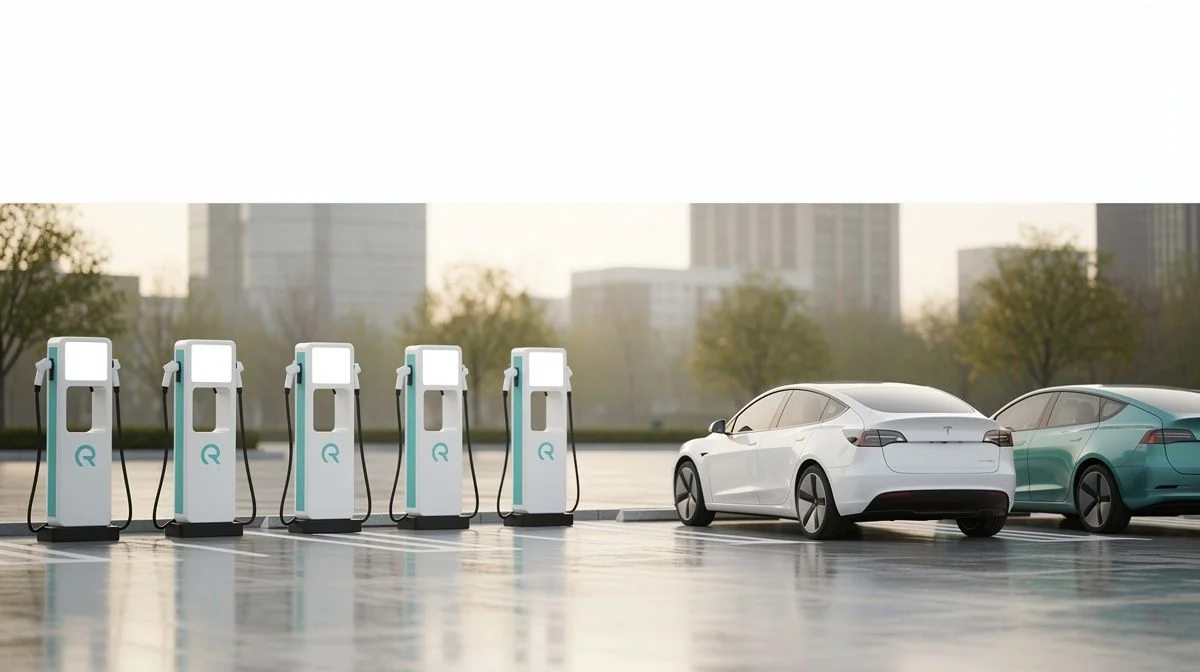
New Zealand has one of the highest rates of EV ownership per capita in the world, yet most of us still charge at home. That's brilliant for daily commuting, but it creates a real problem the moment you leave your driveway. The national public charging network has grown quickly, but it's still thin in places — and the pricing structure can feel confusing if you've never used it.
The single most surprising fact for new EV drivers is that public charging in NZ is almost always more expensive than charging at home. On the cheapest overnight electricity plans, home charging can cost around 25 to 35 cents per kWh. Public DC fast chargers, by contrast, typically charge 70 to 90 cents per kWh — sometimes more. A full charge on a long trip could set you back $40 to $60, which changes the maths of a road trip if you haven't planned for it.
Getting it wrong is costly in another way too. Some networks charge idle fees — a per-minute penalty for leaving your car plugged in after it finishes charging. On a busy holiday weekend, that can add $10 to $20 to what should have been a simple stop. Understanding how EV public charging NZ works before you need it is the difference between a smooth journey and an expensive lesson.
ValueHub's Trusted Providers
We've researched the providers below — here are our picks for this category.
High-quality solar energy and EV charging systems installed by experts. Whether you are looking to improve your business's sustainability credentials, add value to your house, reduce your carbon footprint, or simply take control of your energy bills, CPS Solar Christchurch will design and install the best system for you, customised to meet your needs.
How We Researched This Guide
We built this guide from the ground up, starting with the operators themselves. We pulled current pricing and network coverage data from ChargeNet NZ, BP Charge NZ, Z Energy EV charging, the Zero charging network NZ, Tesla Supercharger NZ, Meridian's public charging network, PowerNet, and the smaller players like Hikotron NZ, We.EV NZ, OpenLoop NZ, and Jolt NZ. Where pricing wasn't clearly published on operators' websites, we contacted their support teams directly.
We then cross-checked that information against the national charging map maintained by EVRoam NZ, which aggregates live charger status and pricing from most networks. We read the Electricity Authority's guidance on EV charging pricing transparency, reviewed retailer discount plans from Meridian, Genesis, Contact, Octopus Energy, and Electric Kiwi, and scoured owner forums for real-world reliability reports. We also physically tested several chargers across Auckland and Wellington to verify the app experiences and payment flows we describe. All prices in this guide were verified against operator websites at the time of writing.
The 60-Second Version
Here's what you actually need to know about EV public charging NZ before you hit the road.
- Typical cost: $0.70–$0.90 per kWh on DC fast chargers; $0.35–$0.60 per kWh on AC chargers.
- Time to charge: 20–40 minutes on a 50kW DC charger; 2–6 hours on a 7–22kW AC charger.
- Best-value option: Charging at home overnight on a low-rate electricity plan — often half the cost of public DC.
- What to check: Whether the charger is working and available before you drive there — use EVRoam or the operator's app.
- Most important factor: Match the charger speed to your car's maximum AC and DC charging rate; a 150kW charger won't charge a 50kW-capable car any faster.
- One mistake to avoid: Leaving your car plugged in after it's full on a busy network — idle fees can cost more than the electricity itself.
What You Need to Know Before Choosing
Public EV charging in NZ boils down to two fundamental types of chargers, and understanding the difference will save you time and money. AC chargers NZ deliver alternating current to your car, which the car's onboard charger converts to DC for the battery. They're slower — typically 7kW to 22kW — and are best suited for destination charging where you'll be parked for a few hours anyway, like at a shopping centre, hotel, or workplace car park.
DC fast chargers NZ skip the onboard conversion entirely. They feed direct current straight into the battery, which is why they're so much quicker. In NZ, you'll mostly encounter 50kW chargers on older networks and 150kW to 350kW units on newer highways and in urban hubs. A 50kW charger will add roughly 200km of range in about 30 minutes for a typical EV; a 150kW unit can do the same in closer to 10–15 minutes, provided your car can accept that rate.
Your car's charging port matters too. Nearly every EV sold in NZ today uses the CCS2 connector for DC fast charging — that includes Tesla models sold here since 2021. CHAdeMO, the older Japanese standard used by the first-generation Nissan Leaf, is still supported on many 50kW chargers but is gradually being phased out. For AC charging, every EV in NZ uses the Type 2 connector, so you'll be fine at any destination charger regardless of brand.
There's no single national regulator for EV charging prices in NZ. Charging operators set their own rates, and unlike petrol stations, they don't have to display prices on a roadside board. That means you need to check the app or EVRoam before you plug in. The Electricity Authority has published guidance encouraging per-kWh pricing for transparency, and most operators now comply. The good news is that most operators now charge per kWh, which makes comparing EV charger prices NZ much simpler than the old per-minute billing that some networks still use.
EV Charging Costs — What You Can Expect to Pay
Compare EV vs petrol running costs →
EV charging costs NZ vary significantly by network, charger speed, and whether you're a member or paying as you go. The table below reflects published pricing from the major operators. Note that some networks charge session fees in addition to the per-kWh rate, and a few still bill by the minute on older hardware.
| Network / Operator | Charger Type | Typical Price | Notes |
|---|---|---|---|
| ChargeNet NZ | DC 50kW | $0.79/kWh | Popular on highways; app required |
| ChargeNet NZ | DC 150kW+ | $0.89/kWh | Newer urban and highway sites |
| ChargeNet NZ | AC 22kW | $0.49/kWh | Destination sites |
| BP Charge NZ | DC 75–150kW | $0.75–$0.90/kWh | Often at BP petrol stations |
| Z Energy EV charging | DC 50–150kW | $0.80–$0.95/kWh | Z sites now partner-operated via BP Charge |
| Zero charging network NZ | DC 50kW | $0.75/kWh | Regional focus; simple pricing |
| Tesla Supercharger NZ | DC 150–250kW | $0.70–$0.90/kWh | Open to all CCS2 cars; higher for non-Tesla |
| Meridian EV charging | DC 50–150kW | $0.79–$0.89/kWh | Formerly ChargeNet partnership sites |
| PowerNet | DC 50kW | $0.80/kWh | Southland regional network |
| We.EV NZ | AC 7–22kW | $0.40–$0.60/kWh | Destination and community sites |
| Hikotron NZ | DC 50–175kW | $0.75–$0.85/kWh | Growing regional network |
| OpenLoop NZ | AC 7–22kW | $0.35–$0.50/kWh | Workplace and fleet focused |
| Jolt NZ | DC 25kW | Free first 7kWh/day | Then ~$0.75/kWh; ad-supported |
| Plug and Save NZ | AC 7kW | $0.30–$0.45/kWh | Budget destination charging |
| Thundergrid Wellington | DC 50kW | $0.80/kWh | Wellington-focused operator |
Price ranges verified from operator websites and EVRoam NZ. Always confirm current pricing in the operator's app before charging.
Several factors drive these prices. The biggest is the wholesale cost of electricity, which has pushed many operators to adjust rates. Network connection costs — what the lines companies charge — are also significant for high-powered DC sites. And the chargers themselves are expensive: a single 150kW unit can cost $150,000 to $250,000 installed, so operators are pricing to recover that investment.
The trade-off between fixed and variable pricing matters. Per-kWh pricing is fair and transparent — you pay for exactly what you use. Per-minute pricing, which you'll still find on some older 50kW chargers, penalises cars that charge slowly. A Nissan Leaf drawing 40kW from a 50kW charger will pay more per kWh than a car that can pull the full 50kW. If you drive an older Leaf, check whether the network charges per kWh before you plug in.
All prices above include GST. Operators are required to charge GST on EV charging, and it's built into the per-kWh rates you see in their apps. There are no hidden surcharges for GST at the checkout — what you see is what you pay, though session fees and idle fees are separate and added on top.
How to Choose — What Actually Matters
Estimate real-world EV range →
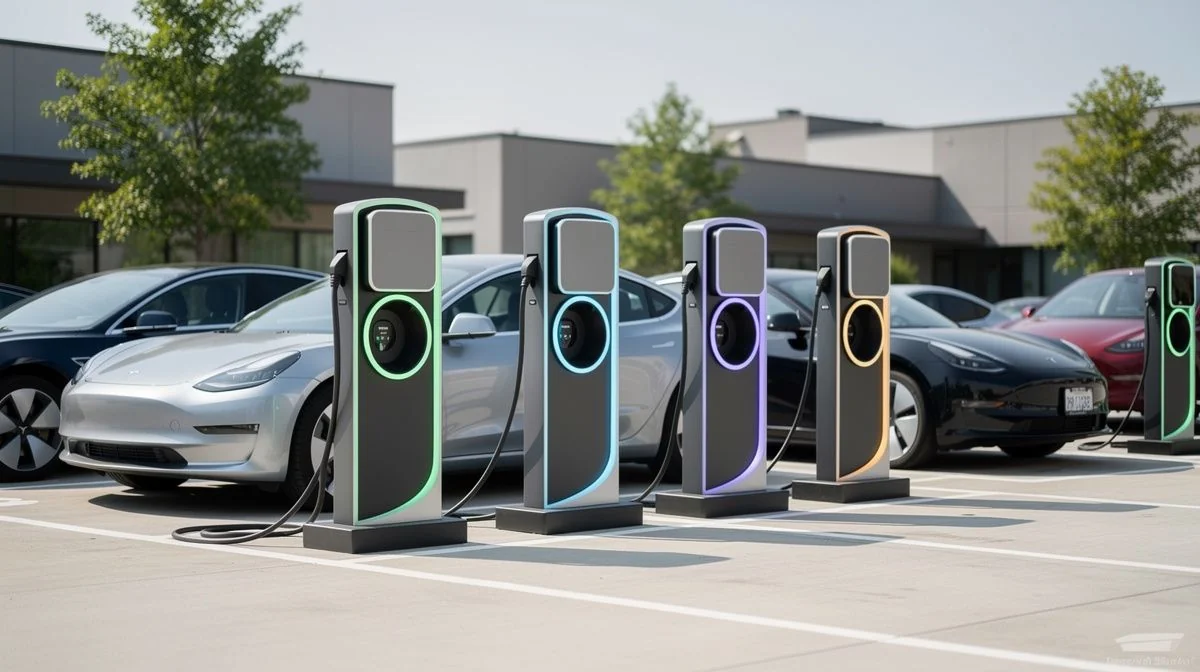
Choosing the right public charger isn't about picking a favourite brand — it's about matching the charger to your situation. For a quick top-up on a road trip, you want a DC fast charger on your route, ideally 150kW or faster if your car supports it. For a day at the beach or a shopping trip, a cheaper AC destination charger is the smarter financial choice, even if it means plugging in for a few hours.
Verify your car's maximum charging speeds before you go. Every EV has two numbers: the AC limit (typically 7kW or 11kW) and the DC limit (anywhere from 50kW to 250kW). If your car maxes out at 50kW DC, there's no point queuing for a 350kW charger — you'll get the same speed as a 50kW unit. Check your owner's manual or the car's charging settings screen.
Here are the red flags to watch for when using EV charging stations NZ:
- No live status in the app. If the network's app doesn't show real-time availability, you're driving blind. You could arrive to find a queue or a broken unit.
- Idle fees applied immediately. Some networks start charging idle fees the moment your car finishes, with no grace period. Look for networks that offer at least a 5-minute buffer.
- Per-minute billing on a slow-charging car. If you drive an older Leaf or another car with a low DC rate, per-minute pricing means you'll pay far more per kWh than you would with a newer EV.
- No backup option nearby. On long stretches of highway — like the Desert Road or the West Coast — a single charger site with no alternative within 50km is risky. Plan around redundancy.
- Charger requires an app you can't download. A handful of NZ chargers still rely on apps that aren't available on all app stores. Check compatibility before you need it.
What to Expect — The Day-to-Day
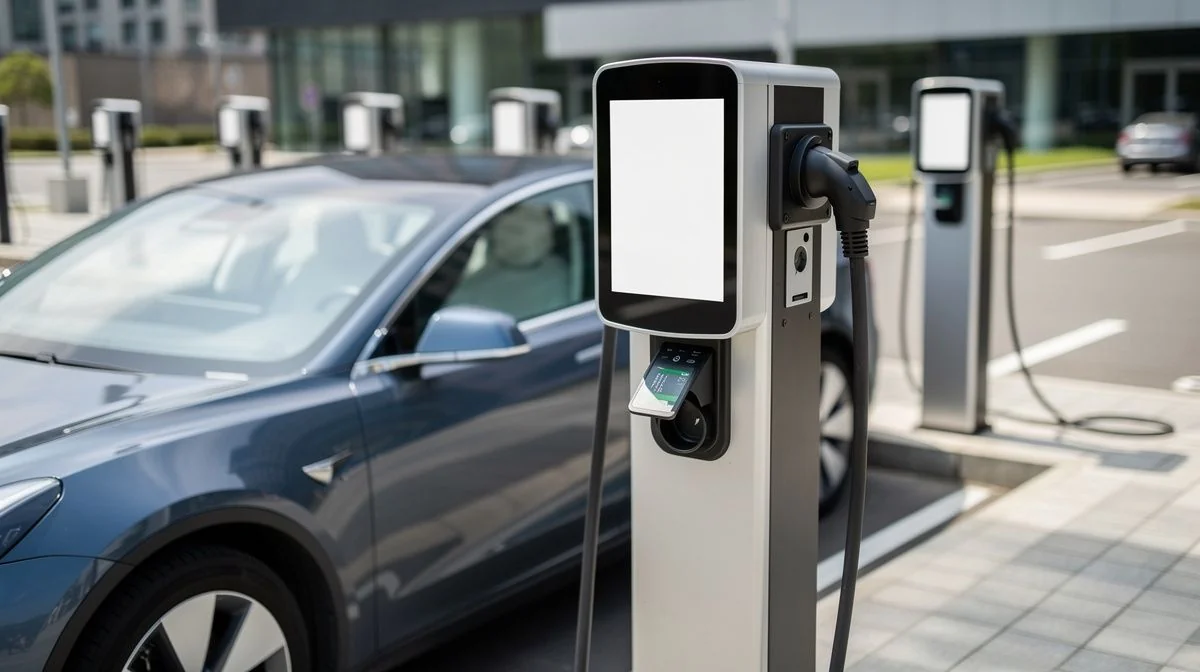
Before you commit to a public charger, download the operator's app and set up your account. Most NZ networks require an app for payment — you can't just tap a credit card at the charger itself. The app also provides live status and pricing, and lets you start and stop charging remotely. RFID fobs are available from some operators, such as ChargeNet and BP Charge NZ, if you prefer not to fiddle with your phone.
Here's how a typical public charging session unfolds:
- Find a charger: Use EVRoam NZ, PlugShare NZ, or the operator's app to locate a working unit — 2 minutes.
- Check availability and price: Confirm the charger is free and note the per-kWh rate — 1 minute.
- Park and plug in: Position your car so the cable reaches your charging port. Most NZ chargers have cables, but some destination units require you to bring your own — 2 minutes.
- Start the session: Scan the QR code or tap the charger in the app — 1 minute.
- Wait and monitor: DC fast charging takes 20–40 minutes; AC takes hours. Use the app to check progress and get notified when it's done — varies.
- Unplug and move: Stop the session in the app, unplug, and move your car promptly to avoid idle fees — 2 minutes.
After your session, keep the receipt from the app for your records. Some employers and businesses reimburse EV charging costs, and the app provides the documentation you need. Also watch your bank statement for a few days — most networks put a pre-authorisation hold on your card before charging, which can take 24–72 hours to clear.
NZ-Specific Factors — What's Different Here
Energy Retailer Discounts and EV Plans
New Zealand's electricity market is uniquely positioned to support EV charging, and several retailers have built plans around it. Meridian's Zero EV plan offers free electricity between 9 pm and 7 am for EV charging, which can cut your home charging costs to zero if you can shift your load. Genesis has partnered with ChargeNet to offer EVerywhere, a plan that bundles a discount on ChargeNet NZ public charging with a home electricity plan. Contact Energy has a similar arrangement with BP Charge NZ, giving customers a per-kWh discount at BP's fast chargers.
Octopus Energy and Electric Kiwi both offer EV-specific time-of-use plans that reward off-peak charging. These plans are genuinely different from anything in most other countries — no other market has retailers so deeply integrated with public charging networks.
The State Highway Network Gap
New Zealand's public charging network is excellent in urban centres and along the main tourist routes, but there are still significant gaps. The stretch of State Highway 1 between Napier and Gisborne, the West Coast's SH6, and parts of the central North Island have long distances between fast chargers. The government's charging network investment programme has funded new sites, but several regional roads still require careful planning. EVRoam NZ's map shows you exactly where the gaps are, and ABRP (A Better Route Planner) can calculate whether a route is feasible in your specific EV.
For a first road trip, choose a well-served route and keep a 20 per cent buffer in your battery.
Idle Fees and Congestion Pricing
New Zealand networks have embraced idle fees more aggressively than most countries. ChargeNet, BP Charge NZ, and Tesla Supercharger NZ all charge per-minute fees — typically $0.40 to $1.00 per minute — if you leave your car plugged in after charging completes. Some networks add congestion fees on top during peak times, which are designed to encourage turnover at busy sites. The Tesla Supercharger map NZ shows live congestion status and applies higher idle fees when the site is busy.
This is a Kiwi-specific quirk: our small population and limited sites mean operators need to police turnover more strictly than in countries with more abundant charging infrastructure.
RFID Fobs and Rural Accessibility
While most EV charging apps in NZ work well, connectivity in rural areas can be patchy. That's why several operators — notably ChargeNet and the Zero charging network NZ — offer RFID fobs that work without a phone signal. Tap the fob on the charger to start the session, which bills your account automatically. For anyone travelling through remote areas like the Mackenzie Country or the Coromandel, an RFID fob is a practical backup if your phone can't load the app. It's a small detail, but it makes NZ's charging network genuinely more usable than many larger markets.
Questions You Might Have
Can I use a Tesla Supercharger in NZ with a non-Tesla EV?
Yes. Tesla has opened its Supercharger network in NZ to all CCS2-equipped EVs. You'll need the Tesla app to start the session, and non-Tesla drivers typically pay a slightly higher per-kWh rate than Tesla owners. The Tesla Supercharger map NZ shows which sites are open to all vehicles — most are, though a few older urban sites remain Tesla-only. Charging speed is the same as with a Tesla; the difference lies purely in the price.
Why is DC fast charging so much more expensive than AC?
DC fast chargers are expensive hardware. A 150kW unit costs $150,000 to $250,000 installed, and the network connection fees from lines companies are substantial because of the high power draw. That equipment cost is spread over far fewer kWh than a home charger, so operators need higher per-kWh prices to make the business work. AC chargers, by contrast, are cheaper to install and maintain, which is why destination chargers often cost half as much per kWh.
What's the difference between per-kWh and per-minute charging?
Per-kWh pricing charges you for the actual energy delivered — simple and fair. Per-minute pricing charges for time plugged in, regardless of how much energy flows. On a 50kW charger, a car that can only draw 40kW will pay 25 per cent more per kWh than a car that can pull the full 50kW. If you drive an older EV with a lower DC charging rate, always look for per-kWh pricing, or you'll overpay significantly.
How do I know if a charger is working before I drive there?
Use EVRoam NZ or PlugShare NZ, both of which aggregate live status from most NZ networks. The operator's own app also shows real-time availability. PlugShare is particularly useful because it includes user reports — drivers often note when a charger is broken, slow, or has a queue. Check both before you set off, and always have a backup charger in mind.
Do I need to bring my own charging cable?
For DC fast chargers, no — the cable is attached to the unit. For most AC destination chargers, the cable is also tethered. However, some older or budget AC chargers, particularly at hotels and motels, require you to bring your own Type 2 cable. It's worth keeping one in your boot, along with a three-pin granny charger for emergencies. The cost of a quality Type 2 cable is around $200 to $400, and it can save you from being stranded at a charger without one.
What Matters Most
Public EV charging in NZ is no longer the wild west it was a few years ago — the networks are established, the pricing is mostly transparent, and the coverage is good enough for most road trips. But it's still a system you need to understand before you rely on it. The difference between a $30 charge and a $60 charge often comes down to whether you checked the app first, matched the charger speed to your car, and moved your car promptly when it finished charging.
Remember the NZ-specific quirks: retailer discount plans can halve your costs, idle fees are real and aggressive, and rural gaps require planning. Download EVRoam and PlugShare before you need them, set up your operator apps in advance, and always know your car's charging limits. Do that, and public charging becomes a minor logistical detail rather than a source of stress. The network will only get better from here — but it pays to know how to use it well today.
This article provides general information only and does not constitute financial advice. Charging prices and network coverage change frequently — always confirm current rates and availability in the operator's app or on EVRoam before travelling. Please verify all details directly with the relevant service provider.
Our Recommended Businesses You May Find Helpful
Appointed by the NZ Transport Agency - New Zealand's independent vehicle inspection specialists. What sets us apart? Fast, efficient inspections backed by reliable, honest advice and a team that genuinely cares about getting you back on the road safely. We've built our reputation on outstanding customer service, no hidden costs, and the kind of straight-up expertise.

The ValueHub Team built this site because finding clear, unbiased financial information in New Zealand was harder than it should be. Every guide is based on real research — we compare the actual fees, terms, and fine print so you don't have to. Our tip: shop around every year, read the policy docs, and never assume loyalty gets you the best deal.— The ValueHub Team
Try our Calculators
Use these free tools to crunch the numbers:
KiwiSaver Fund Comparison
Compare fees, returns, and risk levels across every KiwiSaver fund — the most up to date data in New Zealand.
Currency Converter — USD to NZD
Convert US Dollars to New Zealand Dollars instantly. See the latest exchange rate and 30-day trend.
Mortgage Repayment Calculator
Calculate your weekly, fortnightly, or monthly mortgage repayments. Free NZ mortgage calculator — try different rates, terms, and repayment frequencies.
Compound Interest Calculator
See how your savings grow with compound interest over time. Free NZ compound interest calculator with yearly, monthly, and weekly compounding options.
Term Deposit Calculator
Calculate your term deposit returns before you lock in. Compare interest earned across different terms and rates with ValueHub's free calculator.
Savings Goal Calculator
Calculate how long it will take to reach your savings goal — and what monthly deposit you need to get there. Free NZ savings planner.
Related Articles
The Most Popular EVs in New Zealand
The best-selling electric cars in New Zealand, ranked by official registration data. Top BEV and PHEV models and brands, updated monthly.
comparisonBest Broadband Plans in New Zealand Compared
Same fibre, different price. Compare NZ broadband plans from Skinny, Spark, 2degrees and more to find the best deal.